HSSE TIPS · Product Comparisons · Mobile Healthcare
Mobile Eye Clinic vs General Mobile Medical Clinic: Which Healthcare Vehicle Fits Your Project?
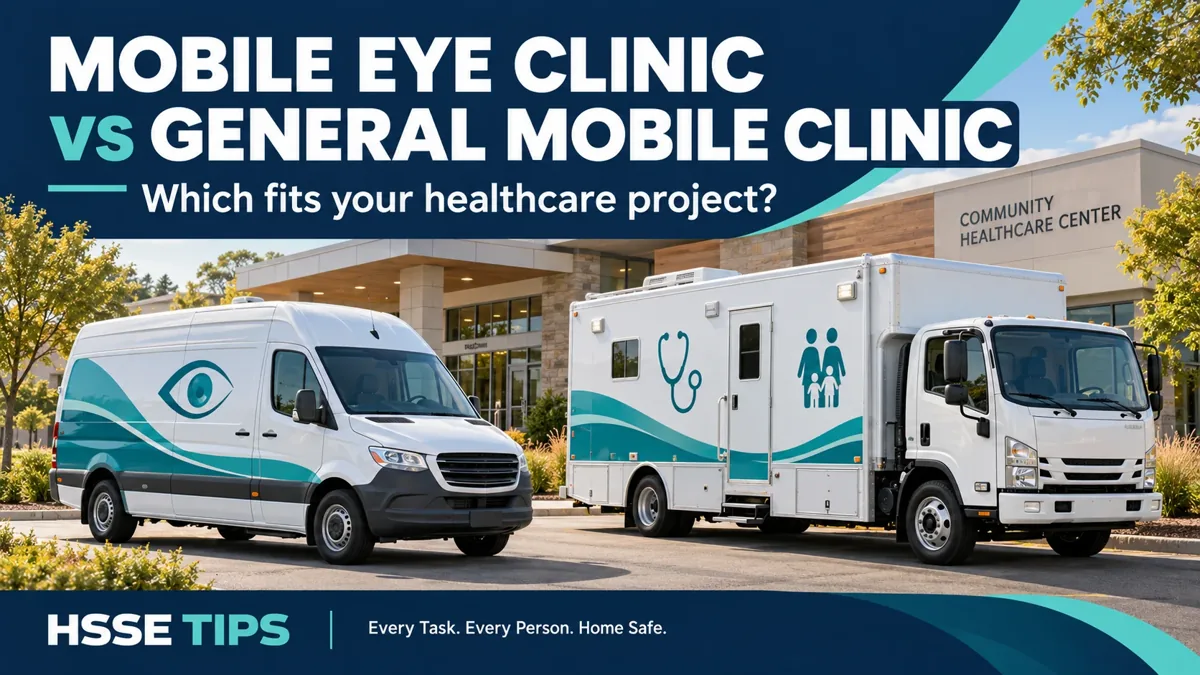
A school vision program, a rural outpatient service and an industrial health campaign may all need healthcare closer to patients. Their clinical work, equipment and staffing can be very different. A productive procurement discussion begins with those differences, before vehicle size or appearance.
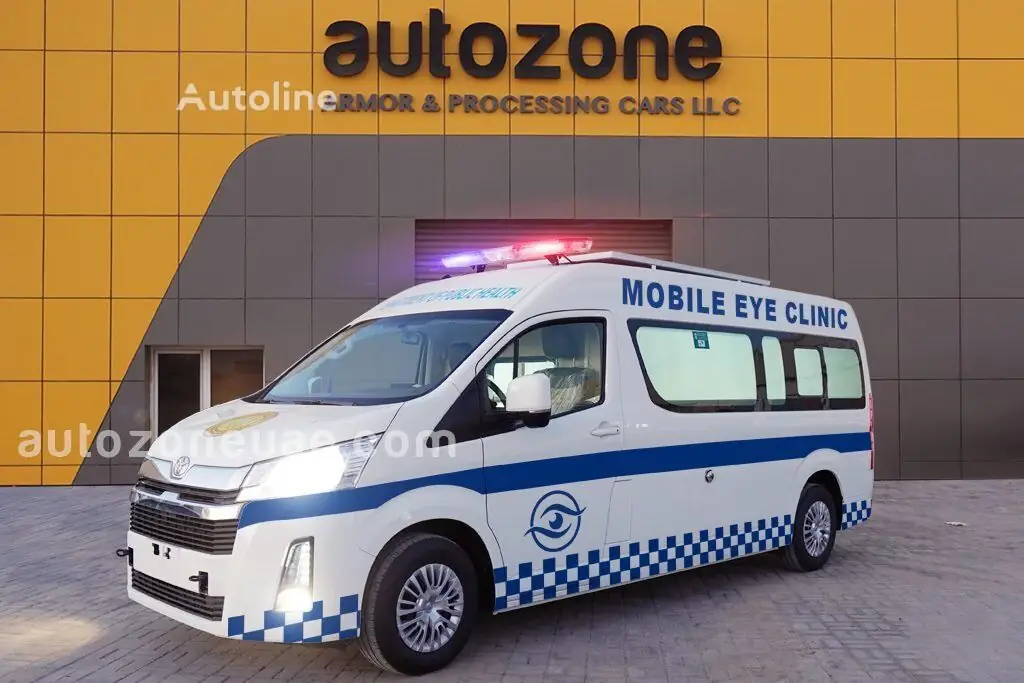
This comparison explains how specialist eye clinics and general outpatient clinics can support different projects. The Toyota Hiace Mobile Eye Clinic and Mobile General OPD Clinic provide advertised examples. Neither is a universal winner: the right choice depends on the services you intend to deliver and the configuration you actually purchase.
Affiliate disclosure: Worksite Safety Hub may earn a commission if you purchase through affiliate links in this article. This does not change the price you pay.
Understanding Mobile Eye Clinics
A mobile eye clinic organizes space around eye examination, vision assessment and the care pathway that follows. Depending on the agreed equipment and staffing, its work may include screening, refraction or clinician-led eye assessments. Screening identifies people who need further evaluation; it does not replace a complete examination when one is indicated.
Plan the patient journey from registration to testing, explanation of results and referral. A vision chart needs an appropriate testing arrangement; instruments need stable positioning; staff need room to work around the patient. These requirements should shape the floor plan rather than being added after the conversion is finished.
The World Health Organization's Vision and eye screening implementation handbook provides a framework for community and primary-care screening. For buyers, its practical implication is straightforward: procure a service pathway, including follow-up, alongside the physical clinic.
An eye-care program should also identify who will explain results, arrange onward appointments and help patients complete the next stage. A clinic that visits several communities needs a clear way to return records and referral information to the responsible healthcare team.
Understanding General Mobile Medical Clinics
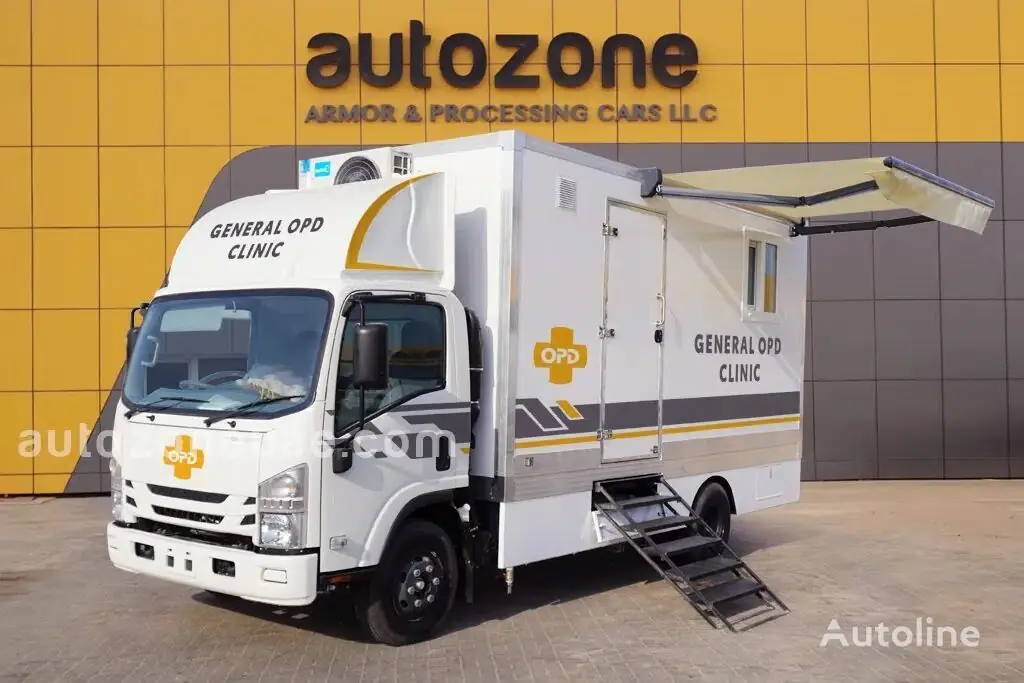
A general mobile medical clinic supports outpatient consultations and examinations according to its design, staffing and authorized services. OPD means outpatient department: patients attend for assessment or care without automatically being admitted overnight.
Planning typically begins with reception, a private consultation space, an examination couch, medical storage and essential observations. The service may focus on community consultations, preventive assessments or follow-up visits. Additional services require their own equipment, consumables, competency and operating arrangements.
The advertised General OPD example is a self-propelled truck conversion: Autozone UAE identifies its base as the Isuzu NPR 75, with diesel fuel, manual transmission, left-hand drive and two-wheel drive. This identification matters because the words “mobile clinic” can also describe trailers, containers and other transportable structures.
Across either category, a healthcare facility's name does not establish a laboratory, emergency department, surgical suite or inpatient capability. Describe the purchased service using the accepted equipment schedule and clinical operating plan.
Mobile Eye Clinic vs General Mobile Medical Clinic: At-a-Glance Comparison
This table compares planning priorities for the two categories. It is not a statement that every vehicle includes the facilities shown.
| Comparison factor | Mobile eye clinic | General mobile medical clinic |
|---|---|---|
| Healthcare focus | A defined vision and eye-care pathway | A defined general outpatient pathway |
| Patient population | People needing the planned eye assessments | People needing the planned general consultations |
| Consultation facilities | Check clinician workspace and discussion privacy | Check consultation space and examination privacy |
| Examination areas | Check positioning, chart setup and instrument access | Check couch access, movement and observation space |
| Ophthalmic equipment | Specify instruments needed for each eye-care service | Include only where expressly contracted |
| General diagnostic equipment | Match any additional devices to the service | Match devices and consumables to the service |
| Patient monitoring | Define observation needs through clinical planning | Define observation needs through clinical planning |
| Patient privacy | Protect examinations, discussions and records | Protect examinations, discussions and records |
| Clinical storage | Plan protected instrument and consumable storage | Plan organized equipment and consumable storage |
| Electrical power | Build a load schedule for the agreed instruments | Build a load schedule for the agreed equipment |
| Water and sanitation | Verify handwashing and waste arrangements | Verify handwashing and waste arrangements |
| HVAC | Match temperature and ventilation to occupancy and equipment | Match temperature and ventilation to occupancy and equipment |
| Staffing | Qualified personnel for the planned eye-care scope | Qualified personnel for the planned outpatient scope |
| Transportation | Depends on the specific van, truck or other platform | Depends on the specific van, truck or other platform |
| Deployment | Verify routes, parking and access before scheduling | Verify routes, parking and access before scheduling |
| Healthcare applications | Services supported by equipment, staff and authorization | Services supported by equipment, staff and authorization |
Two-Product Technical Specification Snapshot
The following details describe published seller or converter information reviewed on 26 October 2026, rather than a physical inspection. “Not specified” means not specified in the information reviewed. Obtain a signed build specification for the particular unit offered.
| Specification | Toyota Hiace Mobile Eye Clinic | Mobile General OPD Clinic |
|---|---|---|
| Base / converter | Toyota Hiace / Autozone UAE | Isuzu NPR 75 / Autozone UAE |
| Configuration | High-roof van conversion | Self-propelled truck conversion |
| Year / mileage | Not specified / not specified | Not specified / not specified |
| Fuel / engine | Petrol; description gives 3,456 cc, six cylinders | Diesel; exact engine model not specified |
| Transmission | Conflicting: automatic field; 6 M/T description | Six-speed manual with overdrive |
| Dimensions / wheelbase | Description: 5,915 × 1,950 × 2,280 mm; 3,860 mm. Listing field gives 5.95 m length | Not specified / not specified |
| GVW / payload | Not specified / not specified | GVW not specified; advertised payload 4,255 kg, conversion allowance unconfirmed |
| Interior dimensions / room count | Not specified / not specified | Not specified; reception and clinic areas described, room count unconfirmed |
| Utilities described | 220 V shoreline; 1,000 W inverter; three 12 V 60 Ah batteries; 380 W solar panel; fresh/waste tanks | Generator, AC, water tanks, basin and toilet; utility capacities not specified |
| Accessibility / inpatient beds | Not specified / not specified | Not specified / not specified |
Source basis: Autozone UAE product pages and seller advertisements XT41519 and NT41519. Conflicting fields are retained transparently. Official Toyota UAE documentation describes current market variants; it does not establish the year, gearbox or specification of this particular conversion.
Ophthalmic Examination vs General Consultation Facilities
Compare the layout by walking through a realistic appointment. Can a person enter safely, sit comfortably, discuss symptoms privately and move between the required assessments? Can a companion remain where needed? Ask the converter for scaled drawings and a demonstration of this journey.
For eye examinations, check instrument working distances, adjustable patient positioning and the lighting needed for each device. For general consultations, check access around the examination couch, space for equipment and the separation between clean storage and used materials. A seat shown in a photograph should not automatically be described as a dedicated ophthalmic examination chair.
Ask where staff will document findings, where patients will wait and how the next patient enters while the previous examination finishes. Include cleaning and restocking in the workflow. More floor space alone does not establish patient throughput; appointment type, staffing and turnaround time all matter.
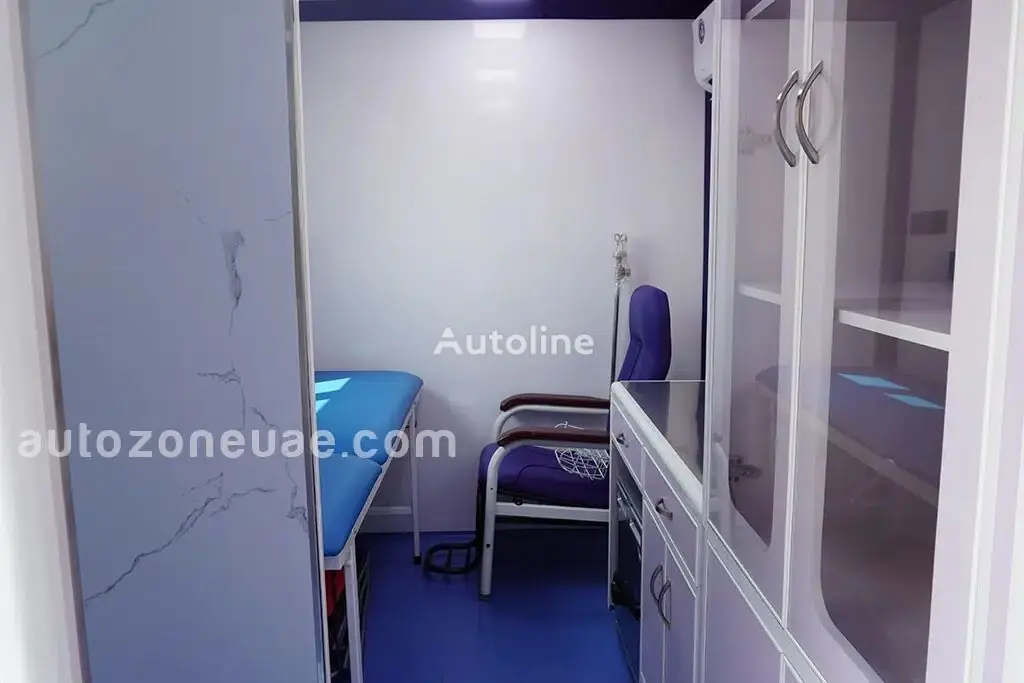
Medical Equipment: Translate the Advertisement Into a Purchase Schedule
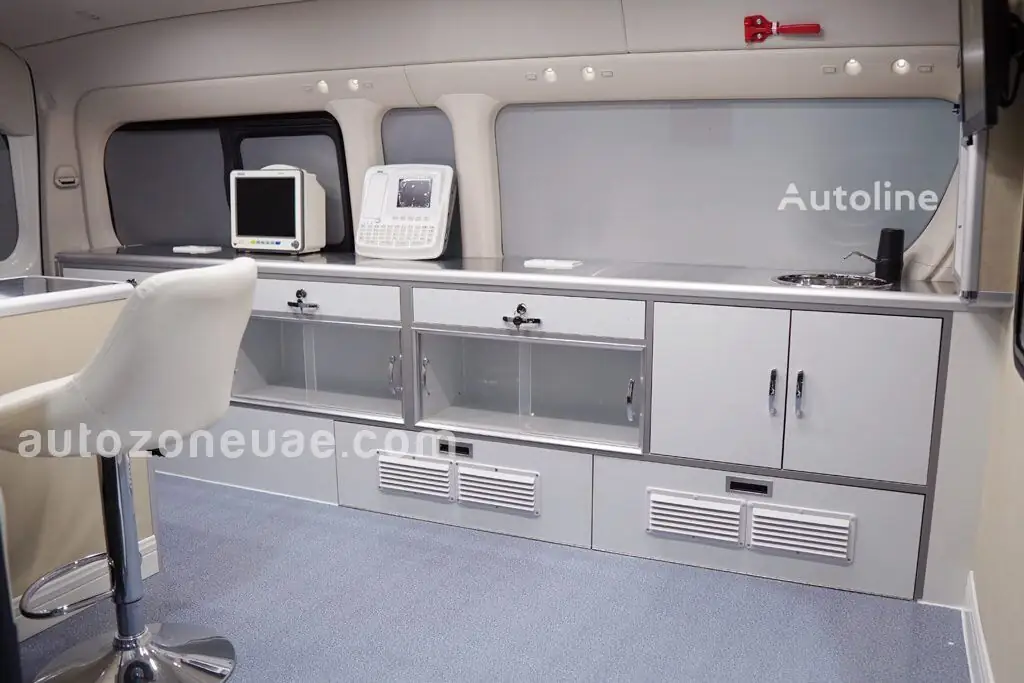
The Hiace's published equipment description names a slit lamp, trial lenses, ophthalmoscope, autorefractometer, digital acuity chart, examination light, A/B scan and an ENT microscope. These are seller-described items; the exact delivered package needs contractual confirmation. An ENT microscope designation does not establish ophthalmic surgical capability.
The OPD equipment description names an examination bed and privacy curtain, pulse oximeter, blood-pressure equipment and stethoscope, thermometer, scale, glucometer, hemoglobinometer and airway-related accessories. Request exact models and quantities, together with any consumables needed to use them.
Organize the purchasing schedule into four evidence groups:
- Confirmed included: items explicitly accepted in the signed quotation, with make, model, quantity and accessories.
- Visible but unconfirmed: items appearing in media whose inclusion is not established. Do not infer model or capability from appearance alone.
- Optional: additions explicitly quoted as optional, with their price and installation requirements.
- Not specified: equipment for which the reviewed documents do not establish inclusion.
Neither reviewed description establishes included OCT, fundus photography, visual-field analysis, ophthalmic lasers, ECG or ultrasound. Tonometers, keratometers, retinoscopes, lensmeters, trial frames, medical refrigeration, suction and full patient monitors also need specific confirmation. Some may be relevant to a proposed service, but relevance does not establish availability as an option.
Ask for device documentation once manufacturers and model numbers are confirmed. It should establish intended use, cleaning instructions, calibration, electrical requirements, operator training and service support. Published names such as “diagnostic set” or “A/B scan” are not enough to establish all clinical functions.
Electrical Power and Utilities: Plan for the Whole Working Day
Prepare a load schedule listing each device, lighting, computing and cooling requirement. Separate continuous operation from starting demand, and identify equipment needing uninterrupted power. Ask an appropriately qualified engineer to check the complete system and its protection arrangements.
A stated inverter rating does not establish the runtime of the clinic. Battery chemistry, usable capacity, connected loads and charging conditions matter. A solar panel rating likewise does not guarantee daily energy production at every deployment location.
Specify external power connections, cables, changeover arrangements, electrical earthing and inspection requirements. If a generator is used, plan safe placement, exhaust separation, refueling and noise management. Establish which functions continue during a supply interruption and how patients' records remain available.
For water, determine daily demand, refill access, cleaning arrangements and wastewater disposal. Confirm that tank capacities support the intended service. For HVAC, request performance criteria covering local climate, occupancy and equipment heat loads; cooling and ventilation should be assessed separately.
Patient Privacy, Infection Prevention and Clinical Safety
Include clinical governance in the project from the start. Identify the service lead, staff qualifications, consent arrangements, confidential record handling and escalation pathways. Provide information patients can understand, including what the mobile team can assess and where follow-up takes place.
CDC's core infection prevention practices cover healthcare across settings. Relevant planning areas include hand hygiene, environmental cleaning, appropriate protective equipment and reprocessing reusable devices. The outpatient infection prevention guide is a useful companion for an ambulatory service.
Ask the infection prevention lead to approve storage, cleaning access, sharps disposal and clinical waste arrangements. Select cleaning products compatible with the device manufacturers' instructions. A claim about cabinet material does not replace an infection prevention program.
Engineering review should address secure equipment mounting, electrical protection, fire precautions, exits and safe access. Confirm local facility authorization and professional requirements for the destination. Vehicle registration and a converter's general management certification do not by themselves authorize a clinical procedure.
Which Mobile Healthcare Facility Fits Different Medical Projects?
Community Vision Screening and Rural Eye Outreach
A specialist eye clinic may suit a program with defined screening or examination activities, trained personnel and an accessible referral network. Plan how the team will communicate findings and arrange the next appointment, particularly where patients live far from the receiving service.
School Vision Screening Programs
An eye-focused configuration may be appropriate when testing arrangements, consent, safeguarding and referral follow-up match the children served. Check testing accessibility and space for an accompanying adult. Do not estimate daily capacity until the team has tested the complete workflow.
Occupational Eye Healthcare
An eye clinic may support a properly designed employee vision program. The assessment should match the job's requirements and the responsible clinician's scope. A mobile screening result should not automatically be presented as a complete fitness-for-work decision.
General Primary Healthcare Outreach and Preventive Care
A general OPD configuration may fit community consultations, examinations and selected preventive assessments. Decide the service menu first, then agree the equipment and consumables. Include a mechanism for results, follow-up visits and continuity with local providers.
Humanitarian Medical Programs
Choose the facility around assessed needs, route access, staffing and referral arrangements. An eye-care mission and a general consultation mission may require different deployments. WHO's discussion of mobile clinics in crisis settings illustrates that mobile care can use several delivery platforms; a vehicle is one component of the response.
Hospital Outreach Services
Either category may extend a hospital's planned services when records, clinical responsibility and follow-up remain connected to the hospital. Set clear criteria for patients who should attend the main facility directly and for situations requiring escalation during a visit.
Remote Industrial Healthcare
A general clinic may support planned outpatient work, while an eye clinic may support periodic eye assessments. Match routes and support arrangements to the actual site. Routine mobile consultations should sit within a separately defined emergency response and transfer plan.
Temporary Healthcare Facility Expansion
A mobile unit may provide additional consultation space if local approvals and site infrastructure support it. Define how patients move between the unit and the host facility, how supplies arrive and how cleaning, security and maintenance are managed.
How the Two Clinic Types Can Work Together
Some programs need a combined pathway. A general team might identify patients who need a specialist eye assessment, while an eye team refers patients for broader medical review. Cooperation works best when responsibility for each stage is explicit.
For example, a community outreach day could use shared registration with separate consultation appointments. Agree record access, referral criteria, waiting arrangements and follow-up ownership before the visit. This is a planning example, not a claim that either advertised vehicle includes an integrated service.
Procurement and Project Planning: A Practical Buyer's Guide
Build a written service specification before requesting the final quotation. It gives the clinical team, converter, engineering adviser and purchasing team a common basis for decisions.
- Define patients and services. List intended assessments, expected appointment types and referral destinations. Record which services fall outside the planned scope.
- Approve the layout. Review patient entry, accessible movement, examination privacy, staff access, storage and cleaning. Request door widths, step heights and details of any ramp or lift.
- Agree the equipment schedule. Specify make, model, quantities, accessories, commissioning, manuals, calibration and training. Separate installed devices from optional additions.
- Approve utilities and staffing. Confirm power, water, waste and HVAC design against the actual service. Budget for the qualified clinical and support team.
- Check transport and site preparation. Review road access, turning space, parking, ground conditions and clearance. Request completed-vehicle weight and axle information with equipment, water and occupants accounted for.
- Plan ownership support. Obtain warranty coverage, maintenance schedules, device servicing arrangements, consumable availability and insurance requirements. Clarify support in the destination country.
- Agree import and delivery responsibilities. Establish documents, destination eligibility, freight, insurance, duties, registration and the applicable transport terms. Allocate responsibility for installation and commissioning.
- Test before acceptance. Use an agreed checklist for documents, equipment, utilities, safety checks and staff training. Record outstanding items and the process for closing them.
Evaluate total project funding without inventing savings or returns. Include the purchase, transport, site preparation, staffing, fuel or electricity, consumables, maintenance and clinical administration. Request comparable quotations based on the same service scope.
Current Seller Offers — Listing Information Reviewed 26 October 2026
“Reviewed” means the published information was checked; it does not mean seller stock, the particular build or delivery dates were independently confirmed. Both supplied affiliate URLs resolved to their respective Autoline advertisements during this review.
Current Seller Offer: Toyota Hiace Mobile Eye Clinic
Advertised condition: New. Price: On request. Product location: Ajman, United Arab Emirates, as shown in the advertisement's location field. Year and mileage: Not specified in the information reviewed.
Equipment: The published ophthalmic package is outlined above; obtain the current contractual list. Availability: Advertisement accessible; ready stock, build time and exact-unit availability require seller confirmation.
Delivery destinations, shipping arrangements, and applicable transport terms were not specified in the information reviewed. Prospective buyers should confirm these details directly with the seller.
Request the Hiace Eye Clinic OfferCurrent Seller Offer: Mobile General OPD Clinic
Advertised condition: New. Price: On request. Product location: Ajman, United Arab Emirates, as shown in the advertisement's location field. Year: Not specified in the information reviewed.
Configuration: Truck-based outpatient clinic. Equipment: Obtain the accepted schedule for the package described above. Availability: Advertisement accessible; ready stock, build time and exact-unit availability require seller confirmation.
Delivery destinations, shipping arrangements, and applicable transport terms were not specified in the information reviewed. Prospective buyers should confirm these details directly with the seller.
Request the General OPD Clinic OfferFrequently Asked Questions
What is the main difference between a mobile eye clinic and a general mobile medical clinic?
The service focus. An eye clinic is organized around defined eye-care activities, while a general clinic is organized around defined outpatient activities. Each unit's actual capability depends on its equipment, staffing, layout and authorization.
Can a general mobile clinic provide eye screening?
It may, if the required testing arrangement, equipment, trained personnel and referral process are available. Do not infer comprehensive eye-care capability from a general clinic designation.
Does a mobile eye clinic include surgery, OCT or a fundus camera?
Only if the agreed specification establishes the equipment and suitable facilities, with the necessary authorization and team. These capabilities should never be assumed from the clinic's name.
Can either clinic operate without external electricity?
That depends on the installed systems and the full connected load. Ask for an engineering assessment and a demonstrated operating scenario rather than relying on a single battery, generator or inverter rating.
Which configuration is right for an institutional project?
Choose the configuration that satisfies the approved clinical brief, patient access requirements and deployment plan. A mixed program may justify complementary units or a separately specified integrated conversion.
Choose the Service Pathway, Then the Clinic
Begin with the people you intend to serve, the assessments they need and the follow-up you can provide. Use that brief to compare layouts, equipment and support arrangements. The most useful vehicle is the one whose verified specification supports your team's planned work.
Request a current quotation with the exact build, clinical equipment schedule, completed-vehicle weights and delivery responsibilities. That gives your clinical and procurement teams a concrete proposal to review.
Discussion: Is your project focused on eye healthcare, general outpatient consultations or an integrated outreach service? Which patient-access and deployment requirements will shape your choice?
Research Sources and Editorial Method
Research checked on 26 October 2026. Commercial details are seller/converter statements and were not physically inspected. Healthcare references inform general planning; they do not certify these products. This article is procurement information, not clinical operating instructions.
- Autozone UAE: Mobile Eye Clinic Van and Mobile General OPD Clinic product descriptions.
- Autoline seller advertisements: XT41519 (Hiace eye clinic) and NT41519 (General OPD clinic). Commercial access uses the exact affiliate links in this article.
- Toyota UAE: current Hiace 3.5 L variant information — background only; no model-year specifications transferred to the advertised conversion.
- WHO: Vision and eye screening implementation handbook.
- CDC: Core Infection Prevention and Control Practices.
- CDC: Guide to Infection Prevention for Outpatient Settings.
- WHO: Delivering health through mobile clinics and medical teams.
Photographs are reused from the existing HSSE TIPS product reviews under their recorded advertiser review-use permission, with existing watermarks retained. No product-specific advertiser video was verified, so no video is embedded.
Your experience matters
Share your thoughts on this page
Have a question, a useful experience or a suggestion? Add your input below.
Comments are public. Keep them respectful and relevant. Do not share contact details, confidential information or emergency reports.
Comments on this page
Loading comments…