HSSE TIPS · Product Reviews · Mobile Eye Healthcare
Toyota Hiace Mobile Eye Clinic Review: Equipment, Specs & Buying Guide
Affiliate Disclosure: Worksite Safety Hub may earn a commission if you make a qualifying purchase through links in this article. This does not change the price you pay.
Introduction — Bringing Eye Healthcare Closer to Communities
An eye screening visit needs a suitable examination setting as well as a way to reach the patient. Lighting, patient positioning, instrument power and a clear referral pathway all matter when the consultation space travels between communities.
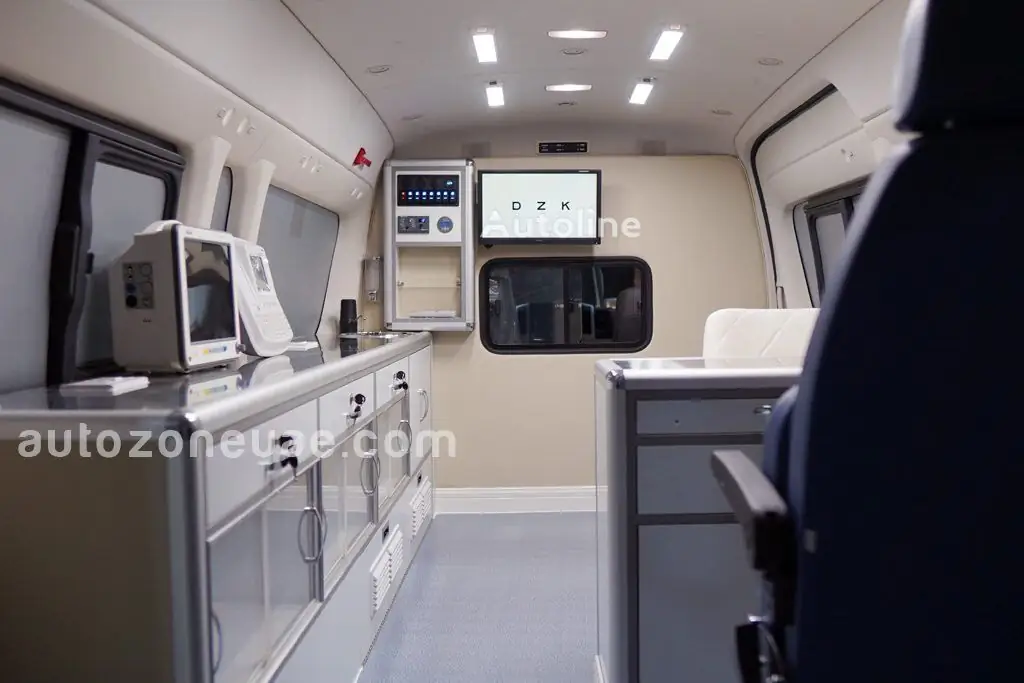
Autozone UAE’s Toyota Hiace Mobile Eye Clinic brings those planning questions into a specific vehicle. Original advertiser photos show a furnished clinical interior with seating, cabinets, a sink, window blinds and a wall-mounted vision-chart display. The written proposal names ophthalmic instruments, battery storage, an inverter, external power and solar charging.
This review examines the advertised configuration and practical buying requirements. It distinguishes listed equipment from photographed fittings and items that require confirmation. It is based on source material, rather than a road test, device inspection or clinical commissioning assessment.
EXPLORE THE TOYOTA HIACE MOBILE EYE CLINIC
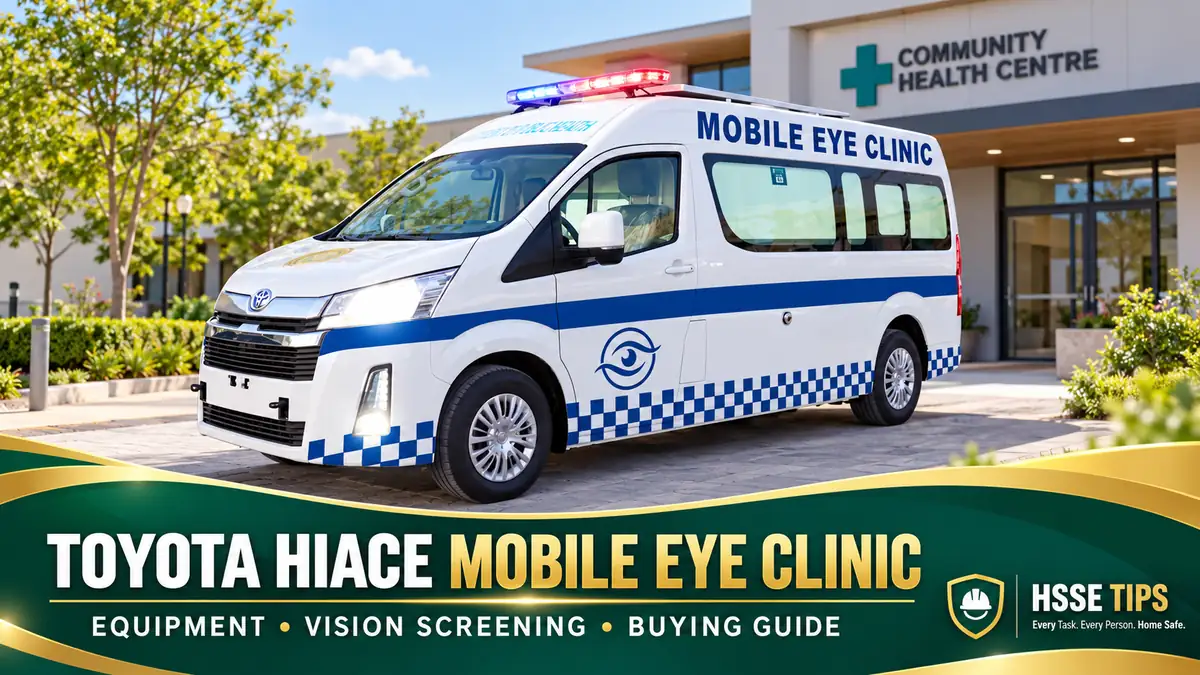
Toyota Hiace Mobile Eye Clinic Overview
The matched converter page identifies Toyota Hiace, petrol, two-wheel drive and left-hand drive. The detailed sheet calls the grade “HIACE D/VAN HR DX”; photographs support a high-roof van presentation. A VIN-linked model code, generation designation and production year are not specified, so none is assigned from appearance.
The vehicle is presented as a mobile eye examination workspace, not a verified surgical facility. Its marketplace category is “other municipal vehicles,” which does not determine its clinical authorisation. A healthcare operator should define the intended screening and consultation services through the supplied equipment and qualified professional team.
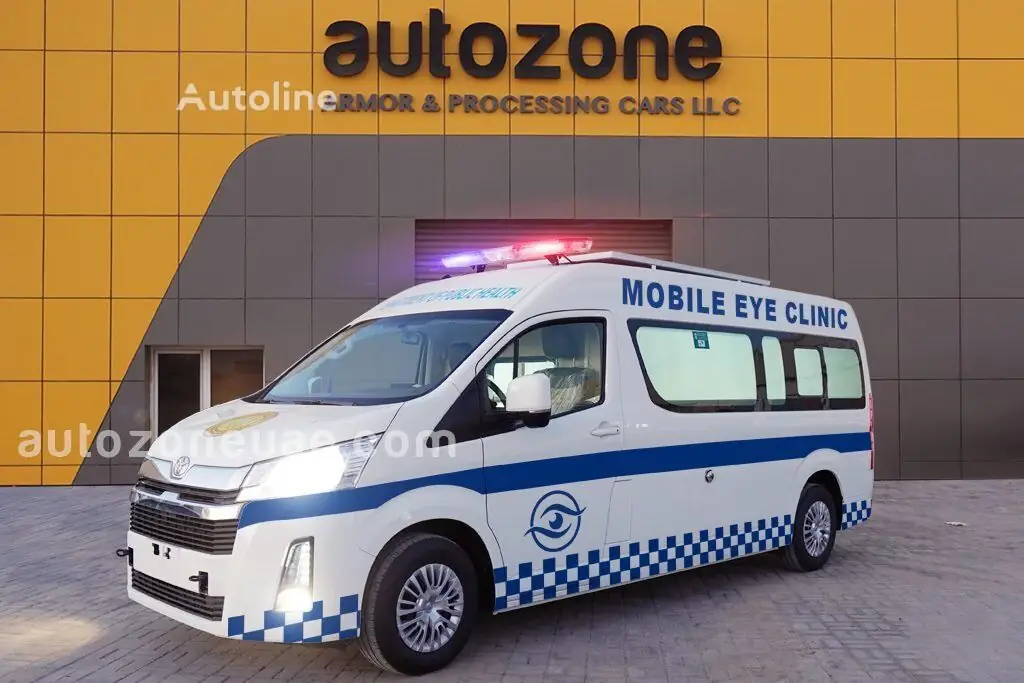
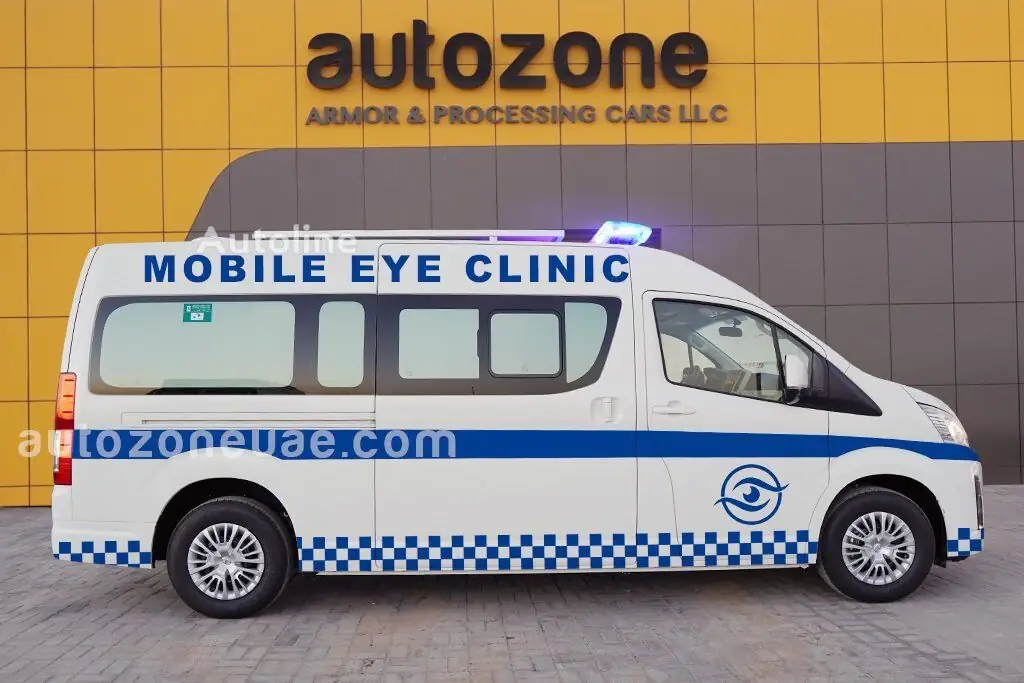
Toyota Hiace Vehicle Platform and Engineering
Hiace is a vehicle family with different market specifications. The official Toyota UAE Hiace range provides current manufacturer context, but its model-year specifications and passenger layouts do not identify this completed clinic. Obtain the chassis record and conversion documents for the actual purchase.
The seller’s detailed sheet describes front MacPherson suspension, rear leaf springs and ventilated disc brakes. A separate marketplace field summarises suspension as spring/spring. Confirm the chassis configuration, axle limits and service schedule from VIN-linked documents. Gross vehicle weight, remaining payload and finished axle weights were not verified.
Engine, Transmission and Drivetrain
The listing’s summary describes a six-cylinder petrol engine of approximately 3.5 litres. The detailed specification gives 3,456 cm³ and D-4S fuel-system terminology. Engine code, rated output and torque are not established for the supplied vehicle; current brochure figures are not transferred to it.
Transmission requires a written clarification: the marketplace and converter summary say automatic, while the detailed sheet states “6 M/T.” Both are reported rather than selecting one as confirmed. The converter describes two-wheel drive, but the driven axle and exact chassis derivative should be established in the final vehicle schedule.
A 70-litre fuel tank and 3,860 mm wheelbase are source-stated. No verified fuel consumption, driving range or operating-cost comparison is available. Fleet planning should use the documented engine, gearbox and regional maintenance requirements for the finished clinic.
Vehicle Dimensions and Medical Conversion
The detailed sheet gives 5,915 × 1,950 × 2,280 mm, while the marketplace length entry is 5.95 m. Confirm the finished length and whether height includes rooftop equipment. Internal clearances, doorway measurements and useful examination space are not specified.
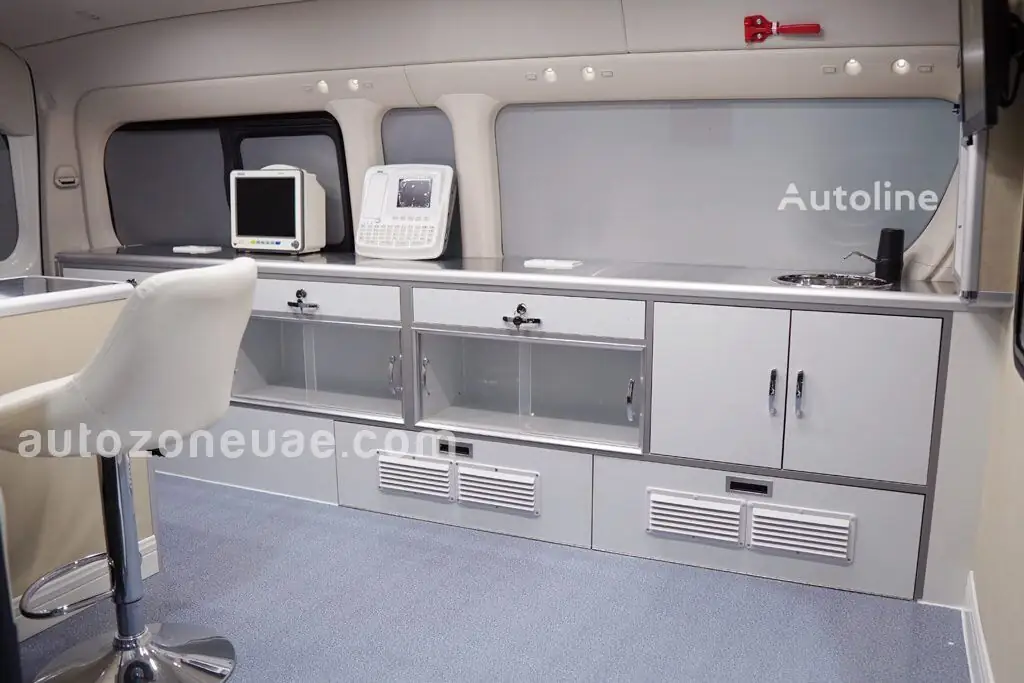
Autozone describes PVC Intecel cabinetry, drawers and fresh/wastewater provision. Its antibacterial, waterproof and heat-resistance descriptions are supplier claims, not verified material test results. Request the materials schedule, flooring specification, insulation details and cleaning instructions. Photographs show fitted cabinets and a speckled floor, without establishing construction thickness or certification.
Eye Examination Area and Interior Layout
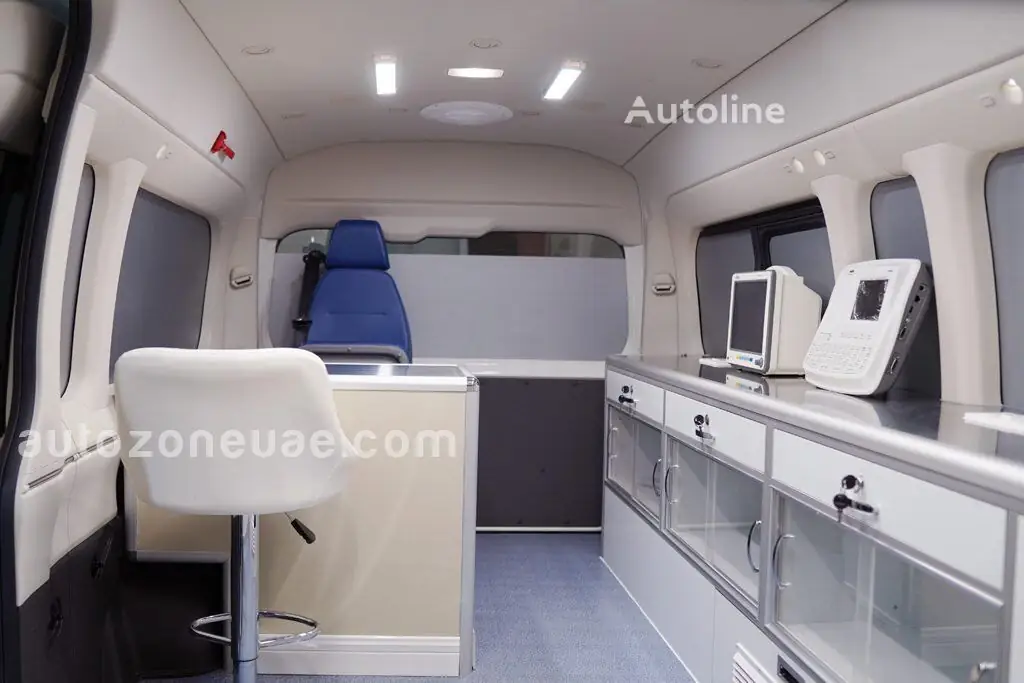
The interior photographs show a blue clinical chair, white seating, work surfaces and cabinetry along the side. Devices sit on the counter, and an acuity display is mounted near a control-panel cabinet. A single photographed layout does not establish a room count, maximum staffing or daily patient capacity.
The written design mentions an attendant bench or seat with backrest and two-point belts, plus a small companion seat. Confirm which fittings are included and approved for travel. Review patient transfer, instrument reach, staff movement and the route to the exit with the intended clinical team.
Ophthalmic and Optometry Equipment
The advertised ophthalmic suite lists a slit lamp described as “Stem India,” an ENT diagnostic/operation microscope, examination light, trial lens set, ophthalmoscope, “Autorefractometer Grand,” digital vision acuity chart with monitor and an A/B scan unit. These are expressly listed items to reconcile with the quotation, not independently tested devices.
The photographs support the presence of examination devices and a vision-chart display, but readable model plates and complete accessory lists were not established. “Stem India” and “Grand” are insufficient to assign a manufacturer datasheet or performance specification. Ask for exact maker, model, serial number, accessories, manuals, maintenance and calibration requirements.
Separate fixed installations, portable devices included in the price, pictured reference equipment, selected options and buyer-supplied items. A keratometer, retinoscope, tonometer, lensmeter, trial frame, fundus camera, OCT system and visual-field analyser are not confirmed inclusions. The word “operation” in a microscope description does not establish eye-surgery capability.
DISCOVER THE EYE EXAMINATION EQUIPMENT
Vision Screening and Diagnostic Facilities
A wall-mounted screen displaying vision-test symbols is visible. The listed acuity chart, trial lenses and refractive-assessment equipment provide a starting point for a specified screening service. Confirm the chart system, viewing conditions, test distance and patient positioning against the device instructions and clinical protocol; do not assume a standard test distance fits this van.
The listed A/B scan unit does not establish a fundus camera, OCT or advanced retinal-imaging package. Nor does the general instrument list establish a complete glaucoma-testing pathway. The authorised service should identify what is assessed, who interprets results and how patients receive further examination or treatment when needed.
WHO’s Vision and eye screening implementation handbook provides programme-planning guidance for community and primary-care settings. It is useful context for screening design and referral arrangements, rather than evidence that this vehicle or equipment package is WHO-approved.
Patient Privacy and Clinical Workflow
Window blinds are visible, but a separate consultation room, reception desk, privacy partition or changing area is not established. Demonstrate privacy with doors and blinds in their operating positions, including confidential conversation and record handling.
A proposed visit can connect registration, explanation and consent, the selected visual assessment, discussion of findings and referral. Present that as the operator’s workflow, not a verified patient-flow diagram for this conversion. Include companion needs, staff access and cleaning between appointments. No patient-throughput claim follows from the number of visible chairs.
Electrical Power and Backup Systems
The proposal describes a 12 V control box with fuses and relays, three 12 V sockets, four 220 V sockets, three 12 V 60 Ah batteries, a 1,000 W pure-sine inverter with charger, battery monitoring and a 220 V shoreline connection. It also lists one 380 W solar panel and an incomplete “Cyrix 230A” entry.
These are source-stated package details. Battery interconnection, usable energy, inverter duty rating, charger specifications, solar-controller arrangement and installed protection require drawings and verification. Do not sum battery capacities into a runtime promise without knowing the system design, load and operating conditions. The incomplete component entry is not used to infer a verified charging system.
A generator is not confirmed as included. Frequency, external connection current and independent operating endurance are not stated. Obtain a load schedule for clinical devices, lighting and HVAC, then demonstrate supply changeover, earthing and protection under the agreed operating load.
Water Supply, Sanitation and Waste Management
The description includes a washbasin and tanks for fresh and wastewater; a sink is visible in the counter. Capacities, plumbing diagrams, water heating and replenishment arrangements are not published. A toilet and onboard clinical-waste treatment are not verified.
Specify potable-water supply, handwashing, tank servicing and lawful wastewater disposal for the intended locations. Agree clinical-waste containers and collection arrangements appropriate to the service. A cupboard or sink does not establish a complete cleaning or waste-handling system.
Heating, Ventilation and Air Conditioning
The gallery shows ceiling vents and fittings, but does not establish the patient-area cooling rating, fresh-air supply, heating, filtration or humidity control. The final HVAC package and its power source should be identified explicitly in the conversion schedule.
Review temperature, ventilation, equipment heat and maintenance access under the expected deployment conditions. No medical-grade filtration, negative pressure or isolation performance is verified. Comfort climate control should have measurable acceptance criteria suited to the clinic’s planned use.
Patient Accessibility and Healthcare Safety
The photos show a raised van-body clinical workspace. A ramp, lift and complete wheelchair-access route were not verified. Obtain the entry arrangement, doorway dimensions, handholds and transfer plan for the intended patient groups, including people with impaired vision.
Specify clear approaches, assistance, appropriate lighting and emergency exit access. Confirm which seats and restraints are approved for travel and how devices are secured. Warning lights and window escape tools visible in photographs do not establish emergency-response permission or a completed safety certification.
Transportation and Deployment Requirements
Survey road access, turning, overhead clearance and parking against the completed vehicle dimensions and weights. Agree stable parked operation, instrument setup, external services and safe interaction with site traffic. No measured setup time or rough-road capability was established.
After travel, check instrument mounting, alignment and any manufacturer-required functional checks before use. Define the arrival checklist, consumable replenishment, cleaning and referral communications. For international delivery, vehicle import, registration and medical-device requirements need destination-specific review.
Mobile Eye Clinic Applications
Community and rural programmes can evaluate the unit for appropriate screening and consultations where the confirmed equipment and qualified team support the service. School programmes need age-appropriate procedures, consent arrangements and follow-up. Do not treat the vehicle purchase as a complete screening programme.
Hospitals and humanitarian providers can connect mobile appointments to specialist referral and treatment pathways. Corporate eye-health services and private mobile optometry practices should specify the actual assessments, confidentiality and authorisations. Eye surgery, lasers and advanced treatment are not verified capabilities.
Mobile Eye Clinic vs General Mobile Medical Clinic
An eye clinic is planned around its selected vision-assessment instruments, patient positioning and examination conditions. A general outpatient clinic follows its own consultation and examination brief. Both can complement established healthcare services through appropriate records and referral arrangements.
Our Mobile General OPD Clinic review examines a separate truck-based configuration; its specifications are not assigned to this Hiace. The mobile dental bus review provides another example of matching infrastructure and equipment to the intended specialty.
Infection Prevention and Clinical Safety
Use qualified eye-health professionals, informed consent, confidential records and suitable safeguarding procedures. Establish hand hygiene, cleaning of patient-contact surfaces, equipment reprocessing and appropriate clinical-waste handling. Device-specific instructions should govern the cleaning of examination interfaces and reusable accessories.
The CDC core infection-prevention practices provide a service-planning framework across healthcare settings. Local requirements still apply. Include electrical inspection, fire protection, battery-system safety, equipment maintenance and secure mounting in clinical and technical acceptance. Clean-looking surfaces do not establish validated sterilisation or isolation capability.
Technical Specifications
The tables distinguish source statements from final-build verification. Conflicting entries remain visible so the buyer can obtain one agreed specification.
Table 1: Toyota Hiace Base Vehicle Specifications
| Item | Source-attributed information |
|---|---|
| Advertised identity | Toyota Hiace D/VAN HR DX; exact model code/year not established |
| Engine / fuel | Six-cylinder petrol; detailed sheet 3,456 cm³, summary approximately 3.5 litres |
| Transmission | Summary automatic; detailed sheet 6 M/T — reconcile before purchase |
| Drive / steering | 2WD / LHD, converter-stated |
| Dimensions / wheelbase | Detailed 5,915 × 1,950 × 2,280 mm; summary length 5.95 m; wheelbase 3,860 mm |
| Fuel tank / tyres | 70 litres / 215/70R16, source-stated |
| Chassis details | Detailed sheet: front MacPherson, rear leaf springs, ventilated discs; VIN confirmation required |
Table 2: Medical Conversion and Eye Examination Facilities
| Item | Source-attributed information |
|---|---|
| Converter | Autozone UAE / Autozone Assembling LLC |
| Storage / work surfaces | Cabinets, drawers and counters described and photographed |
| Patient / staff space | Blue clinical chair and white seating photographed; capacity not established |
| Privacy / lighting | Window blinds, ceiling lights and acuity display photographed |
| Water provision | Washbasin and fresh/wastewater tanks described; sink photographed |
Table 3: Ophthalmic Equipment and Utility Systems
| Item | Source-attributed information |
|---|---|
| Listed eye equipment | Slit lamp, ENT microscope, examination light, trial lenses, ophthalmoscope, autorefractometer, acuity display, A/B scan |
| Battery / inverter proposal | Three 12 V 60 Ah batteries; 1,000 W pure-sine inverter/charger; bank layout unverified |
| Supply / sockets | 220 V shoreline; three 12 V and four 220 V sockets described |
| Solar / controls | One 380 W panel, monitoring and fused/relayed 12 V controls described |
| Device identity | Exact models, accessories, calibration and inclusion schedule require confirmation |
VIEW CURRENT PRICE & AVAILABILITY
Current Seller Offer — Verified 26 October 2026
Product: Toyota Hiace Mobile Eye Clinic, Autoline XT41519. Product Location: Ajman, United Arab Emirates, from the vehicle-location field; exact collection premises unconfirmed. Manufacturer: Toyota. Model: Hiace D/VAN HR DX in detailed description. Converter: Autozone UAE / Autozone Assembling LLC.
Production year and mileage: not specified. Condition: advertised new. Engine: approximately 3.5-litre six-cylinder petrol, detailed 3,456 cm³. Transmission: automatic summary conflicts with six-speed-manual detail; not resolved. GVW, payload and internal dimensions: not specified.
Examination/diagnostic facilities: furnished workspace and devices photographed; ophthalmic suite listed above, exact models and sale inventory to agree. Electrical: battery/inverter, shore connection, controls and solar package described; commissioning unverified. Water: basin and fresh/wastewater tanks described, capacities not specified. HVAC: installed performance not specified.
Asking price: on request; amount and currency not quoted. Availability: listing accessible; allocated stock, production status and dispatch date unconfirmed. Delivery destinations, shipping arrangements and export terms: no product-specific commitments verified. The converter’s general worldwide-export statement is separate from a destination-specific quotation.
Delivery destinations, shipping arrangements, and applicable transport terms were not specified in the information reviewed. Prospective buyers should confirm these details directly with the seller.
What Buyers Should Confirm Before Purchasing
Prepare a clinical brief naming the patient groups, examinations, screening protocol and referral pathway. Obtain the VIN-linked model and gearbox record, measured layout, completed axle weights and an itemised device schedule. Resolve both length entries and distinguish included devices from reference equipment, options and buyer-supplied items.
Agree instrument setup, electrical loads, battery design, water servicing, HVAC, accessible entry and maintenance support. Define training, calibration and commissioning tests. Obtain a scoped quotation covering insurance, shipping, import documents, registration, healthcare approvals and handover responsibilities rather than assuming these are included.
Frequently Asked Questions
Which Hiace configuration is advertised?
The detailed sheet names Hiace D/VAN HR DX, with a high-roof van shown. Exact chassis code, generation designation and year require confirmation.
Is it automatic or manual?
The summary says automatic and the detailed sheet says 6 M/T. Obtain a VIN-linked gearbox specification; neither is treated here as settled.
Which eye-care devices are listed?
The proposal names a slit lamp, ENT microscope, light, trial lenses, ophthalmoscope, autorefractometer, acuity display and A/B scan unit. Confirm the exact supplied models and accessories.
Does it include OCT or a fundus camera?
Neither is confirmed. The listed A/B scan unit does not establish those devices or an advanced retinal-imaging service.
Is a generator included?
A generator was not verified. The described package uses batteries, an inverter/charger, external 220 V connection and solar charging; ratings require acceptance checks.
How long can it operate independently?
No verified runtime is published. Battery topology, usable energy, loads and charging conditions must be established first.
Does it have a sink and water tanks?
A sink is photographed and fresh/wastewater tanks are described. Capacities, heating, plumbing and servicing details require confirmation.
Is wheelchair access provided?
A complete ramp or lift arrangement was not verified. Specify and demonstrate the access solution required for the patient population.
Can it perform eye surgery?
That capability was not established. A listed microscope does not prove surgical facilities, staffing, protocols or authorisation.
What are the price and delivery terms?
Price is on request, with Ajman, UAE as the listed product location. Confirm stock, shipping destinations and export responsibilities in writing.
Final Verdict
The Toyota Hiace Mobile Eye Clinic offers a documented examination-oriented interior with storage, seating, sink and vision-chart display, supported by a detailed advertised instrument and electrical proposal. Its photographs give healthcare buyers a useful basis for discussing a community eye-care service.
The next step is one agreed specification: resolve the chassis and gearbox details, identify the medical devices and confirm utilities, patient access and commissioning. With the professional team and referral pathway defined, buyers can assess the vehicle against their actual screening and consultation programme.
Join the Conversation
Which requirement would shape your mobile eye-health project most: instrument selection, patient access, examination conditions, reliable power or referral support? Share your planning priorities. Every Task. Every Person. Home Safe.
Sources, Images and Editorial Method
Checked 26 October 2026 using the original XT41519 advertisement, matched Autozone eye-clinic specification, Toyota regional range context and WHO/CDC guidance. Supplier statements and visible fittings are distinguished from an inspected build. Recommendations are editorial analysis; no device performance, certification or clinical outcome is invented.
Five original advertiser photographs are locally hosted under the confirmed review-use permission, with watermarks retained and duplicate views omitted. The featured artwork is illustrative. No product-specific video was verified in the listing or converter page, so no video is embedded.
Your experience matters
Share your thoughts on this page
Have a question, a useful experience or a suggestion? Add your input below.
Comments are public. Keep them respectful and relevant. Do not share contact details, confidential information or emergency reports.
Comments on this page
Loading comments…