HSSE TIPS · Product Reviews · Mobile Laboratory Infrastructure
Ford Transit Mobile Laboratory Review: Equipment, Specifications & Buying Guide
Affiliate Disclosure: Worksite Safety Hub may earn a commission if you make a qualifying purchase through links in this article. This does not change the price you pay.
Introduction — Bringing Diagnostic Healthcare Services Closer to Communities
A laboratory vehicle brings workspace to the point where samples are collected. Making that workspace useful requires more than installing instruments: the test method, power, water, storage, environmental conditions and transport arrangements must work together. For healthcare purchasers, that means defining the service before selecting the equipment package.
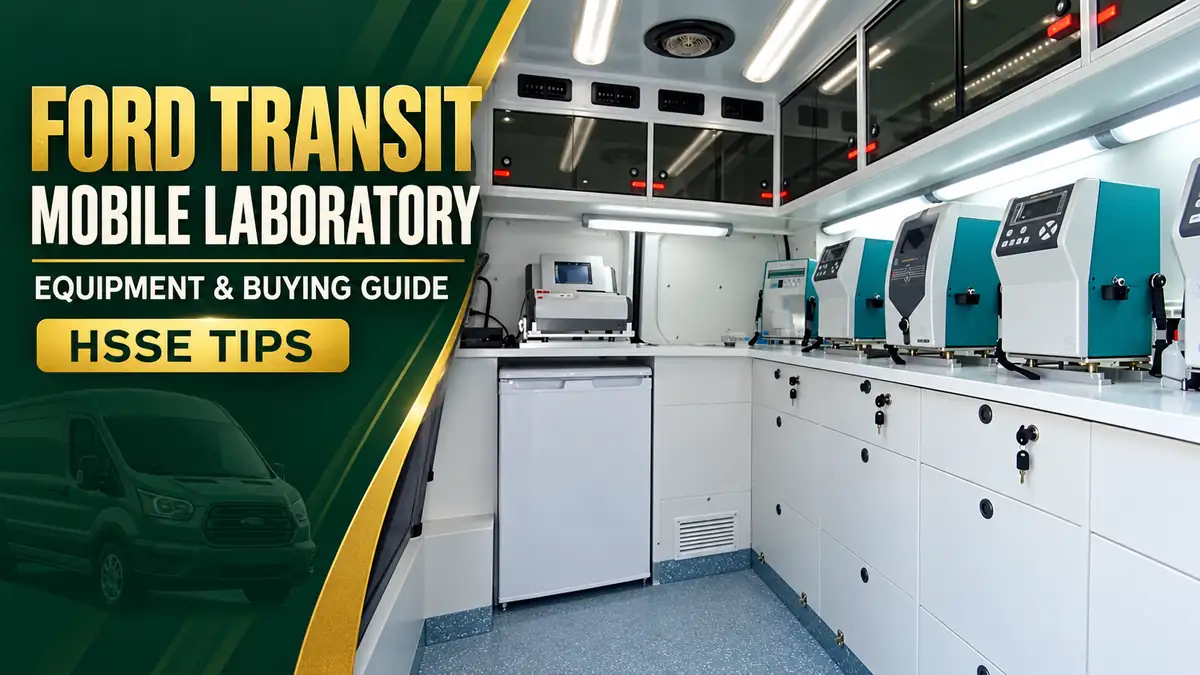
The advertised Ford Transit Mobile Laboratory offers a visible starting point. Its original interior photographs show white worktops and cabinets, restrained benchtop instruments, refrigeration and a sink within a compact van. This review examines that photographed conversion and the seller’s proposed specifications, while keeping clinical testing, containment and patient-transport capabilities separate from features the evidence actually establishes.
EXPLORE THE FORD TRANSIT MOBILE LABORATORY
Ford Transit Mobile Laboratory Overview
Autoline QQ35931 advertises a new Ford Transit Mobile Laboratory under its ambulance category. AmbulanceMed supplies the offer and describes configurable laboratory installations. The gallery contains seven images: a promotional exterior visual and six views of the laboratory interior and access areas.
The photographs support a van-based laboratory workspace. They do not establish a conventional stretcher ambulance or a combined clinical laboratory and emergency transport configuration. The seller also describes a three-room design with registration and technical areas; that wider concept should not be treated as a measured floor plan for this compact photographed van.

Understanding the Ford Transit Platform
Transit covers multiple markets, engines, wheelbases, roof heights and weight classes. The advertisement does not establish a Transit 350, 410, 470 or another precise derivative. The VIN, manufacturer build record and completed-vehicle documents are therefore essential to identify the base vehicle being quoted.
Ford’s conversion guidance directs modifiers to the appropriate Body and Equipment Mounting Manual. Its special-vehicle resources cover technical integration and related publications. Ask the converter to identify the guidance applicable to the actual chassis and explain added loads, mounting points and electrical changes. Specifications from a Transit Custom, a North American petrol Transit or another ambulance should not be substituted.
Engine, Transmission and Drivetrain
The seller records a 1,995 cm³ diesel engine, 185 HP / 136 kW and Euro 6. Its engine field uses the wording “2,0 Echo Blue.” Treat the advertised engine identity as requiring reconciliation with Ford records rather than assuming an engine code from that spelling.
Six gears are listed, but a unit-specific manual/automatic designation and drivetrain are not established. Request the gearbox identification and driven-axle configuration, along with torque and emissions documentation. No verified operating fuel consumption or range is adopted for the completed laboratory vehicle; weight, route and equipment operation would need a defined measurement basis.
Chassis, Dimensions and Gross Vehicle Weight
The advertisement lists overall dimensions of 6.704 × 2.474 × 2.781 m. Confirm the measurement scope, particularly mirrors and rooftop equipment, against the completed vehicle. Wheelbase, internal working height, door clearances and axle ratings are not established by the reviewed material.
Gross, net and load-capacity entries also need a finished-vehicle weight certificate. Cabinets, instruments, refrigeration, power equipment, water and staff contribute to operating weight. Weigh the intended configuration and check individual axle limits before treating a nominal load figure as remaining laboratory payload. Additional instruments should be assessed for both mass and their mounting location.
Mobile Laboratory Conversion and Exterior Design
The interior uses white cupboards and drawers with round latches, dark-fronted overhead storage, task lighting and a blue-grey floor. Side and rear access views reveal different parts of the installation. AmbulanceMed branding appears in the supplied images; final converter identity and approval scope should come from the handover records.
Ask for a vehicle-specific materials and installation schedule. The supplier’s broader descriptions mention particular coatings, rooms and equipment, but those descriptions span different laboratory designs. Confirm actual worktop chemical compatibility, floor finish, insulation and access for maintenance rather than transferring a general construction claim to every surface in this van.
Laboratory Interior and Workspace Layout
The photographs show an L-shaped working arrangement, with instruments along one counter and a compact refrigerator beneath another. Overhead cupboards provide storage above the benches. A sink is visible near the side entrance, while rear access exposes equipment and service areas behind the furniture.
The compact arrangement gives buyers a useful basis for planning instrument reach and circulation. Request a dimensioned drawing and demonstrate cabinet opening, access to connections and movement around seated staff. Define where samples arrive, where paperwork is handled and where clean supplies are kept. Separate reception, waiting, toilet and technical rooms are not verified in the pictured van.

Diagnostic Equipment and Laboratory Instruments
Several teal-and-white benchtop units are retained with black straps; other instruments and tubing appear along the worktops. Some units appear to carry C. Gerhardt branding, but readable model and serial labels are required before identifying their functions. This is a visual inference, not confirmation of a model-specific inventory.
That distinction matters: C. Gerhardt’s official range includes extraction equipment for food, feed and environmental analysis. Instrument appearance should therefore not be used to label these units as clinical blood analyzers. No specific PCR, molecular, microbiology, hematology or chemistry test menu has been verified for the offered installation.
The wider seller description mentions a microscope and centrifuge, but their models and inclusion are not established for this gallery. Ask for an equipment schedule separating fixed installations, included portable items, photographed demonstration equipment, priced options and buyer-supplied devices. Obtain manuals and service records before estimating workload or reagent requirements.

DISCOVER THE LABORATORY EQUIPMENT & FACILITIES
Specimen Collection, Handling and Storage
Worktops and cabinets can form part of a specimen workflow, but no dedicated blood-collection chair, barcode system or validated specimen transport package was verified. The service design should identify whether the vehicle collects samples, prepares them, performs selected tests or transfers them to another laboratory. Each role requires its own equipment and documentation.
An Arçelik-marked refrigerator is visible. Its presence does not establish a medical cold chain, an approved specimen temperature range or monitoring capability. Require the model, intended contents, temperature mapping, alarms and power-interruption arrangements applicable to the selected service. No freezer or validated specimen-storage capacity has been confirmed.
Electrical Power and Backup Systems
The seller’s general design text describes a petrol generator using the notation “5kwa,” while a separate manufacturer laboratory article mentions 2 kVA. These refer to broader configurations and do not establish the generator supplied with this Ford. No readable installed-generator nameplate or unit-specific electrical schedule was found.
Request the actual supply voltage, frequency, distribution diagram and load assessment. Instruments, refrigeration, lighting, water pumps and climate systems must be assessed together, including startup demands and shutdown needs. Confirm external connection arrangements, earthing, protective devices and the approved generator operating installation. Battery, inverter or UPS inclusion and backup duration remain unverified.
Water Supply, Sanitation and Waste Management
The side-access photograph shows a sink and tap within the worktop. Freshwater and wastewater capacities, fill points, drainage and supply quality are not specified for this installation. General descriptions of toilets and additional sinks do not prove that they are present in the pictured Transit.
Ask the designer to distinguish handwashing water, any instrument-specific water supply and different waste streams. Waste segregation and disposal arrangements must follow the proposed laboratory work. No verified sharps container, chemical-waste storage cabinet or onboard waste-treatment system was identified. Do not calculate deployment endurance or sample throughput from the presence of a sink alone.

Heating, Ventilation and Air Conditioning
Ceiling fittings, lighting and air outlets are visible, while the listing includes climate control. No measured ventilation rate, operating temperature range or instrument-specific environmental qualification is available. A comfort air-conditioning entry does not establish suitable conditions for every analytical method.
The laboratory manager should specify environmental limits from the actual instrument and reagent instructions. Confirm how the conversion controls temperature while parked, how heat is removed and how maintenance access is provided. No HEPA filtration, negative pressure or biological safety cabinet has been verified for this vehicle.
Laboratory Biosafety and Infection Prevention
WHO’s Laboratory Biosafety Manual uses a risk-based approach: the planned activity and its hazards should determine the controls. A mobile workspace is not assigned a biosafety level simply because it contains instruments, cabinets and a sink. No laboratory containment certification or accreditation was supplied for this Transit.
Before authorizing clinical work, qualified laboratory personnel should define specimen receipt, staff training, clean/soiled separation, equipment cleaning and incident arrangements. Confirm any primary containment required for the selected tasks. A chemical extraction system, a fume-control enclosure and a biological safety cabinet serve different purposes; none should be inferred from an unidentified instrument housing.
Transportation and Deployment Requirements
The pictured product is a self-propelled van, not a removable container on the evidence reviewed. The side threshold and rear service access should be measured against planned operating sites. Verify parking space, safe pedestrian approach, ground conditions, utility connections and access for replenishment and maintenance.
Black straps are visible on several instruments, but their presence does not establish tested retention or vibration performance. Ask for mounting specifications and instrument manufacturer transport instructions. Define what must be secured, drained or shut down before movement, and what checks or recalibration are required after arrival. No verified setup time or daily testing capacity is available.

Mobile Laboratory Applications
The photographed workspace is a candidate for an organization seeking configurable field laboratory infrastructure. A healthcare buyer could evaluate it for sample collection, selected screening or authorized testing after defining the required equipment and operating conditions. The current evidence does not establish those clinical services as ready-to-run capabilities.
Hospitals, rural programmes, occupational health providers and humanitarian teams should specify the intended workload, staffing, supplies and referral arrangements before ordering. Analytical or environmental work may require a different instrument package from clinical diagnostics. For a larger configuration, see our Mitsubishi mobile laboratory review; its equipment and dimensions do not apply to this Ford.
Mobile Laboratory vs Conventional Ambulance
A laboratory vehicle provides a workspace for samples and instruments; a patient-transport ambulance requires its own accommodation, restraints and clinical equipment. Marketplace categorization does not establish both functions in one vehicle. No stretcher, compatible floor-lock system or approved patient-transport arrangement was verified here.
Our Sprinter infection-type ambulance guide addresses a separate transport configuration. Likewise, the Sprinter dental clinic review concerns a different treatment workspace. Compare each finished conversion against the service actually needed.
Safety, Hygiene and Regulatory Considerations
Qualified laboratory and fleet personnel should jointly assess equipment retention, vehicle weights, electrical protection, fire equipment, exit access and chemical or biological hazards associated with the proposed work. A fire extinguisher is visible near the side doorway, but its inspection status and suitability still require checking.
Specify calibration, instrument maintenance, consumable availability and staff competence alongside vehicle servicing. Destination import, emissions and vehicle-registration requirements are separate from permission to operate a clinical laboratory. No universal registration eligibility, clinical accreditation or advanced pathogen-testing capability is established by the advertisement.
Technical Specifications
These tables distinguish seller-entered fields from visible features and information awaiting documentation.
| Item | Evidence and scope |
|---|---|
| Advertised model | Ford Transit Mobile Laboratory; exact derivative and VIN unverified |
| Powertrain fields | Diesel; 1,995 cm³; 185 HP / 136 kW; Euro 6; six gears — advertiser entries |
| Overall dimensions | 6.704 × 2.474 × 2.781 m — listed; measurement scope and completed dimensions to confirm |
| Weight fields | 3,500 kg gross, 2,000 kg net and 1,500 kg load — listed; operating payload not established |
| Chassis details | Wheelbase, driven axles, gearbox type and axle limits require manufacturer records |
| Item | Evidence and scope |
|---|---|
| Conversion identity | AmbulanceMed branding in original images; final converter documents required |
| Visible layout | White worktops, drawers, overhead cabinets, sink and under-counter refrigeration |
| Access | Side doorway and rear service access photographed; clearances/accessibility unverified |
| Room configuration | No verified separate registration, waiting, toilet or technical rooms in pictured van |
| Item | Evidence and scope |
|---|---|
| Instruments | Strapped benchtop units visible; exact models, functions and inclusion unconfirmed |
| Refrigeration | Arçelik-marked refrigerator visible; specimen temperature range and validation unverified |
| Power / water | Actual generator rating, supply schedule and tank capacities not established |
| Containment | No verified biological safety cabinet, HEPA system, negative pressure or biosafety classification |
VIEW CURRENT PRICE & AVAILABILITY
Current Seller Offer — Verified 26 October 2026
The date records this review’s source check. No physical inspection, diagnostic performance test or completed-vehicle certification is implied.
- Product: Ford Transit Mobile Laboratory / Ambulance; Autoline QQ35931
- Product Location: Ankara, Türkiye — listing location field; exact physical dispatch site not independently confirmed
- Manufacturer / Seller: Ford / AMBULANCEMED LTD.ŞTİ
- Asking Price: €70,000; tax, instrument package and freight basis require confirmation
- Production / Condition: 2026 / new — advertiser entries
- Mileage / First Registration: Not established
- Exact Model / Engine / Transmission: Transit laboratory designation and seller fields summarized above; VIN-linked identification required
- Gross Weight: 3,500 kg listed; finished operating weight and axle loads unverified
- Laboratory Conversion: AmbulanceMed-described installation; model-specific drawing and inventory required
- Facilities / Equipment: Worktops, cabinets, sink, refrigeration and instruments photographed; contracted inclusions unconfirmed
- Specimen Storage / Utilities: No validated cold-chain specification, power schedule or containment performance verified
- Availability: Listing accessible; allocated vehicle and build lead time unconfirmed
- Delivery / Export: No unit-specific shipping quotation, destinations or Incoterms verified
The supplier’s general stock information mentions dispatch to Turkish ports and equipment air freight. It is not a vehicle-specific delivery commitment for this laboratory. Obtain written collection, shipping, insurance and export-document arrangements for the quoted configuration.
Delivery destinations, shipping arrangements, and applicable transport terms were not specified in the information reviewed. Prospective buyers should confirm these details directly with the seller.
What Buyers Should Confirm Before Purchasing
Request current exterior photographs, VIN/build records and a dimensioned conversion drawing. Reconcile the finished vehicle’s mass, axle loads and approved travel seating. The instrument schedule should state model, serial number, purpose, condition, service history, inclusion and warranty for each item.
Agree acceptance criteria for equipment operation, power interruption, refrigeration, water and waste systems, ventilation and transport retention. Define commissioning after shipment, training, consumables and local support. A clinical purchaser should approve the test menu and quality-management requirements before selecting instruments, rather than expecting an unspecified laboratory package to deliver every diagnostic service.
Frequently Asked Questions
Is this a mobile laboratory or an ambulance?
The gallery supports a laboratory van. A verified stretcher-based patient-transport configuration is not established.
Which Ford Transit variant is it?
The listing does not establish a precise 350, 410, 470 or other derivative. Ask for the VIN-linked manufacturer build record.
What instruments are included?
Several benchtop instruments are photographed, but an itemized, model-specific inclusion list was not verified. Obtain one with the quotation.
Can it perform PCR or blood analysis?
No specific clinical test menu is established. Suitable instruments, operating conditions, qualified staff and required authorization must be agreed.
Does the refrigerator provide a medical cold chain?
Not established. The photographed refrigerator needs model identification, temperature qualification, monitoring and power-continuity assessment for its intended contents.
Is a generator included?
The wider descriptions mention different generator configurations. The rating and inclusion for this exact Ford require confirmation.
Does it have a biological safety cabinet?
No identified biological safety cabinet, HEPA filtration or negative-pressure system was verified in the reviewed evidence.
What is the asking price and product location?
The checked listing shows €70,000 and Ankara, Türkiye. Confirm the configuration price, tax treatment and physical dispatch site.
Are original photos and a vehicle video available?
Four distinct original interior/access photographs and the advertiser exterior visual are included here. No unit-specific video was verified.
Final Verdict
The Ford Transit offer provides a clearly photographed laboratory workspace: worktops, storage, restrained instruments, refrigeration and a sink in a van-based layout. These features make it a useful procurement candidate for an organization prepared to specify its analytical or healthcare mission precisely.
Its value should be assessed against the actual included instruments, chassis records and commissioning evidence. Request that complete specification through the seller’s offer, then evaluate the finished conversion against the work it must perform. This review does not treat the generic laboratory or ambulance labels as proof of clinical capability.
Join the Conversation
Which matters most to your mobile laboratory programme: instrument support, utility independence, specimen storage or deployment access? Share your procurement experience in the discussion below. Every Task. Every Person. Home Safe.
Sources and Editorial Method
Autoline QQ35931 and its seven-image gallery were checked on 26 October 2026. Additional context: AmbulanceMed laboratory concept information, supplier stock-service information, Ford Pro special-vehicle resources, C. Gerhardt analytical equipment range and WHO Laboratory Biosafety Manual, fourth edition. Apparent instrument branding is explicitly treated as visual inference. No VIN-linked build sheet, instrument inventory, clinical accreditation or unit video was verified. Commercial enquiries use the tracked offer buttons.
Your experience matters
Share your thoughts on this page
Have a question, a useful experience or a suggestion? Add your input below.
Comments are public. Keep them respectful and relevant. Do not share contact details, confidential information or emergency reports.
Comments on this page
Loading comments…