HSSE TIPS · Product Reviews · Truck-Mounted Healthcare
DAF CF 75.250 Mobile Medical Clinic Review: Equipment, Specifications & Buying Guide
Affiliate Disclosure: Worksite Safety Hub may earn a commission if you make a qualifying purchase through links in this article. This does not change the price you pay.
Introduction — Bringing Healthcare Services Beyond Permanent Facilities
A medical outreach team needs somewhere to work before it can deliver care. Privacy, handwashing, reliable power and a serviceable vehicle all matter when the next appointment is far from a hospital building.
The DAF CF 75.250 Mobile Medical Clinic offers a substantial starting point: an existing rigid truck conversion with partitioned accommodation, blue fitted cabinetry, a sink, an electrical control panel and accessible utility compartments. Its photographs reveal the infrastructure that a fleet buyer can inspect and specify.
This is a used medical box truck whose clinical fit-out and systems need careful assessment. The appeal lies in evaluating an established body and its services against a defined healthcare programme. Here is what the advertised configuration shows, what remains undocumented, and how to turn an enquiry into a meaningful purchase specification.
EXPLORE THE DAF CF 75.250 MOBILE MEDICAL CLINIC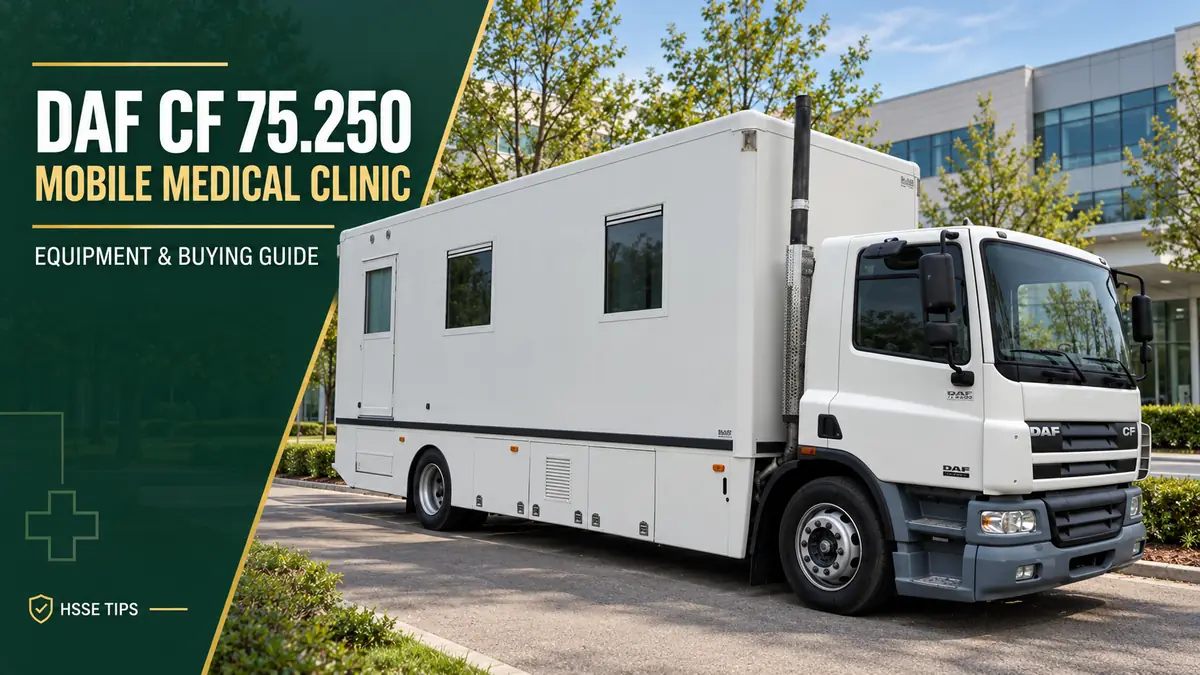
DAF CF 75.250 Mobile Medical Clinic Overview
The seller identifies the truck as “CF 75-250 / Mobile medical clinic,” with stock reference MO2968. It is a truck-mounted enclosed facility, rather than a van-based patient transport ambulance or a standalone hospital container.
The useful distinction is between the road vehicle, the fitted medical body and the clinical equipment an operator needs. The photographs establish an interior with separate spaces and service installations. They do not establish a currently licensed clinic, an included diagnostic inventory or a certified patient-transport arrangement.

Understanding the DAF CF 75.250 Platform
The photographed cab and rigid-body arrangement are consistent with the CF75 identification in the offer. Matching the chassis plate and VIN to registration and service records remains the appropriate way to establish the exact build.
DAF’s official Bodybuilder Information service includes an archive for out-of-production chassis drawings, searchable by release date and configuration. That is more relevant to this enquiry than assigning specifications from a modern CF brochure. Obtain the drawing that matches the actual chassis before evaluating body supports, wheelbase, axle loading or alterations.
Engine, Transmission and Drivetrain
The seller lists a diesel engine rated at 184 kW, displayed as 250 HP, a manual transmission and Euro 3 emissions classification. The stated axle configuration is 4×2 with two axles. These are advertised entries, not results from an independent mechanical inspection.
The engine code, displacement, torque, gear count and transmission model are not provided. They should be established from manufacturer records and identification plates rather than inferred from the 75.250 badge. No fuel-consumption, range or acceleration claim is supported.
Chassis, Dimensions and Gross Vehicle Weight
The advertised gross vehicle weight is 18,000 kg. It is a total permitted-weight entry, not the amount available for medical equipment. The completed vehicle’s actual weight and individual axle limits are needed before calculating remaining capacity.
Overall length, width, height, wheelbase and interior standing height are not specified. Perspective in an exterior photograph cannot supply dependable dimensions. Request a measured general-arrangement drawing, including travel height, door openings and any deployed access equipment.
Medical Box Body and Exterior Design
The exterior shows a tall rectangular body with side windows, an access door and a row of lower service lockers. These lockers are a particularly useful feature for assessment: several photographs expose equipment that would otherwise remain hidden behind the body skirts.
The bodybuilder is not confirmed in the sale text. A dealer watermark is not a conversion-manufacturer identification plate. Construction materials, insulation specification and mounting method require documentation, and no demounting system has been established.
Inspect the body’s underside, mounting points, roof joints, window seals and locker closures. Inside, inspect around windows and service penetrations for signs of leakage. Confirm that repairs and any proposed equipment additions preserve the intended structural and electrical arrangements.
Mobile Clinic Interior and Patient Examination Facilities
The interior photographs show a passage connecting partitioned spaces, doors, windows, work surfaces and blue cabinets. This is a tangible layout to evaluate for consultation privacy and staff circulation. The room functions and permitted occupancy are not labelled in a supplied floor plan.
No examination couch or complete reception workstation is confirmed in the reviewed photographs. Buyers should define where consultation, examination, record keeping and supplies would sit, then check the physical clearances with the actual equipment proposed.
Walk the patient route from ground level to the intended room. Check door operation, turning space, privacy and exit arrangements. A clinical team should assess the layout with the fleet engineer so that a convenient equipment position does not obstruct access or maintenance.

Medical Equipment and Storage
Fitted cabinets and counters are visible infrastructure. Their catches, hinges and mounting points need inspection, including how contents will be restrained while the truck moves. Agree which fitted items remain with the sale.
For procurement, separate five categories: installed features photographed; equipment expressly included in the contract; loose items only shown; quoted options; and equipment the buyer must source. The advertisement does not supply an itemized medical-device schedule.
No patient monitor, diagnostic analyzer, medical refrigerator, oxygen system, suction device or emergency equipment package is confirmed as included. That leaves room for a mission-specific inventory, but its purchase, installation, electrical load and servicing belong in the project budget. Cabinets alone cannot demonstrate an authorized clinical service.
DISCOVER THE MOBILE CLINIC FACILITIESElectrical Power and Backup Systems
A substantial control panel is photographed, with analog instruments, switches and indicators. A separate locker contains an engine-coupled alternator assembly consistent with a generating set. These observations justify a detailed electrical inspection; they do not establish the generator’s output or working condition.
Obtain readable data plates, circuit drawings and a supply diagram identifying external input, distribution, protection and changeover. Voltage, frequency, continuous power, inverter provision and battery autonomy remain undocumented.
The acceptance demonstration should use an agreed simultaneous load, including climate control and proposed medical devices. Ask for electrical test records and proof of protective-device operation. Confirm ventilation, exhaust routing and service access for any generating plant before planning occupied operation.


Water Supply, Sanitation and Waste Management
The gallery shows a stainless sink and tap, a separate toilet space, and underbody tanks with pipework and valves. These are useful physical observations, although fresh-water versus waste-water allocation and capacities are not identified.
Have the plumbing traced and labelled. Establish fill, drain, treatment, pump and maintenance arrangements, then agree a cleaning and water-quality plan appropriate to the intended clinical service. Do not use the presence of metal tanks as evidence of potable-water suitability.
Clinical waste and sharps arrangements require a defined operating plan and suitable equipment. Confirm storage locations, collection services and cleaning responsibility at each destination. A toilet does not establish a complete infection-prevention or waste-treatment system.


Heating, Ventilation and Air Conditioning
A wall-mounted split air-conditioning unit appears in the interior gallery, while another view shows a radiator. These are distinct body features from the cabin air-conditioning entry in the seller’s vehicle specification.
Assess heating and cooling under the intended ambient conditions and occupancy. Request equipment identification, maintenance history and ventilation information, including how fresh air is introduced and stale air removed. An air conditioner does not by itself establish adequate ventilation.
No HEPA filtration, pressure-controlled isolation, humidity-management specification or certified infection-control installation was verified. If the planned service needs special environmental conditions, include their design and validation in the conversion scope.
Transportation and Deployment Requirements
Plan site access around the truck’s measured dimensions and loaded weights. Survey entrance width, turning space, overhead obstructions, ground condition and parking orientation. Provide safe pedestrian access and an emergency exit route separate from vehicle manoeuvring.
The photos do not establish a supplied wheelchair lift, ramp, access stair set, hydraulic stabilizers or levelling system. Agree these provisions explicitly where the service requires them. An elevated side door requires a practical access solution before patients arrive.
Healthcare and Medical Outreach Applications
The existing rooms and utility infrastructure make this a candidate for assessment by outreach operators seeking an enclosed, adaptable working space. Rural programmes, hospital outreach teams and industrial healthcare providers can compare its layout with a specific service plan.
Consultation or screening use would still require suitable furniture, devices, staff, procedures and local authorization. The reviewed evidence does not establish surgery, intensive care, laboratory testing or emergency patient transport capability.
WHO’s Mobile Clinics Toolkit supports feasibility assessment, service planning and ongoing quality monitoring. Applied to this truck, that means starting with community need, staffing, referrals and a sustainable resupply plan, then commissioning the facility to support those decisions.
Truck-Mounted Mobile Clinic vs Van-Based Mobile Clinic
This DAF has a visibly partitioned box body and external service compartments. Those features can be compared with a van-based candidate’s actual floor plan and utility installation. There are no verified dimensions here to support a numerical room-space advantage.
Compare both candidates’ measured turning space, parking footprint, utility connections and patient access. For this DAF, the advertised 18,000 kg gross rating also makes completed weight, axle loading and local truck maintenance central to the assessment.
The choice is operational: use the facility that meets the clinical brief, route and support arrangements. A truck body’s appearance does not automatically establish higher patient throughput or a more capable medical service.
Safety, Hygiene and Regulatory Considerations
Set acceptance criteria for the chassis, body and clinical installation separately. The road inspection should cover structural condition, tyres, brakes, steering, lights and vehicle records. Review age-related maintenance alongside mileage; the advertised odometer entry does not describe time spent parked or running auxiliary plant.
Inspect body attachments, equipment securing, electrical protection, fire precautions and patient access. Clinical operation needs qualified staff, cleaning procedures, sharps management, waste arrangements and maintained equipment. Confirm local vehicle and healthcare requirements with the responsible professionals.
Request reports identifying the actual truck and installed systems. Neither a marketplace category nor an inspection of the engine proves medical-equipment compliance or authorization to provide healthcare.
Technical Specifications
These tables distinguish seller-stated entries from visible installations. No independent mechanical or clinical commissioning was performed.
| Item | Evidence and scope |
|---|---|
| Advertised model | DAF CF 75-250 / Mobile medical clinic; stock MO2968 |
| Powertrain | Diesel; 184 kW / displayed 250 HP; manual gearbox; Euro 3 — seller-stated |
| Axles and weight | Two axles, 4×2; 18,000 kg gross weight — seller-stated |
| Other advertised equipment | ABS, power steering, cruise control, central locking, air conditioning and auxiliary lamps |
| Unverified identification | Engine code, displacement, torque, gearbox model, wheelbase, dimensions, payload and first registration |
| Item | Evidence and scope |
|---|---|
| Exterior photographs | Enclosed body, side windows, side access door and lower service lockers |
| Interior photographs | Passage, partition doors, blue cabinets and work surfaces |
| Sanitary features photographed | Stainless sink and tap; separate toilet space |
| Construction scope | Bodybuilder, materials, insulation and mounting specification not confirmed |
| Access and capacity | No supplied ramp/lift or levelling system established; room dimensions and patient capacity unverified |
| Item | Evidence and scope |
|---|---|
| Electrical controls photographed | Panel with analog instruments, switches and indicators; ratings and test status unverified |
| Generating equipment photographed | Engine-coupled alternator assembly; identity, output and sale inclusion require confirmation |
| Plumbing photographed | Metal tanks, valves and pipework; functions and capacities unidentified |
| Body HVAC photographed | Split air-conditioning unit and radiator; performance and service condition unverified |
| Clinical equipment schedule | No itemized included medical-device inventory confirmed |
Current Seller Offer — Verified 25 October 2026
Product: DAF CF 75.250 Mobile Medical Clinic Box Truck. Seller: Laslo Truck. Exact advertisement KD49426; seller reference MO2968.
Product Location: Budapest, Hungary, according to the exact advertisement’s vehicle-location field. The current physical dispatch site requires confirmation: the same stock reference also appears in a Romanian listing. No seller office address is substituted for an inspected vehicle location.
Asking price: €31,400 net, excluding VAT. The exact marketplace page also displays €39,878 gross; confirm invoice taxes and export treatment for the transaction.
Production year: 2002. Condition: Used. Mileage: 103,000 km, seller-stated. First registration is not specified.
Engine and transmission: Diesel, 184 kW / displayed 250 HP, Euro 3, manual. Chassis: Two axles, 4×2, advertised gross weight 18,000 kg. Payload and engine displacement are not verified.
Medical body and equipment: Photographed partitioned interior, cabinets, sink, control panel and utility installations. Bodybuilder, included medical-device inventory and functioning power-system specification require written confirmation.
Availability: Advertised when checked; current stock possession, readiness and dispatch date were not independently verified.
Delivery and export: Laslo Truck’s general services page advertises delivery coordination, export, customs clearance, temporary plates and shipping assistance. These are supplier-level services, not a confirmed delivery contract for MO2968.
Delivery destinations, shipping arrangements, and applicable transport terms were not specified in the information reviewed. Prospective buyers should confirm these details directly with the seller.
Obtain a vehicle-specific quotation covering collection site, freight charges, insurance, Incoterms, export documents, lead time and any clinical commissioning. No included installation service or worldwide-delivery guarantee is established for this truck.
What Buyers Should Confirm Before Purchasing
Ask for a written condition report and a live walkthrough tied to stock reference MO2968. Have the seller show the VIN, odometer, body plate, rooms and open utility compartments in one current recording.
- Chassis identity: Registration history, engine and gearbox identifiers, service records and road inspection.
- Facility layout: Measured drawing, occupancy, clinical furniture positions, access equipment and exit route.
- Systems condition: Generator identification, electrical test results, HVAC demonstration and traced water circuits.
- Sale inventory: Fitted equipment and loose items listed individually, including what must be repaired or supplied separately.
- Project acceptance: Refurbishment scope, destination requirements, training, delivery responsibilities and commissioning criteria.
No video of this exact truck was verified in the advertiser material reviewed. A general seller channel is not evidence of a unit-specific demonstration.
Frequently Asked Questions
Is this a complete operational medical clinic?
The photographs show an existing medical-style conversion. Clinical readiness, device inventory and authorization have not been established.
What engine and gearbox are advertised?
The seller lists diesel power of 184 kW, displayed as 250 HP, and a manual gearbox. Exact engine and transmission identifiers are unconfirmed.
Is this DAF a 4×4?
No. The advertised configuration is two-axle 4×2; no four-wheel-drive capability is claimed.
Does 18,000 kg mean medical-equipment payload?
No. It is the advertised gross vehicle weight. Completed weight and axle limits are needed to establish remaining capacity.
Is a generator included?
A generator-style engine/alternator assembly is photographed. Its inclusion, identity, rating and working condition need contractual confirmation.
Are water tanks and sanitation provided?
The gallery shows a sink, toilet space and tanks with plumbing. Functions, capacities, condition and water-quality suitability remain unverified.
Does it have wheelchair access?
No supplied wheelchair lift or ramp was verified. Assess the side-door access and agree the necessary equipment before use.
Where is the vehicle physically located?
The exact advertisement names Budapest, Hungary. Reconfirm the dispatch site because another listing uses the same stock reference with a different location.
Can the seller arrange international shipping?
The supplier advertises general export and delivery assistance. This truck still needs a destination-specific quotation and agreed transport terms.
Final Verdict
The DAF CF 75.250 Mobile Medical Clinic is distinctive through its existing partitioned body and unusually useful utility-compartment photographs. Buyers can examine the layout, cabinetry, sink, control installation and generating equipment before defining a refurbishment and equipment plan.
Its suitability rests on a documented chassis assessment and a clinical brief matched to the completed facility. Confirm the dispatch location, inventory and system performance, then compare the total commissioned project against alternative healthcare vehicles.
CONTACT THE SELLERJoin the Conversation
Would your outreach programme prioritize separate consultation rooms, accessible entry, dependable utilities or local maintenance support? Share your mobile-clinic procurement experience or question in the comments.
Research and Editorial Basis
The supplied affiliate redirect was checked on 25 October 2026 and led to Autoline KD49426, reference MO2968. The exact listing, supplier’s matching product page and original gallery were reviewed. Original images retain their AUTO-SCHÄFER watermark and are attributed; no blanket reuse licence is asserted. General engineering sources: DAF Bodybuilder Information and its out-of-production chassis drawing archive. Operational context: WHO Health Cluster Mobile Clinics Toolkit. This is a desk-based review; no road test, onsite inspection, equipment test or clinical commissioning was performed.
HSSE TIPS — Worksite Safety Hub
Every Task. Every Person. Home Safe.
Your experience matters
Share your thoughts on this page
Have a question, a useful experience or a suggestion? Add your input below.
Comments are public. Keep them respectful and relevant. Do not share contact details, confidential information or emergency reports.
Comments on this page
Loading comments…