HSSE TIPS · Product Reviews · Maternal Healthcare Infrastructure
Isuzu 20FT Mobile Maternity Clinic Review: Equipment, Specifications & Buying Guide
Affiliate Disclosure: Worksite Safety Hub may earn a commission if you make a qualifying purchase through links in this article. This does not change the price you pay.
Introduction — Bringing Maternal Healthcare Closer to Communities
Antenatal outreach needs a place where a woman can speak privately, undergo an appropriate examination and leave with a clear plan for follow-up. Bringing that environment closer to a community is a facility-planning challenge as much as a transport task.
The advertised Isuzu 20FT Mobile Maternity Clinic combines a truck-carried medical body with a visibly furnished examination space. Its strongest features are concrete: an examination chair, separate examination surface, privacy curtain, fitted cabinets, handwashing sink and rear entrance.
For health ministries, hospital outreach teams and humanitarian programmes, the useful question is how that configuration fits a defined maternal-health service. This review follows the exact advertisement, its photographs and its linked presentation, distinguishing the proposed clinical package from the documents needed to commission a particular unit.
EXPLORE THE ISUZU MOBILE MATERNITY CLINIC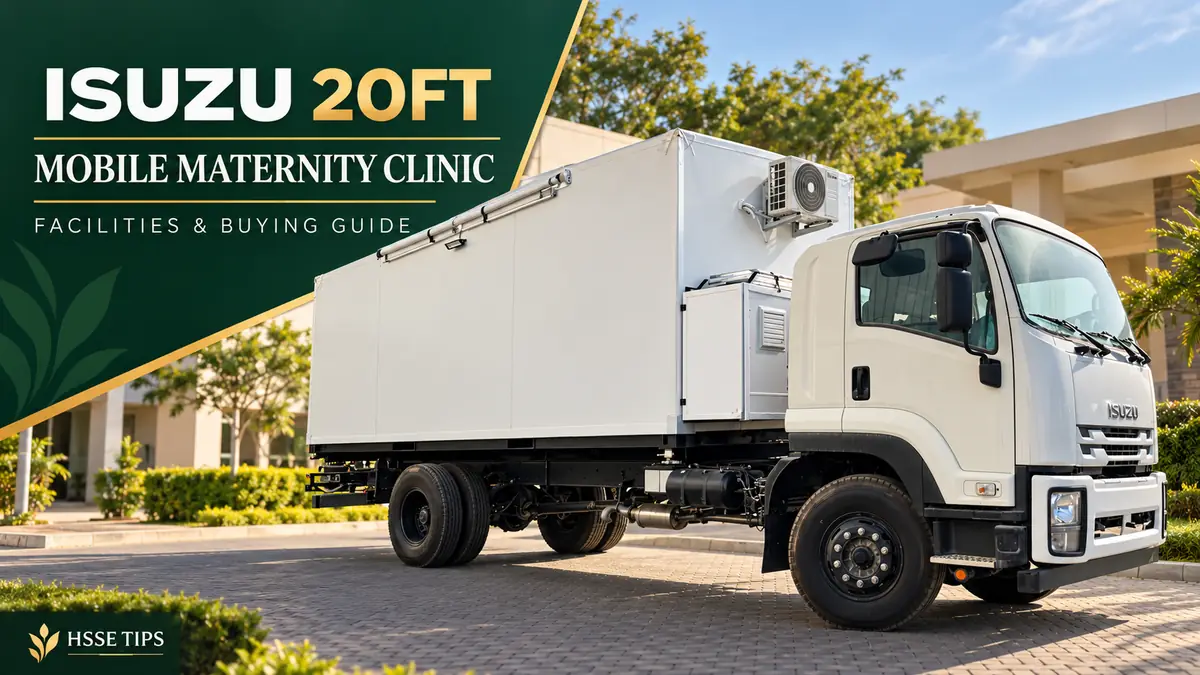
Isuzu 20FT Mobile Maternity Clinic Overview
Autoline reference NJ35912 describes an Isuzu truck and 20-foot maternity container, supplied by AmbulanceMed. The seller names the NPR platform in the description, while the gallery shows the truck, clinical interior, rear closure, transport preparation and cabin.
Its primary identity is a truck-mounted maternal-health facility. The marketplace places it in an ambulance category, but that classification does not establish approved patient carriage. Nor does the title establish that the module is a certified shipping container or a fully commissioned obstetric service.

Understanding the Isuzu Commercial Truck Platform
The NPR designation is supplied by the advertiser and repeated on AmbulanceMed’s corresponding product page. A full chassis variant, VIN and build sheet are not supplied, so the complete vehicle specification remains to be matched to the offered unit.
Official Isuzu Body Builder Guides separate body installation, mechanical specifications and weight-distribution information. That is the right engineering approach for a medical module: confirm the chassis first, then assess its mounting, installed services and operating loads. Regional NPR brochures are useful context, but their ratings cannot simply be transferred to this advertisement.
Engine, Transmission and Drivetrain
The exact advertisement does not state engine code, displacement, rated power, torque, fuel type or gearbox specification. It identifies two axles without identifying the driven-wheel arrangement.
AmbulanceMed’s related maternity-clinic product page describes a four-cylinder 4HK1 diesel, manual transmission and Euro VI configuration. This is a manufacturer-published configuration reference, rather than VIN-linked confirmation of the truck offered through NJ35912. Obtain the actual build sheet before using those entries for procurement or import decisions.

Chassis, Dimensions and Gross Vehicle Weight
The seller enters dimensions of 6 × 2.4 × 2.4 metres under an overall-dimensions heading. The advertisement also describes a truck carrying a 20-foot module. It does not resolve whether those measurements refer to the body, its usable space or the complete vehicle.
Do not use the entry as a verified truck travel envelope. Request separate drawings for the cab-and-body vehicle, external module and usable interior, including door openings, floor height and deployed access equipment.
Gross vehicle weight, axle ratings, wheelbase and remaining payload are not provided. The operating assessment must include the module, fuel, water, generator, equipment, staff and supplies. Ask for completed-vehicle weights and an agreed loading schedule before selecting additional equipment.
20FT Medical Container and Exterior Design
The rectangular module has a rear shutter closure, while an exterior view shows a forward-mounted air-conditioning condenser and a separate utility enclosure. The seller also describes a side canopy. These details provide a useful basis for discussing deployment and service access.
“20FT” is the advertised nominal body designation. ISO compatibility, transport certification, rated lifting points and a removable-body system have not been established. A truck-carried module should not be booked for container handling on that designation alone.
The attached presentation describes an epoxy-coated floor and a preparation worktop. Treat material statements as manufacturer descriptions to be checked against the supplied build. Ask for insulation, interior-finish, mounting and cleaning-compatibility specifications tied to the final configuration.

Maternity Clinic Interior and Antenatal Examination Facilities
The interior photographs show a teal examination chair, a separate upholstered examination surface, a step, cabinets, worktops and a sink. A curtain provides visible screening around part of the examination space. These are the offer’s strongest patient-facing features.
The layout gives buyers a practical patient-route exercise: arrival, private conversation, changing where needed, examination and follow-up discussion. Check that staff can reach the patient and supplies without compromising privacy or blocking the exit.
The description mentions an entrance desk and storage. It does not supply measured room clearances, a confirmed waiting capacity or patient-throughput figures. A drawing and an actual walkthrough are needed to define how those functions share the available space.

Maternal Healthcare Equipment and Storage
The seller describes a gynecological examination chair, examination bed and step, bassinet, examination lamp and other fittings. The photographs support the presence of examination furniture and storage, but there is no model-by-model contractual inventory.
Separate five categories in the quotation: fixed installations; equipment expressly included; loose items only photographed; options; and items the healthcare operator must supply. Apply this to consumables as carefully as to furniture: quantities, expiry dates and replenishment arrangements matter.
The presentation discusses monitoring, suction, newborn-care and emergency equipment in a broad list. It also describes ultrasound integration as an option. Do not treat either passage as proof of a particular fetal monitor, ultrasound system, oxygen installation, neonatal-care device or certified device package included in the sale.

Electrical Power and Backup Systems
The advertisement mentions a generator, while the linked presentation describes external 220 V supply and lists an inverter. Elsewhere in the same presentation, a 3 kW petrol generator is presented as an option. The supplied power package therefore needs a written, unified specification.
Confirm voltage, frequency, continuous output, sockets, protective devices and the changeover arrangement. An inverter rating, a socket-circuit limit and a generator rating describe different parts of a system; none should be substituted for another.
Commissioning should demonstrate the intended simultaneous load, including cooling and selected medical devices. Define which functions remain available during a supply failure and for how long. Obtain circuit drawings, test records and instructions covering earthing, exhaust placement and safe maintenance access.
Water Supply, Sanitation and Waste Management
A sink and tap are clearly photographed. The seller additionally describes hot and cold water, treatment, wastewater storage and a pressure-booster arrangement. Tank capacities, plumbing diagrams and treatment performance are not supplied.
Confirm any toilet or shower separately; the reviewed offer does not establish their exact installation. Include cleaning access, waste segregation, sharps provision and approved collection routes in the operating brief. No onsite clinical-waste treatment system is verified.
Heating, Ventilation and Air Conditioning
The gallery shows a split air-conditioning unit inside and a condenser outside. The presentation also describes climate-control provisions. Equipment identity, heating capability, ventilation rate and performance under a defined climate remain to be documented.
Specify the conditions expected while staff and patients occupy the unit. Ask how outside air is introduced, how air moves through the room and how the system is maintained. Cooling alone does not establish adequate ventilation.
No HEPA filtration, negative-pressure isolation, medical-grade air certification or verified humidity-control performance is claimed. Temperature-sensitive supplies need appropriate storage and monitoring independent of room comfort.
Transportation and Deployment Requirements
Rear-entry photographs show the shutter and inner doorway; another gallery view shows a stairway with handrails. These observations support an access assessment, but do not establish a supplied wheelchair ramp or lift.
For a maternal-health programme, check the route from arrival to examination with the clinical team. Agree support for people who cannot comfortably use stairs, safe landings, clear handrails and a usable exit. Privacy should extend to the entrance and any external waiting area.
The supplier describes a canopy, but its footprint, supports and operating limits need confirmation. Plan parking, pedestrian space, weather protection, utility connections and emergency access together. During transport, secure furniture, consumables and loose devices using the approved arrangements.

Maternal Healthcare and Medical Outreach Applications
The furnished examination environment makes this a relevant candidate for antenatal consultation and maternal-health outreach enquiries. Government programmes, maternity hospitals and humanitarian operators can assess the facility against a defined service package, staffing model and referral pathway.
Potential programme components include private consultations, examinations supported by the specified equipment, health education and referral coordination. Screening or imaging services depend on the devices, trained personnel and authorization actually provided.
The seller promotes childbirth use, but the reviewed material does not establish the completed unit’s readiness or authorization for that service. A clinical commissioning team must assess the environment, emergency resources, staffing and escalation arrangements. Emergency obstetric surgery, neonatal intensive care and emergency patient transport are not verified capabilities.
WHO’s maternal and newborn quality-of-care framework addresses both the provision and experience of care. For this procurement, that means assessing technical resources alongside privacy, communication, competent staff and access to onward care.
Mobile Maternity Clinic vs Conventional Ambulance
This unit is described and furnished as a clinical workspace that travels to a service site. An ambulance intended to carry a patient needs a transport-approved installation, suitable seating and restraints, secured equipment and the relevant vehicle and service approvals.
The examination chair and bed do not demonstrate those transport provisions. The presentation’s generic emergency-equipment language does not establish a fitted stretcher-locking system, emergency warning installation or certified transport layout. Organisations needing both outreach and transfers should define each function independently.
Safety, Hygiene and Regulatory Considerations
Assess the chassis, medical body and clinical operation as connected responsibilities. Verify vehicle identity, weights, mounting integrity, equipment securing, electrical protection, fire precautions and safe entry. Require records identifying the particular installation inspected.
The healthcare operator should establish qualified maternal-health staffing, patient privacy, cleaning, hand hygiene, waste management and device maintenance. WHO’s facility standards emphasize reliable basic resources; that principle should become measurable acceptance criteria for water, energy and essential equipment here.
Agree responsibility for destination-country vehicle and healthcare requirements with the appropriate professionals. Organisational markings, a new-condition advertisement or a medical-style interior do not independently establish certification, clinical authorization or endorsement.
Technical Specifications
The tables distinguish the exact listing, related manufacturer descriptions and photographed features. They are an evidence summary, not a VIN-linked acceptance certificate.
| Item | Evidence and scope |
|---|---|
| Advertised platform | Isuzu NPR, named in seller description; exact variant and VIN not supplied |
| Axle count | Two — advertiser entry; driven-wheel configuration not stated |
| Powertrain evidence | Related AmbulanceMed page describes 4HK1 four-cylinder diesel, manual and Euro VI. Not confirmed for the individual offered chassis. |
| Identification still required | Engine displacement, output, torque, gearbox code, fuel specification, first registration and mileage |
| Weight and chassis data | Gross weight, axle limits, payload, wheelbase and suspension not verified |
| Item | Evidence and scope |
|---|---|
| Module designation | 20ft container — advertiser description; ISO compatibility and removability unverified |
| Dimension entry | 6 × 2.4 × 2.4 m listed as overall; measurement scope unresolved |
| Photographed clinical facilities | Examination chair, separate examination surface, cabinets, sink, step and privacy curtain |
| Photographed entrance | Rear shutter and inner doorway; stairway appears elsewhere in gallery |
| Bodybuilder documentation | AmbulanceMed presentation attached to listing; final construction and mounting schedule required |
| Item | Evidence and scope |
|---|---|
| Advertised equipment | Examination furniture, bassinet, lamp and supplies described; individual models and final sale inventory not confirmed |
| Optional equipment | Presentation describes ultrasound integration as an option; do not assume inclusion |
| Power documentation | External 220 V supply described; generator scope differs between general description and optional provision |
| Water documentation | Sink photographed; hot/cold supply, treatment, wastewater and booster described without capacities |
| HVAC evidence | Split indoor unit and external condenser photographed; ratings and commissioned performance unverified |
Current Seller Offer — Verified 25 October 2026
Product: Isuzu Truck 20FT Container Mobile Maternity Clinic / Ambulance. Supplier: AMBULANCEMED LTD.ŞTİ. Exact advertisement: NJ35912.
Product Location: Ankara, Türkiye, as stated in the advertisement’s vehicle-location field. The specific physical dispatch site has not been independently verified; no office street address is used as proof.
Asking price: On request; no amount or currency is quoted. Production year: 2025, advertiser-stated. Condition: New, advertiser-stated. Mileage and first registration: Not specified.
Exact model: NPR is named in the description, but the full chassis variant and VIN are unavailable. Engine, transmission, drivetrain and gross weight: Not confirmed for the offered chassis; related manufacturer configuration information is distinguished above.
Medical body: Advertised 20ft maternity module. The 6 × 2.4 × 2.4 m dimension entry needs clarification. AmbulanceMed provides the associated presentation; final construction details require a signed build schedule.
Maternity facilities and included equipment: Furnished examination area is photographed. A contractual equipment list, device identities, quantities and consumable schedule remain to be agreed. Power systems: Generator and external-supply provisions are described, but the supplied package and ratings are not established.
Availability: Publicly advertised when checked. Ready-stock status, unit quantity, build status and dispatch date were not independently confirmed.
Delivery destinations, shipping arrangements, and applicable transport terms were not specified in the information reviewed. Prospective buyers should confirm these details directly with the seller.
Obtain a destination-specific quotation covering road or sea transport, insurance, export and registration documents, customs responsibilities, Incoterms, lead time and any commissioning services. No included worldwide-delivery or clinical installation package is verified.
What Buyers Should Confirm Before Purchasing
- Chassis: VIN, full model, powertrain records, registration, weights and local maintenance support.
- Clinical space: Dimensioned layout, privacy arrangements, patient access, working clearances and exit provision.
- Equipment: Signed inventory separating fixed fittings, included devices, options and buyer-supplied items.
- Utilities: One consistent power specification, water diagrams, HVAC identification and functional test records.
- Acceptance: Agreed clinical service scope, training, handover documents, warranty and commissioning responsibilities.
No advertiser-supplied video of this exact configuration was verified in the material reviewed. A general supplier channel is not a substitute for a unit-specific demonstration.
Frequently Asked Questions
Is this a maternity clinic or a patient-transport ambulance?
The evidence supports a truck-mounted maternity examination facility. Approved carriage of patients during travel is not established.
Which Isuzu model is advertised?
The description names NPR. A complete variant and VIN-linked build specification still need to be supplied.
Does 20FT describe the whole truck?
It describes the advertised module designation. Complete vehicle dimensions and usable interior dimensions must be confirmed separately.
Is ultrasound included?
The presentation describes ultrasound integration as optional. No identified ultrasound device is confirmed as included.
Is a generator supplied?
The listing mentions a generator, while the presentation also offers an optional generator provision. Confirm one agreed package, rating and inclusion schedule.
Can the unit be used for childbirth?
The seller markets it for that purpose. Readiness and authorization for childbirth require assessment of the actual equipment, staff, facility and referral arrangements.
Is wheelchair access provided?
A stairway is shown in the gallery; no wheelchair ramp or lift is confirmed. Agree an appropriate access solution for the service.
Can the module be removed or shipped as an ISO container?
No rated removal system, lifting certification or ISO compatibility was verified. Obtain the handling and transport documentation.
What are the price and delivery terms?
Price is on request. Current availability, destination-specific freight, export responsibilities and commissioning terms need a written quotation.
Final Verdict
The Isuzu 20FT Mobile Maternity Clinic offers a clearly documented examination-oriented interior: chair, separate examination surface, sink, storage and privacy screening. The original gallery and attached presentation give institutional buyers useful material for a focused clinical-facility enquiry.
The purchase should be defined by the actual chassis, accessible layout, agreed device inventory and tested utility package. Once those are tied to a responsible maternal-health programme and an acceptance plan, buyers can assess the complete proposition against their outreach requirements.
CONTACT THE SELLERPlanning a women’s healthcare project? Compare the mobile gynecology and maternity clinic configurations through clinical facilities, privacy, equipment and deployment requirements.
Join the Conversation
Which requirement would shape your mobile maternity clinic purchase most: private consultation space, patient access, dependable utilities, equipment support or referral arrangements? Share your procurement question or outreach experience in the comments.
Research and Editorial Basis
The exact affiliate redirect led to Autoline NJ35912, checked 25 October 2026. Its original photographs and seven-page Container Maternity Unit Presentation were reviewed. Original images are attributed and retain their watermarks. General engineering reference: Isuzu Body Builder Guides; regional specifications are not assigned to the offered chassis. Operational reference: WHO maternal and newborn quality-of-care standards. This is a desk-based review; no road test, VIN inspection, device testing or clinical commissioning was performed.
HSSE TIPS — Worksite Safety Hub
Every Task. Every Person. Home Safe.
Your experience matters
Share your thoughts on this page
Have a question, a useful experience or a suggestion? Add your input below.
Comments are public. Keep them respectful and relevant. Do not share contact details, confidential information or emergency reports.
Comments on this page
Loading comments…