HSSE TIPS · Product Reviews · Mobile Healthcare Facilities
IVECO Eurocargo Mobile Blood Donation Vehicle Review: Equipment, Specifications & Buying Guide
Affiliate Disclosure: Worksite Safety Hub may earn a commission if you make a qualifying purchase through links in this article. This does not change the price you pay.
Introduction — Taking Blood Donation Services Beyond Traditional Facilities
Taking a blood donation service into a community requires more than chairs and a convenient parking space. Staff need an organised working environment, donors need appropriate assessment and observation, and collected units need a documented route into the blood service’s handling and processing system.
The offer advertised as an IVECO Eurocargo Mobile Blood Donation Vehicle attracts attention through its fitted medical interior: reclining chairs, extensive cabinetry, a worktop sink and a separate desk area.
Important identification finding: the six listing photographs show a standalone medical container and its interior, with no IVECO cab or chassis. The Eurocargo connection, exact chassis and inclusion of a truck remain unverified. This review assesses the documented facility and explains what a buyer must establish before ordering.
EXPLORE THE IVECO MOBILE BLOOD DONATION VEHICLE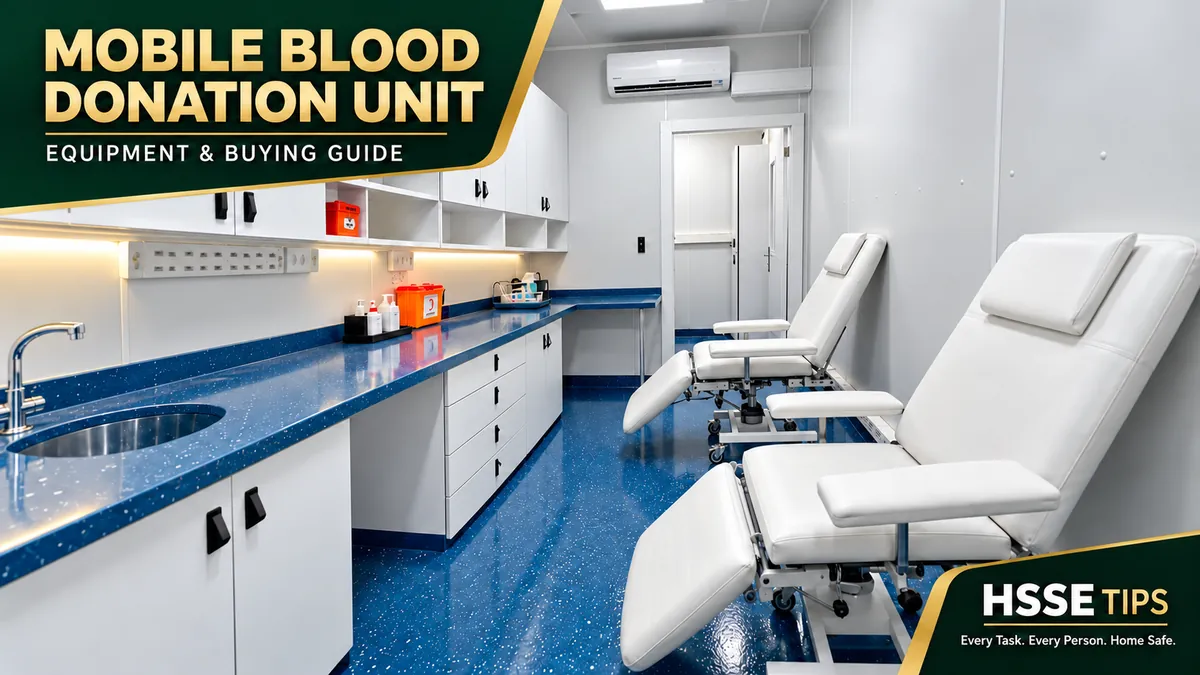
IVECO Eurocargo Mobile Blood Donation Vehicle Overview
Machineryline reference MR36375 is offered by AMBULANCEMED LTD.ŞTİ under the hospital-container category. Its title uses “Eurcargo”; IVECO’s manufacturer spelling is Eurocargo. That spelling correction does not independently establish the chassis identity.
The evidence supports a fitted blood-collection-style medical module. It does not establish a complete road-going blood donation truck, removable truck body or authorised transfusion facility. The contract should identify whether the sale covers a container, a medical body with mounting system, or a complete vehicle.
Understanding the IVECO Eurocargo Platform
IVECO’s official Eurocargo range includes different chassis and drive configurations, including 4×2 and 4×4 variants. A family name therefore cannot establish this offer’s engine, carrying capacity or off-road equipment.
Request a chassis plate photograph, VIN, full model code, vehicle documents and bodybuilder approval. If a truck is supplied, its chassis specification and completed-body weight must be assessed together. A container photograph cannot establish that combination’s suitability.
Engine, Transmission and Drivetrain
No unit-specific engine designation, displacement, rated power, torque, fuel type, emissions class, gearbox or drivetrain was verified. First registration and mileage are also absent from the reviewed identification evidence.
These details should come from the offered chassis documents, rather than another Eurocargo brochure. Confirm parts support and destination registration requirements against the actual VIN before comparing operating costs or arranging export.
Chassis, Dimensions and Gross Vehicle Weight
The advertisement enters 12.2 × 2.24 × 2.59 metres as overall dimensions without establishing whether these describe the module or a completed vehicle. It also enters a net weight of 3.7 kg, which is not a usable transport-weight specification for the illustrated structure. It must not be silently reinterpreted as tonnes.
Obtain a dimensioned general-arrangement drawing, certified transport mass and, where applicable, completed-vehicle gross and axle ratings. No usable payload can be calculated from the available information. Equipment, consumables, staff and other loads all need to be included in the eventual operating-weight assessment.
Mobile Medical Body and Exterior Design
The exterior photograph shows a white, corrugated container-style structure with corner fittings, standing inside a building. It shows neither chassis mounting nor road equipment. Shipping-container appearance alone does not establish transport certification, lifting approval or removability from a truck.
Inside, photographs show white panel walls and ceiling, a blue speckled floor, blue work surfaces and white upper and lower cabinets. Material composition, insulation, fire performance and disinfectant compatibility need specification. External access steps, ramps and accessible door dimensions are not established.

Donor Reception and Screening Facilities
A separate photographed area contains a curved white desk, a red staff chair and a reclining examination-style chair. It offers a concrete starting point for discussing reception or consultation, although its approved function and acoustic privacy are not documented.
Ask for a floor plan showing registration, confidential assessment, collection and recovery routes. No donor-management software, network infrastructure or haemoglobin analyser model was verified. A desk and monitor-shaped device do not establish a functioning digital registration system.

Blood Donation Chairs and Collection Equipment
The principal interior photograph clearly shows two white reclining chairs alongside the counter. Another chair appears in the separate desk area; the photographs do not establish a certified simultaneous collection capacity.
The supplier’s generic product text describes a two-motor, 220 V donation chair, a blood-bag mixing device with automatic zeroing and a 220 V centrifuge. The same text discusses panel vans and buses, so it cannot be treated as an exact build sheet for this container.
Obtain chair models, load ratings, positioning functions and maintenance instructions. For collection scales, mixers and centrifuges, require model numbers, intended use, calibration records and an explicit sale-inclusion schedule. Small devices visible on counters are evidence of a photographed layout, not proof that each device is included or commissioned.

Blood Storage, Refrigeration and Temperature Monitoring
No blood refrigerator, validated transport cooler, temperature logger or alarm system was identified with a confirmed make and model. Consequently, certified blood storage and an independent cold chain are not established.
WHO treats the blood cold chain as a coordinated storage and transport system with controlled conditions throughout handling. For this purchase, the responsible blood service should specify the intended components, equipment, monitoring, backup arrangements and validated transfer process. A general refrigerator or room air conditioner cannot establish those capabilities.
Donor Recovery and Staff Accommodation
Reclining seating is visible, but there is no verified dedicated recovery lounge, refreshment station or staff accommodation. The listing’s “10 seats” field must not be interpreted as ten donor couches or a ten-donor treatment capacity.
A service layout should allow observation and staff access without obstructing exits or confidential assessment. Request a proposed staffing and circulation plan, plus emergency access arrangements approved by the operating organisation.
Electrical Power and Backup Systems
Electrical outlets and a wall-mounted air conditioner are visible. The generic description mentions a “3kws” generator and 220 V equipment, but no generator plate, installed backup system, frequency or total demand schedule was verified for this offer.
Require a circuit schedule covering clinical devices, HVAC, lighting and any refrigeration, with supply ratings, protection, earthing and external connection details. Define what remains powered during an interruption and how any temperature-sensitive material is transferred or protected. Do not budget on an included generator without written confirmation.
Water Supply, Sanitation and Waste Management
A sink is visible in the blue counter. The supplier describes hot and cold water generically, but tank capacities, heater, pump, freshwater connection and wastewater arrangement are unverified.
Confirm the operational water source and cleaning regime, together with wastewater disposal and hand-hygiene provision. An orange disposal container is visible; its presence does not establish a complete sharps and clinical-waste management system. The operator must define segregation, secure storage and authorised collection.
Heating, Ventilation and Air Conditioning
A high-mounted split air-conditioning unit appears in the main room. Its capacity, electrical demand and performance at the intended outdoor conditions are not published. Vehicle-engine-driven cooling and fuel-fired heating appear in generic supplier text, rather than verified container specifications.
Request ventilation and occupancy calculations and a commissioning test under agreed conditions. Air conditioning alone does not establish fresh-air provision, specialist filtration, humidity control or infection-control certification.
Transportation and Deployment Requirements
The essential logistics question is whether this is a complete truck or a transported module. That determines road permissions, carrier selection, handling equipment, insurance and site preparation. No included trailer, lifting method or installation time is confirmed.
Before dispatch, agree the transport envelope, lifting plan, rated lifting points and site access. Establish ground support, safe entry, emergency escape, utility connections and weather protection. If truck-mounted operation is proposed, require mounting calculations, weight distribution and road approval for the completed configuration.
Blood Donation Workflow — General Operational Context
A qualified blood service may organise a session around the following stages. This is general planning context; it does not mean the advertised unit independently supports every stage.
- Donor arrival, identification and registration.
- Confidential eligibility screening by qualified personnel.
- Pre-donation assessment under the service’s approved procedures.
- Collection using suitable, maintained equipment.
- Donor observation and recovery.
- Blood-unit identification, documentation and traceability.
- Appropriate controlled holding or transfer.
- Transportation to authorised processing facilities.
WHO donor-selection guidance places responsibility on blood services to protect donors and recipients through appropriate assessment. Layout, staffing and equipment should be reviewed against the organisation’s procedures; furnishing a room does not create an authorised collection programme.
Mobile Blood Donation Applications
Subject to confirmed equipment and authorisation, the photographed layout may merit evaluation for community campaigns, hospital-led collection programmes and institutional donation events. Its separate desk area and reclining chairs are relevant features for that assessment.
Regional or humanitarian outreach additionally needs a dependable supply chain, staff, consumables and onward processing arrangements. No evidence establishes emergency transfusion, blood-bank replacement, surgery or inpatient care. “Transfusion unit” and “hospital container” in an advertisement are not clinical service approvals.
Mobile Blood Donation Vehicle vs Fixed Blood Collection Centre
A mobile service can bring collection space closer to scheduled donor groups. It also introduces travel, setup, utility verification and transfer logistics for every deployment. A fixed centre can maintain permanent connections and an established layout, although donor access still depends on location and service planning.
For this offer, the missing truck/module definition prevents a meaningful transport-cost comparison. Compare complete operating proposals: donor access, qualified staffing, session capacity, utilities, equipment maintenance and the route to authorised processing. Neither format guarantees higher throughput or a lower cost per donation.
Safety, Hygiene and Regulatory Considerations
Procurement should involve the responsible blood service, facilities team and vehicle or structural engineer. Define local operating authorisations, donor confidentiality, identification and traceability, cleaning, equipment maintenance and clinical-waste arrangements.
Acceptance checks should cover safe access, exits, fire protection, electrical testing, secure equipment and documented handling of collected units. Where a chassis is included, add roadworthiness and gross/axle-load compliance. Request the actual conformity documents for the delivered configuration; no blood-service licence, cold-chain certification or completed-vehicle approval was independently verified.
Technical Specifications
Evidence below separates advertiser fields, photographic observations and generic catalogue descriptions. Photographed equipment is not an agreed sale inventory.
| Item | Verified evidence and scope |
|---|---|
| Advertised brand | IVECO — advertiser field; no chassis or VIN shown |
| Advertised model wording | Eurcargo Mobile Blood Donation Vehicle And Transfusion Unit |
| Product category | Hospital container |
| Condition / year entry | New / 2026, advertiser-stated; exact chassis identity and build documentation unverified |
| Item | Verified evidence and scope |
|---|---|
| Exterior evidence | White corrugated standalone container-style structure with corner fittings |
| Main room | Two reclining white chairs clearly shown beside fitted work surfaces |
| Separate desk area | Curved desk, red staff chair and another reclining chair photographed |
| Interior fittings | White cabinets, blue worktops and speckled blue floor |
| Water fixture | Sink visible; functioning supply and waste systems not verified |
| Body attribution | AmbulanceMed branding visible; exact body model and manufacturer documentation require confirmation |
| Item | Verified evidence and scope |
|---|---|
| Chairs | Reclining chairs visible; generic supplier text describes two motors and 220 V |
| Collection devices | Small countertop devices photographed; generic text describes mixer and centrifuge, without model-specific inclusion schedule |
| HVAC | Wall-mounted split air-conditioning unit visible |
| Electrical fittings | Outlets visible; generic generator reference is not verified installed equipment |
| Disposal provision | Orange disposal container visible; full waste system not established |
Current Seller Offer — Verified 25 October 2026
Verified refers to checking the advertisement on this date, not independent inspection or confirmation of every seller claim.
Product Location: Ankara, Türkiye — the location entered in the product listing. The supplier’s office address is not substituted.
- Product / reference
- Advertised IVECO Eurocargo mobile blood donation vehicle / Machineryline MR36375
- Supplier / manufacturer identity
- AMBULANCEMED LTD.ŞTİ; IVECO appears as advertised vehicle brand. Exact chassis and medical-body model unverified.
- Asking price
- €110,000. VAT basis, included chassis, medical devices and delivery scope require a written quotation.
- Production year / condition
- 2026 / new, as entered by advertiser. Build dates and serial-specific documentation unverified.
- First registration / mileage
- Not specified.
- Engine / transmission / drivetrain
- Not specified for an identified chassis.
- Gross vehicle weight / payload
- Unverified. The 3.7 kg net-weight entry is unusable for logistics planning.
- Dimension entry
- 12.2 × 2.24 × 2.59 m; whether module or complete vehicle is not established.
- Medical body / blood collection equipment
- Fitted container interior and reclining chairs photographed; itemised included-equipment schedule not verified.
- Refrigeration / power systems
- No verified blood-refrigeration model, temperature monitoring or installed generator specification.
- Availability
- Advertisement accessible when checked. Stock unit, chassis inclusion and dispatch date require confirmation.
- Delivery / shipping / export
- No product-specific destinations, freight charges, delivery lead time or Incoterms established. Customs, registration and medical-equipment documentation responsibilities unconfirmed.
Delivery destinations, shipping arrangements, and applicable transport terms were not specified in the information reviewed. Prospective buyers should confirm these details directly with the seller.
Marketplace inspection or delivery-service prompts do not establish supplier-provided transport. Request a destination-specific proposal separating equipment, any chassis, freight, insurance, customs and commissioning.
CHECK DELIVERY & EXPORT OPTIONSWhat Buyers Should Confirm Before Purchasing
Start with a signed scope: container only, fitted medical module or complete registered truck. Obtain dated photographs, serial plates, a layout and a model-numbered equipment inventory, identifying permanent fittings, included loose devices, options and buyer-supplied items.
Then agree capacity, utilities, cold-chain interfaces, transport mass, handling, training, spares and support. Define factory and site acceptance tests, document deliverables, warranty coverage and payment milestones. An authorised blood service should approve the operational specification before the commercial order is finalised.
Frequently Asked Questions
Is an IVECO Eurocargo truck confirmed as included?
No. The title advertises that connection, but the photographs show a standalone container and interior. Obtain a VIN and a contract defining the complete supply scope.
What is the exact engine and gearbox?
Neither is verified for this offer. Do not import specifications from another Eurocargo variant.
How many donors can it accommodate?
No approved simultaneous collection or session capacity is documented. Two chairs are clearly visible in the main room; the ten-seat listing entry is not a donor-capacity rating.
Are powered donation chairs included?
Chairs are photographed, and generic text describes powered functions. Their exact models, ratings and inclusion must be specified in the quotation.
Does it include a certified blood refrigerator?
No blood refrigerator or validated cooler with a confirmed model and monitoring specification was verified.
Is a generator supplied?
A generator appears in generic product text, but its installation, rating and inclusion for this unit are unconfirmed.
Can it perform transfusions or replace a blood bank?
The reviewed evidence does not establish those capabilities or authorisations. Evaluate it as a proposed collection facility, subject to the blood service’s requirements.
Where is the product and what is the price?
The listing enters Ankara, Türkiye and €110,000. Tax, equipment, chassis and delivery inclusions need confirmation.
Is international delivery included?
No destination-specific shipping package or export terms were established. Request an itemised delivered proposal.
Final Verdict
The offer’s strongest documented feature is its fitted collection-style interior: reclining chairs, organised cabinetry, a sink, a separate desk area and visible air conditioning. These provide a useful basis for a qualified blood service to develop a procurement enquiry.
The next step is a precise, documented offer resolving the Eurocargo connection, supply scope, equipment and blood-handling arrangements. That evidence will determine whether this is the right container or completed vehicle for the buyer’s programme.
CONTACT THE SELLERJoin the Conversation
Which requirement would decide this purchase for your organisation: access, donor layout, dependable power, cold-chain integration or the truck/module arrangement? Share your procurement experience or question in the comments.
Blood Donation Video — General Service Context
No video of this exact advertised unit was verified. NHS Blood and Transplant’s “What happens when I give blood?” explains the donor experience in its service. It is general educational material, not footage of this product or an endorsement of the seller; operating requirements vary by jurisdiction.
Video: NHS Blood and Transplant, embedded from its official video resources. No autoplay.
Research and Editorial Basis
Exact advertisement MR36375 and its six photographs checked 25 October 2026. A selection of original advertiser photographs is embedded with source attribution and the original watermarks retained. Technical context: IVECO Eurocargo range and AmbulanceMed’s generic mobile blood donation specification. Operational context: WHO donor-selection guidance and WHO blood cold-chain guidance. Video source: NHS Blood and Transplant video resources. This is a desk-based evidence review; no unit inspection, equipment testing or clinical validation was conducted.
HSSE TIPS — Worksite Safety Hub
Every Task. Every Person. Home Safe.
Your experience matters
Share your thoughts on this page
Have a question, a useful experience or a suggestion? Add your input below.
Comments are public. Keep them respectful and relevant. Do not share contact details, confidential information or emergency reports.
Comments on this page
Loading comments…