 Lesson 19 · 8 min read
Technology Must Earn Operational Trust: Verify the Signal Before Acting
Use new tools to sharpen human decisions, with clear limits, validation and evidence of real-world benefit.
Read the full article →Strategy translated into frontline learning
Twenty-five independent, practical lessons connecting safety, collaboration, lower-emissions operations, reliability, learning, maintenance, resilience, partnership, technology and transport safety and water stewardship, task-specific competence, prevention through design, fatigue risk and alarm performance with everyday offshore and industrial decisions.
Explore the lessons ↓From strategy to action
This independent Worksite Safety Hub series translates responsible progress into practical operational lessons for professionals. It connects long-term value with safe, reliable and environmentally responsible work.
Protect people, critical barriers and the capacity to operate safely tomorrow.
Read lesson →02Strengthen handovers, respectful challenge and timely information-sharing.
Read lesson →03Prevent leaks, avoid unnecessary flaring and use energy responsibly.
Read lesson →04Connect safe, reliable energy with the people and communities who depend on it.
Read lesson →05Design environmental protection into the task before mobilisation.
Read lesson →06Report actual conditions, escalate weakened barriers and speak up.
Read lesson →07Address weak signals before deterioration becomes operational failure.
Read lesson →08Act on adverse trends before margins and safer options disappear.
Read lesson →09Remove preventable loss and rework without weakening essential controls.
Read lesson →10Verify that corrective action changed conditions in the field.
Read lesson →11Make concerns safe to raise, difficult to ignore and visible through closure.
Read lesson →12Keep safety-critical assets ready for the moment they are demanded.
Read lesson →13Assess, authorise and communicate the new risk picture before implementation.
Read lesson →14Turn trustworthy trends into timely decisions and accountable action.
Read lesson →15Design decisions with operators, technicians and contractors who perform the work.
Read lesson →16Restore safeguards, close risks and hand over the real condition.
Read lesson →17Prepare early, test realistic response plans and protect operational continuity.
Read lesson →18Make safety a shared condition of the work, from bid and mobilisation to handover and demobilisation.
Read lesson →19Use new tools to sharpen human decisions, with clear limits, validation and evidence of real-world benefit.
Read lesson →20Treat every work journey as planned work, with a fit driver, safe route, clear check-ins and authority to stop.
Read lesson →21Map withdrawals and losses, use water efficiently, verify discharge controls and consider other users of the same resource.
Read lesson →22Verify task-specific capability, clear authorisation limits and readiness for infrequent work.
Read lesson →23Remove exposure during planning before people must manage it in the field.
Read lesson →24Design schedules, staffing and work so alert performance is available when risk is highest.
Read lesson →25Give operators relevant alarms, defined responses and enough time to act during abnormal conditions.
Read lesson →The complete series
Newest lessons appear first. Use the pages below or the numbered series links to read in sequence.
Lesson 19 · 8 min readUse new tools to sharpen human decisions, with clear limits, validation and evidence of real-world benefit.
Read the full article → Lesson 18 · 8 min read
Make safety a shared condition of the work, from bid and mobilisation to handover and demobilisation.
Read the full article →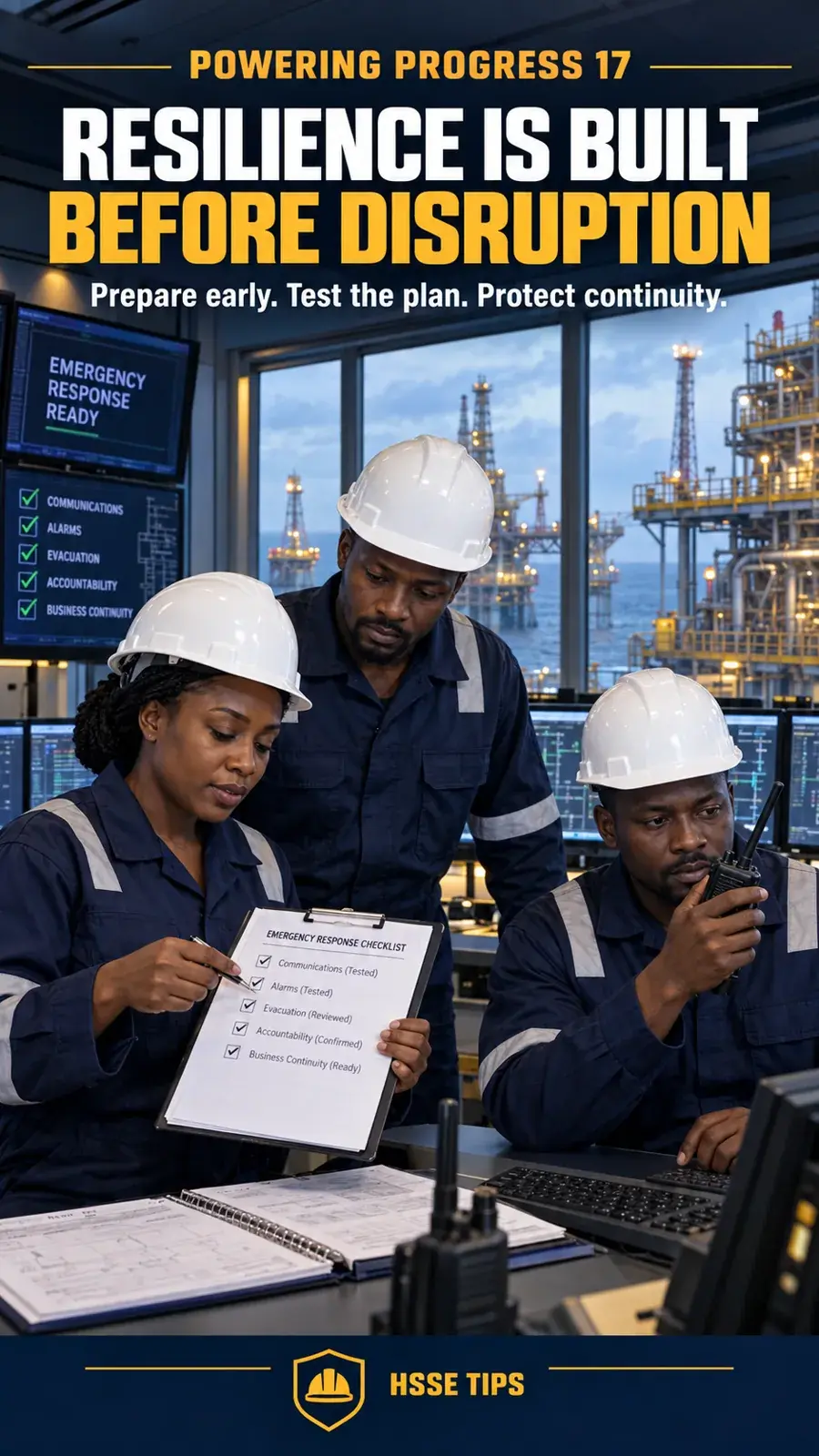 Lesson 17 · 8 min read
Operational resilience is created before an emergency. Prepared teams understand critical dependencies, test realistic response plans and learn from drills before disruption removes their options.
Read the full article → Lesson 16 · 8 min read
Work is complete only when safeguards are restored, residual risks are visible and the receiving team understands the condition it inherits.
Read the full article →Lesson 15 · 7 min readOperators, technicians and contractors hold practical knowledge that plans and dashboards cannot fully capture. Early involvement improves controls and ownership.
Read the full article → Lesson 14 · 7 min read
Data creates value only when it is trustworthy, interpreted in context and connected to a clear decision, owner and response threshold.
Read the full article →Use with your team
Discuss the article's closing question during a toolbox talk or shift meeting, identify one condition that needs attention, assign ownership and return to confirm closure.
Future HSSE email updates
Record your interest in future Worksite Safety Hub messages, selected HSSE news and new-resource alerts. Email delivery is not connected yet.
Your experience matters
Share your thoughts on this page
Have a question, a useful experience or a suggestion? Add your input below.
Comments are public. Keep them respectful and relevant. Do not share contact details, confidential information or emergency reports.
Comments on this page
Loading comments…