Powering Progress · Lesson 5 · 8 min read
Respecting Nature Starts Before the Job Begins
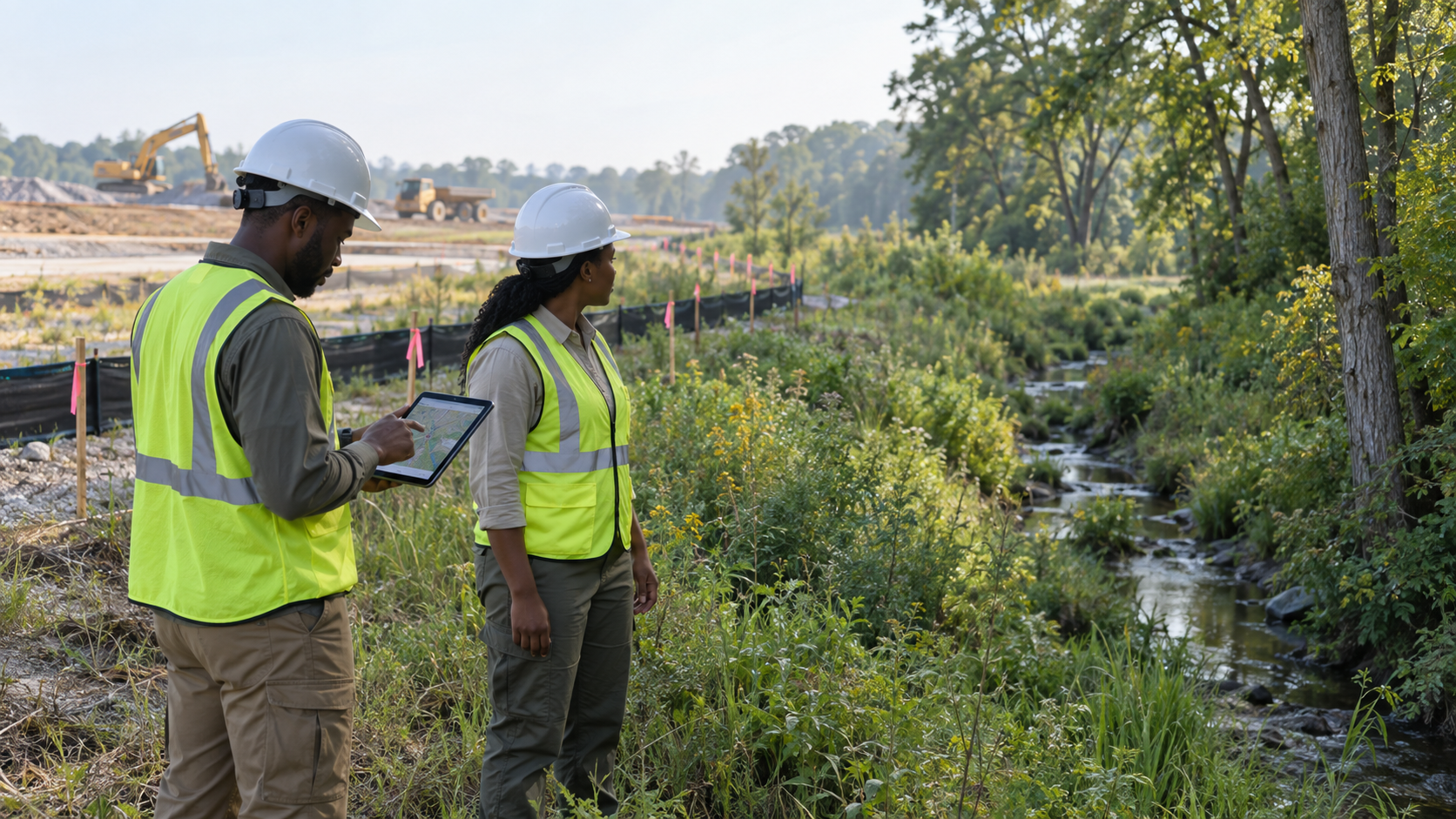
Environmental protection is strongest when it is designed into scope, access, materials, controls and restoration—before equipment and people mobilise.
Environmental control begins with the plan
Respecting nature is part of the published Powering Progress framework. The practical lesson is that environmental protection cannot depend only on cleanup after a job. By mobilisation, many important choices have already been made: location, access, timing, method, materials, containment, waste route and restoration standard.
Good planning identifies environmental aspects alongside safety hazards. Ask what could reach air, water or land; what habitat or community could be disturbed; which resources will be consumed; and what abnormal condition could expand the impact. Then apply the hierarchy: avoid the impact where practicable, reduce what cannot be avoided, control the remaining exposure and verify the result.
Know the environmental setting
A generic checklist cannot replace local understanding. Drainage direction, rainfall, tide, wind, sensitive receptors, wildlife activity, soil condition and nearby water use can change the consequence of the same task. Establish the baseline and the applicable permit or site requirements before selecting controls.
Unexpected conditions deserve a defined response. If a crew discovers a drain connection, protected feature, contaminated soil, wildlife presence or unplanned discharge pathway, the professional action is to stop and escalate. The original assessment cannot control a feature it did not recognise.
Design prevention into execution
Place containment where a release could occur, not where it is easiest to store. Protect drains and over-water work areas before opening systems. Confirm that spill materials match the substance and credible quantity, and that people know how to raise the alarm without entering exposure. Segregate waste at source and establish a documented route to an authorised destination.
Consider normal and abnormal phases. Startup, draining, cleaning, transfer and demobilisation can create more environmental exposure than the main maintenance step. Weather can overwhelm a control that was adequate in dry conditions. Build inspection and stop criteria into the work so controls are checked while they still matter.
Closure requires verification and restoration
A job is not environmentally complete when tools leave. Confirm that temporary materials, contaminated absorbents and waste have been removed; drains and containment are clear; disturbed areas are stable; and required monitoring or records are complete. Where restoration is required, define what success looks like and who will verify it later.
Learning should travel beyond the individual task. Record unexpected pathways, control failures and effective improvements so future planners start with better information. Environmental near misses deserve the same curiosity as safety near misses: they reveal where the system relied on luck or late intervention.
- Identify receptors and pathways before choosing controls.
- Review startup, shutdown, transfer, cleaning and bad-weather conditions.
- Set a stop-and-escalate trigger for unexpected environmental features.
- Verify waste transfer, site condition and restoration before closure.
Team discussion
For the next planned job, which environmental decision will become difficult to change after mobilisation? What should be redesigned now, while the team still has options?
Editorial note: This independent Worksite Safety Hub article provides general learning and does not replace permits, legal requirements, site procedures or specialist environmental advice.
Daily HSSE updates
Subscribe for practical HSSE updates.
Subscribe for the daily message, selected HSSE news and occasional new-resource alerts from Worksite Safety Hub.