Powering Progress · Lesson 17 · 8 min read
Resilience Is Built Before Disruption: Prepare Early, Test the Plan and Protect Continuity
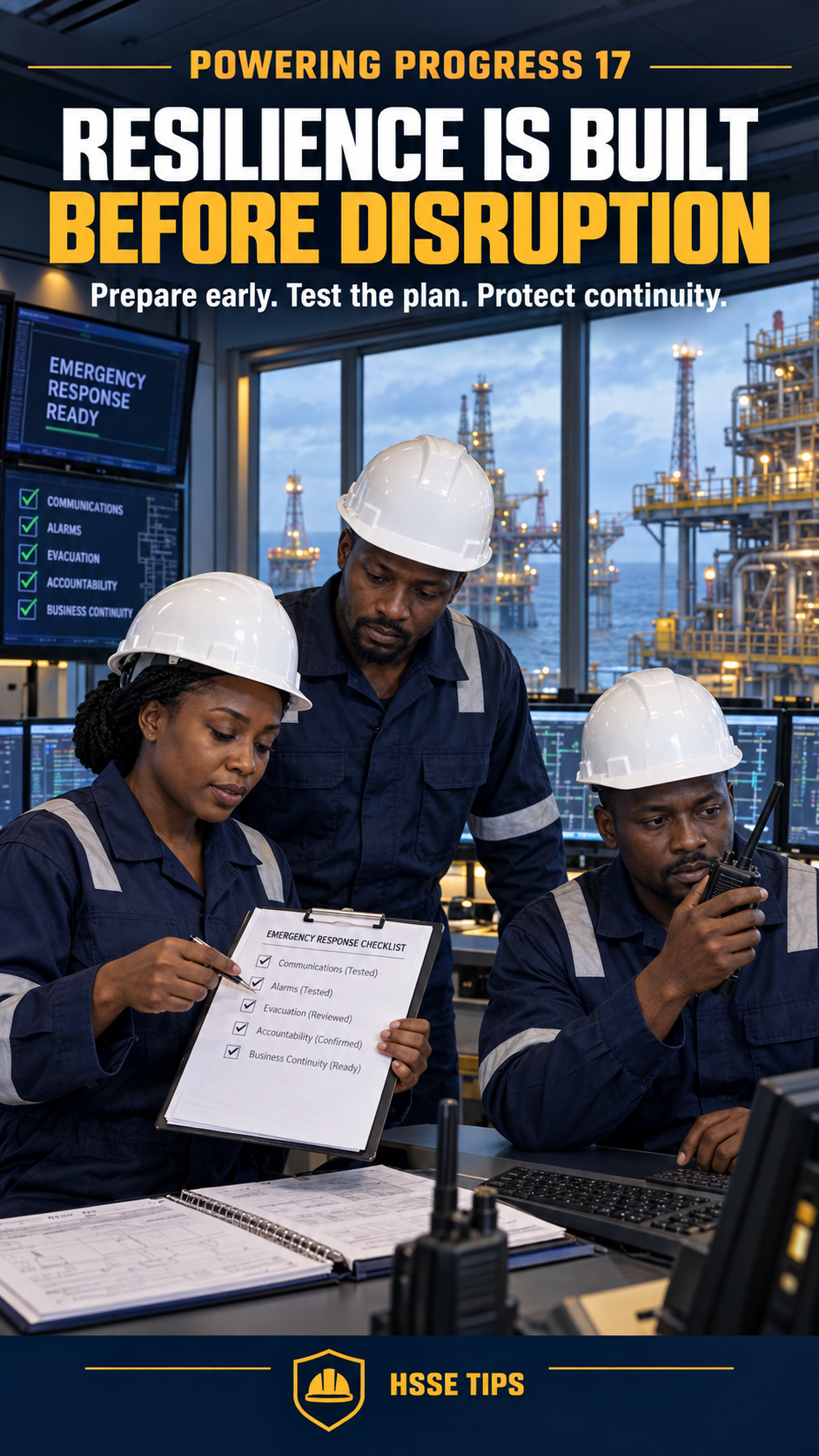
Operational resilience is created before an emergency. Prepared teams understand critical dependencies, test realistic response plans and learn from drills before disruption removes their options.
Resilience begins before the alarm
A resilient operation is not one that simply survives disruption. It is one that anticipates credible threats, protects essential functions, responds without losing control and recovers through decisions that do not create a second emergency. That capability is built during normal operations, when teams still have time to examine dependencies and correct weaknesses.
Production stability can hide fragility. A facility may appear reliable while emergency equipment is difficult to access, contact lists are outdated, backup systems have not been tested under realistic load or response roles depend on one experienced person being available. The absence of disruption does not prove readiness. Positive evidence comes from inspection, testing, practice and verified closure of identified gaps.
Know what must continue—and what can stop safely
Continuity does not mean keeping every activity running. During a serious disturbance, the first obligation is to protect people, maintain control of major hazards and place the operation in the safest achievable condition. Teams should know which functions are essential, which loads or activities can be reduced, and which conditions require an orderly shutdown or evacuation.
Map the dependencies behind critical functions. Power, communications, control systems, firewater, detection, drainage, logistics, competent staffing and external support can be connected in ways that routine work does not reveal. Consider common-cause failure: a single flood, fire, cyber disruption, severe-weather event or loss of utilities may affect several safeguards at the same time.
Test the plan under realistic conditions
A written emergency or business-continuity plan is a starting point, not proof of capability. Exercises should test decisions, interfaces and communications—not reward participants for following a predictable script. Use credible scenarios that require teams to recognise changing conditions, prioritise actions and coordinate with people beyond their immediate workgroup.
Vary the circumstances. Test during a shift change, with a key role unavailable, with one communication route lost or with weather restricting access. The aim is not to make people fail; it is to discover where the system depends on assumptions that may not survive a real event. Protect psychological safety so participants report confusion, delays and workarounds honestly.
Prepare communication for pressure
Disruption increases uncertainty while reducing attention and time. Response communication must therefore be brief, structured and confirmed. State what has happened, what is known, what remains uncertain, which protective action is required and who owns the next update. Use read-back for critical instructions and maintain one recognised source of operational status.
Test primary and backup communication routes with the actual people and locations that will use them. A radio stored without a charged battery, a number belonging to a former role-holder or a satellite phone nobody has practised with is not a dependable backup. Communication readiness includes equipment, competence, authority and agreed language.
Turn every exercise into stronger capability
A drill creates value when observations become owned improvements. Debrief promptly while the sequence is fresh. Ask what supported good decisions, where information arrived late, which equipment or interface created difficulty and what participants had to improvise. Separate individual performance from system design so learning is specific and fair.
Assign actions according to consequence, define acceptance criteria and verify them in the next relevant test. Repeated findings are evidence that the learning system—not only the response plan—needs attention. Share useful lessons across shifts and contractor groups so readiness does not remain with the people who attended one exercise.
- Identify essential functions and the dependencies that keep them available.
- Define the conditions for safe reduction, shutdown, evacuation and recovery.
- Test primary and backup communication routes under realistic constraints.
- Exercise decision-making when people, information or equipment are unavailable.
- Close drill findings with evidence and confirm improvement in a later test.
Team discussion
Which single failure could disrupt several of our critical safeguards at the same time, and when did we last test our response without assuming that failure was immediately restored?
Editorial note: This independent Worksite Safety Hub article provides general learning and does not replace approved emergency-response, crisis-management, shutdown or business-continuity arrangements.
Daily HSSE updates
Subscribe for practical HSSE updates.
Subscribe for the daily message, selected HSSE news and occasional new-resource alerts from Worksite Safety Hub.