Short, practical messages designed for toolbox talks, shift briefings and daily team conversations.
Page 4 of 11 · Daily safety messages 37–48 of 122
· Wet Cement Skin Contact and Chemical Burns
Wet Concrete in a Boot Is a Reason to Stop
Fresh concrete can look like ordinary mud, but its wet cement can burn skin. Inside a boot or under soaked clothing, it can remain pressed against the body while work continues. Pain is not a reliable warning: cement burns may not hurt straight away. Do not wait until the pour is finished to deal with contamination. Plan to prevent contact, and make it easy for anyone exposed to stop, wash and get help.
One cut through a concrete paving slab can release fine silica dust into the air. Repeatedly breathing this dust can cause permanent lung disease; short tasks throughout a working day still add to exposure. A smaller visible cloud does not prove the air is safe. Before the saw starts, agree how the cut will be avoided or controlled, who must stay clear and how the residue will be removed. Dust control must work for the whole task, including cleanup.
Fixing one bracket can disturb material hidden behind a wall finish or ceiling panel. The size of the job does not establish whether asbestos is present, and appearance alone cannot confirm that a material is safe to drill. Before cutting, drilling or opening building fabric where asbestos may be present, check the asbestos information for the exact location and depth of the work. If that information is missing or incomplete, pause the job and get competent advice. Keeping the material undisturbed is the first practical step.
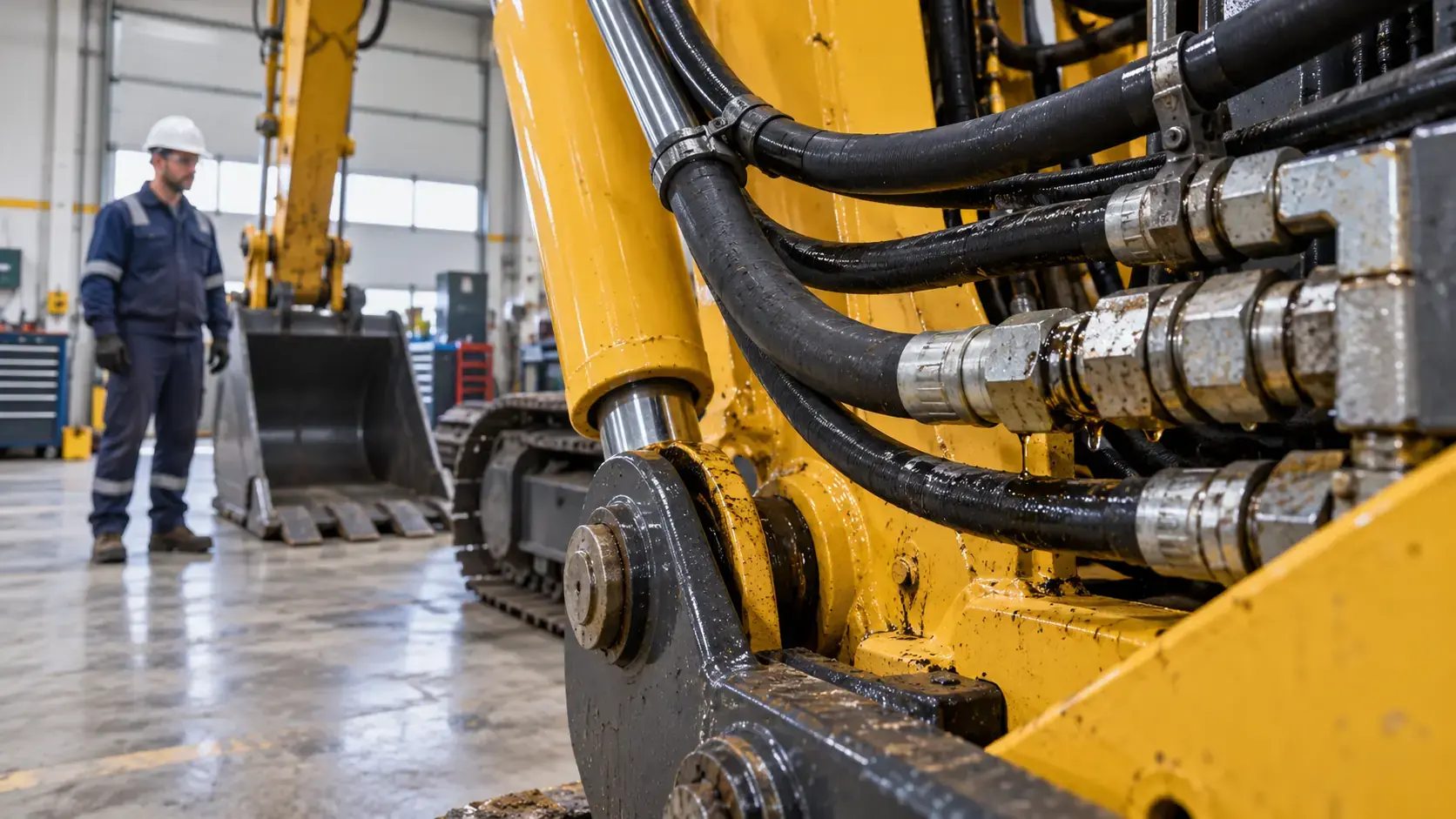
A Pinhole Hydraulic Leak Can Become a Medical Emergency
Oil around a hydraulic fitting is a reason to stop and report, not to run a finger along the hose. A narrow jet of pressurized fluid can penetrate skin, and the entry mark may look deceptively small. Gloves do not make touching a suspected leak safe. Keep your body away from the suspected release and have the machine made safe under its approved procedure. If fluid injection is suspected, immediate professional medical treatment is essential; do not wait for pain or swelling.
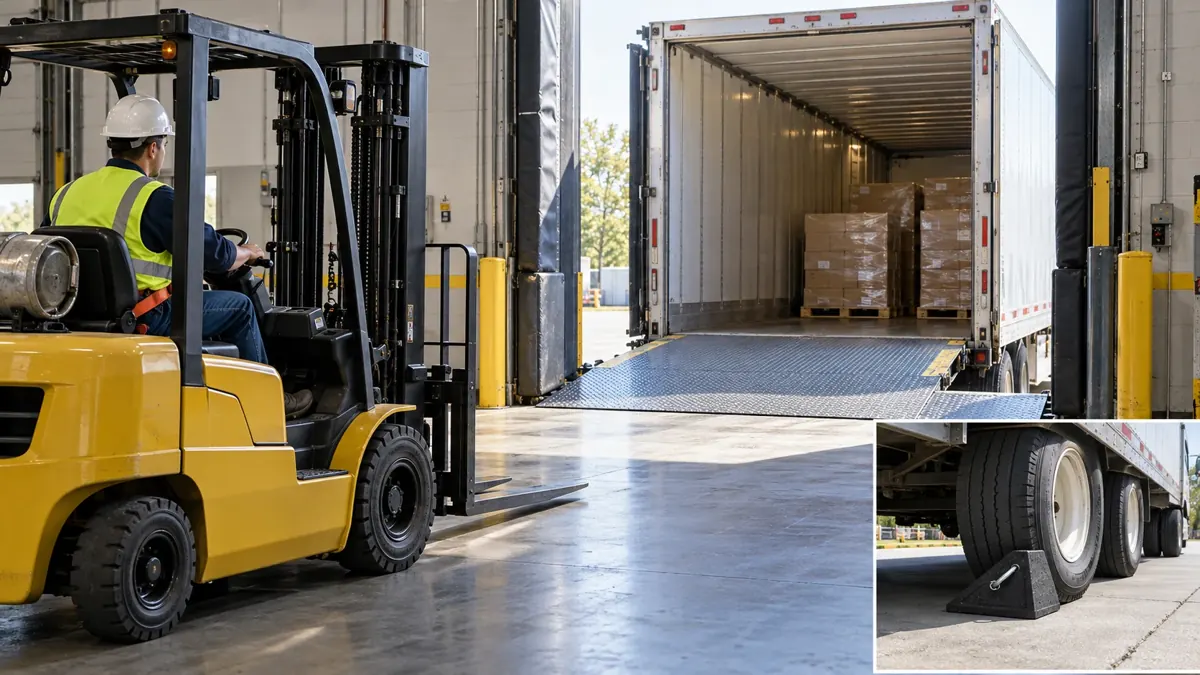
A Docked Trailer Can Move While the Forklift Is Inside
A trailer backed against a loading dock can still roll or be driven away before loading is finished. Even a small movement can open a gap beneath a forklift crossing the dock edge. An open trailer door is not permission to enter, and a waiting driver is not a departure-control system. Before the first crossing, confirm that the vehicle is secured, the crossing can carry the equipment and load, and everyone understands who can authorize release.
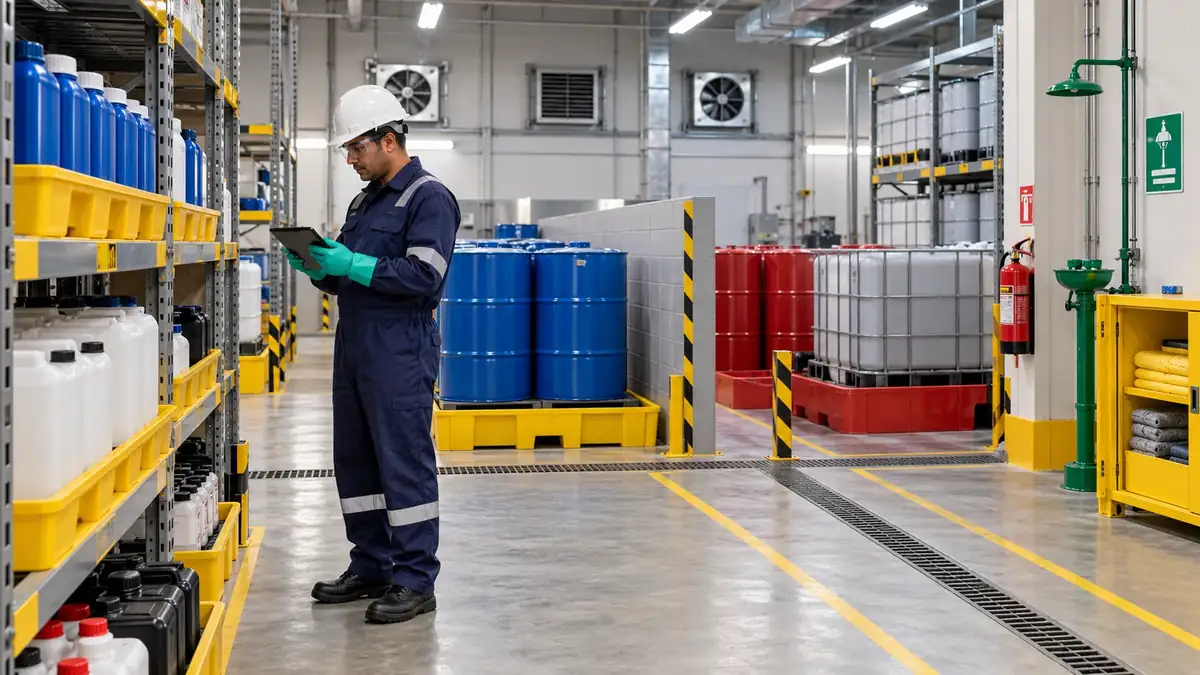
Two sealed chemical containers can appear harmless until damage or leakage allows incompatible contents to meet. The result may be heat, fire, pressure or toxic gas inside a storage area where people have little time to react. Store chemicals by hazard and compatibility—not by convenience, container colour or alphabetical order. Use labels and safety data to decide where each product belongs, keep incompatible substances apart and prevent one leak from flowing into another storage zone.
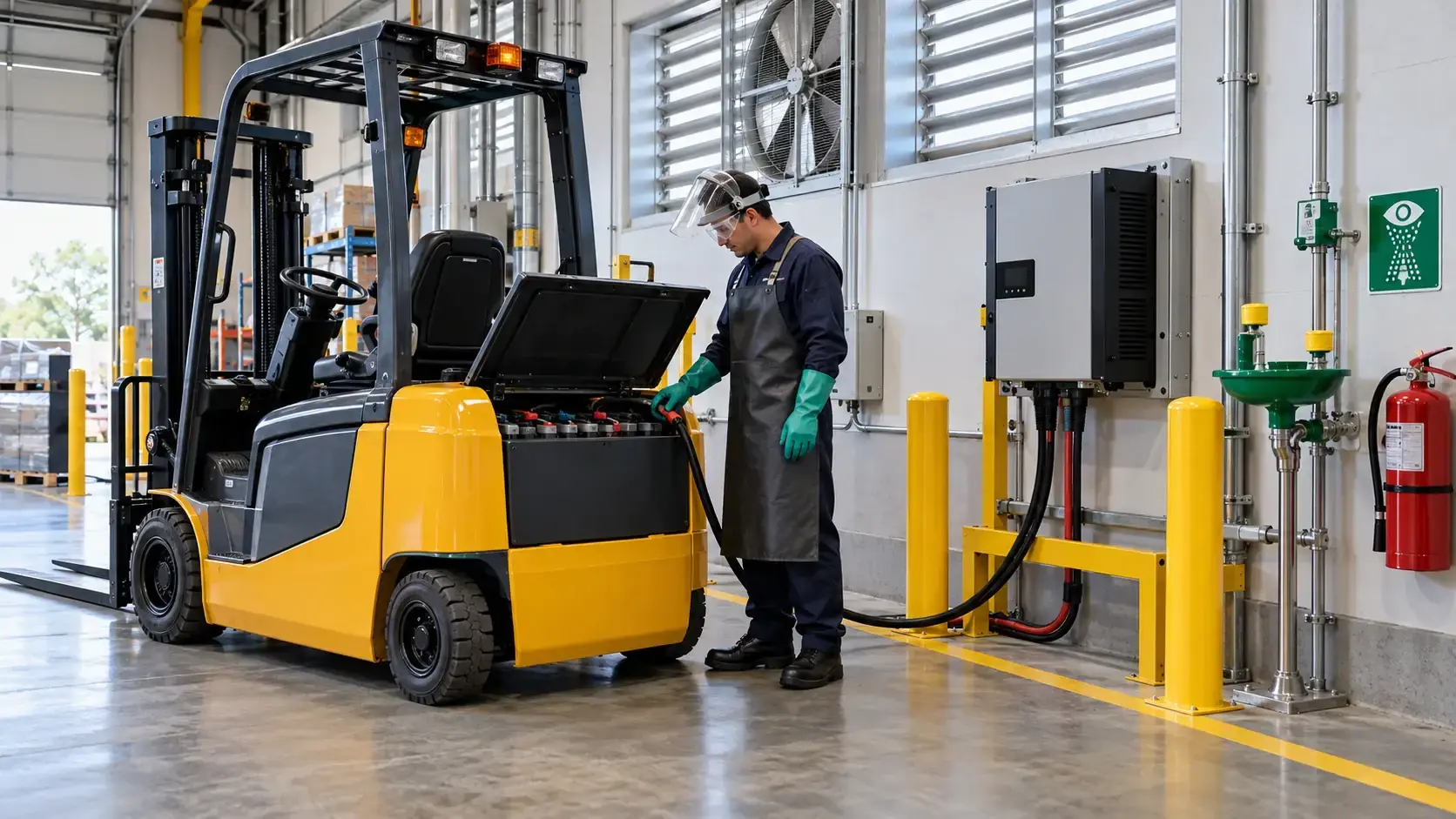
The Forklift Is Parked, but the Battery Hazard Is Active
A charging industrial-truck battery may look quiet, but the work can involve corrosive electrolyte, electrical short-circuit energy and hydrogen that becomes explosive if it accumulates. Treat charging as a controlled task in a designated area—not as parking beside a socket. Position the truck safely, control ignition sources, provide effective ventilation and confirm emergency equipment before connecting the charger. The truck may be stationary, but the battery hazard is active.
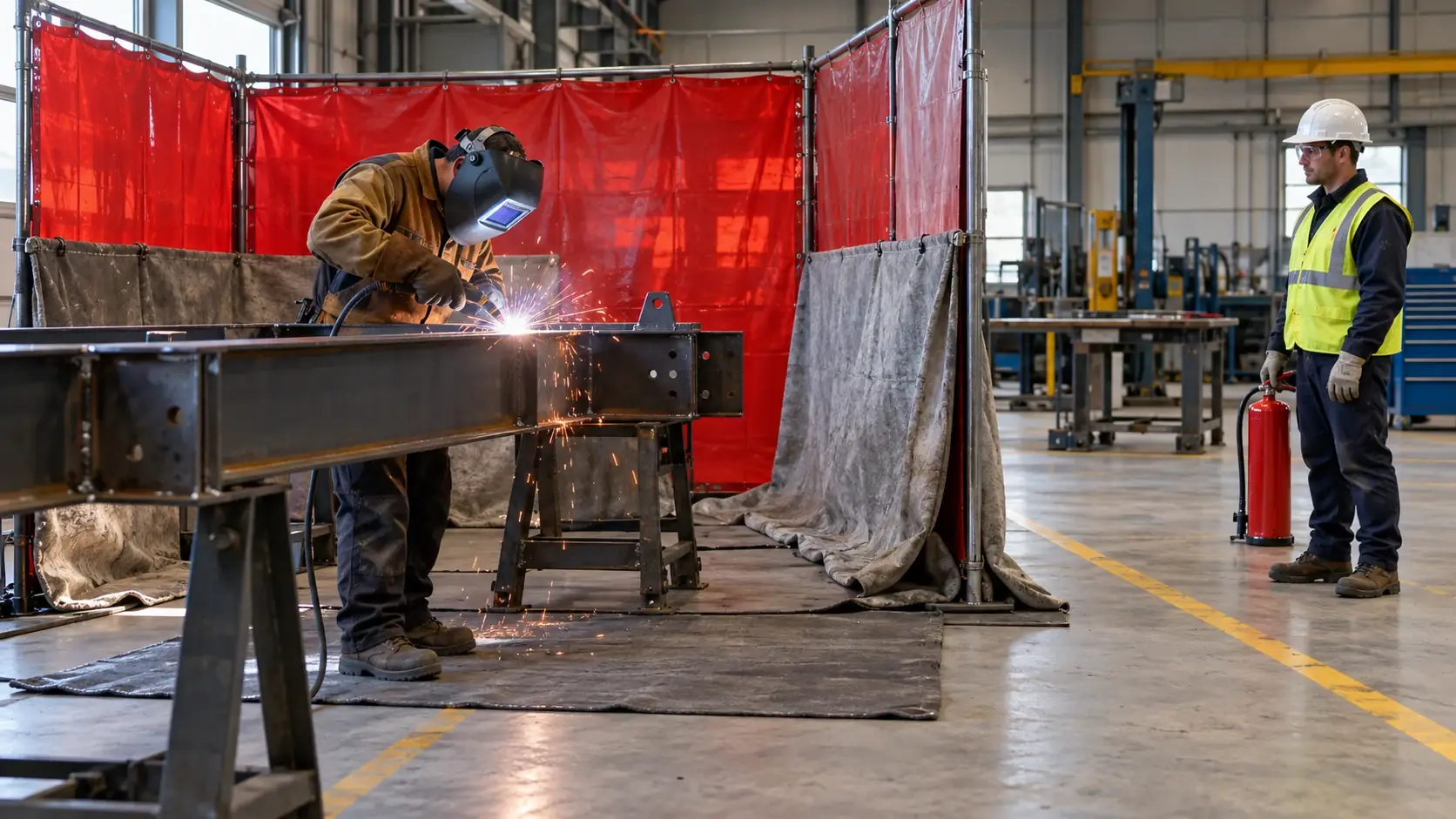
Welding and cutting can ignite material well beyond the visible arc or flame. Sparks can travel through floor openings, settle in hidden spaces or heat the far side of a metal partition, leaving a smouldering fire after the job appears finished. Before authorising the task, make the area fire-safe, confirm where heat and sparks can travel and assign a competent fire watch wherever the risk requires one. Completion of the weld is not completion of the fire risk.
An Extinguisher Cannot Help From Behind an Obstruction
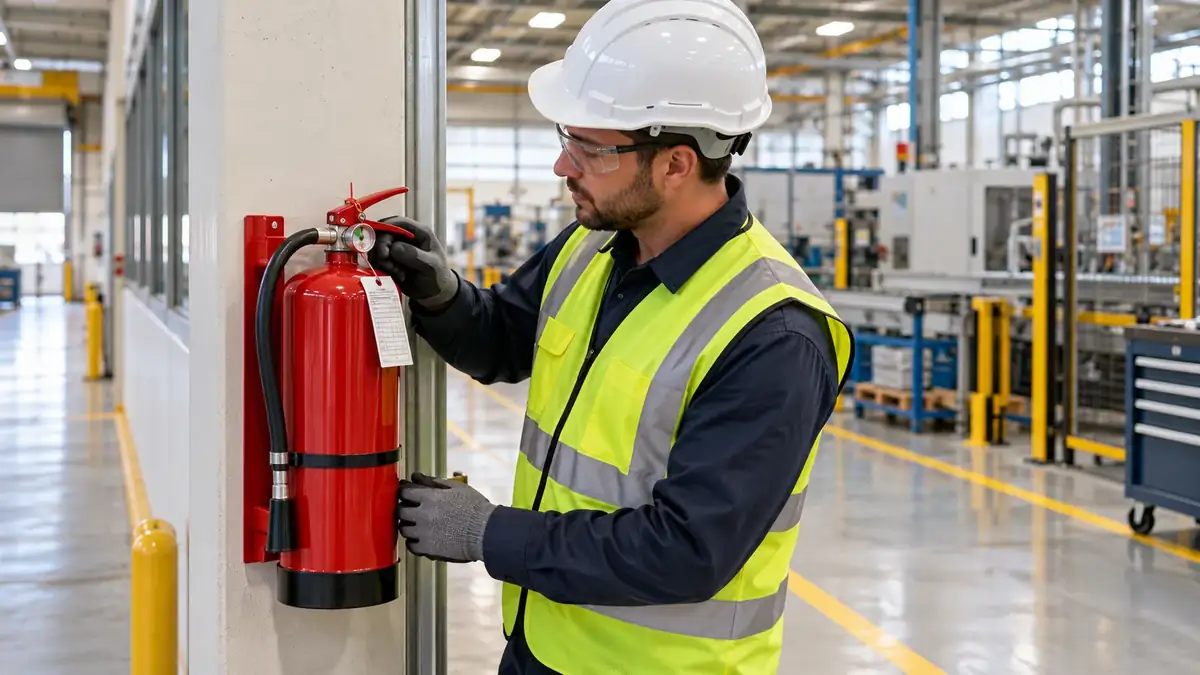
A portable fire extinguisher is an emergency control, not wall decoration. It must be the right type for the anticipated fire, remain in its designated place and be immediately reachable without moving boxes, tools or equipment. A unit that is missing, discharged, damaged or hidden behind stored materials may fail the team at the exact moment it is needed. Keep access clear, check visible condition and follow the site emergency plan—only trained and authorised people should attempt to control an incipient-stage fire, and everyone must preserve a safe escape route.
A Jack Lifts the Vehicle but Cannot Replace Safe Support
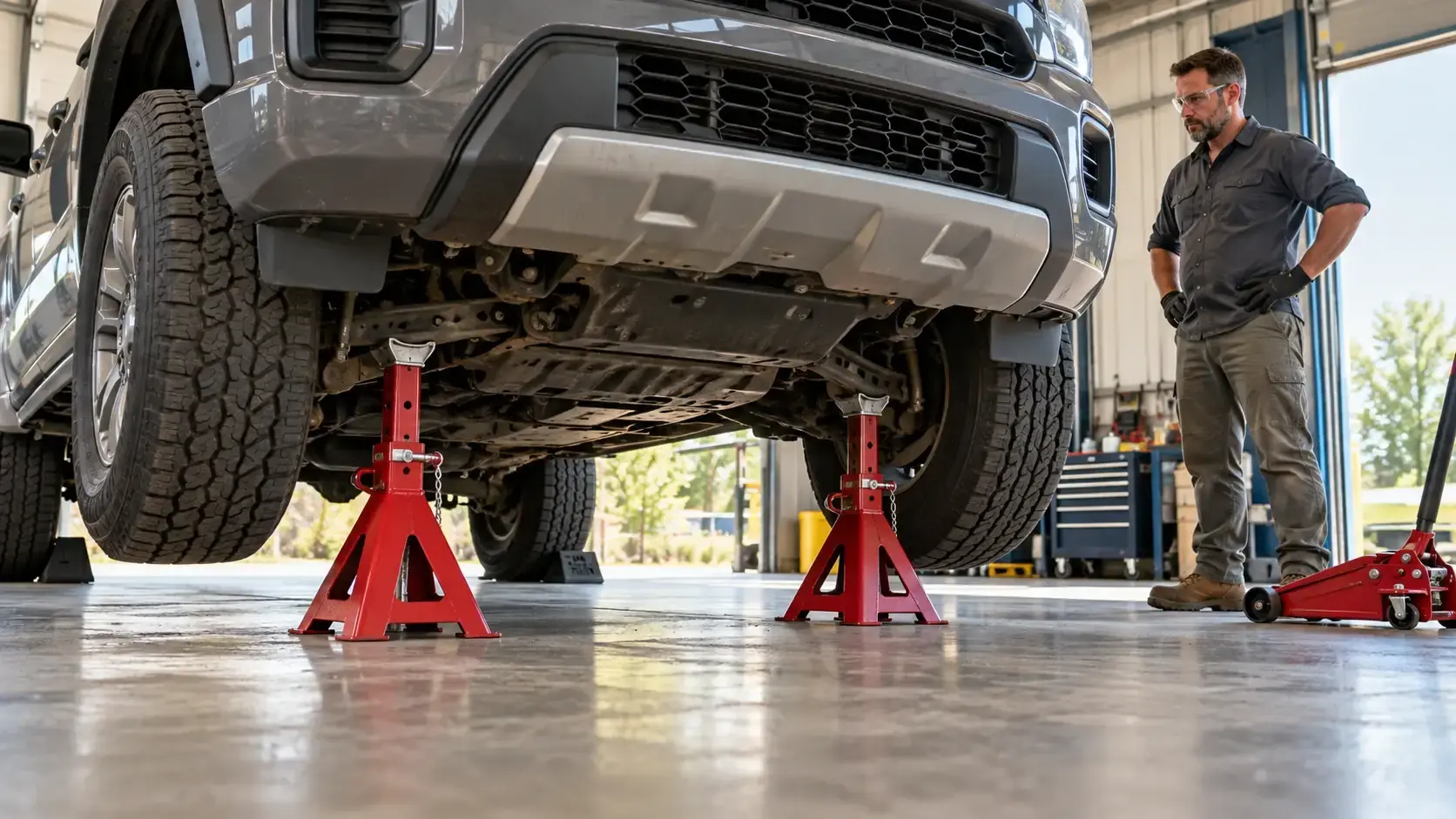
A raised vehicle can look steady while leaving a person exposed to a fatal crush hazard. A jack is a lifting device, not permission to work underneath. Before anyone enters the space below a vehicle, secure it against rolling and support it with suitable rated stands at the manufacturer's specified points. Ground condition, equipment condition and support placement all matter. Never let a quick inspection become an exception: if the support arrangement is uncertain, keep clear and stop the job until it is made safe.
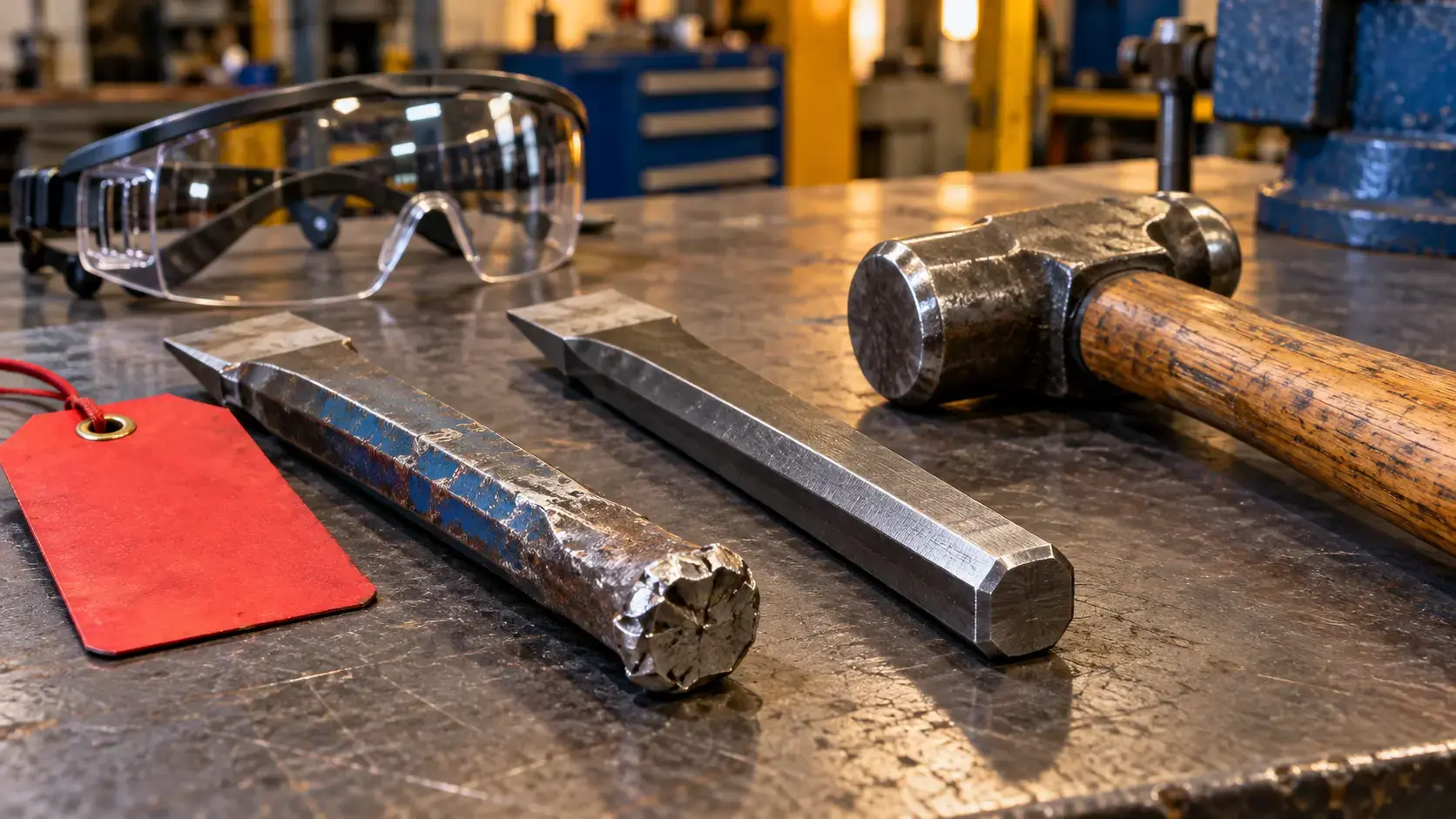
Every hammer blow changes the condition of an impact tool. When the struck end of a chisel, wedge or drift pin spreads into a mushroom shape, its thin rolled edges can crack or break away as high-speed metal fragments. Familiarity with the tool does not make that damage acceptable. Inspect the complete tool before use, remove it from service as soon as deformation, cracking or looseness is found, and use only a serviceable tool suited to the task. A few seconds of inspection can prevent an eye, face or hand injury.
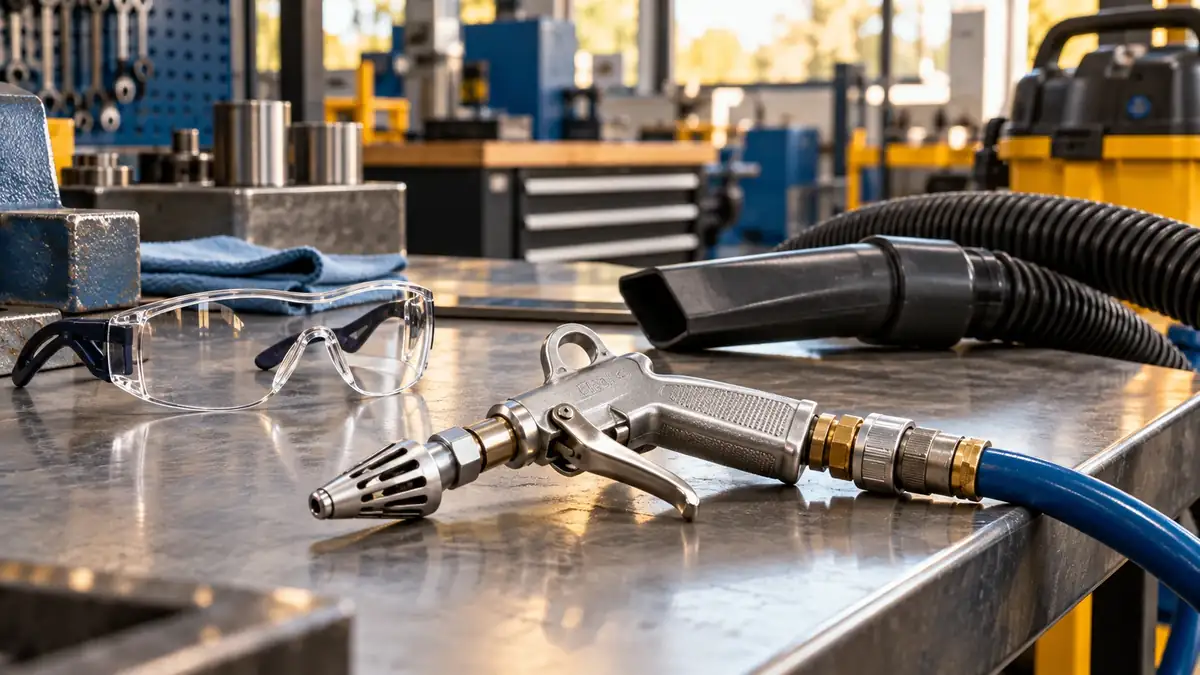
A quick blast of compressed air can turn settled chips and dust into an exposure for the person cleaning and anyone nearby. Never direct an air nozzle at a person or use it to clean skin or clothing. A reduced pressure setting does not make that practice safe. Choose a suitable vacuum or another approved cleaning method wherever practicable. When compressed air is authorised for equipment cleaning, pressure control, effective chip guarding and suitable protective equipment must work together. Stop if debris can escape towards people.
 · Wet Cement Skin Contact and Chemical Burns


Your experience matters
Share your thoughts on this page
Have a question, a useful experience or a suggestion? Add your input below.
Comments are public. Keep them respectful and relevant. Do not share contact details, confidential information or emergency reports.
Comments on this page
Loading comments…