Chemical Storage Compatibility and Segregation
One Shared Shelf Can Create a Dangerous Reaction
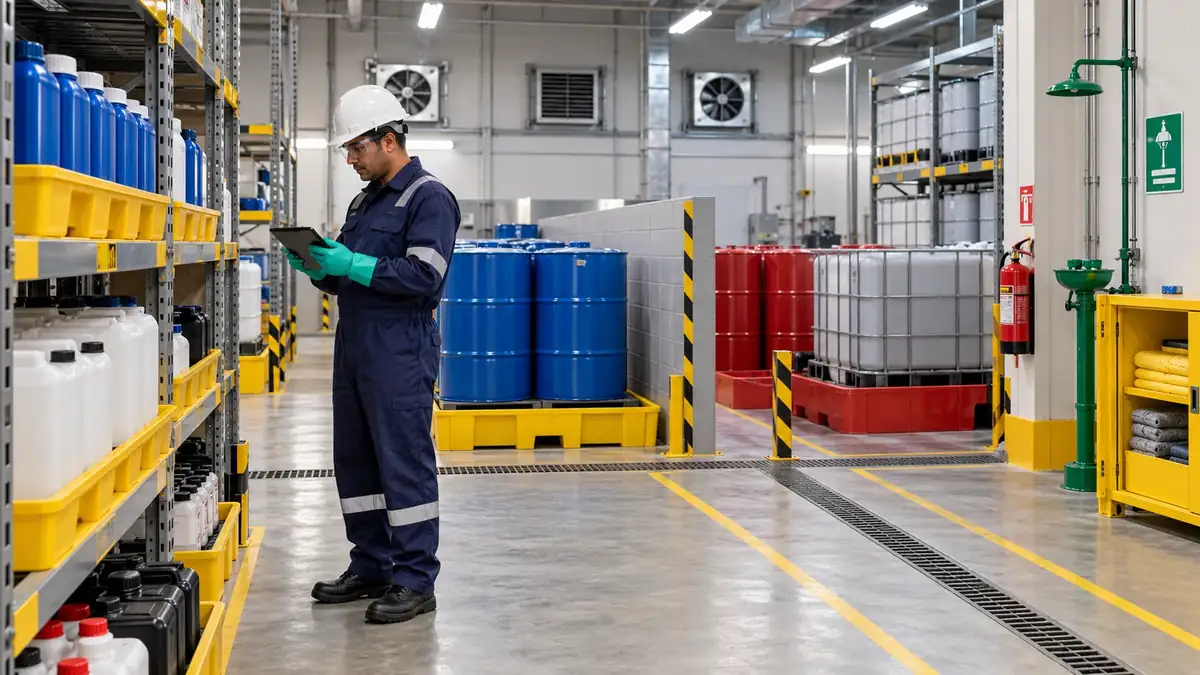
Two sealed chemical containers can appear harmless until damage or leakage allows incompatible contents to meet. The result may be heat, fire, pressure or toxic gas inside a storage area where people have little time to react. Store chemicals by hazard and compatibility—not by convenience, container colour or alphabetical order. Use labels and safety data to decide where each product belongs, keep incompatible substances apart and prevent one leak from flowing into another storage zone.
Controls to confirm
- Maintain an accurate inventory, legible container labels and accessible safety data for every stored product. Complete a compatibility assessment before assigning a location, and quarantine unknown, unlabelled or damaged containers instead of placing them into general storage.
- Physically segregate incompatible hazard groups using suitable dedicated zones, cabinets, separation distances or fire-resistant barriers identified by the risk assessment. Arrange bunds, sumps and drainage so a leak cannot carry one substance into an incompatible product.
- Inspect storage areas routinely for leaks, corrosion, swelling, damaged packaging and poor housekeeping. Keep quantities controlled, aisles and exits clear, ventilation effective, and suitable spill and emergency arrangements ready; train workers to report defects and avoid improvised relocation.
Today’s action
Inspect one chemical storage area today using the product labels and safety data. Verify that every container is identified, compatible with its assigned zone and protected by suitable segregation and spill control; quarantine and report anything uncertain or damaged.
Source guidance
Future HSSE email updates
Register interest in HSSE email updates.
Record your interest in future Worksite Safety Hub messages, selected HSSE news and new-resource alerts. Email delivery is not connected yet.
Your experience matters
Share your thoughts on this page
Have a question, a useful experience or a suggestion? Add your input below.
Comments are public. Keep them respectful and relevant. Do not share contact details, confidential information or emergency reports.
Comments on this page
Loading comments…