Process Safety · Lesson 37 · 8 min read
Opening to Air Can Turn Deposits Into an Ignition Source
Equipment can be isolated, depressurised and ready for the next maintenance step while a reactive deposit remains inside it. In susceptible sour-service systems, introducing air can turn that deposit into an ignition source. Treat the change from closed process equipment to an open worksite as a controlled hazard transition—not simply the end of shutdown preparation.

The mechanism: the ignition source can already be inside
OSHA describes pyrophoric iron sulphide as a product of the interaction between sulphur compounds and iron or steel equipment. It can ignite spontaneously when exposed to air. The practical distinction matters: removing external sparks does not eliminate a reactive deposit on an internal surface. A hot-work prohibition alone cannot control this mechanism. [1]
Opening, draining or cleaning can change the atmosphere surrounding deposits. If reactive material encounters oxygen while flammable vapour remains, the combination can produce fire or explosion. Even without a flammable hydrocarbon atmosphere, oxidation of the deposit can still generate heat. An operating history without a fire is not evidence that the first exposure to air will be harmless. [2]
What an official investigation teaches
WorkSafeBC investigated a December 2019 explosion during cleaning of a low-pressure separator at a natural-gas wellsite. One worker was seriously injured. Its published summary concluded that a pyrophoric reaction likely occurred when oxygen entered the vessel and ignited flammable vapours. Keep that qualification: the regulator reported a likely mechanism, not laboratory proof of every deposit involved. [3]
The investigation also identified inadequate analysis of the cleaning task, incomplete communication between employers and repeated gas-monitor alarms that were reset without informing others. Testing in front of inspection hatches did not provide the same information as an appropriate assessment inside the vessel. These are connected failures: an unrecognised internal ignition source, changing conditions and warnings that did not trigger reassessment.
Plan the transition, not only the opening
Before authorising the work, the responsible technical and operating personnel should establish whether the service and equipment history make pyrophoric deposits credible. Review previous internal findings, cleaning records and comparable equipment. Do not use black colour alone to identify a chemical, or an absence of visible deposits to dismiss the hazard.
INPEX’s published operator procedure treats uncertain material as pyrophoric pending appropriate assessment or testing. It integrates controls with task risk assessment and the permit-to-work process. That is useful primary operating guidance, but its facility-specific limits and arrangements are not universal instructions for every FPSO. Apply the installation’s approved procedures and technical-authority decisions. [2]
Define the preparation, first opening, cleaning, interruptions and waste-transfer stages separately. Record who confirms readiness at each stage and who can suspend the job. A contractor arriving only for cleaning needs the relevant process history; a signed isolation certificate cannot communicate it by itself.
Control the deposits through removal and disposal
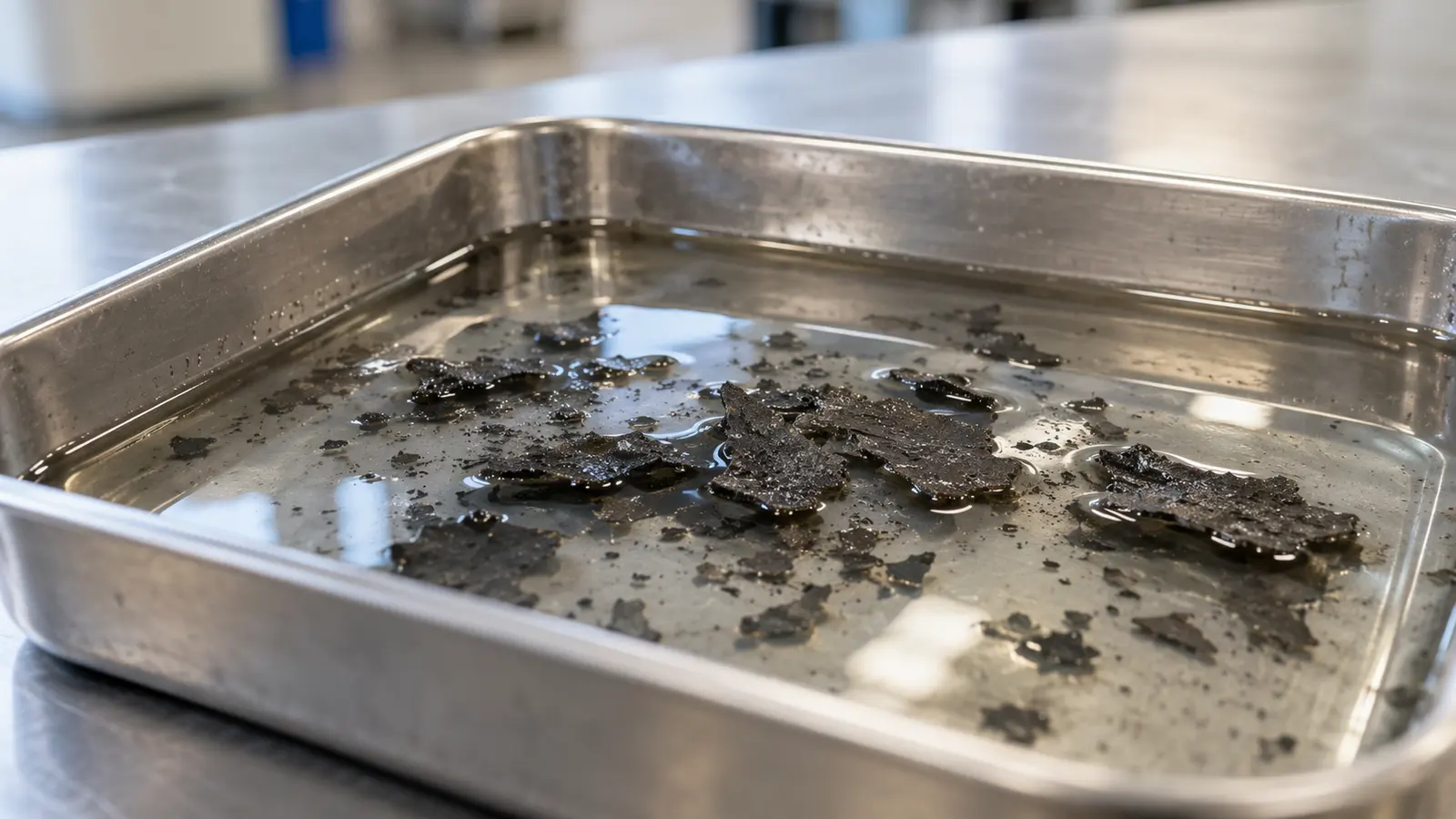
Todd Energy’s published procedure explains that dampening can slow the reaction and that drying can allow the hazard to return. It addresses keeping removed debris wet during storage and transport and communicating its properties to the waste contractor. This is not evidence that a single rinse permanently neutralises material. [4]
Where wetting is selected and compatible with the equipment and contents, the approved plan must maintain the required condition throughout the job. Include interrupted water supplies, inaccessible deposits and delayed waste collection. Do not improvise chemical treatment, dry scraping or a demonstration ignition test. Specialist treatment needs its own assessment. A bag, tray or drum does not by itself establish safe storage: the complete waste method must be suitable and authorised.
Do not exchange fire risk for oxygen-deficiency risk
HSE explains that inerting is effective in enclosed plant, but substantially open equipment cannot be effectively inerted because oxygen concentrations can vary. Loss of inert atmosphere and asphyxiation are both important maintenance hazards. Where inerting is a credited control, its supply, monitoring and reliability require deliberate attention. [5]
Never infer that equipment is safe for entry because it has been purged. Entry assessment, isolation, atmospheric testing, rescue arrangements and authorisation remain separate requirements. Our related lesson on nitrogen and oxygen deficiency explains why protecting the process atmosphere must not endanger the work group.
Hypothetical FPSO example
This is a hypothetical operational example, not a reported incident. A sour-service separator is scheduled for internal inspection. The work pack describes isolation and gas testing, but calls the next activity simply “open and clean”. An experienced contractor asks what controls apply if dark scale is discovered and where removed solids will go overnight.
The supervisor pauses authorisation. Operations, integrity and the cleaning contractor review the service history and agree the approved deposit-control method, monitoring arrangements and waste route. They clarify the conditions requiring work to stop and how those conditions will be communicated at shift change. The successful intervention is not a heroic response to a fire; it is resolving the missing plan before exposure changes.
Leadership and practical actions
Managers should ask for evidence that the plan covers the whole task, including waste left after the vessel is clean. Give supervisors time and authority to resolve uncertainty. The following actions translate the guidance into a practical team check; they do not replace an engineered work procedure.
- Recognise: identify susceptible service, previous findings and uncertainties before opening.
- Verify: confirm approved deposit, atmosphere and waste controls with everyone involved.
- Respond: stop and reassess changing conditions or alarms; do not reset a warning into silence.
Takeaway and team discussion
Takeaway: removing pressure and hydrocarbons does not prove that a reactive deposit is safe to expose to air.
Discussion question: which upcoming opening or cleaning task has the weakest plan for controlling suspected deposits through final waste handover?
Continue learning in the Process Safety hub and revisit verified isolation before planning intrusive work.
Official video availability
No directly relevant official video could be verified for this lesson. No unrelated video has been embedded; use the WorkSafeBC written investigation below for the team discussion.
Primary sources and reference notes
- OSHA Technical Manual, Section IV, Chapter 2: Petroleum Refining Processes—sulphur compounds and pyrophoric iron sulphide.
- INPEX: Safe Handling of Pyrophoric Material, revision 1, 24 May 2024—operator-specific guidance, not this website’s operating procedure.
- WorkSafeBC: Worker injured in explosion when iron sulfide reaction ignited flammable vapours—December 2019 incident; summary published February 2021.
- Todd Energy: Pyrophoric Iron Sulphide SOP, revision 3, November 2025—operator-specific handling and waste guidance.
- HSE: Inerting—enclosure, reliability and maintenance hazards.
Sources checked 19 October 2026. This educational article supports discussion; use approved site procedures, competent assessment and applicable requirements for actual work.
Your experience matters
Share your thoughts on this page
Have a question, a useful experience or a suggestion? Add your input below.
Comments are public. Keep them respectful and relevant. Do not share contact details, confidential information or emergency reports.
Comments on this page
Loading comments…