Security · Maritime Operations
Hormuz Ship Attacks: From Strike to Fire, Flooding and Evacuation
Published · Updated
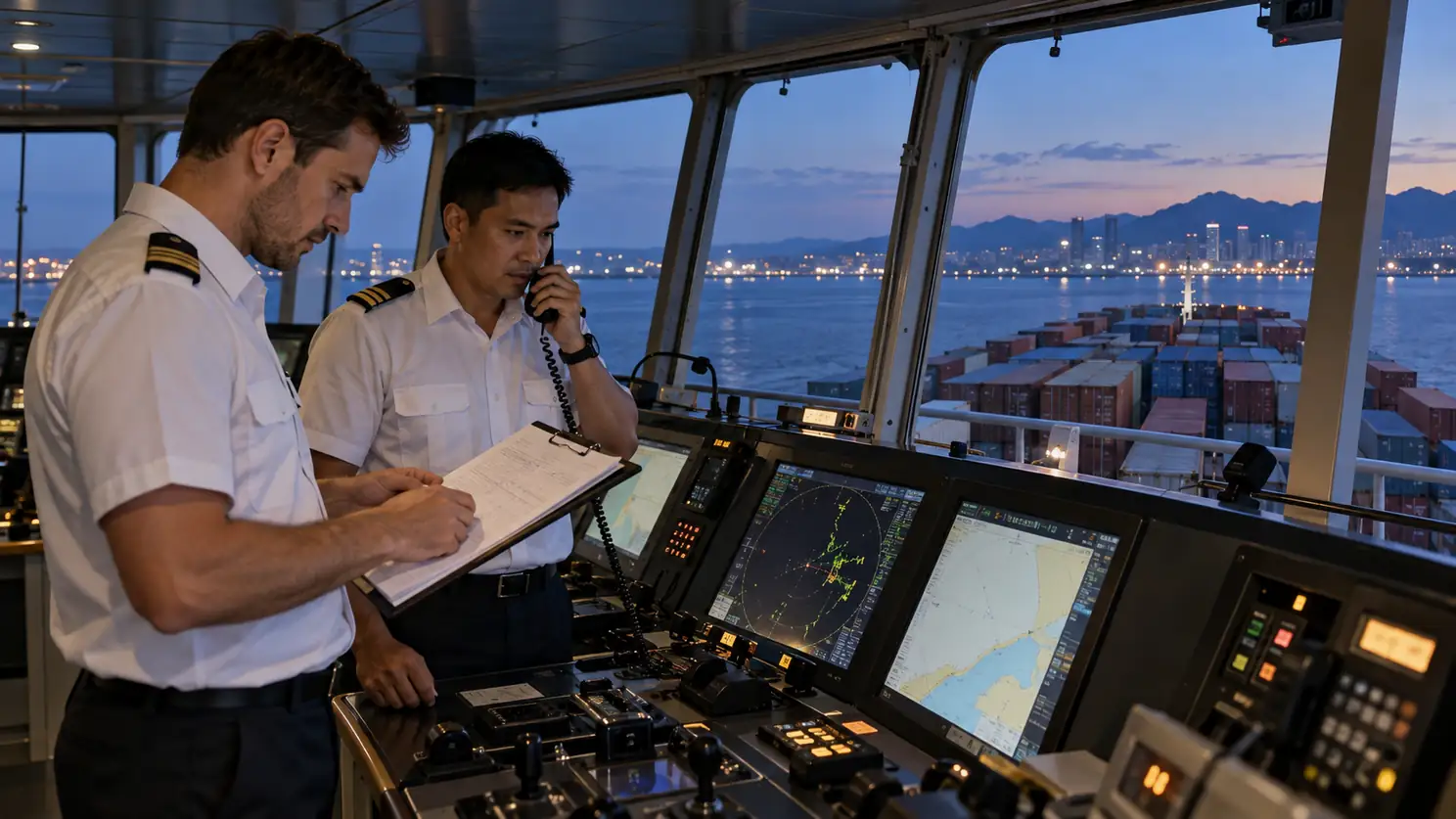
The loss of a container ship and damage to another in the Strait of Hormuz show why security, fire response, flooding control and evacuation must be planned together. A vessel that survives the initial strike can still face a rapidly changing emergency.
Material update: what authorities confirmed
Singapore’s Maritime and Port Authority published its notice on 14 October 2026. It says GFS PRIDE and GFS GISELLE were reportedly struck by unknown projectiles on 13 and 14 October respectively, Singapore Time.
GFS PRIDE sustained damage and fire and subsequently sank. All 21 crew were safely evacuated, with no injuries reported. GFS GISELLE sustained hull damage but reached a safe anchorage under its own propulsion; all 22 crew were safe, with no reported injuries. Read MPA’s official notice ↗
IMO’s incident list, current as of 14 October, records GFS PRIDE as sunk and no pollution reported for that entry. It also lists two seafarers missing from PETRO DOLPHIN at Sohar anchorage in its 11 October entry, and limited pollution reported for KITION M in the Strait that day. These are vessel-specific outcomes—not one combined casualty or pollution total. Check the current IMO incident list ↗
Dates, attribution and limits of the evidence
MPA’s notice gives dates in Singapore Time; IMO uses an incident-date table and lists GFS GISELLE under 13 October. Do not silently treat those date labels as an exact shared timestamp. The MPA notice does not state the precise sinking time, the projectile type or the responsible party.
The IMO page is a live list, not a dated final investigation report. Its “no pollution” entry describes the reported status at that update; it is not a guarantee about future releases or every vessel nearby. This article was first published on 12 October and updated on 15 October with these material developments. Earlier tanker reporting remains context, not the full current picture.
Why the emergency plan needs a transition check
Security procedures often describe the warning and initial response. The harder question is what happens next: can the bridge still navigate, can the engine room maintain power, can teams control fire or flooding, and can everyone reach the correct muster location?
Use a realistic tabletop scenario that progresses from a strike to degraded communications, smoke, flooding and a possible evacuation. Do not assume that every consequence will occur or claim that these were the precise mechanisms on either ship. The exercise tests the connections between the ship’s existing approved plans.
Five practical control checks for ship and shore teams
- Reassess the voyage and waiting arrangements. Use current flag-state, coastal-state, UKMTO and company information. Define who can delay a movement, revise an anchorage plan or request additional support. Check alternatives before the vessel is committed to a constrained location.
- Connect detection with immediate action. Allocate bridge, navigation and reporting roles so additional security watchkeeping does not distract from safe navigation. Keep primary and backup emergency contacts accessible. Do not improvise jamming, interception or weapons use.
- Verify critical emergency systems. Check the status of firefighting, watertight boundaries, emergency power, steering, alarms and communications through the vessel’s approved maintenance and drill arrangements. Resolve impairments rather than assuming a recent inspection means everything is available today.
- Prepare for a safe transition to survival arrangements. Review crew accounting, casualty movement, life-saving appliances, protected muster and the master’s decision process. Visitors, contractors and supernumeraries must be included. Do not delay life-saving action to preserve equipment or collect footage.
- Retain pollution and evidence controls. Confirm shutdowns, reporting contacts and the applicable shipboard pollution plan. Preserve logs and electronic records when safe. A report of no pollution at one time does not remove the need to inspect and notify after subsequent deterioration.
Make the anchorage security hold point real
Before cargo work, bunkering, repairs or contractor access, the master and shore team should confirm that the current threat assessment still supports the activity. Identify how work stops, transfers are secured, openings are closed and people are accounted for if conditions change.
Agree the same stop-and-communicate arrangement with terminals, agents and contractors. Avoid a gap in which every organisation assumes another is watching the external threat. Keep fatigue and relief arrangements under review when heightened watches continue.
Questions for the next readiness review
- What verified information would make us change the voyage, timing or waiting area?
- Can bridge, engine-room and deck teams communicate after loss of normal power?
- Which impaired emergency system would change the plan before entry?
- Who accounts for every person, including contractors?
- Can a medical or evacuation request be made without searching for contacts?
- How do we separate confirmed facts from developing casualty or pollution information?
Video note
No directly relevant authoritative, embeddable video for these new incidents was verified. Unrelated attack footage has not been added. Use the official MPA notice, IMO list and current operational advisories.
Primary sources and dates
- MPA — Two Singapore-Registered Vessels Struck in Strait of Hormuz ↗Published 14 October 2026; incidents dated 13 and 14 October, Singapore Time
- IMO — Middle East highlighted confirmed incidents ↗Live list current as of 14 October 2026; consulted 15 October
- UKMTO — Recent incidents ↗Operational updates; check the latest notices before movement
- BMP Maritime Security (PDF) ↗Supporting maritime-security guidance, not an investigation finding
Your experience matters
Share your thoughts on this page
Have a question, a useful experience or a suggestion? Add your input below.
Comments are public. Keep them respectful and relevant. Do not share contact details, confidential information or emergency reports.
Comments on this page
Loading comments…