Safety · 9 min read
When a Ship Is Damaged at Sea: Crew Safety and Pollution Readiness After the Gulf Incidents
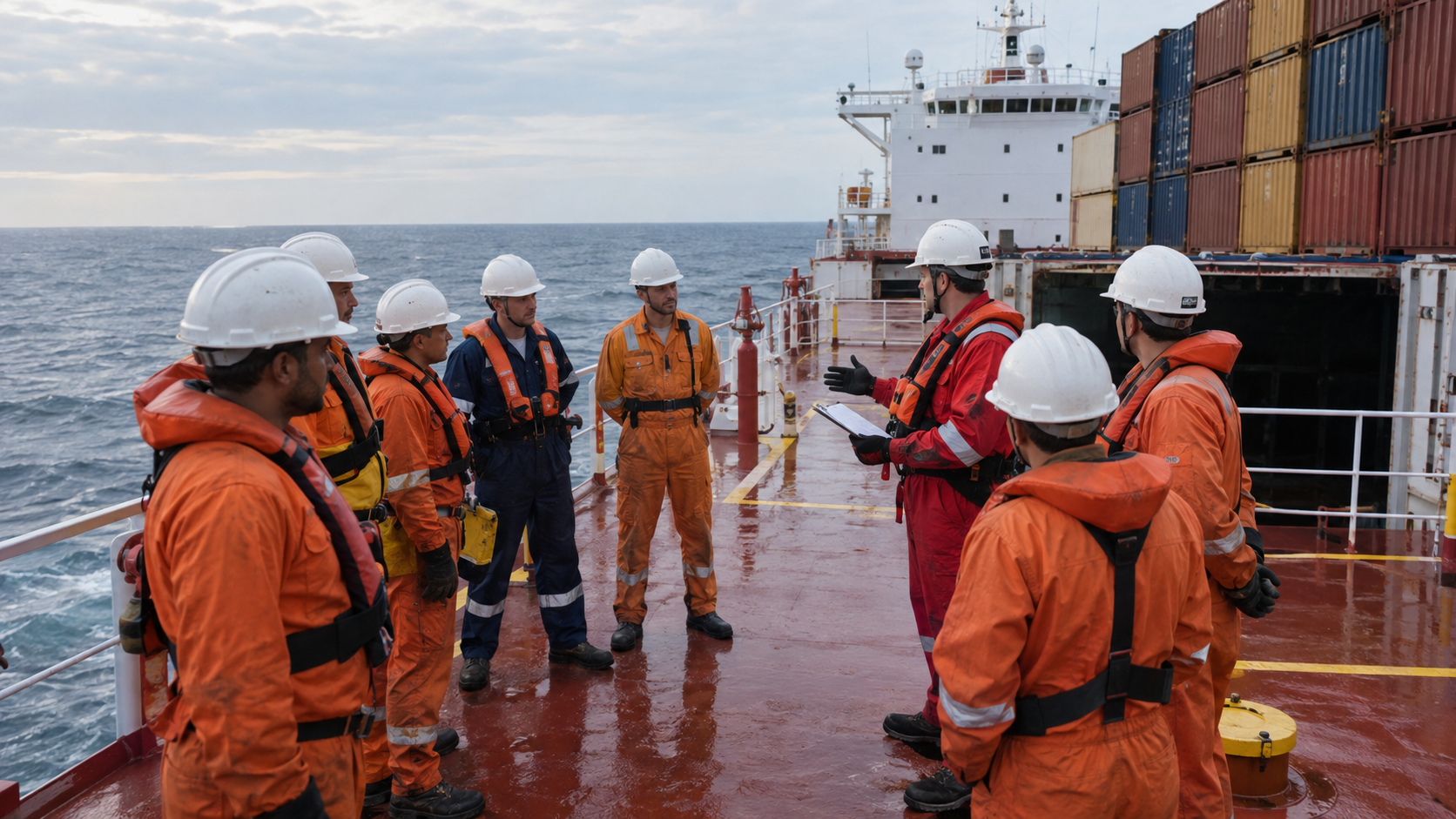
The IMO records three damaged vessels on 8–9 September, including one seafarer fatality. What should a crew and shore team be ready to do when damage, medical needs and pollution risk converge?
What the IMO has confirmed
The International Maritime Organization's confirmed-incident register, with cumulative figures as at 10 September 2026, lists damage to Hercules Star on 9 September approximately 24 nautical miles northwest of Port Rashid, United Arab Emirates. One seafarer died. It also lists damage to New Andros on 9 September approximately 28 nautical miles southeast of Al-Faw, Iraq, and to Horizon 1 on 8 September approximately 38 nautical miles northeast of Dibba, United Arab Emirates. The register reports no pollution for each of these three entries.
The same register lists 75 confirmed incidents and 22 seafarer fatalities across the wider Middle East crisis as at 10 September. Those cumulative figures do not mean that all 22 fatalities occurred in the three latest incidents. The register does not establish the cause, mechanism or attribution of the latest damage. Its individual entries are brief, so this article does not infer the type of damage, cargo, crew actions or adequacy of any vessel's response.
Why a single damage report demands several plans at once
A damaged ship can face a medical emergency, loss of propulsion or steering, fire, flooding, a compromised cargo or bunker system and an uncertain security picture at the same time. These are credible planning scenarios, not reported outcomes of the three vessels. A no-pollution entry is welcome, but it cannot substitute for checking tank boundaries, vents, bilges, overboard discharges and sea-surface observations after damage.
The first operational challenge is to protect people while building an accurate picture. A crew may have to muster, account for everyone, treat casualties, identify unsafe compartments, stabilise the ship and send a clear report ashore before the full extent of damage is known. Decisions about continuing, diverting, requesting assistance or abandoning ship depend on changing conditions rather than a single initial assessment.
Before transit: make the voyage decision explicit
Security exposure must be part of the voyage-specific risk assessment, alongside weather, traffic, vessel condition, cargo and the availability of assistance. The operator should set a clear decision owner and documented go/no-go criteria, update route and threat information through appropriate maritime channels, and agree when the master will seek a revised passage plan. Commercial pressure must not silently replace a risk decision.
- Confirm current route intelligence, reporting arrangements and contact details through the company's designated security channels.
- Check lifesaving, firefighting, damage-control, medical and communications equipment against the actual voyage and crew complement.
- Brief muster duties, safe refuge, casualty handling and how to report an emergency without exposing crew to further harm.
- Identify diversion, refuge and medical-evacuation options, including realistic response times and communication limits.
The first minutes: account, isolate, assess, communicate
A workable response starts with a reliable alarm and muster. Account for all crew and contractors, locate casualties without sending rescuers into an unassessed space, and establish whether the bridge retains navigation and communications capability. Damage-control teams need a safe route, appropriate protection, a reporting line and withdrawal criteria.
Shore support needs concise updates: position, vessel status, persons aboard, casualties and medical needs, observed damage, fire or flooding indications, possible pollution, assistance required and next reporting time. Separate observations from assumptions. One person should maintain a timeline of decisions and changing conditions so new responders are not forced to reconstruct the event from fragmented calls.
Medical evacuation and personnel protection
A fatality in the IMO register is a reminder that personnel protection is the immediate priority. Practise stabilising an injured person, selecting a safe transfer point and coordinating medical advice or evacuation when weather, vessel motion or distance make a straightforward transfer impossible. A helicopter or boat may not be instantly available.
Protect those conducting the response as carefully as the casualty. Assess structural stability, smoke, heat, electrical hazards, atmosphere and access before entry. Set explicit stop and withdrawal conditions. Preserve evidence where safe, but never delay lifesaving action to protect an investigation.
Pollution readiness even when no release is reported
The IMO reports no pollution from Hercules Star, New Andros or Horizon 1. This is an incident-status statement, not proof that damaged vessels never pose an environmental threat. Following any hull or machinery damage, crews should verify relevant tank soundings and transfer systems, check containment and overboard paths, and monitor for signs of discharge using safe methods.
If a release is suspected, the shipboard pollution emergency plan should connect the master, company, coastal authorities and specialist responders. Avoid improvised transfers that could worsen stability or cause another release. Prepare accurate cargo and bunker information, map sensitive areas if a spill becomes credible, and document what was observed and reported. The response must fit the vessel's actual equipment, location and permissions.
A tabletop exercise for ship and shore
Use a scenario in which a ship reports unexplained damage at sea, one injured crew member and uncertain tank integrity. Ask the master and shore team to make the first three calls, identify what must be checked before entering a space, decide when to request outside help, and specify what evidence would change the passage decision. Then introduce a communications outage or a fresh indication of flooding.
The test is whether people can make linked safety, security, medical and environmental decisions under imperfect information. Record the gaps in contacts, authority, equipment, response time and handover; assign owners and close them before the next exposed voyage.
- Can everyone aboard be accounted for quickly, including personnel off watch?
- Who authorises entry into a damaged compartment, and what makes the team withdraw?
- What triggers diversion, assistance, medical evacuation or abandonment?
- How will a suspected discharge be verified and reported without creating another hazard?
- Can shore support sustain a clear common picture if the vessel must move while the incident evolves?
Learn from the facts without inventing a cause
These IMO entries establish damage, one fatality aboard Hercules Star and no pollution reported for the three most recent listed vessels. They do not explain why the damage occurred. The useful lesson now is preparedness: integrate voyage security with the ship's existing rescue, damage-control, firefighting and pollution-response arrangements, then revise the assessment if authoritative findings add detail.
Sources
- Middle East — Highlighted (Confirmed) incidents — International Maritime OrganizationPublished Register figures as at 10 September 2026
Daily HSSE updates
Subscribe for practical HSSE updates.
Subscribe for the daily message, selected HSSE news and occasional new-resource alerts from Worksite Safety Hub.