Safety · Product Reviews · 10 min read
Rotary-Dial High-Top Safety Boots Review: Convenient Protection or Marketplace Hype?
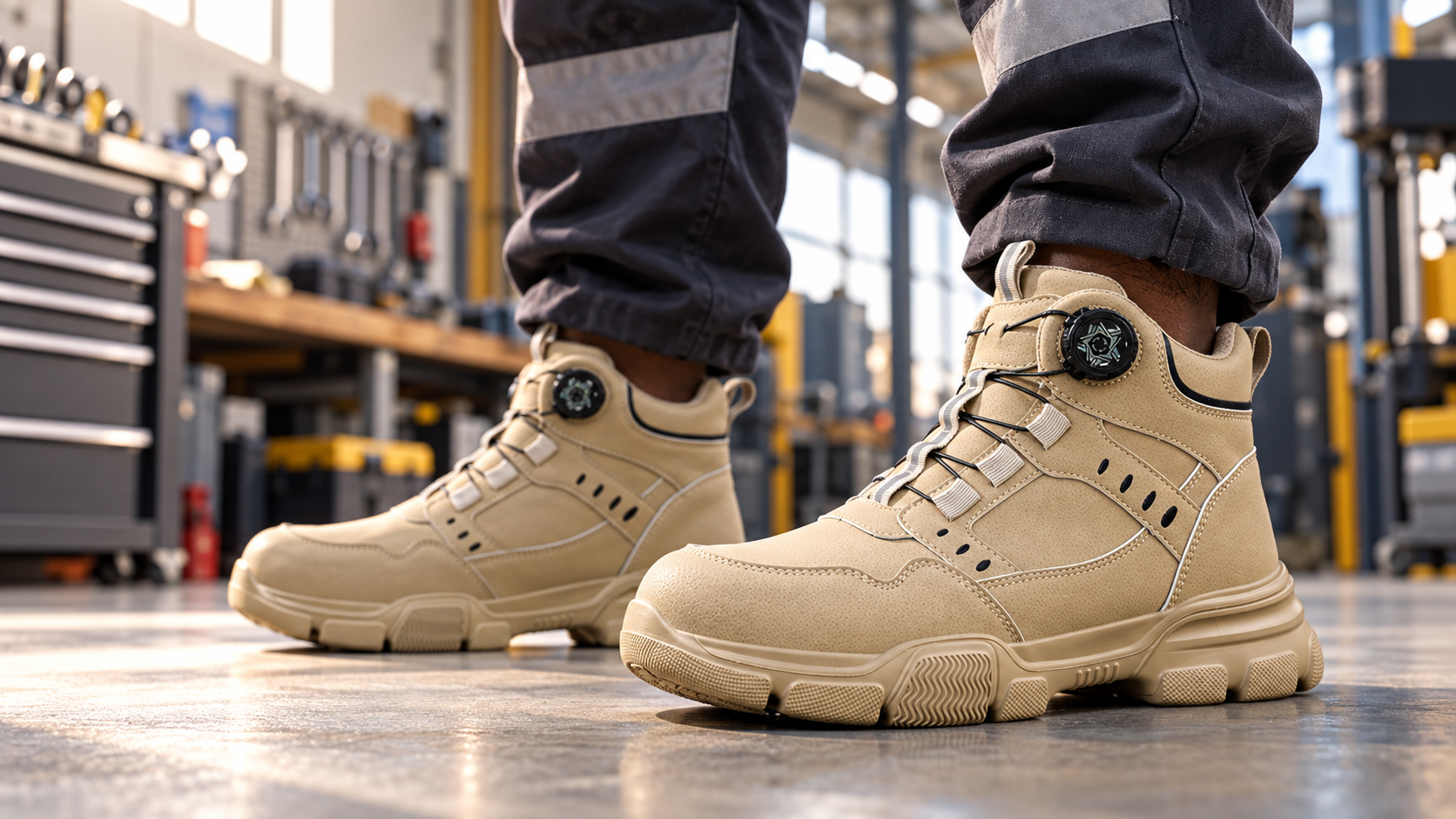
An independent review of tan high-top work boots advertised with rotary-dial closure, a protective toe, flexible puncture-resistant midsole, splash-resistant microfiber upper and lightweight cushioned sole.
Affiliate disclosure and review basis
This independent review contains an affiliate link. Worksite Safety Hub may earn a commission if you make a qualifying purchase through it, at no additional cost to you. Our assessment is based on the supplied listing images and seller claims; we have not independently impact-tested, puncture-tested, slip-tested, splash-tested or durability-tested the exact boots.
This is a separate tan high-top model with a rotary-dial closure. It should not be confused with the previously reviewed black low-cut mesh safety shoes. Product construction, protection, fit and intended use are materially different, and options within the listing may also vary.
Quick verdict
These boots package several attractive ideas into a modern high-top design: fast rotary tightening, padded ankle coverage, a microfiber-style upper, a chunky cushioned outsole and seller-advertised toe and underfoot protection. The dial can be convenient for workers who repeatedly change footwear, while the closed upper appears easier to wipe clean than open knitted mesh.
The boots look practical for general warehouse, workshop, maintenance and light-construction duties, subject to the workplace hazard assessment. Their weakness is not the concept but the evidence: photographs of nails, falling objects or internal layers do not prove compliance with a recognized footwear standard. Our verdict is cautiously positive for comfort and convenience, but protective use depends on independently verifiable certification for the exact model.
What makes this model different
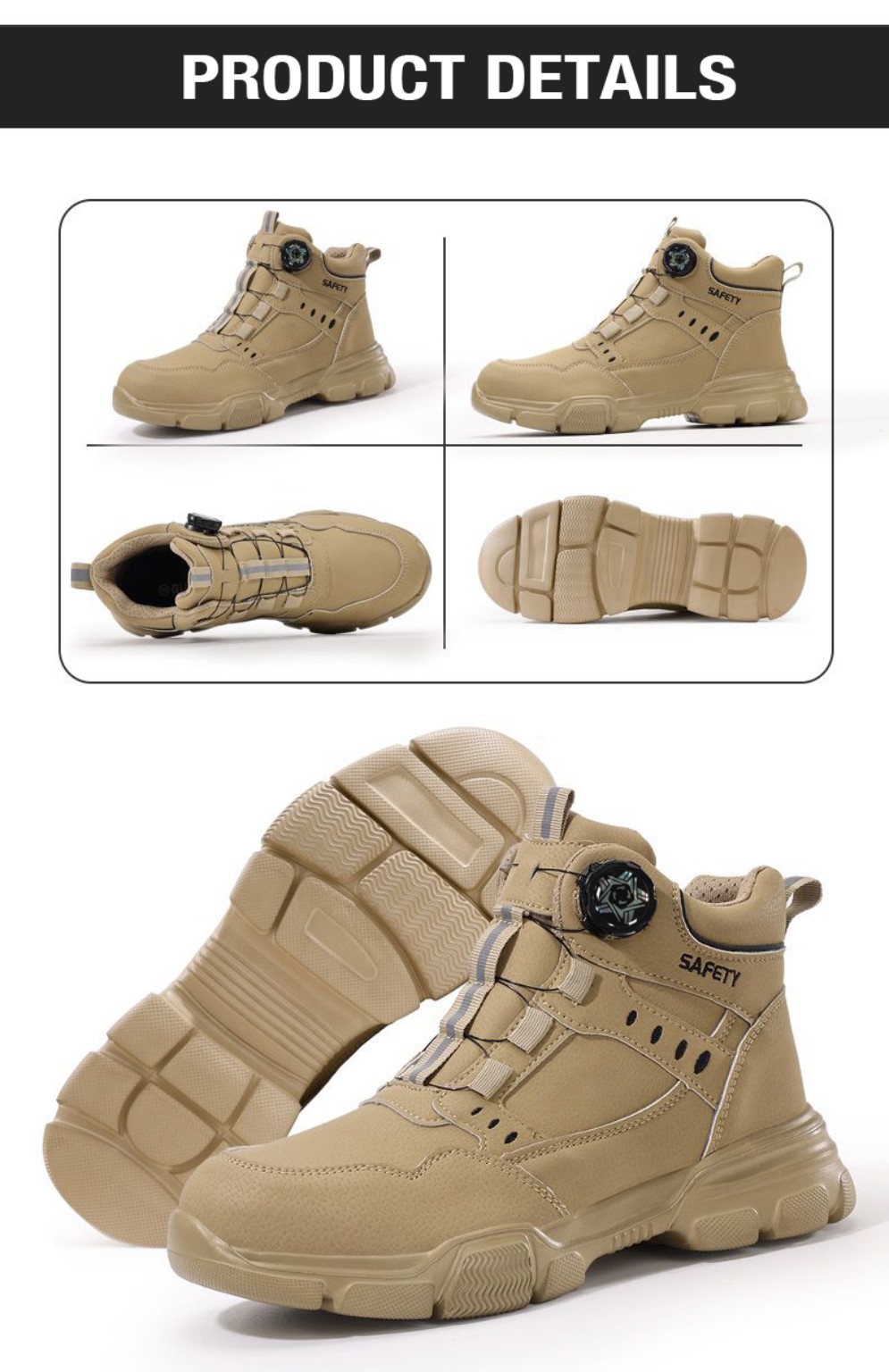
The boot rises above the ankle and uses a side-mounted rotary dial linked to thin cable lacing. Fabric guides distribute the cable across the instep, while pull tabs at the tongue and heel should make entry easier. The upper is presented as microfiber, with stitched overlays, small ventilation openings and reflective-looking piping.
A high-top shape can provide a more secure feel and protect the ankle from light abrasion, but height alone does not prove ankle support. Likewise, a reflective strip may improve conspicuity in some conditions without meeting any high-visibility requirement. Buyers should judge each feature on documented performance rather than appearance.
Rotary closure: useful, with important checks
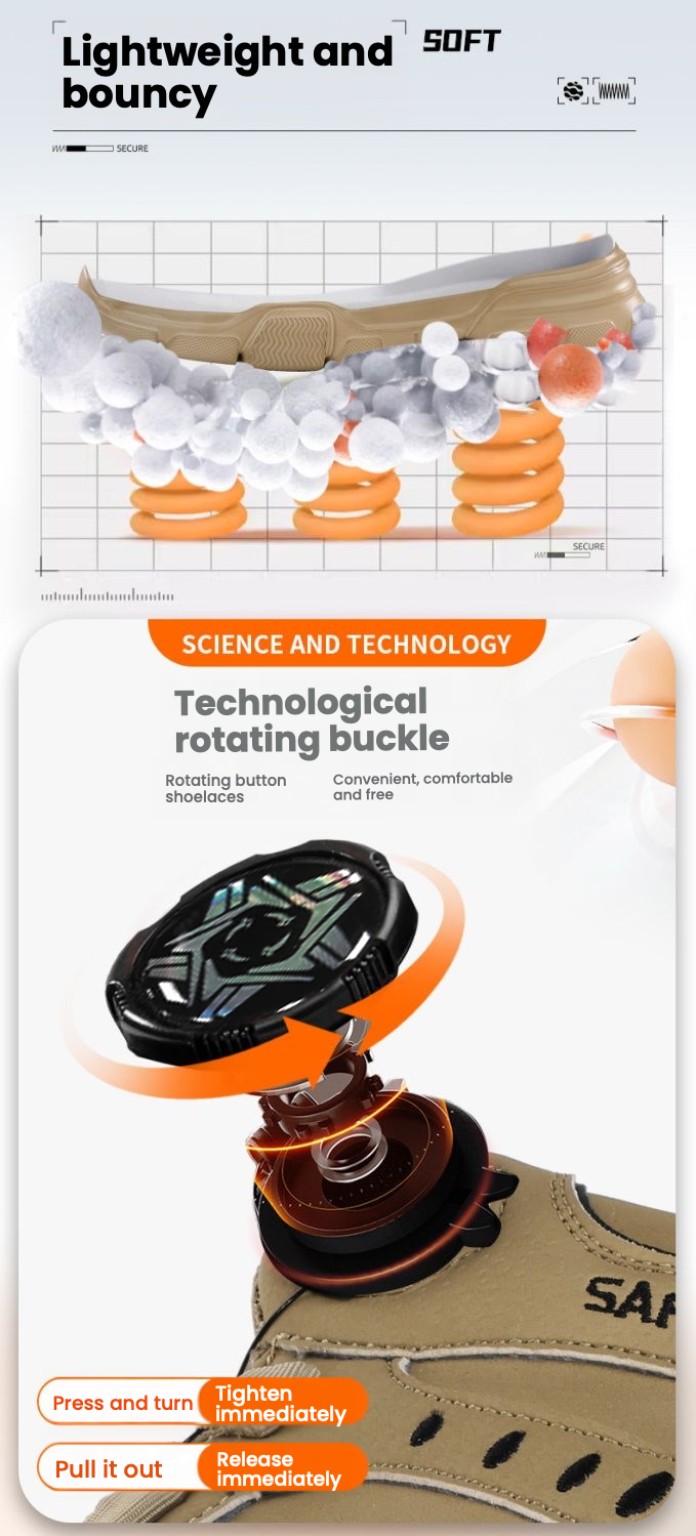
A rotary closure can deliver quick, even tightening without loose lace ends. That is useful around housekeeping-sensitive work areas and for people wearing gloves or frequently entering clean zones. It also makes tension adjustment possible without retying a knot.
The mechanism creates a single point of failure. Dirt, impact, cable damage or a broken dial may leave the boot loose or difficult to remove. Ask whether the cable and dial are replaceable, whether spares are included and how the system releases if contaminated or damaged. Workers should be able to remove the boot promptly after an injury or contamination event.
Protective construction claims
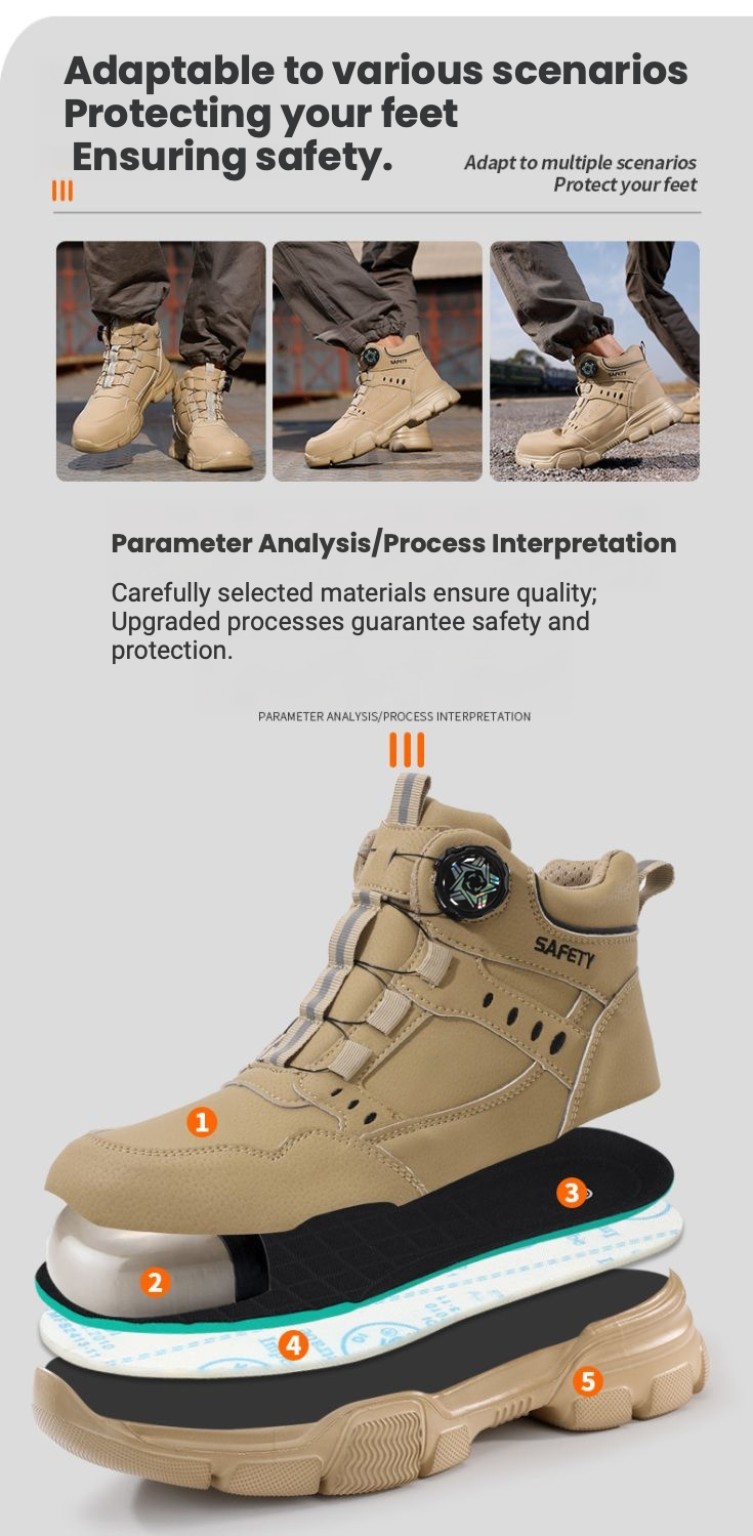
The listing graphics describe a standard protective toe and a soft puncture-resistant midsole, presented as an alternative to a rigid steel plate. A flexible textile layer could reduce weight and cold transfer while allowing more natural movement. However, material names such as ‘Kevlar’ or phrases such as ‘military-grade’ should be treated as marketing claims unless the seller documents the fibre, construction and tested penetration resistance.
Request a complete report tied to the exact model, manufacturer and size range. Confirm impact and compression performance for the toe, puncture resistance for the midsole, slip resistance for the outsole, and any antistatic, conductive or electrical-hazard classification separately. Passing one test does not establish the others.
- Exact model number on the boot, box, certificate and report.
- Recognized standard and full footwear classification.
- Named test laboratory with traceable report details.
- Toe impact and compression results.
- Puncture performance for the actual midsole construction.
- Slip testing relevant to the work surface and contaminants.
Upper, splash resistance and cleaning
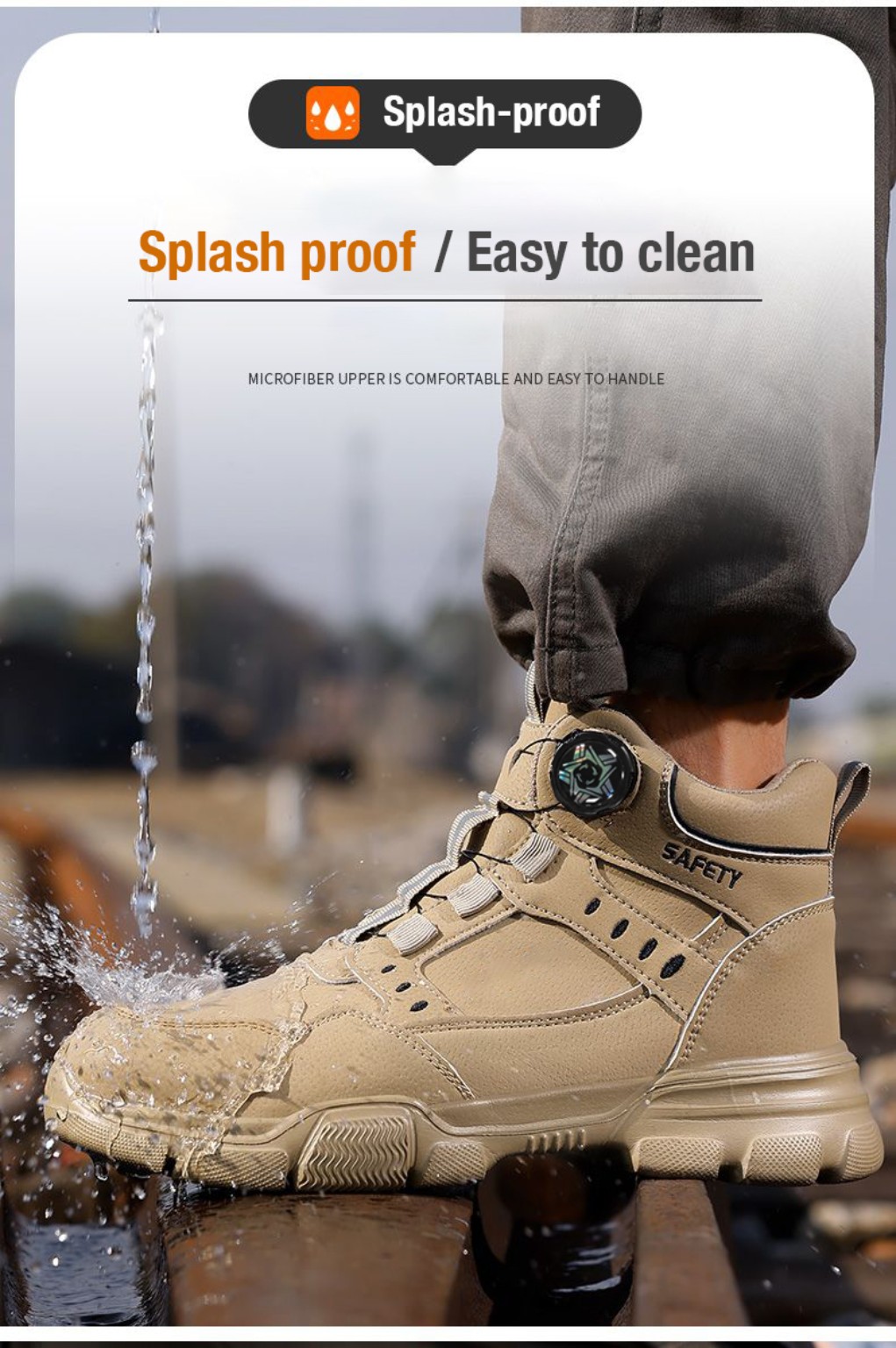
Compared with a knitted safety sneaker, the microfiber-style upper should resist light splashes and surface dirt more effectively. Smooth panels are easier to wipe down, and the padded collar may keep out some loose debris. These are useful qualities for dry workshops, warehouses and general maintenance.
Splash-resistant does not mean waterproof. Stitched seams, the tongue opening, ventilation holes and the dial assembly can admit water. The listing also provides no evidence of resistance to fuels, solvents, acids, alkalis, wet concrete or hot particles. Clean according to the seller's instructions, avoid aggressive chemicals and dry the boots naturally away from direct heat.
Comfort, sole and walking performance
The seller promotes a lightweight, thick rebound sole and illustrates a flexible segmented outsole. Cushioning can reduce perceived impact during walking on hard floors, while the high-top collar and dial allow a close fit. The trade-off is that deep soft segments may feel less stable on ladders, gratings, edges or uneven ground.
Comfort claims are personal and should be tested over a full shift. Check heel hold, toe-cap clearance, forefoot width, arch support, heat buildup and whether the dial creates a pressure point. Inspect the tread for embedded debris and early separation, and confirm that the compound suits oil, water and temperature conditions at the intended workplace.
Who should consider these boots?
Subject to verified certification and employer acceptance, these boots may appeal to warehouse teams, maintenance technicians, delivery workers, light assemblers and tradespeople who value quick fastening, a wipe-clean upper and more ankle coverage than a low-cut shoe.
They should not be assumed suitable for offshore operations, heavy civil construction, live electrical work, chemical handling, welding, foundry work, firefighting, chainsaw use or hazardous-area duties. Those applications may require documented water resistance, metatarsal protection, heat resistance, chemical resistance, electrical properties, flame resistance or other specialist performance not established by these images.
Buyer checklist
Save a screenshot of the exact selected variant and obtain answers before paying. A low price is poor value if the footwear cannot be approved for the task or replacement parts are unavailable.
- Correct tan high-top rotary-dial model selected.
- Foot-length and width chart for the exact size range.
- Model-specific certificate and independent test report.
- Dial and cable warranty, release method and replacement availability.
- Outsole slip, oil and temperature performance.
- Upper limitations for water and workplace chemicals.
- Returns process for incorrect fit or damaged closure.
- Employer or site approval before occupational use.
Final assessment
This tan rotary-dial boot is a genuinely different proposition from a breathable safety sneaker. Its high-top profile, fast closure, microfiber-style upper and thick segmented outsole may deliver a useful balance of convenience, cleaner appearance and everyday comfort for suitable tasks.
The protective story remains conditional. Treat the toe-cap, puncture-resistant layer, splash resistance and slip performance as seller claims until the exact boot is backed by durable markings and credible documentation. If those checks succeed and the fit is secure, the design could be a practical warm-climate work boot; if they do not, regard it as casual work-style footwear rather than verified PPE.
Confirm the exact model, specification, certification evidence, shipping terms and current price before ordering.
Sources
- AliExpress — Rotary-dial high-top safety boots product listingPublished Product listing; accessed 20 September 2026
- OSHA — Foot Protection, 29 CFR 1910.136Published Current standard; accessed 20 September 2026
Daily HSSE updates
Subscribe for practical HSSE updates.
Subscribe for the daily message, selected HSSE news and occasional new-resource alerts from Worksite Safety Hub.