Safety · 9 min read
A Ship Under Repair Is a Changed Risk: Lessons From the Fatal Qingdao Shipyard Fire
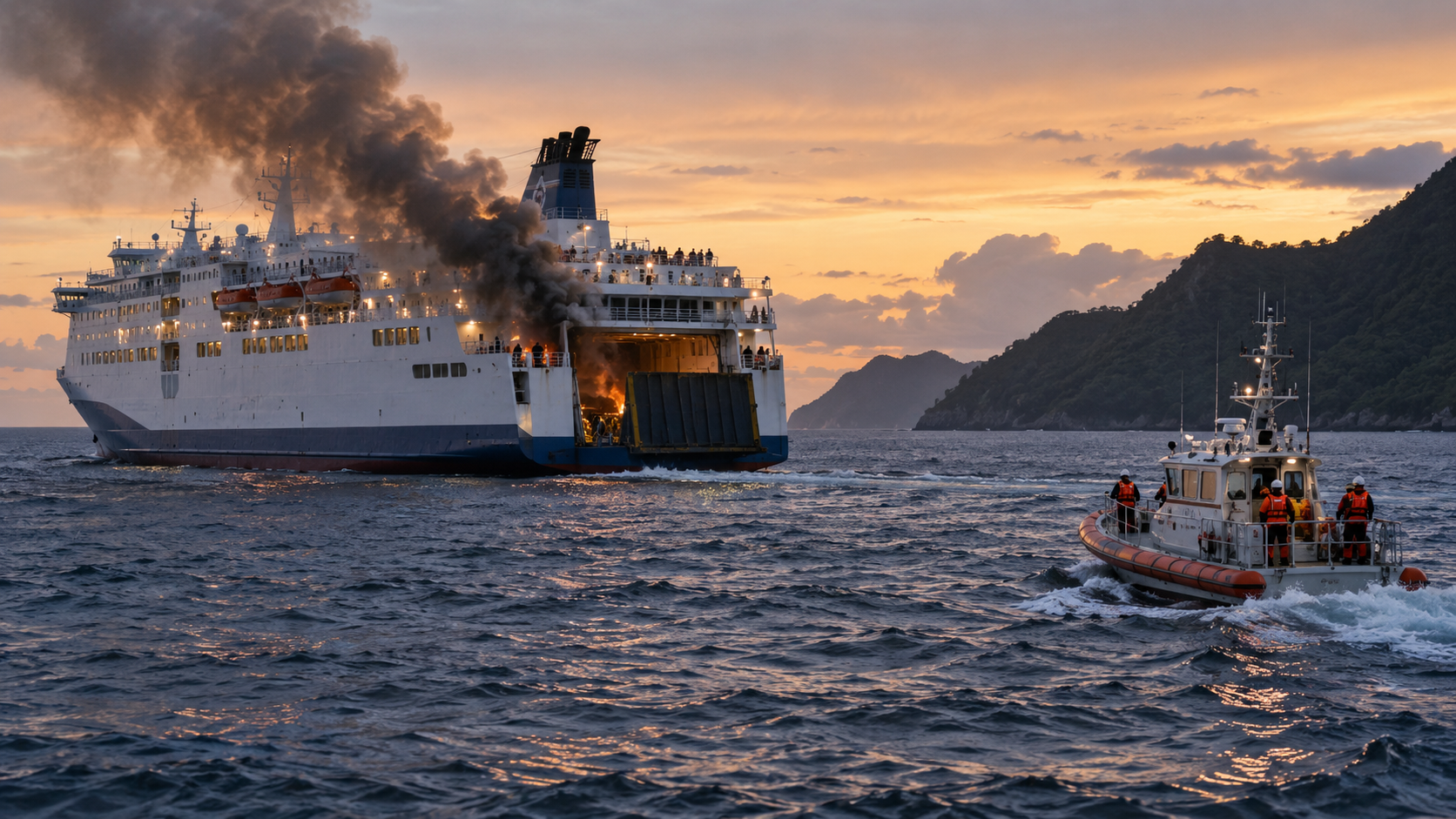
The fatal fire aboard a vessel under repair in Qingdao reinforces why ship and yard activities need one SIMOPS picture, rigorous impairment control and shared emergency command.
Confirmed facts and unresolved cause
Official reporting states that a fire broke out at about 11:15 a.m. on 10 September 2026 aboard a foreign cargo vessel undergoing repair and inspection at Qingdao Beihai Shipbuilding in Shandong. Forty-two people were reported aboard: 12 evacuated safely, five were hospitalised in stable condition and 25 died. The visible fire was extinguished at approximately 2:30 p.m.; subsequent reporting identified the vessel as the Liberian-flagged bulk carrier Ocean Melody.
On 14 September, China’s State Council established an investigation team to determine cause, responsibilities and corrective actions. Until that investigation reports, it would be wrong to present hot work, coating, fuel, ventilation or any other suspected factor as established. The lessons below address the temporary risk state created by repair work, not an asserted cause of this tragedy.
Repair changes the vessel’s safety architecture
A vessel designed to operate with intact boundaries, available detection and known system configurations may enter repair with compartments opened, cables routed through doors, ventilation altered, systems drained and normal fire protection impaired. Temporary services and contractors add new ignition sources, obstructions and communication paths.
Treat the ship as a temporarily modified process facility. The daily risk picture should show which systems and fire zones are impaired, which compensating measures are active and which work fronts can influence each other. Returning one system to service can also change the hazard for another crew, so restoration belongs in the SIMOPS plan.
One permit picture for ship and yard
Crew, yard employees and subcontractors may use different supervisors, languages and permit practices. A safe arrangement needs one coordinated authority that can see hot work, coating, cleaning, electrical work, fuel-system maintenance, tank entry and testing together. Locally valid permits can still conflict when their combined effects are invisible.
Before each shift, identify shared ventilation, drainage, power, access and fire-protection systems. Confirm atmospheric-testing needs and whether monitoring must continue as conditions change. Define who can suspend work across organisational boundaries and how every affected permit holder will be notified when an alarm, impairment or new conflict emerges.
Impaired protection requires real compensation
When permanent detection, alarms, hydrants, pumps or fixed suppression are isolated, the record of impairment is not itself a control. Temporary arrangements must be installed, tested and positioned for the actual work areas. Fire watch coverage must consider concealed spaces and the period after work stops, when smouldering material may remain unseen.
Compensation should have a defined owner, inspection frequency and restoration deadline. If the temporary system cannot provide adequate coverage, incompatible work should not proceed. Emergency teams need current isolation status and vessel drawings immediately; searching for this information after smoke has spread consumes life-saving time.
Escape and accounting must include everyone onboard
A repair workforce changes throughout the day. Paper lists at the gate may not show the compartment where each person is working or whether a subcontractor moved between jobs. Use a live personnel-accounting method that reconciles crew, yard staff, contractors and visitors and remains available if normal power or networks fail.
Verify at least two practical escape options from occupied compartments, accounting for temporary hoses, cables, scaffolds and open work. Test whether alarms are audible and understandable amid repair noise and whether unfamiliar contractors know the muster signal and route. Rescue teams must not be sent into uncertain atmospheres merely because the count is unclear.
Questions for today’s ship-repair coordination meeting
Ask which permanent barriers are unavailable, which temporary measures replace them and who last proved those measures. Identify the highest-consequence interaction between today’s work permits. Confirm who has the full onboard count, who holds emergency command and how ship and shore responders will share information.
Then challenge the escape routes in the actual configuration. If the primary way out fills with smoke, can each work party reach another route without crossing the hazard? A repair plan is incomplete until the people doing the work can survive the emergency created by the changed plant state.
Sources
Daily HSSE updates
Subscribe for practical HSSE updates.
Subscribe for the daily message, selected HSSE news and occasional new-resource alerts from Worksite Safety Hub.