Safety · Product Reviews · 9 min read
Breathable Safety Shoes Review: Lightweight Comfort With Worksite Protection?
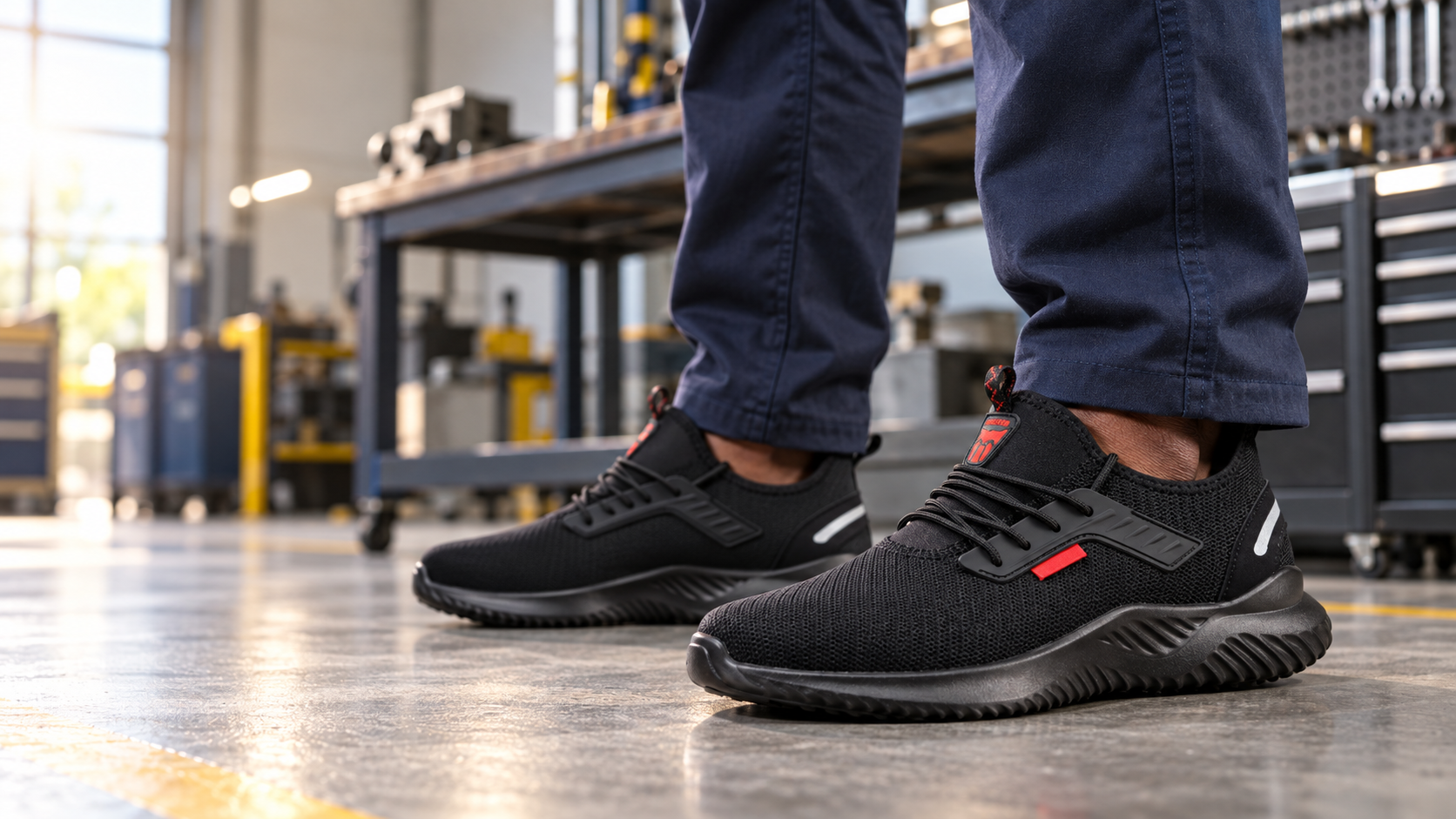
An independent, safety-first review of black mesh work shoes advertised with a protective toe and puncture-resistant midsole—covering comfort, fit, limitations and the evidence buyers should verify.
Affiliate disclosure and review basis
This independent review contains an affiliate link. Worksite Safety Hub may receive a commission if you make a qualifying purchase, at no additional cost to you. Our assessment is based on the supplied listing images and product claims; we have not independently impact-tested, puncture-tested, slip-tested or durability-tested the exact pair.
Colours, construction, sizes and protection claims can vary between options or sellers. Confirm the specification attached to the exact model and size in your basket before ordering.
Quick verdict
These low-cut black work shoes aim to combine the familiar feel of a sports sneaker with protection advertised for workshop, warehouse and light-construction use. The knitted upper should feel cooler and less restrictive than a heavy leather boot, while the broad sole and padded opening may support comfort during walking and standing.
The main buying issue is verification. The listing describes anti-smash and puncture-resistant construction, but photographs of a hammer or nails do not prove compliance with a recognized footwear standard. Our verdict: potentially attractive for lower-risk work where a competent assessment accepts this style, but not a responsible choice for mandatory PPE until the exact model's certification, marking and test evidence are verified.
Design, fit and everyday wear
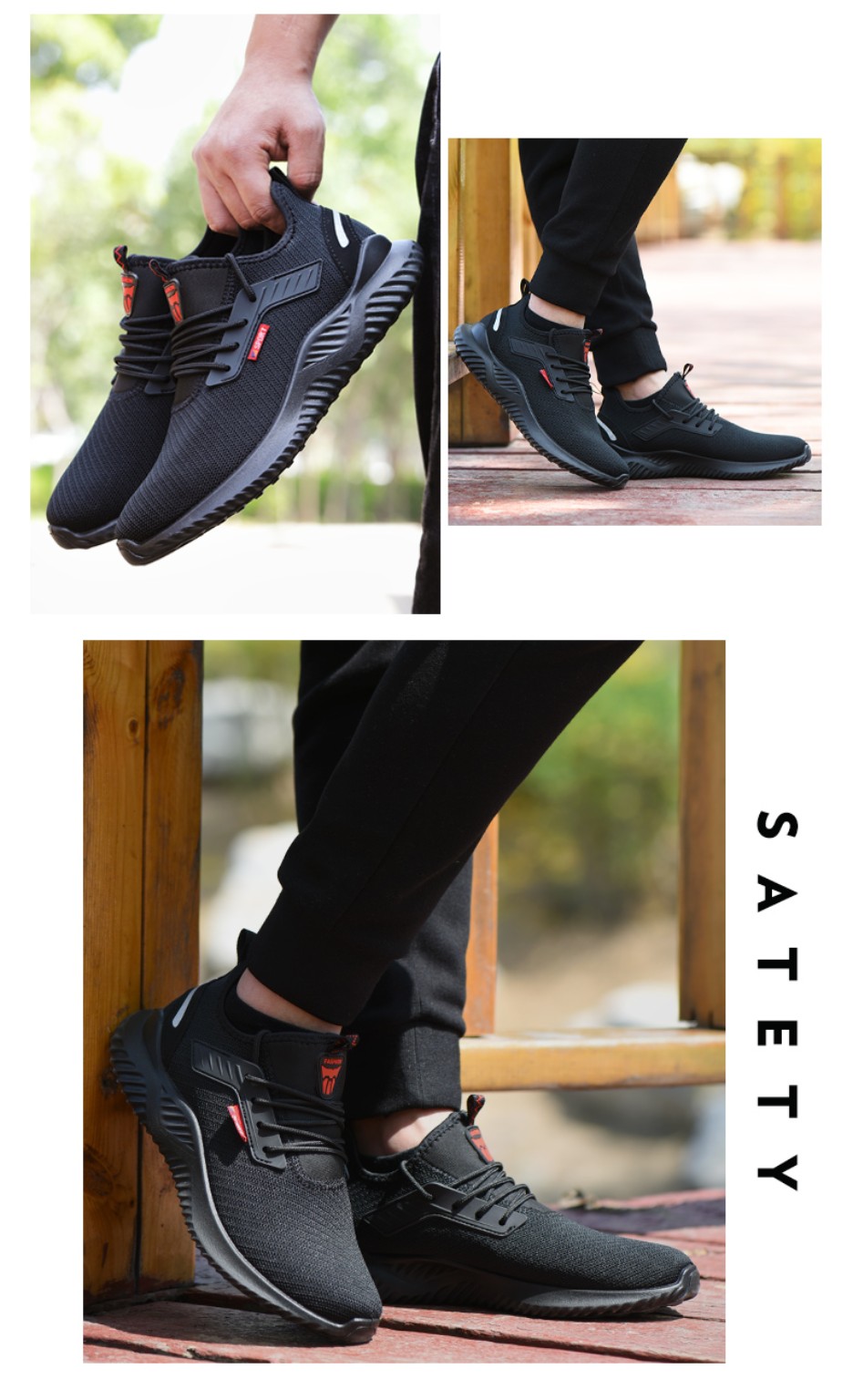
The shoe uses a black knitted or fly-woven upper, conventional laces, pull tabs and a sculpted black sole. A reflective-looking heel detail may improve visibility in some lighting, but it should not be treated as certified high-visibility PPE.
Low weight and flexibility may reduce the fatigue associated with stiff footwear, but a very soft sole is not automatically better. Excessive flex can reduce underfoot stability on ladders, uneven ground or long shifts. Test heel retention, toe room, arch support and torsional stability before relying on the shoes for work.
Breathability: the strongest practical feature
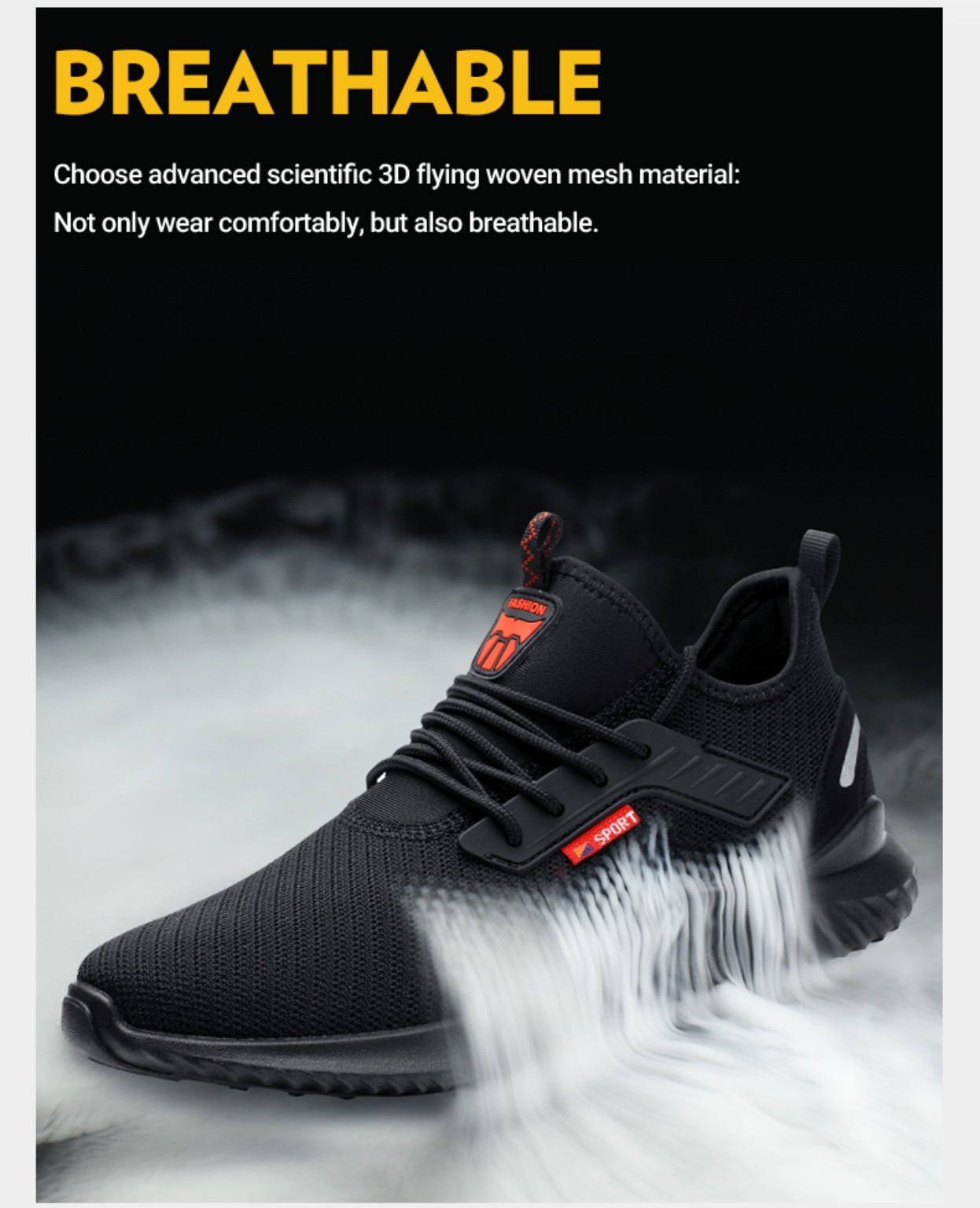
For warm workplaces, the open knit is the most immediately credible benefit. Airflow can help with heat and moisture management, especially during long periods of walking. The trade-off is equally important: porous mesh offers limited protection against rain, wet concrete, chemicals, hot particles, sharp swarf and fine dust.
Choose this construction only when the environment suits it. Welding, foundry work, chemical handling, heavy outdoor work and persistently wet areas usually call for a different upper and a task-specific footwear rating.
Protective toe and puncture claims
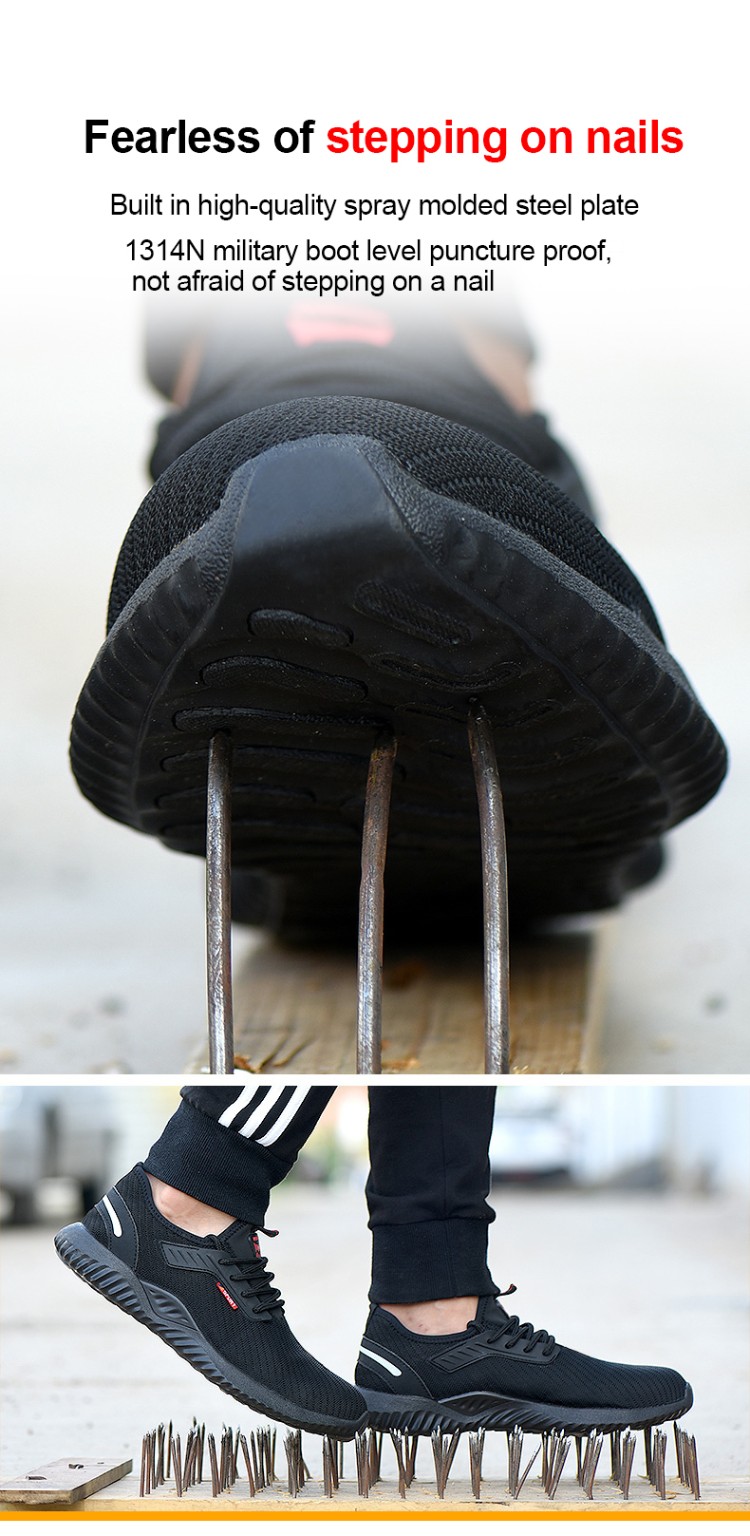
The seller images advertise a widened protective toe and a metal or protective midsole, including a stated puncture-force figure. Treat these as unverified marketplace claims until the seller provides a model-specific report from an identifiable laboratory and the footwear carries durable markings that match the report.
Ask which standard and classification apply—for example, the exact current standard required by your employer or jurisdiction—and confirm toe impact, compression, puncture, slip and any electrical or antistatic properties separately. One successful demonstration cannot establish repeatable protection across production pairs.
- Match the model number on the shoe, box, certificate and report.
- Check the named standard, classification and test laboratory.
- Confirm toe and puncture performance independently; one does not prove the other.
- Verify outsole slip testing for the surfaces and contaminants at your site.
- Reject vague certificates that do not identify the exact product.
Sizing and comfort
The supplied chart presents sizes 36–45 against foot lengths of approximately 230–275 mm. Measure both feet late in the day, use the larger measurement and follow the current listing chart rather than assuming your usual regional size will translate exactly.
Allow room for the work socks you actually use, but do not oversize: heel lift and foot movement can create blisters and reduce control. On arrival, wear the shoes indoors first, check for toe-cap contact, pressure across the forefoot and heel slip, and retain the packaging until fit is confirmed.
Where they may—and may not—fit
Subject to verified protection and site approval, this style may suit dry warehouses, picking and packing, light assembly, maintenance stores, delivery work and controlled workshops where mobility and warm-weather comfort matter.
Do not assume suitability for offshore facilities, heavy construction, live electrical work, chemical areas, molten-metal exposure, firefighting, chainsaw work or hazardous locations. Those tasks can require water resistance, metatarsal protection, chemical-resistant materials, defined electrical properties, ankle support or other certified features not established by this listing.
Buyer checklist
Before ordering, save the selected option and ask the seller for evidence tied to that exact variant. Price and appearance should come after hazard compatibility.
- Exact model, colour and size selected.
- Recognized safety standard and complete classification.
- Traceable model-specific test report and durable footwear marking.
- Toe, puncture and slip performance appropriate to the hazard assessment.
- Upper and outsole compatibility with water, oil, heat, chemicals and abrasion.
- Foot-length chart, width information and returns process.
- Replacement, warranty and seller-support terms.
Final assessment
This is a visually appealing safety-sneaker concept with plausible comfort advantages: a breathable upper, familiar lacing, flexible cushioning and a lightweight profile. It could be a sensible warm-climate option for appropriate lower-risk tasks if the exact pair fits well and the claimed protection is supported by credible evidence.
Do not let dramatic hammer-and-nail photographs replace due diligence. Workplace safety footwear should be selected from the hazard assessment, approved by the employer where required and supported by verifiable certification. Comfort earns these shoes attention; documented performance must earn them a place on the worksite.
Confirm the exact model, specification, certification evidence, shipping terms and current price before ordering.
Sources
- AliExpress — Breathable protective work-shoe product listingPublished Product listing; accessed 20 September 2026
- OSHA — Foot Protection, 29 CFR 1910.136Published Current standard; accessed 18 September 2026
Daily HSSE updates
Subscribe for practical HSSE updates.
Subscribe for the daily message, selected HSSE news and occasional new-resource alerts from Worksite Safety Hub.