Safety · 8 min read
One Release, Two Hazards: When Stored Energy Triggers a Mobile-Equipment Incident
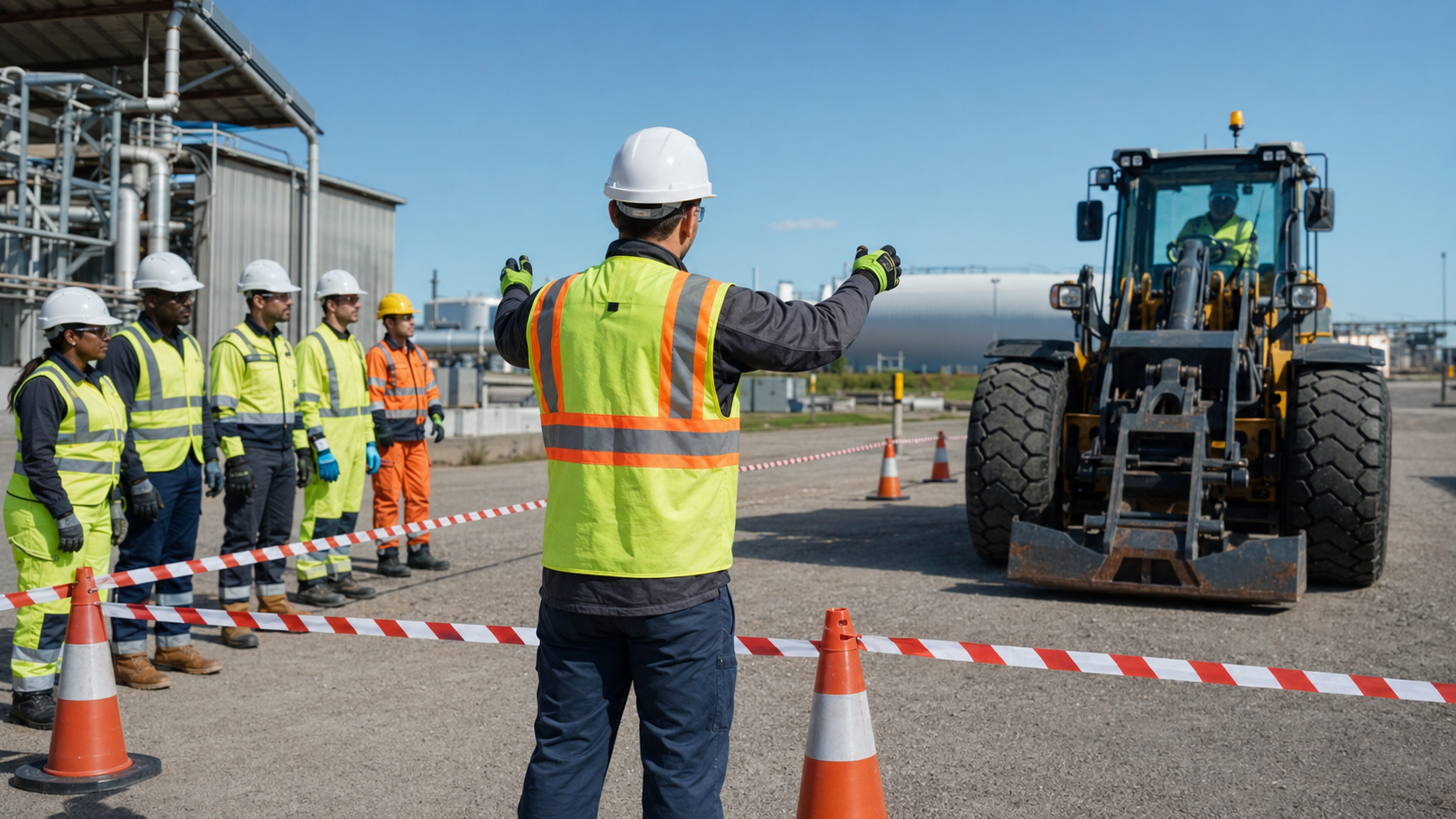
A Queensland mine incident shows how pressure release, unsafe access, lost visibility, a fall and vehicle movement can combine into one escalating event.
What is known so far
Resources Safety & Health Queensland issued Safety Alert 485 after a worker was seriously injured during maintenance on a compressed-air pipeline at an underground coal mine on 12 September 2026. Preliminary information says the worker stood on the front bumper of a drift runner to reach the pipework while a clamp was being tightened.
The pressurised clamp-and-pipe assembly reportedly failed, releasing compressed air and creating dust that reduced visibility. The worker fell from the vehicle. For reasons still being investigated, the drift runner then moved and struck the fallen worker. RSHQ stresses that the precise sequence remains subject to investigation and verification.
Risk assessments must follow the escalation path
The incident combined stored pressure, a possible projectile or release zone, improvised access, reduced visibility, a fall and mobile-equipment movement. Assessing each hazard in isolation can miss how one failure activates the next. The useful question is not only ‘what can go wrong?’ but ‘what will that failure make possible immediately afterward?’
For every significant energy release, consider secondary effects: noise and startle, dust or vapour, loss of lighting or visibility, displaced tools, loss of footing, vehicle movement and blocked escape. Extend the exclusion zone to cover where a worker may fall or retreat, not just where a component may travel.
Depressurise before adjustment or fault-finding
Routine clamps and fittings can store dangerous energy when the line remains live. Before repair, adjustment or fault-finding, apply the site’s approved isolation: identify every supply and backfeed, secure the isolation, vent the section and prove that pressure is absent. Account for trapped pockets and blocked vents.
If a defect cannot be diagnosed without pressure, use a specifically engineered and authorised method with suitable equipment, remote positioning and defined limits. Do not allow production convenience to turn live adjustment into normal practice. An unexplained leak, damaged fitting or unstable assembly is a reason to move people away and reassess.
Access equipment changes body position and consequence
Standing on a bumper can place the worker above the normal footing, close to the release path and directly in front of equipment capable of movement. A suitable platform is not merely a comfort improvement; it controls reach, balance, fall distance and the person’s position relative to stored energy.
Plan access after defining the exclusion zone. The platform should permit the task without leaning into the line of fire and without using mobile plant unless it is designed and authorised for that purpose. Verify that tools, lighting and escape remain usable if dust, noise or pressure release occurs.
Immobilise nearby mobile equipment
When a vehicle is part of the work area, control it against intentional and unintended movement. The method may include parking position, braking, isolation, chocking, key control and clear responsibility, according to the equipment and site procedure. A person should never depend on the driver noticing them after visibility is lost.
Separate the roles of access platform and transport vehicle. If plant must remain nearby, define a no-movement condition and a positive communication method before anyone enters the zone. Reconfirm controls whenever operators change or the task shifts from inspection to hands-on work.
A five-minute field challenge
Choose one maintenance job involving pressure and mobile equipment. Point to the isolation and proving location. Mark the possible path of released air, parts, dust and a falling person. Confirm the access equipment and the physical control preventing vehicle movement. Then ask what change would make the plan invalid.
RSHQ advises operators to verify critical controls, use suitable access, maintain exclusion zones and reassess when conditions change. The investigation is ongoing, but those actions can be applied now without speculating about why the vehicle moved.
Sources
- Resources Safety & Health Queensland — Safety Alert 485Published 14 September 2026
Daily HSSE updates
Subscribe for practical HSSE updates.
Subscribe for the daily message, selected HSSE news and occasional new-resource alerts from Worksite Safety Hub.