Safety · 6 min read
Line-of-Fire Control: Turning Awareness into Reliable Worksite Practice
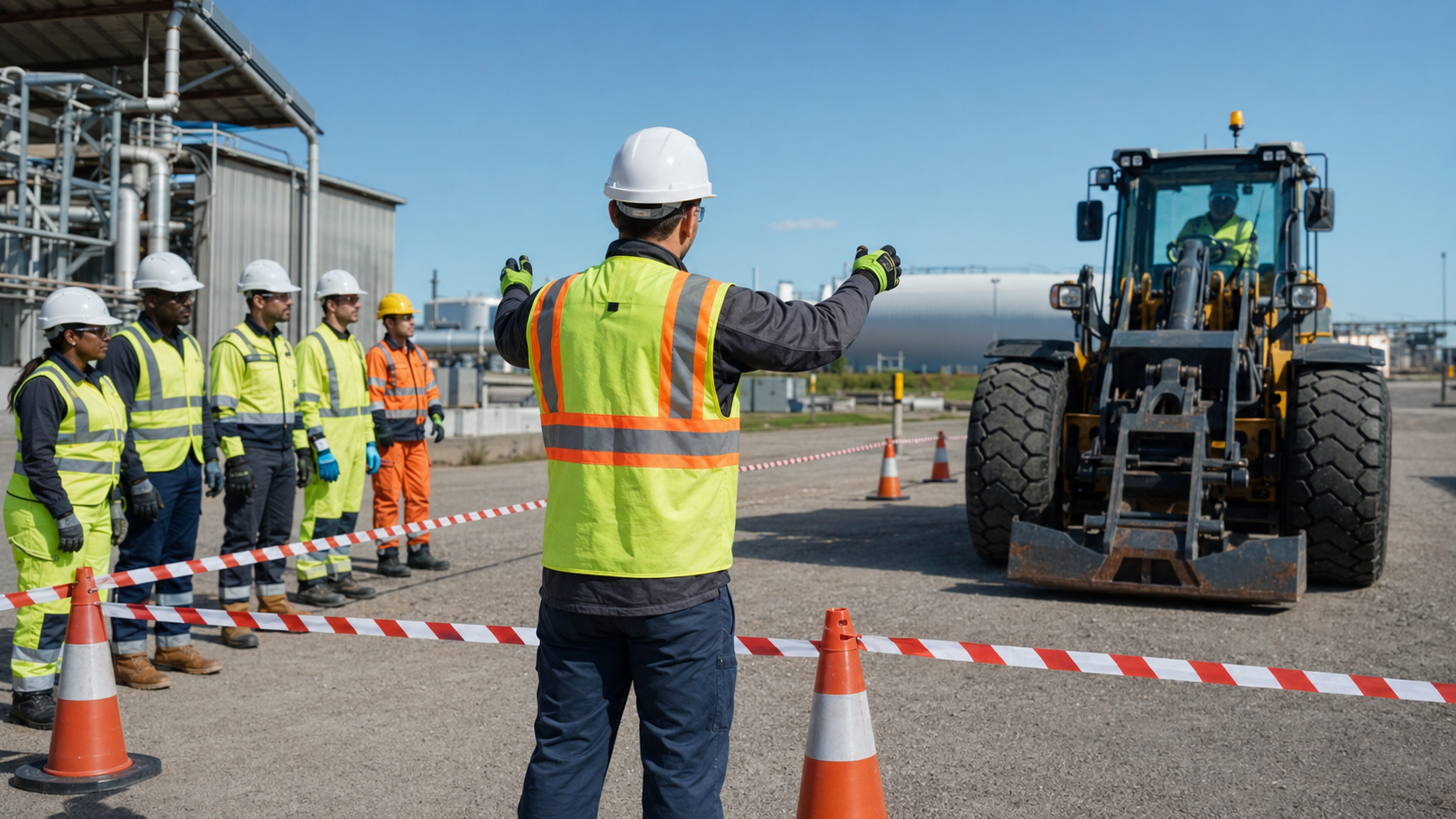
A practical guide to recognising where energy may travel, strengthening exclusion zones, and improving communication around moving work.
Why body position matters
Line-of-fire exposure exists whenever a person could be struck, trapped, crushed, caught between objects, or affected by released energy. The risk is not limited to large machinery. Hand tools, tensioned equipment, suspended items, unstable materials, pressure, gravity and vehicle movement can all create an exposure path.
Good planning asks two questions before work begins: where could energy travel, and where will people be if conditions change? Those questions make body position part of the control plan rather than leaving it to individual judgement during the task.
Controls that work together
No single control is enough for every task. The strongest arrangements combine physical separation, a clear sequence of work, competent supervision and reliable communication.
- Mark exclusion zones that match the actual movement or energy path.
- Use a dedicated spotter where an operator cannot maintain a complete view.
- Keep escape routes clear and avoid standing between movable and fixed objects.
- Pause and re-brief when the load, equipment position or work sequence changes.
Leadership in the field
Supervisors should invite workers to point out hidden exposure paths during the toolbox talk. Workers should be able to stop the task when visibility, communication or separation is lost. This creates a shared picture of the job and makes intervention a normal part of professional work.
Line of Fire: Vehicles and Mobile Equipment · Energy Safety Canada
Daily HSSE updates
Subscribe for practical HSSE updates.
Subscribe for the daily message, selected HSSE news and occasional new-resource alerts from Worksite Safety Hub.