Safety · Mining · Emergency Management
Iscuandé Mine Collapse: Test Remote-Site Rescue Readiness
Published
Incident and official emergency statement: 19 October 2026 · Preliminary information, not a final investigation
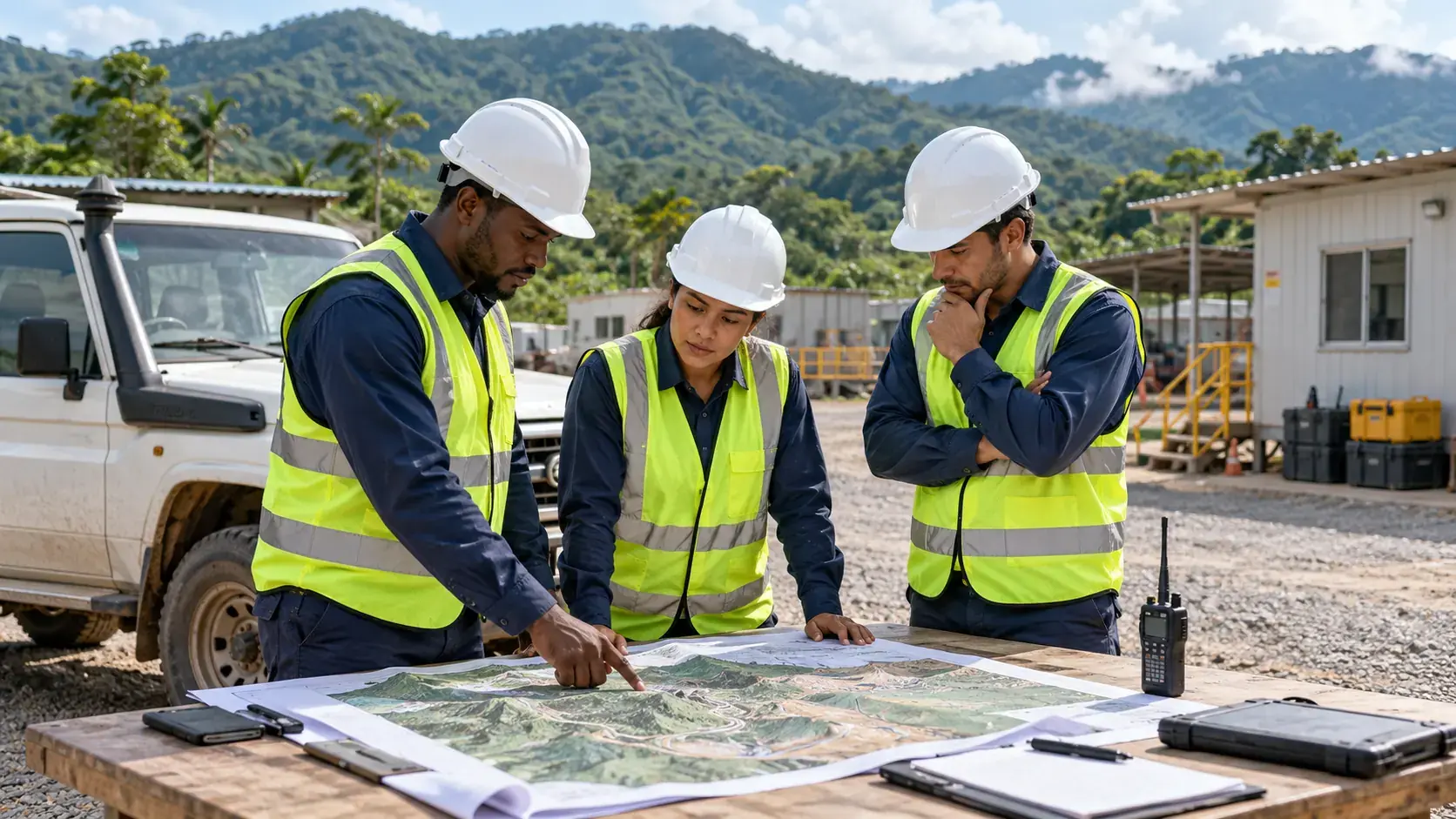
At a remote worksite, an emergency plan must connect the incident location with people who can reach it safely and a medical service that can receive casualties. Colombia’s latest fatal mining emergency makes that entire chain worth testing—not just the emergency telephone number.
What happened, and what is verified
Colombia’s Ombudsman’s Office, the Defensoría del Pueblo, published an emergency statement on 19 October 2026 ↗ after a landslide that morning at a gold mine in Santa Bárbara de Iscuandé, Nariño. It requested coordinated rescue, medical transport and hospital support, and highlighted the need for safe humanitarian access because armed groups were present in the area.
In a separate later report, Associated Press attributed a balance of at least 14 deaths and seven injuries to regional authorities ↗. AP also reported that the search ended on Monday night. These later details come from news reporting of authorities’ statements, not a casualty count in the earlier Ombudsman release.
Event date: 19 October 2026. Official statement date: 19 October 2026. Article publication: 20 October 2026. The earlier statement left the victim total unconfirmed. No final technical investigation establishing the collapse mechanism was available in the sources reviewed. This article does not infer rainfall, excavation geometry, equipment movements or a particular control failure as the cause.
Why HSSE teams should review the response chain
The immediate lesson is a planning question: can help reach the right place, operate without creating more casualties, and transfer injured people to appropriate care? Mining, construction, energy, forestry and utilities teams can face similar remote-access problems even when their hazards differ.
The review steps below are Worksite Safety Hub’s original practical application. They are not additional findings about this mine or instructions for members of the public to enter a collapse area. Emergency rescue must remain under competent command.
1. Prevent exposure before planning a rescue
Check that the current work area, access routes and exclusion zones match the competent ground-control assessment. Identify who can stop work when conditions change and who must authorise re-entry. Do not substitute a generic slope angle or distance for site-specific engineering.
As older supporting guidance—not a new Colombian requirement—MSHA’s Highwall Failure safety alert ↗ reinforces planned highwall control, hazard recognition and examinations. It highlights reassessment after rain and freeze–thaw conditions. Apply relevant principles through competent assessment of the actual material and operation, not by assuming that every slope behaves like a rock highwall.
2. Test the route from alarm to arrival
Use a tabletop exercise to follow a realistic alarm from the supervisor to the external response coordinator. Can the caller provide an unambiguous location, access constraints, known hazards and a reliable callback channel? Can responders find a safe rendezvous without relying on one employee’s personal knowledge?
Review communications coverage, weather limits, route availability and alternatives with the actual service providers. Record assumptions that remain untested. An ambulance, boat or aircraft shown in a plan is not a confirmed available resource until arrangements and operating limits have been established with its provider.
3. Put responder safety inside the plan
Identify a safe command and staging location outside the assessed danger area. Establish who controls entry, accounts for people and communicates changes. Include the risk of further ground movement and the separation of bystanders and vehicles from response activities.
Where security conditions could obstruct access, coordinate through the relevant authorities and authorised humanitarian arrangements. Do not send workers to negotiate passage with armed actors or enter an insecure area to verify a route. A security plan and a rescue plan must work together without placing untrained personnel in either role.
4. Confirm the medical handover
Occupational-health and emergency-service leads should agree how first aid, casualty information, transport and receiving-facility acceptance connect. Consider a multiple-casualty scenario and delays, not only the easiest single-person evacuation.
Test the handover using simulated details, protecting medical privacy. Confirm who updates families and who releases verified public information. A request for an aircraft or specialist facility is not evidence that it has been deployed or accepted a patient.
5. Turn the exercise into verified improvements
Track gaps by accountable owner, interim arrangements and completion evidence. Retest a failed communication or access handover after correcting it. Record whether the exercise proved a capability or merely identified a dependency on another organisation.
Keep rescue readiness separate from permission to continue unsafe work. If a critical prevention or response assumption cannot be met, the operational decision needs explicit competent review—not reassurance that people will improvise if something happens.
Leadership and toolbox questions
- Who can stop work, and what requires a new ground assessment?
- Can the next shift explain the safe rendezvous and escalation route?
- Which response resource depends on an unconfirmed assumption?
- Who controls entry and prevents a second casualty?
- Has the receiving medical service agreed the handover arrangements?
- What did our last exercise actually prove, and what remains open?
Video note
No directly relevant authoritative video with a verified publisher, title and embeddable URL was found for this incident or its remote-access response lesson. News footage, commercial training previews and unrelated underground-rescue videos have not been used as a substitute.
Sources and verification dates
- Defensoría del Pueblo — Urge atención a la emergencia en mina de oro en Iscuandé, Nariño ↗Primary emergency statement published 19 October 2026. Confirms the morning landslide and requests coordinated support; leaves the casualty total unconfirmed.
- Associated Press — 14 miners killed in Colombia gold mine collapse in Nariño province ↗Secondary corroboration published 19 October 2026 and checked 20 October. Reports the later regional-authority casualty balance and end of search. The underlying regional statement was not independently retrieved.
- MSHA — Highwall Failure Accident safety alert (PDF) ↗Older supporting prevention guidance about a 30 September 2024 accident, not a new alert or a finding about Colombia. Publicly indexed official text reviewed 20 October 2026; direct PDF access may require browser verification.
Sources checked 20 October 2026. Case details remain subject to official updates. Apply local law, competent ground assessment and the instructions of authorised emergency services.
Share the lesson
Open the separate 9:16 Pinterest poster
Original AI-generated illustration, not actual incident footage. HSSE TIPS branding appears only in the designed poster footer.
Your experience matters
Share your thoughts on this page
Have a question, a useful experience or a suggestion? Add your input below.
Comments are public. Keep them respectful and relevant. Do not share contact details, confidential information or emergency reports.
Comments on this page
Loading comments…