Safety · 8 min read
When the Fault Is Not on the Map: Workplace Preparedness Lessons From West Java’s Seismic Swarm
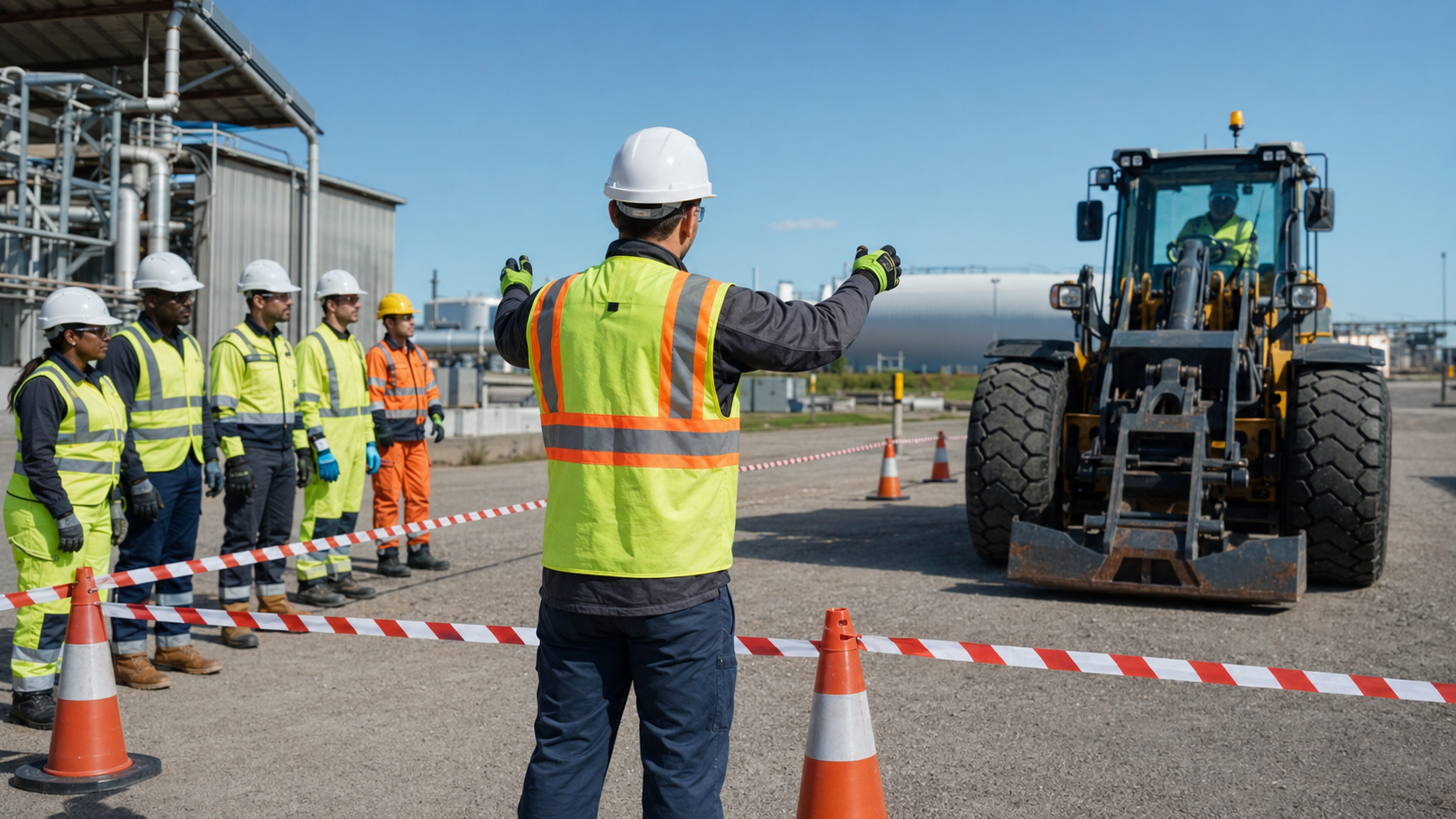
BMKG’s report of 118 shallow earthquakes near Bandung shows why natural-hazard registers must respond to emerging evidence without turning uncertainty into alarm.
What BMKG reported—and what it did not
Indonesia’s Meteorology, Climatology and Geophysics Agency reported 118 shallow earthquakes around Bandung Regency between 11 August and 17 September 2026. Magnitudes ranged from M1.0 to M3.4. Thirteen events were felt at intensity II–III MMI in Pangalengan, Talegong, Cisewu and nearby communities.
BMKG’s analysis associates the activity with a local active fault, but the earthquake pattern lies outside the currently mapped Garsela and Cicalengka fault zones. Further investigation is therefore needed to identify the precise source. BMKG did not state that a larger earthquake was imminent. A seismic swarm is a reason to review preparedness and follow authoritative updates—not a basis for predicting a major event.
A hazard map is a decision tool, not a guarantee
Organisations often translate regional maps into site risk registers, engineering assumptions and emergency plans. That is useful, but a map reflects the evidence and interpretation available when it was prepared. New monitoring data can reveal activity beyond a familiar hazard boundary without making the earlier work worthless.
A living hazard register records uncertainty, identifies the information source and defines what new evidence will trigger review. Sites in the affected region should compare BMKG updates with their location, ground conditions, building vulnerability and critical operations. Changes to engineering or operational controls should be made through competent assessment, not from social-media claims or a single felt tremor.
Control the secondary hazards that turn shaking into an incident
For many workplaces, the most immediate harm may come from what shaking dislodges, ruptures or disables. Unsecured cylinders, chemical containers, high shelving, suspended equipment and temporary structures can fall or move. Damaged piping, electrical systems and fuel supplies can create fire, toxic exposure or loss of containment after the ground motion ends.
Walk down critical areas with the people who operate and maintain them. Check restraints, anchors, flexible connections, clearances and emergency-system availability. Keep evacuation routes free from items likely to fall or block passage. Give priority to equipment whose movement could affect many people or defeat another protection layer.
- Secure gas cylinders, chemical stores, racks, cabinets and suspended loads.
- Check vulnerable pipework, hoses, tanks, cable supports and utility connections.
- Protect emergency power, firewater, alarms, communications and shutdown systems.
- Remove loose objects and temporary materials from escape and response routes.
Define shutdown, evacuation and re-entry decisions before the next tremor
People make better decisions when the criteria are agreed before pressure arrives. A site plan should state who may stop hazardous operations, when personnel move to a safe location, how visitors and contractors are included, and what conditions prevent immediate re-entry. The response should be proportionate to the site and the verified information available.
Re-entry is a controlled transition, not the automatic end of an evacuation. Competent personnel may need to check structural damage, utilities, fire protection, hazardous inventories and process containment. Aftershocks, blocked roads or lost communications can change the risk during inspection. No one should enter a damaged or uncertain area merely to restore production quickly.
Account for people when normal systems fail
Earthquake response can disrupt mobile networks, power and access roads at the same time. Personnel accounting must therefore work without depending entirely on one electronic platform. Keep shift, visitor and contractor records current and establish a fallback method that can be used at muster points.
Test how the organisation will account for lone workers, drivers, remote teams and people who leave by an alternative route. Agree how missing-person information will be verified before a search begins. Responders should not be exposed to unstable structures or hazardous releases because records are incomplete.
Communicate uncertainty without creating complacency or alarm
Two weak messages are common during emerging natural hazards: dismissing small events because damage has not occurred, or presenting them as proof that a major disaster is coming. Both undermine trust. Good communication states what the authority has confirmed, what remains uncertain, which actions people should take and when the next update will be issued.
Use BMKG and relevant local authorities as the primary sources for this event. Correct rumours promptly, but do not repeat sensational claims more widely than necessary. Supervisors should be ready to explain why practical checks are being strengthened even though no larger earthquake has been predicted.
A practical preparedness review for today
Bring together facilities, operations, emergency response, security and business-continuity leads. Review the latest verified information and identify the site’s three most consequential secondary earthquake scenarios. Confirm the controls in the field, not only in the emergency plan.
Then run a short exercise: a felt tremor interrupts operations, communications are unreliable and one utility system reports an abnormal condition. Ask who stops work, where people muster, how the site accounts for everyone, who authorises inspection and what evidence is required for re-entry. Record owners and deadlines for every gap.
- Are BMKG updates monitored by a named role on every shift?
- Which equipment could fall, rupture or ignite if movement increases?
- Can emergency shutdown and isolation be completed safely after a tremor?
- Will muster and communication still work without power or mobile data?
- Who has authority to declare an area safe for re-entry?
Sources
- BMKG — Earthquake sequence in Bandung Regency and surrounding areas, 11 August–17 September 2026Published 17 September 2026
Daily HSSE updates
Subscribe for practical HSSE updates.
Subscribe for the daily message, selected HSSE news and occasional new-resource alerts from Worksite Safety Hub.