Safety · Product Reviews · 9 min read
BSIDE SH7 Thermal Imaging Multimeter Review: Two Diagnostic Tools in One
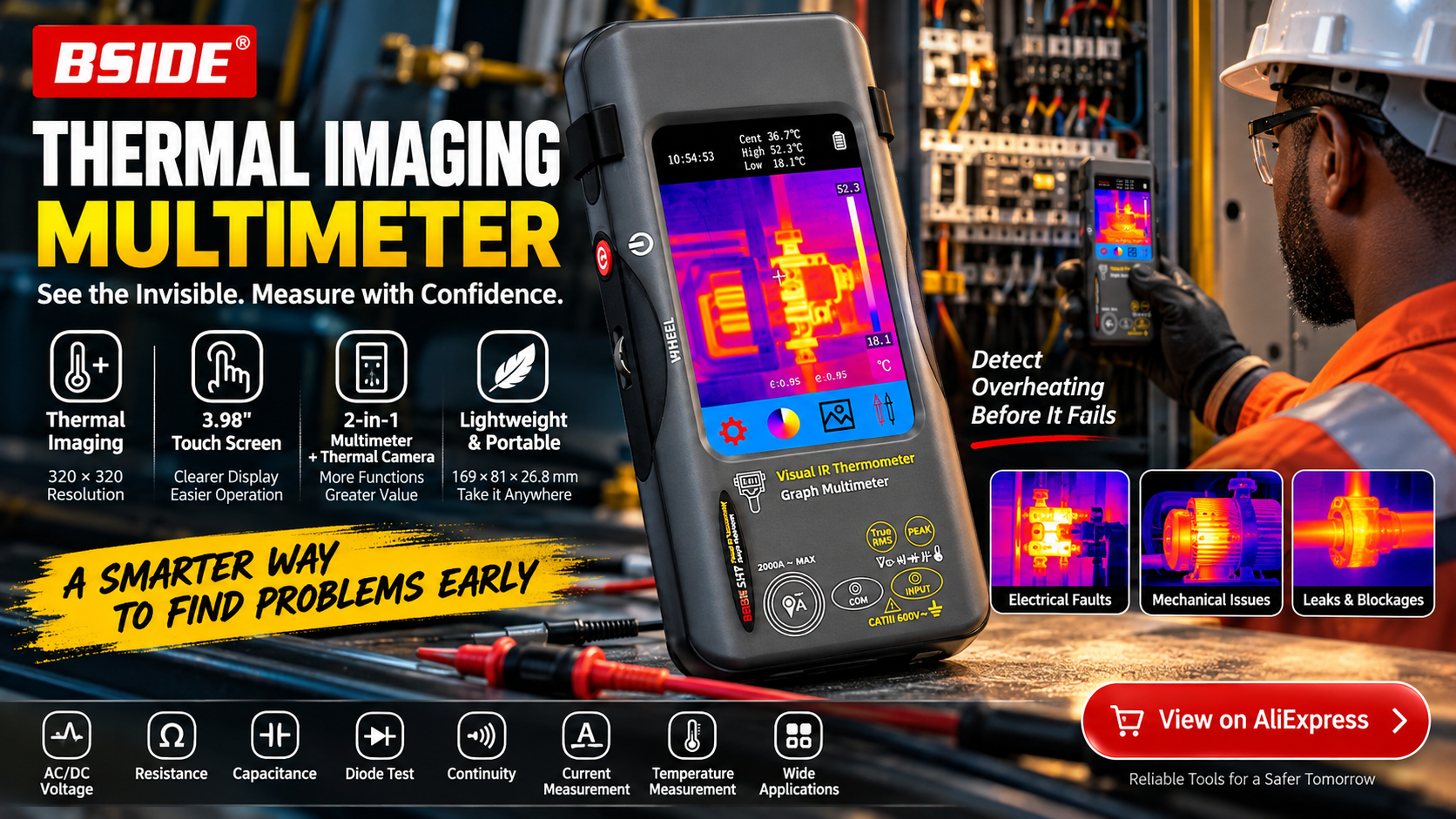
A safety-focused review of the BSIDE SH7 thermal imaging multimeter, combining electrical measurements with a 320 × 320 thermal display for faster troubleshooting and preventive maintenance.
Affiliate disclosure and review basis
This article contains an affiliate link. Worksite Safety Hub may earn a commission if you make a qualifying purchase through it, at no additional cost to you. This is an independent assessment based on the supplied product information and photographs; we have not personally laboratory-tested or calibrated the exact unit.
Specifications, accessories, prices, shipping terms and seller offers can change. Confirm the exact SH7 option in your basket, the current listing details and recent buyer feedback before ordering.
Quick verdict
The BSIDE SH7 brings two useful diagnostic views into one handheld instrument: conventional multimeter readings and a thermal image that can help a technician locate temperature differences before taking a targeted electrical measurement. That combination may reduce the time spent moving between separate tools during inspection and troubleshooting.
Its strongest advertised features are a 320 × 320 thermal image, a 3.98-inch capacitive touchscreen, a 20,000-count multimeter and a portable double-injection-moulded body. The value is attractive for maintenance, electrical and HVAC users, but workplace use still depends on verified ratings, suitable test leads, competent operation and an inspection programme appropriate to the electrical system.
What makes the SH7 useful
Thermal scanning can reveal patterns that deserve attention: a warmer terminal, an unevenly loaded connection or an overheating component. The multimeter can then support a more focused check of voltage, resistance, continuity, capacitance, diode condition or other supported functions.
This workflow can be valuable during preventive maintenance because it connects a visible temperature anomaly with an electrical measurement. It does not, however, identify the root cause automatically. Load, emissivity, reflections, airflow, surface material and viewing angle can all affect the thermal picture.
- 320 × 320 advertised thermal-image resolution.
- 3.98-inch capacitive touchscreen for viewing results and menus.
- 20,000-count multimeter display.
- Advertised AC/DC voltage, resistance, capacitance, diode and continuity functions.
- Temperature measurement with adjustable emissivity from 0.01 to 1.00.
- Compact body designed for portable inspection work.
Thermal imaging: see the pattern, then investigate
A thermal imager is most useful as a screening and comparison tool. A technician can scan a distribution board, connector, motor area or electronic assembly from an appropriate safe position and look for unexpected differences between comparable components under similar load.
Temperature alone does not prove that equipment is defective. A hot connection may reflect resistance, load imbalance or poor contact, while an apparently cool component may simply be unloaded. Record operating conditions and compare like with like. Where a finding could affect safety or reliability, investigate through the approved maintenance process rather than relying on the image alone.
Multimeter functions and practical handling
The large display and touchscreen should make menus and trends easier to read than on a small conventional meter. The supplied photographs describe AC and DC voltage, millivolt, resistance, capacitance, diode and continuity modes, plus compatibility with a flexible current coil. Buyers should verify which probes, coil and accessories are included in the selected package.
Before each use, inspect the enclosure, input terminals, leads and probe insulation. Select the correct function and range before making contact, discharge capacitors where the approved procedure requires it, and keep fingers behind probe guards. Never assume that an instrument is suitable for a circuit merely because its screen can display the expected value.
Critical safety checks before workplace use
For professional electrical work, the decisive details are the independently verifiable measurement category, maximum rated voltage, fuse protection, test-lead rating and conformity evidence for the exact model. Marketplace photographs and general quality statements do not replace those details.
Electrical testing should be performed only by competent and authorised people under the applicable safe system of work. Isolation, proving dead, arc-flash controls and personal protective equipment must follow the site procedure and legal requirements. Thermal imaging can sometimes reduce exposure by supporting non-contact observation, but it does not remove the hazards created by opening or approaching energised equipment.
- Verify the CAT rating and voltage rating on the instrument and leads.
- Confirm the exact certification and manufacturer documentation.
- Check fuse type, input protection and lead condition.
- Use an approved proving method before relying on a voltage indication.
- Keep within required approach boundaries and PPE rules.
- Remove damaged, contaminated or out-of-calibration equipment from service.
Who should consider it
The SH7 may appeal to electrical maintenance technicians, HVAC personnel, electronics troubleshooters, facilities teams and advanced DIY users who want thermal screening and electrical measurement in one portable device. It could be especially convenient for routine condition checks where carrying two instruments slows the task.
It is less suitable where a company requires a particular approved brand, traceable calibration, specialist thermal sensitivity, higher-resolution reporting or a specific certified measurement category that cannot be verified for the selected unit. In those situations, compliance and support should outweigh purchase price.
What to confirm before ordering
Read the option description attached to the exact package. Confirm the thermal resolution, temperature range, accuracy statements, multimeter functions, CAT rating, included leads and current coil, battery and charger arrangement, language support, storage or export functions, calibration information, warranty and return terms.
Also check the seller's recent reviews and buyer photographs for recurring comments about display quality, build, lead quality and software behaviour. If the instrument will influence safety-critical decisions, establish how it will be acceptance-tested and calibrated before issue.
- Exact SH7 configuration and included accessories.
- Electrical safety ratings and supporting documentation.
- Thermal and electrical accuracy specifications.
- Calibration, warranty and replacement-support options.
- Shipping, import charges and return arrangements for your location.
Final assessment
The BSIDE SH7 is an interesting two-in-one diagnostic instrument. Its thermal view can help direct attention, while the multimeter can support the next measurement without reaching for another device. For non-critical troubleshooting and preventive-maintenance screening, that convenience is its clearest advantage.
The responsible buying decision rests on evidence, not the feature list. Verify the electrical safety ratings, use appropriate accessories, place the instrument under the organisation's inspection and calibration controls, and keep every test inside an approved safe system of work.
Confirm the exact model, specification, certification evidence, shipping terms and current price before ordering.
Sources
- AliExpress — BSIDE SH7 thermal imaging multimeter product listingPublished Product listing; accessed 19 September 2026
Daily HSSE updates
Subscribe for practical HSSE updates.
Subscribe for the daily message, selected HSSE news and occasional new-resource alerts from Worksite Safety Hub.