Safety · Critical Risk Management · 11 min read
Known Hazards, Preventable Harm: Lessons from Australia’s 2026 WHS Statistics
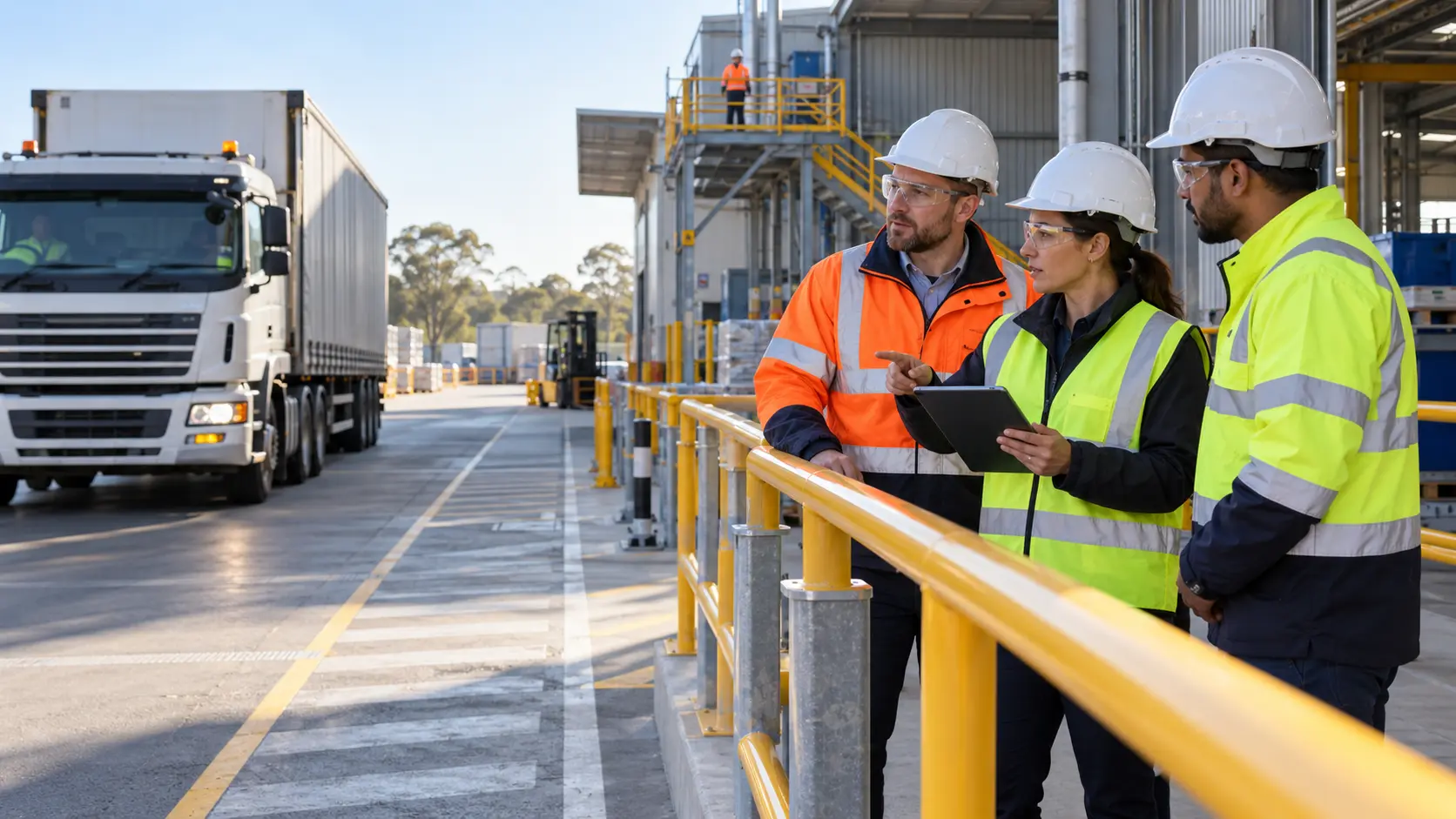
Australia’s latest work health and safety data carry a blunt message for every industry: new technology deserves attention, but workers are still being killed and seriously injured by hazards that are already well understood. The immediate task is to verify that proven controls work every shift, at every site.
What changed
Safe Work Australia released Key Work Health and Safety Statistics Australia 2026 on 12 October 2026. The national report records 222 workers who died from traumatic injuries sustained at work in 2025—the highest annual count since 2012 and above the five-year average of 197 deaths.
The 2025 fatality rate was 1.5 deaths per 100,000 workers. That is lower than the 2015 rate of 1.8, but it is above the 2021–2025 five-year average of 1.4 and has remained relatively steady in recent years. Counts and rates tell different parts of the story: workforce growth affects the count, while neither measure should be treated as proof that a site’s controls are effective.
The figures are confirmed national statistics based on regulator notifications, official reports and coronial information. Safe Work Australia cautions that annual counts can vary and historical data may be updated as investigations and coronial reports are finalised.
The familiar hazards behind most deaths
Three mechanisms accounted for 64% of traumatic worker deaths in 2025:
- Vehicle incidents: 92 deaths, or 41% of the total.
- Falls from height: 28 deaths, or 13%.
- Being hit by falling objects: 21 deaths, or 9%.
The concentration is also clear by industry. Transport, postal and warehousing recorded 61 deaths; construction recorded 41; and agriculture, forestry and fishing recorded 38. Together, those three industries represented 63% of worker fatalities.
This is not only an Australian lesson. Vehicle interaction, work at height and falling objects are recurring critical risks across logistics, construction, mining, energy, utilities, manufacturing, agriculture and public services worldwide. The control question is not whether they appear in the risk register. It is whether the barriers that should prevent fatal exposure are present, used and verified today.
Serious harm extends beyond traumatic injury
For 2024–25, the preliminary workers’ compensation data show about 147,200 serious claims involving at least one week away from work—more than 400 serious claims a day. Body stressing, falls, slips and trips, being hit by moving objects and mental stress made up 85% of those claims.
Mental health conditions accounted for 17,900 serious claims, or 12.2% of the total. Over the decade, the number of serious mental-health claims increased by 169.4%. These claims had a median 34.8 working weeks lost and median compensation of A$68,600—far higher than the overall medians.
Physical and psychosocial risk must therefore be managed as one system. Work pressure, bullying, violence, fatigue, insecure work design and weak recovery arrangements can harm health directly and can also reduce attention, decision quality and safe performance around vehicles, heights and machinery.
Six control resets HSSE teams can start now
- Rebuild vehicle controls around separation. Remove unnecessary vehicle–pedestrian interaction, use physical barriers, engineer one-way flow where practicable, control reversing, set realistic speed limits, verify seatbelt use and manage fatigue and journey risk. A painted line alone is not dependable separation.
- Put collective fall protection first. Design work from the ground, use guardrails and safe platforms, protect openings and fragile surfaces, inspect access equipment and plan rescue before exposure begins. Personal fall-arrest systems are not a substitute for eliminating the fall where collective protection is reasonably practicable.
- Control dropped and falling objects at the source. Secure loads, use toe boards and containment, tether suitable tools, control stacking, inspect lifting accessories and establish exclusion zones that match the credible drop path—not merely the footprint directly below.
- Strengthen remote-work resilience. Safe Work Australia found a strong rise in fatality risk with remoteness; workers in Very Remote Australia were around eight times more likely to die from traumatic work injury than the national average. Verify communications, lone-worker monitoring, retrieval, medical support, transport and the time needed to reach definitive care.
- Treat psychosocial hazards as operational hazards. Consult workers about workload, role clarity, staffing, exposure to violence, bullying and work pressure. Assign controls to the work design and management system; do not reduce prevention to personal resilience training.
- Verify critical controls in the field. Select the few barriers that must work to prevent a fatal event. Define how each control is checked, who checks it, what evidence proves it is effective and what happens immediately when it fails.
A 30-day critical-risk reset
Days 1–7: find exposure. Review fatal and high-potential events, near misses, assurance findings and frontline concerns. Map where people interact with vehicles, work near edges or openings, pass below overhead work, work alone or report unmanageable pressure.
Days 8–14: test the barriers. Observe normal work on every shift. Test gates, interlocks, barriers, alarms, communications and rescue arrangements. Ask workers what they do when the planned control is unavailable or production conditions change.
Days 15–21: fix the weakest points. Close uncontrolled routes, repair physical safeguards, change work sequencing, remove unsafe access, improve supervision and stop tasks whose fatal controls cannot be verified.
Days 22–30: lock in accountability. Give each critical control an owner, a verification frequency and a clear fail state. Track actions to effective closure and share lessons across every site with the same exposure.
Questions for leaders and toolbox talks
- Where can a person and a moving vehicle still enter the same space?
- Which height task relies most heavily on individual behaviour rather than collective protection?
- What object could fall outside the current exclusion zone?
- Can a remote or lone worker summon help, be located and reach suitable medical care in time?
- Which workload, staffing or violence exposure is creating avoidable mental stress?
- What high-potential near miss have we treated as a warning rather than a statistic?
- Which critical control is recorded as present but has not been tested for effectiveness?
- If that control failed today, who has authority to stop the work immediately?
Video note
No report-specific authoritative and embeddable video was identified at publication. Unrelated media has not been added. The official Safe Work Australia release, full data report and interactive dashboards below provide the current evidence.
Authoritative sources
- Safe Work Australia — New work health and safety data demands stronger action to prevent harmPublished 12 October 2026
- Safe Work Australia — Key Work Health and Safety Statistics Australia 2026Released 12 October 2026; national fatality, injury and illness data
- Safe Work Australia — Preliminary fatalities 2026 dashboardCurrent preliminary data; finalised figures may differ
Your experience matters
Share your thoughts on this page
Have a question, a useful experience or a suggestion? Add your input below.
Comments are public. Keep them respectful and relevant. Do not share contact details, confidential information or emergency reports.
Comments on this page
Loading comments…