Product Reviews · Emergency Medical Vehicles
Toyota Land Cruiser LC79 Ambulance Review: 4×4 Specifications, Medical Equipment & Buying Guide
Affiliate Disclosure: Worksite Safety Hub may earn a commission if you make a qualifying purchase through links in this article. This does not change the price you pay.
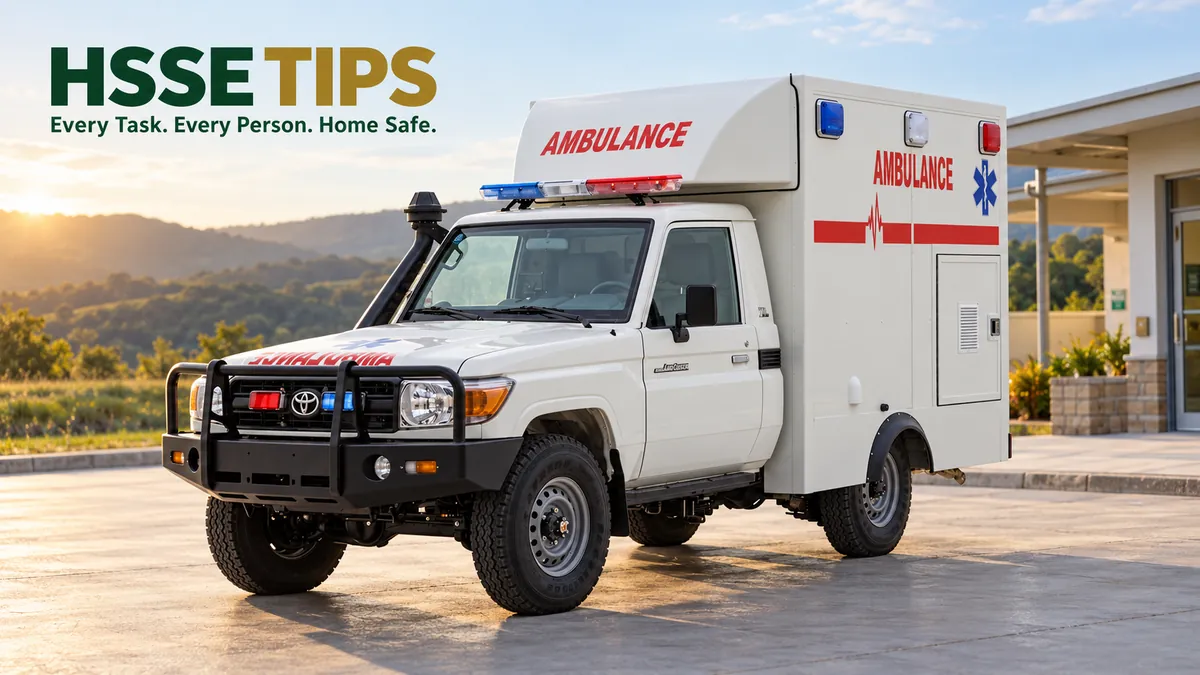
A remote medical transport vehicle has two jobs to bring together: carrying a patient and crew in an appropriate clinical environment, and completing the journey within the vehicle’s operating limits. The body behind the cab can be as important to that decision as the chassis underneath.
This Toyota Land Cruiser LC79 offer is explicitly described as a single-cab pickup with a box-body ambulance conversion. Its gallery shows a separate, tall patient compartment, rear double doors, a stretcher installation and extensive cabinet arrangements. The seller also offers to build the conversion to the buyer’s specification.
This research review separates seller statements, photograph observations and Toyota references. No road test or inspection was performed.
EXPLORE THE TOYOTA LC79 AMBULANCE
Toyota Land Cruiser LC79 Ambulance Overview
The advertisement identifies the model as Land Cruiser LC79 and the condition as new. Its single-cab pickup and box-body arrangement are stated expressly, rather than inferred from the LC79 name alone.
Equipment is advertised as supplied, but no itemized inventory or named converter appears. Engine, fuel, transmission, production year and mileage are also absent. The review therefore assesses a documented conversion concept and gallery, not a fully identified chassis specification.
Different images show variations in exterior markings, warning lamps and interior fittings. Ask the seller to identify which photographs represent the quoted build. A customizable offer does not establish that all illustrated features are standard.
Understanding the Toyota Land Cruiser 79 Series
Toyota’s 70 Series family includes distinct hardtop and pickup branches. TGS, Toyota’s specialised distributor, lists 79 single- and double-cab pickups separately. This seller specifies the single-cab form, leaving the patient box behind the cab.
The 70 Series platform uses a ladder-frame chassis. Toyota documents part-time four-wheel drive, low range and live axles for the range. These are engineering references, not a replacement for the offered vehicle’s chassis and conversion documents.
Obtain the complete model code and VIN to establish generation, engine, gearbox and market specification. The rectangular-headlamp exterior and cab photographs should not be used to assign a production date or an engine code.
How this differs from the LC78 offer
Our LC78 ambulance review concerns an enclosed hardtop conversion. Here, the seller expressly offers a pickup-derived single cab with a separate box. The photographs confirm that different body arrangement.
This supports a useful comparison of access and packaging, but not a claim that one vehicle has more approved payload, better ride quality or greater clinical capability. Those conclusions require completed-vehicle measurements and equipment documentation.
Engine, Transmission and Drivetrain
No engine specification is published for this LC79 offer. Fuel type, displacement, power, torque, emissions level and transmission remain unverified. In particular, the engine choices mentioned in the separate LC78 advertisement do not describe this listing.
TGS documentation illustrates why identification matters: its 79 single-cab range includes different model codes and powertrains. Those reference engines cannot establish what will be supplied under this advertisement.
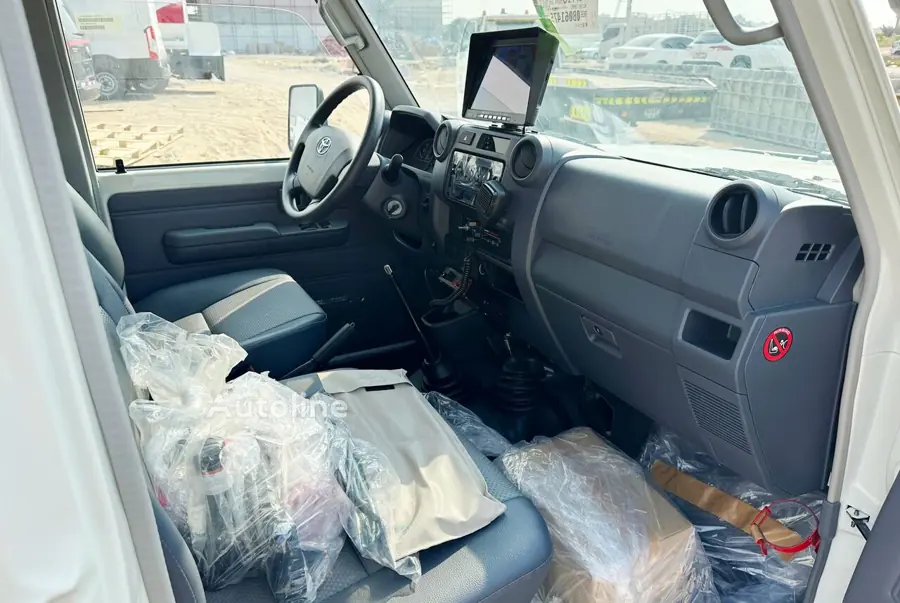
The cab photograph shows a long gear lever and a shorter adjacent drivetrain lever. Their presence does not identify gear count, ratios or the precise transfer case. Ask for a VIN-linked specification and a control demonstration.
4×4 Features and Remote-Area Assessment
Toyota’s documented part-time 4×4 and low-range platform provides relevant context for evaluating an LC79 in remote service. The actual chassis specification should identify the driven wheels, transfer case and operating procedures.
Differential locks, ground clearance, suspension ratings and approach/departure angles are not specified for the offered conversion. Do not transfer a standard pickup’s figures to a taller completed ambulance with different body overhangs and loads.
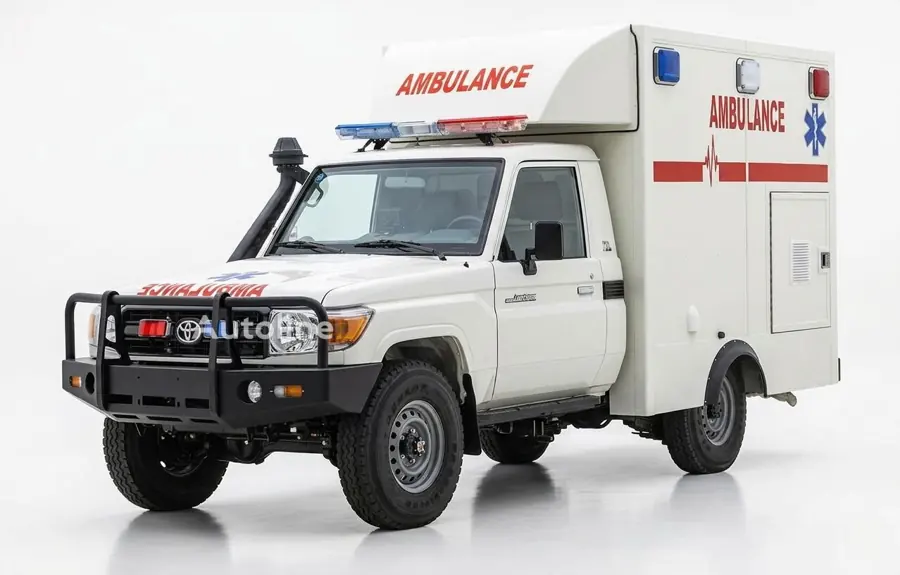
The studio exterior shows a front protection bar, raised intake and road wheels. These photographs do not establish a rated recovery point, winch, water-crossing depth or upgraded suspension. Confirm installed tyre specifications and recovery provisions separately.
Route planning should account for vehicle clearance, loaded stability, patient handling, communications and recovery support. Remote suitability is a completed-system assessment, not a universal terrain promise attached to the Land Cruiser badge.
Ambulance Conversion and Body Design
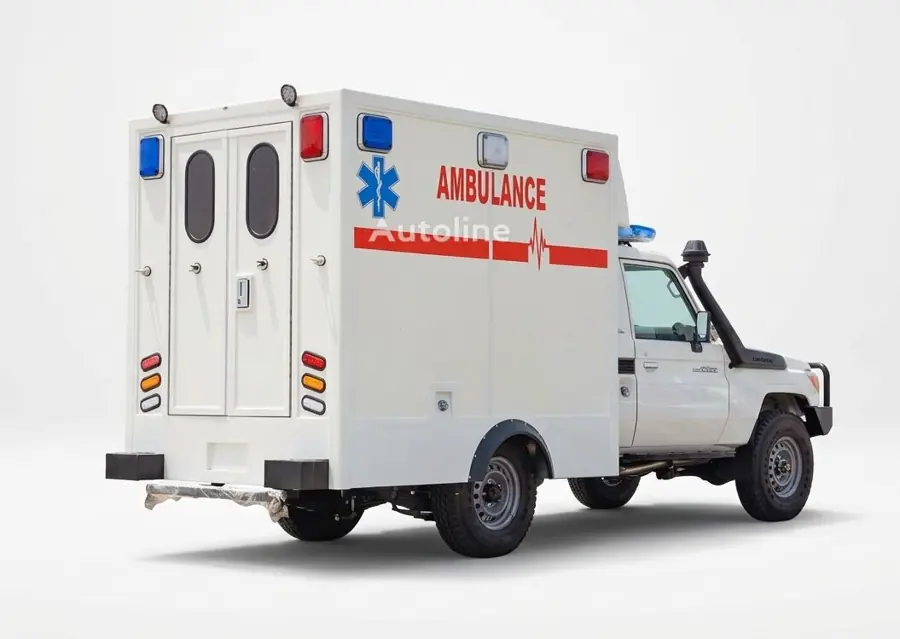
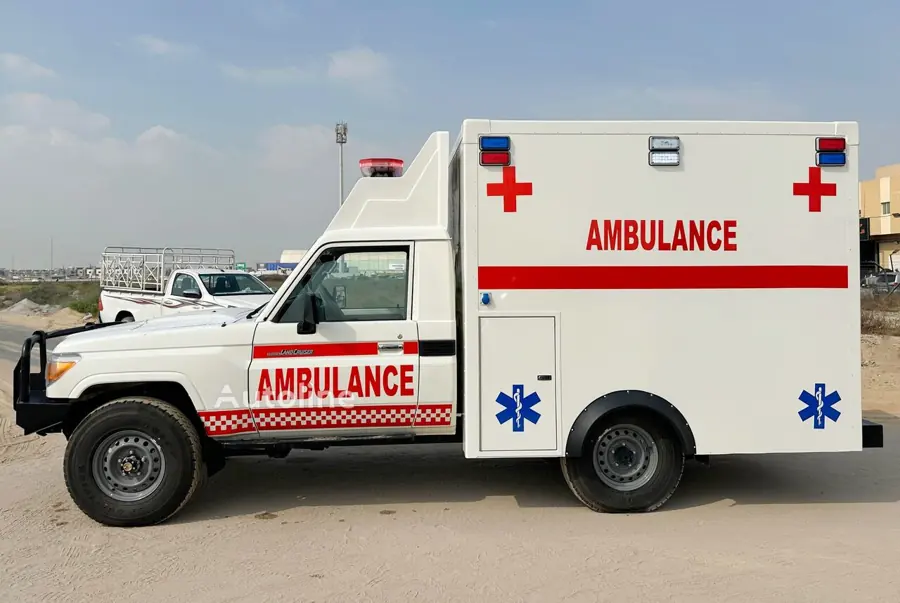
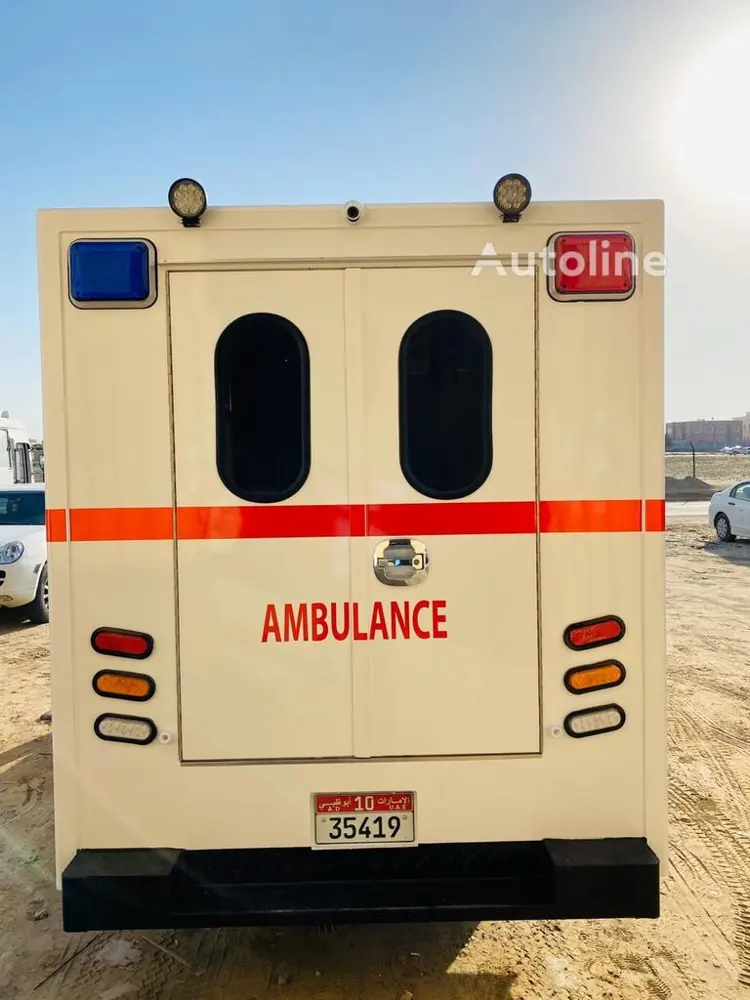
The separate patient body rises above the cab and extends over it with a forward fairing. The studio example has upper warning lamps, a side service hatch, red striping and ambulance markings. Rear views show double doors.
The yard side profile has different markings and lamp details. Confirm the selected exterior, body manufacturer, mounting arrangement and final dimensions in the quotation. No remountable-body capability or particular structural approval is established.
The seller offers specification-led builds. Use that opportunity to define access, storage, lighting, climate control and equipment from the service requirement, then agree drawings and an acceptance process before production.
Patient Compartment and Interior Layout
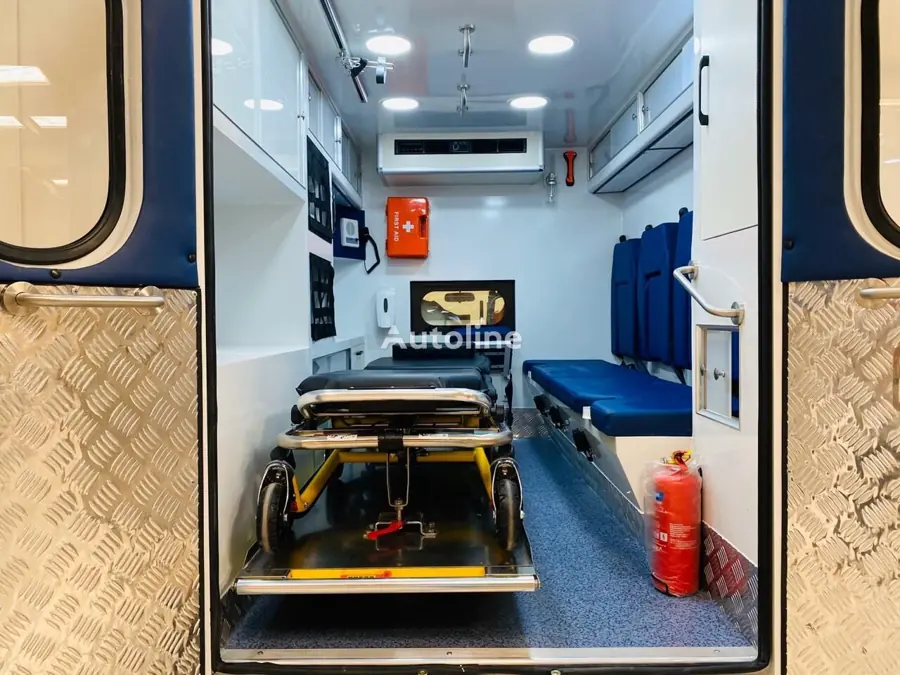
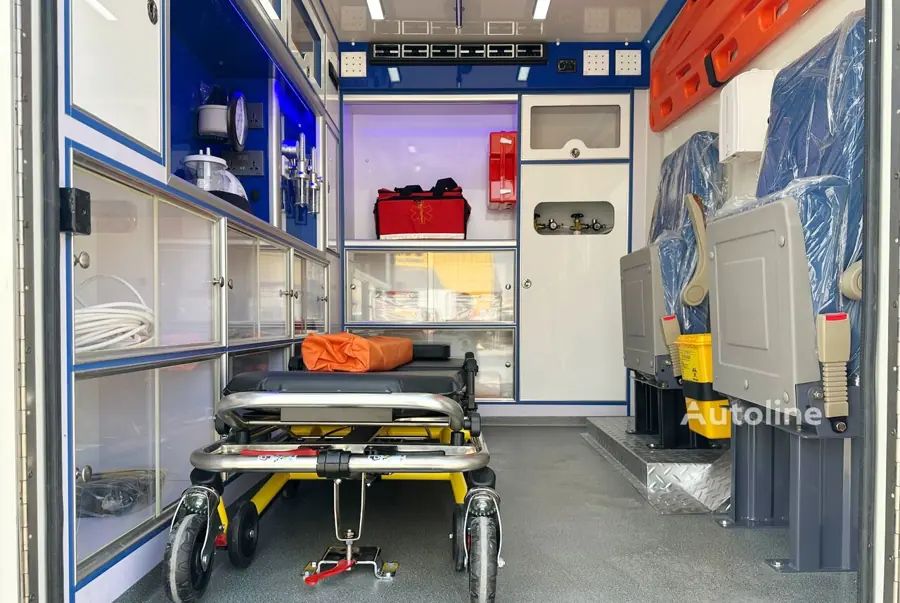
One rear interior view shows blue attendant seats, overhead lockers, ceiling lights, a stretcher and a forward climate unit. Other views show a more extensively fitted cabinet layout with blue-edged storage, medical fittings and a red bag.
Those differences are useful design references, but should not be combined into one assumed standard package. The seller should identify the exact interior being quoted, including every occupied position and restraint installation.
Request a measured floor plan. Assess patient access from the approved seats, cupboard reach, stretcher clearance and movement through the rear entrance. Photographs alone do not establish usable headroom or working aisle width.
Stretcher and Patient Handling Equipment
The gallery contains a wheeled stretcher with a yellow undercarriage and dark mattress, positioned longitudinally inside the patient box. Rear loading views show the relationship between stretcher, doorway and attendant seating.
Stretcher manufacturer, mount, lock, load rating and patient restraints are not identified. Confirm the stretcher and retention system together in the sale inventory, rather than treating a pictured stretcher as a guaranteed inclusion.
Arrange a demonstration of loading, securing and unloading with the equipment actually supplied. Rear opening width, loading height and crew working positions should inform the handling procedure. No powered lift or specified loading ramp is confirmed.
Medical Equipment and Storage
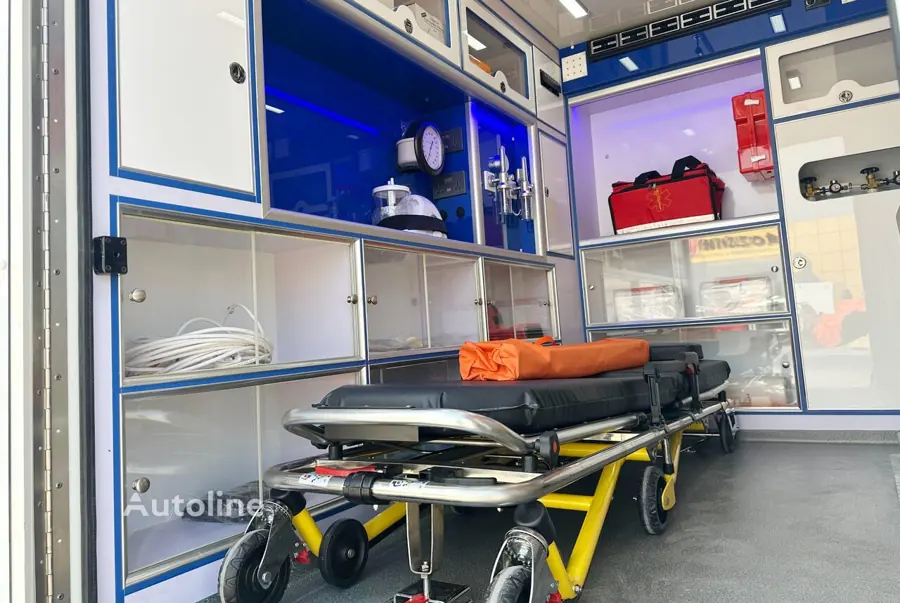
The detailed interior image shows transparent-front cupboards, shelves, gauges, medical-gas-style fittings, a collection-jar device, tubing and a red medical bag. A first-aid-labelled case and a fire extinguisher appear in gallery views.
These observations do not establish device models, service condition or an included clinical package. The contents of bags and cases are not specified, and the visible fittings do not verify a complete operational gas or suction system.
- Fitted features pictured: storage structures, seating, lights and mounts; confirm the ordered layout.
- Seller’s inclusion statement: equipment is supplied, without a published item-by-item schedule.
- Removable items pictured: stretcher, bag, case and devices need express model, quantity and inclusion confirmation.
- Customized additions: agree the specification, price and supporting documents for each requested addition.
A defibrillator, patient monitor, ventilator or identified oxygen/suction package is not confirmed as included. Obtain device identities, mounting details, inspection information and applicable approvals for the final package.
DISCOVER THE AMBULANCE EQUIPMENT
Emergency Warning and Communication Systems
The studio exterior shows a cab-roof lightbar, grille warning units and upper box lamps. The yard examples have other lamp and marking details. Ask for a precise warning-system schedule rather than assuming every pictured unit is supplied.
The cab image includes a handset, dashboard-mounted screen and additional control hardware. Their functions, radio model, network compatibility and inclusion are unconfirmed. An audible siren and scene-lighting specification are not documented.
Request a functional demonstration, switch labels and destination-compliance information. The communications plan should cover the intended routes and service area independently of the dashboard hardware.
Driver Cabin and Medical Crew Accommodation
The photographed cab is left-hand drive, with front seating, a central dashboard, gear levers and storage areas. No approved cab occupancy, seating trim or driver-assistance specification is published.
Patient-area photographs show individual attendant seating and other upholstered accommodation. Have the supplier identify every permitted travelling position, restraint and installation document. The number of visible cushions cannot establish legal occupancy.
Heating, Ventilation and Climate Control
The interior gallery shows a forward climate-control unit, upper outlets and ceiling lighting. No heating capacity, cooling output or parked operating specification is supplied. Cab climate equipment also requires confirmation for the chosen build.
Ask for the electrical and climate schedules together. They should identify batteries, charging, outlets, protection, equipment loads and any external power connection. No inverter or auxiliary battery rating is established.
Dimensions, Payload and Capacity
TGS documents a 3,180 mm wheelbase for its referenced 79 single-cab variants. This is model context, not a certified measurement of the ambulance offered here. Body height, overall width, overhangs and finished weight must come from the completed conversion.
The advertisement does not provide gross vehicle weight, permitted axle loads, payload, fuel capacity or interior measurements. Request a final drawing and weighing certificate with the agreed equipment installed.
Check crew, patient, fuel, stretcher, devices and consumables against gross and axle limits. Box-body volume is not a measure of remaining payload, and bare-pickup capacity cannot be adopted without accounting for the conversion.
Healthcare and Emergency Medical Applications
The single-cab and separate patient box give rural health services, industrial medical teams and humanitarian operators a concrete configuration to assess. Hospitals and private providers can evaluate it against their transfer routes, staffing and equipment needs.
Mining-site or remote construction use requires an agreed route and support plan alongside the medical specification. No ALS, BLS, intensive-care classification or equivalent certified service category is verified for this offer.
For other independently researched configurations, see the Staria petrol ambulance and single-cab FOTON ambulance reviews. Our LC79 fire truck review concerns a different conversion and equipment package.
Safety and Operational Considerations
Acceptance checks should cover loading, stretcher retention, occupied seats, cabinet latches, secured medical devices and electrical protection. Familiarize staff with the actual vehicle controls and patient-body systems.
If medical gas is supplied, require cylinder identification, inspection records, compatible fittings and documented securing. Agree cleaning methods, routine conversion checks and chassis maintenance schedules with the responsible suppliers.
No EN 1789 certificate or other ambulance approval is published. Request the documentation required for the destination and intended clinical service, including registration eligibility and medical-device requirements.
Technical Specifications
Toyota Land Cruiser LC79 Base Vehicle Specifications
| Specification | Evidence and scope |
|---|---|
| Manufacturer / model | Toyota Land Cruiser LC79, seller-listed |
| Cab configuration | Single cab pickup, seller description and gallery |
| Condition | New, seller classification |
| Photographed controls | Left-hand drive; long gear lever and adjacent drivetrain lever |
| Toyota/TGS platform reference | 79 single-cab branch; part-time 4×4 and low-range range context |
| Reference wheelbase | 3,180 mm in TGS 79 single-cab documents; supplied unit unverified |
Ambulance Conversion and Medical Equipment Specifications
| Specification | Evidence and scope |
|---|---|
| Body | Separate box-body ambulance, seller-described and pictured |
| Rear access | Double doors pictured |
| Patient handling | Wheeled stretcher and loading installation shown; models unspecified |
| Interior examples | Blue seating layout and more extensively fitted cabinet layout |
| Included equipment | Seller says equipment supplied; inventory not published |
| Build options | Can be built to buyer specification, seller-stated |
| Converter / clinical certification | Not identified / not verified |
VIEW CURRENT PRICE & AVAILABILITY
Current Seller Offer — Verified 25 October 2026
Product Location: Dubai, United Arab Emirates. This is the vehicle-location field displayed in the advertisement.
| Specification | Evidence and scope |
|---|---|
| Seller / reference | Fire Trucks 4 Africa / LL38704 |
| Price / currency | On request; no numeric price or currency published |
| Dates / mileage | Production, first registration and mileage unspecified |
| Condition | New, seller-stated; unused status not documented |
| Engine / transmission / drivetrain | Exact supplied specification unpublished |
| Body / equipment | Single-cab box conversion; equipment schedule to be agreed |
| Availability | Accessible offer; allocated stock and build lead time unverified |
| Export | Outside EU countries only, seller restriction |
| Shipping | Destinations, arrangements and transport terms unspecified |
The listing was accessible when checked, but a published offer does not establish an allocated vehicle, stock quantity or build lead time. Request the standard specification, selected build and complete price.
The seller restricts this offer to export outside EU countries. No named delivery destinations, freight costs, collection procedure, export-document schedule, insurance terms or Incoterms are provided.
Delivery destinations, shipping arrangements, and applicable transport terms were not specified in the information reviewed. Prospective buyers should confirm these details directly with the seller.
Warranty, tax treatment, inspection arrangements and payment stages also need a written agreement. A generic marketplace delivery-service feature does not establish seller-provided transport for this vehicle.
What Buyers Should Confirm Before Purchasing
Begin with the exact chassis: model code, VIN, build date, registration history, mileage, engine, gearbox, drive configuration and weights. Then define the body, mounting arrangements, access dimensions and final clearance.
Agree a floor plan and signed equipment inventory. Identify the converter, stretcher/mount combination, occupied seating, medical devices, gas system, warning controls and electrical supply. Request a demonstration and the documents needed for local acceptance.
Allocate support responsibilities between chassis, conversion and device suppliers. Resolve maintenance, spares, destination approval, transport, inspection and payment before ordering. A clear specification makes a customizable offer practical to evaluate.
Video and Research Sources
No advertiser video of this offer was identified. The TGS pod demonstration below illustrates a different conversion from another supplier. It does not establish this body’s access, medical equipment or converter identity.
Platform context was checked against the TGS 70 Series brochure and Toyota’s 70 Series engineering information. Listing LL38704 and its eight photographs provide the offer-specific evidence checked on 25 October 2026.
Frequently Asked Questions
What body does this LC79 ambulance use?
The seller specifies a single-cab pickup with a box-body ambulance conversion. The gallery shows the separate patient box behind the cab.
How does it differ from the LC78 ambulance?
The reviewed LC78 uses an enclosed hardtop arrangement. This LC79 has a single cab and separate box; measured capacity or clinical superiority is not established.
Is it factory-new or unused?
The seller classifies it as new. Production date, first registration and mileage are unspecified, so unused status requires documentation.
What engine and transmission are fitted?
No engine, fuel or gearbox specification is published. Obtain a VIN-linked build sheet rather than assuming another Land Cruiser’s powertrain.
Are 4×4 and differential locks confirmed?
Toyota documents part-time 4×4 and low range for the platform. The offered unit’s drivetrain and lock equipment require a complete specification.
Is the pictured medical equipment included?
Equipment is advertised, but no inventory identifies individual devices. Confirm the stretcher, gas fittings, bags and other items expressly in the quotation.
Where is it located and what is the price?
The listed product location is Dubai, United Arab Emirates. Price is on request; no numeric amount or currency is published.
Can it be customized and shipped internationally?
The seller offers specification-led builds and limits the offer to export outside EU countries. Shipping destinations and arrangements are unspecified; enquire through a review button.
Final Verdict
This LC79 advertisement has a clearly described single-cab, box-body identity. Its original gallery provides useful views of rear access, patient accommodation, storage and cab controls, while the specification-led build offer allows buyers to define their requirements.
The decisive procurement document is a complete chassis, body and equipment schedule. Confirm that package against the intended routes and medical service, then inspect the agreed configuration before acceptance.
Join the Conversation
For a pickup-based ambulance, which matters most to your team: patient access, body layout, documented capacity or equipment support? Share your priorities in the comments below.
Your experience matters
Share your thoughts on this page
Have a question, a useful experience or a suggestion? Add your input below.
Comments are public. Keep them respectful and relevant. Do not share contact details, confidential information or emergency reports.
Comments on this page
Loading comments…