Product Reviews · Emergency Medical Vehicles
FOTON Ambulance Review: Single-Cab Diesel Conversion, Equipment & Buying Guide
Affiliate Disclosure: Worksite Safety Hub may earn a commission if you make a qualifying purchase through links in this article. This does not change the price you pay.

The ambulance body determines where a crew can stand, how a patient enters and which supplies remain within reach. Choosing the right vehicle starts by matching those physical arrangements to the service it must provide.
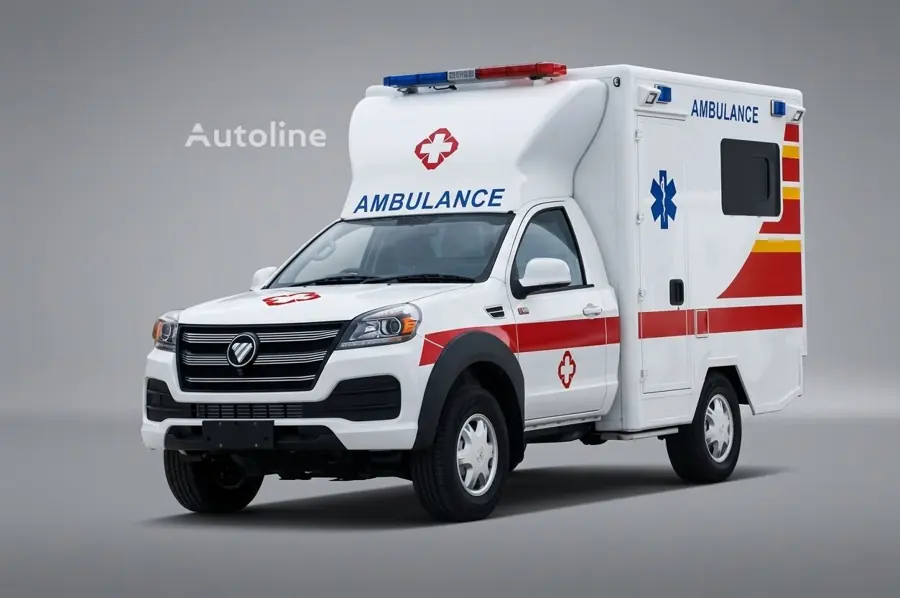
This FOTON offer takes a different approach from a conventional converted van: a single cab sits ahead of a separate, tall patient body. The seller advertises a 2.8-litre Cummins diesel, lists a 4×4 axle configuration and also mentions a 4×2 alternative. Original gallery images show rear double doors, side access, medical storage and a stretcher arrangement.
For hospitals, ambulance operators and industrial medical teams, those details provide a useful starting point. This listing-specific review examines what the advertisement establishes, what its photographs reveal and which decisions belong in a written vehicle-and-equipment quotation.
A Separate FOTON Ambulance Offer
Autoline reference XL38704 identifies the advertisement reviewed here. It is offered by Fire Trucks 4 Africa and classified as new by the seller. No production year, registration date or mileage is published in the information reviewed; “new” therefore remains the advertised condition rather than an independent finding of unused status.
Its single-cab, separate-body layout is visibly different from the van-style ambulance in our previous FOTON ambulance review. That earlier offer describes a 2.4-litre petrol vehicle. This one describes a 2.8-litre Cummins diesel and has its own eight-image gallery. These are substantive configuration differences, although an exact FOTON model name is absent from both advertisements.
The seller and advertised product city are the same. A different URL does not establish a different generation, build year or manufacturer. The review therefore uses “FOTON ambulance” and a descriptive single-cab label throughout.
Understanding the Single-Cab FOTON Platform
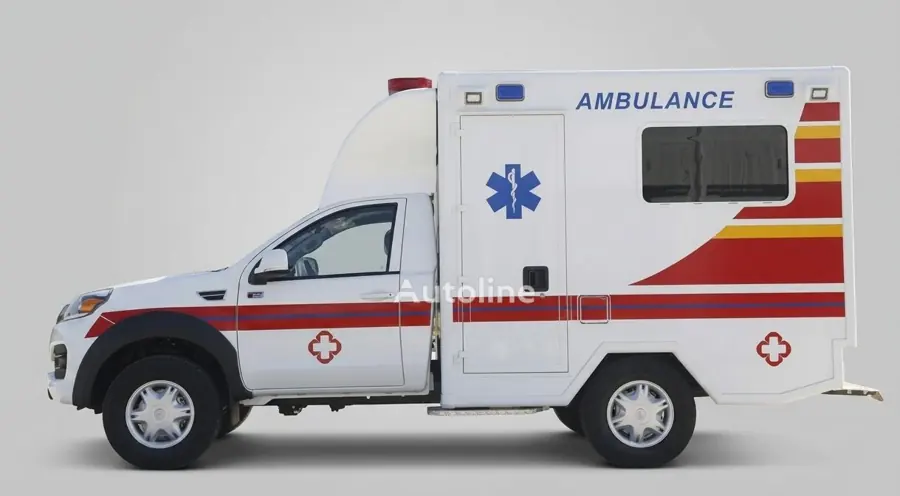
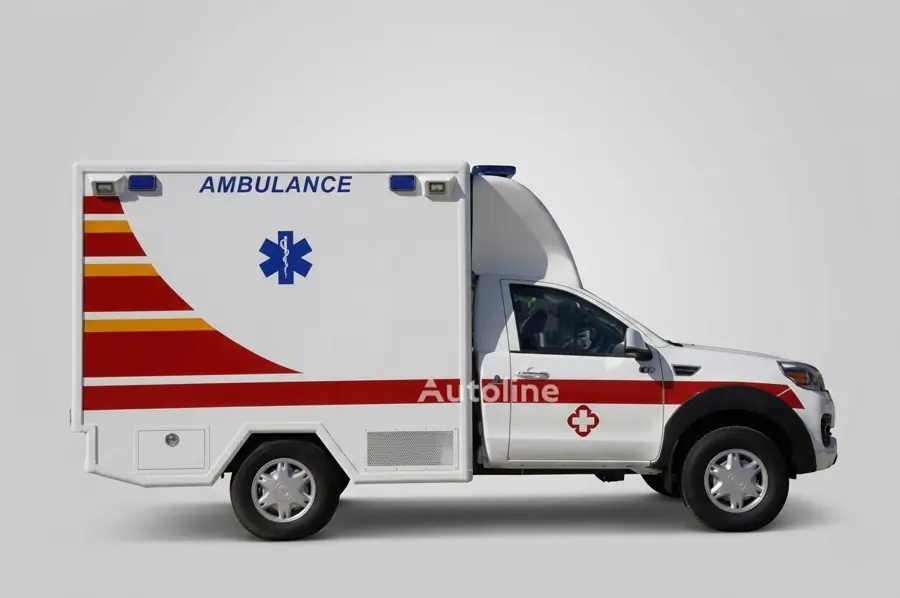
The exterior photographs show a pickup-style front cab with two cab doors and a patient box behind it. The box extends above the cab, with a shaped forward fairing. Side windows and a separate patient access door are visible.
The listing does not identify this as a Toano, View or particular Tunland variant. FOTON’s official range distinguishes pickups from its View and Toano vans, but that catalogue context cannot identify the chassis in this advertisement. Request the model code, vehicle identification number and chassis documentation before selecting parts or comparing platform specifications.
A separate patient body introduces specific procurement questions: who built it, how it attaches to the chassis, how loads are distributed and which company supports its systems. No converter or generation is named. Obtain both the base-vehicle identity and the completed-vehicle documentation.
Diesel Engine, Transmission and the Drive Configuration
The seller specifies a 2.8-litre diesel Cummins engine. Engine code, rated power, torque, emissions level and transmission are not published. There is no basis to assign a gearbox type, gear count or fuel economy figure.
Cummins documents an ISF2.8 family for light commercial applications, including trucks, pickups and utility vehicles. This is useful manufacturer context, but the listing does not name ISF2.8 or an engine rating. Its published output options and technical features should not be transferred to this ambulance without an engine plate or build record.
What the 4×4 field actually establishes
The structured specification says 4×4, while the seller’s description offers “4x4 or 4x2.” Treat this as a choice requiring confirmation in the quotation. The advertised price is not allocated explicitly between those alternatives.
No transfer-case arrangement, low range, differential lock, ground clearance or suspension specification is provided. Four-wheel drive alone cannot establish safe access on a particular route, especially with a patient and equipment aboard. Ask for the exact drivetrain and evaluate the completed vehicle against the intended roads, loading and operating limits.
Ambulance Body and Exterior Access
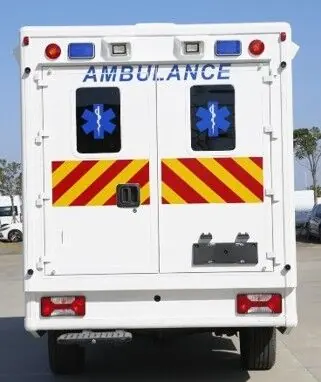
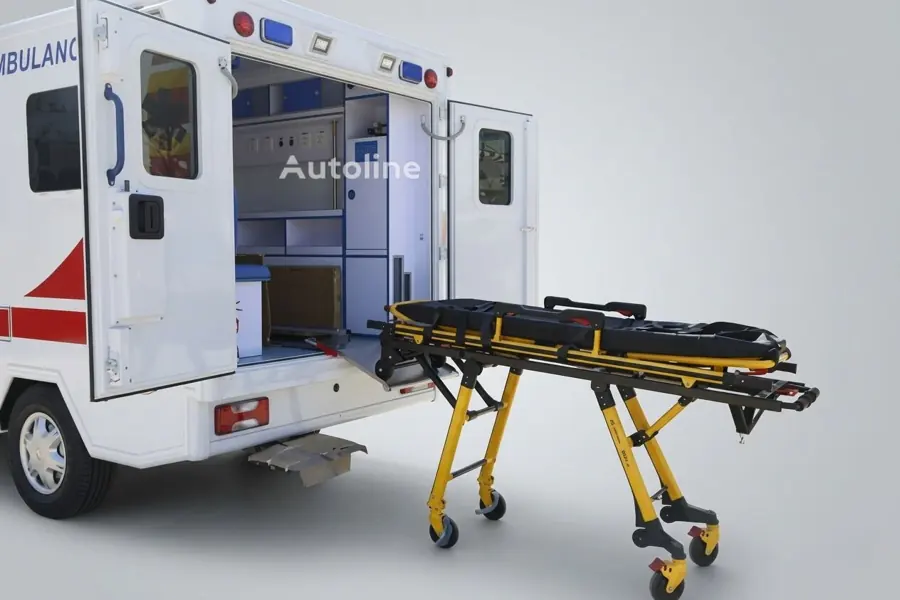
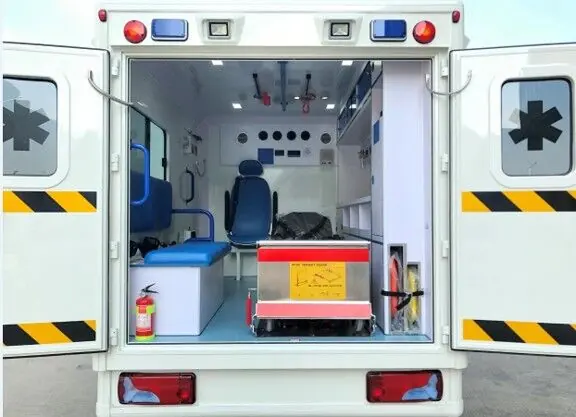
The patient box has rear double doors and a side entrance. Exterior views show red striping, yellow accents, ambulance lettering, medical symbols and warning lamps. The rear photograph includes high-visibility chevrons and a lower loading step.
These access arrangements affect everyday work. Check the clear width of the rear opening with the selected stretcher, the side-door step height and the clearance needed to open doors at hospital bays. Request measurements from the supplied body, rather than estimating them from images.
Body materials, insulation, structural testing and mounting details are unspecified. A separate-body layout does not by itself establish a modular certification, a particular ambulance type or suitability for remounting onto another chassis.
Inside the Patient Compartment
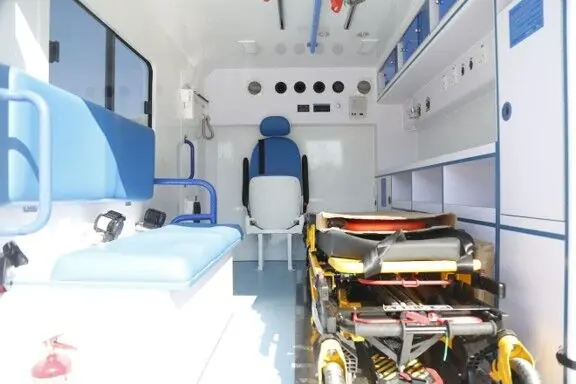
The interior photographs show light-coloured cabinetry, blue seating and trim, a central working space and a longitudinal stretcher position. An attendant chair sits toward the front of the compartment, with a side bench and overhead storage also visible.
The arrangement gives buyers concrete points to inspect: access to the patient’s head and sides, cupboard reach from a restrained seat, clearance around the stretcher and movement between the side and rear entrances. Photographs cannot establish those working clearances or the approved number of occupants.
Ask for a floor plan and an interior demonstration with the intended stretcher installed. Have the clinical team review the layout alongside the vehicle engineer, particularly where storage, seating and medical devices share limited space.
Stretcher, Loading and Patient Restraints
The gallery shows a wheeled stretcher with a yellow frame, including a view outside the rear doors and views inside the compartment. A rear loading structure is visible, but its manufacturer, model, locking mechanism and rated load are not identified.
The seller states that equipment is included without naming individual items. Confirm the stretcher, mounting interface and restraints expressly in the sale inventory. Neither the stretcher’s appearance nor the ambulance markings establish a tested restraint system or an applicable patient-weight limit.
Request a loading demonstration covering deployment of the undercarriage, engagement of the mount, release procedure and access for the loading crew. No powered lift or ramp is confirmed. Assess the whole handling sequence with the equipment actually supplied.
Medical Equipment and Storage: Reading the Evidence
Cabinets, shelves, seating, overhead rails and interior fittings are visible. A portable fire extinguisher appears in the rear/interior photographs. These observations help assess the pictured conversion, while a signed inventory establishes the delivered specification.
- Photographed fitted features: storage units, seats, grab rails, lighting and body openings. Confirm that the ordered vehicle uses this layout.
- Express sale statement: equipment is included, but no model-by-model equipment schedule is published.
- Photographed removable items: the stretcher and other loose equipment require explicit inclusion, quantity and specification.
- Options: no priced optional medical-device schedule is provided; request separate details for additions.
An included oxygen supply, suction unit, defibrillator, patient monitor, ventilator or emergency medical bag is not established. Wall fittings and ceiling openings cannot identify a complete functioning system. Obtain device names, service records and installation details for the selected package.
Emergency Warning Lights and Communications
Exterior images show a red-and-blue roof lightbar and additional lamps around the patient body. Rear views show upper warning units and rectangular light fittings. Their functions, output, operating modes and compliance are not documented.
A siren, operational radio, communications network and emergency control-panel specification are not confirmed. Ask the supplier to demonstrate the installed warning equipment and document the switch layout, electrical protection and destination requirements. Photographs of lights do not establish an audible warning system.
Driver and Medical Crew Accommodation
The single cab and medical attendant seating are evident, but the gallery does not provide a detailed dashboard or driver-cabin view. Steering position, gearbox controls, front seating count and driver assistance systems remain unverified.
The patient space shows a forward-facing-looking attendant chair and side bench; approved travel positions and restraint specifications require documentation. Do not calculate legal crew capacity by counting cushions in a photograph.
Heating, Ventilation and Auxiliary Power
The patient compartment shows ceiling and upper-wall fittings, interior lights and control areas. Their presence does not establish air-conditioning capacity, a separate heater or a particular ventilation system. Confirm climate control in both compartments, including performance under the intended ambient conditions.
Battery arrangement, external mains connection, inverter, auxiliary power outlets and electrical ratings are not specified. Request a circuit schedule showing which devices can run while driving and while parked, together with charging arrangements and operating instructions.
Dimensions, Weight and Fleet Capacity
Two axles are listed. Wheelbase, completed dimensions, gross vehicle weight, payload and axle limits are not published. Values from a similar pickup or van cannot establish the capacity of this conversion.
Obtain the completed vehicle’s weight with its fitted body and equipment, then account for crew, patient, fuel and supplies against the relevant limits. Axle distribution matters alongside total weight. Ask for actual body height and width when checking ambulance-bay access and transport arrangements.
Where This Configuration May Fit
The pictured patient compartment supports assessment for patient transport work, subject to equipment, approvals and the operator’s service requirements. Hospitals and private ambulance services can examine loading access, attendant positions and storage against their transfer procedures.
Industrial or remote-site medical teams may wish to investigate the advertised 4×4 configuration. Route suitability still depends on the exact vehicle, road conditions, loaded stability and service support. The listing supplies no evidence for a particular off-road performance claim.
No basic life support, advanced life support, intensive-care category or EN 1789 certification is established. Such classifications require evidence for the completed vehicle and intended service. For other body approaches, our IVECO ambulance review and Sprinter 316 CDI review provide separate listing-specific procurement examples.
Technical Specifications
The following tables contain seller-stated details and directly observable gallery features. They do not represent an independent mechanical inspection.
FOTON Base Vehicle Specifications
| Information | Listing evidence |
|---|---|
| Manufacturer | FOTON |
| Cab configuration | Single cab, seller description and gallery |
| Engine | Cummins, seller-stated; engine code unspecified |
| Displacement and fuel | 2.8 litres, diesel, seller-stated |
| Axles | Two |
| Drive configuration | 4×4 listing field; description also offers 4×2 |
| Condition | New, seller classification |
Ambulance Conversion and Medical Equipment Specifications
| Information | Listing evidence |
|---|---|
| Body | Separate box-style patient compartment, photographed |
| Access | Rear double doors and side patient entrance, photographed |
| Patient-handling equipment | Wheeled stretcher pictured; model and inclusion unconfirmed |
| Storage and seating | Cabinets, side bench and attendant chair pictured |
| Warning equipment | Roof lightbar and body lamps pictured |
| Included equipment | Seller says equipment included; no itemized inventory |
VIEW CURRENT PRICE & AVAILABILITY
Current Seller Offer — Verified 25 October 2026
Product Location: Xi’an, China. This is the advertisement’s vehicle-location field.
| Information | Listing evidence |
|---|---|
| Product and reference | FOTON single-cab diesel ambulance; XL38704 |
| Seller | Fire Trucks 4 Africa |
| Asking price | US$47,500; configuration allocation and tax treatment unspecified |
| Condition | New, seller-stated |
| Engine | 2.8-litre Cummins diesel, seller-stated |
| Drive options | 4×4 field; 4×4 or 4×2 description |
| Production / first registration / mileage | Not specified |
| Transmission and converter | Not specified |
| Included medical equipment | Unitemized equipment inclusion statement |
| Availability | Published offer accessible on check date; stock/lead time unconfirmed |
| Export | Outside EU countries only, seller statement |
| Shipping | Destinations, costs and terms unspecified |
The advertisement was accessible with a contact option when checked. This confirms a published offer, rather than physical stock allocation, build lead time or a reserved vehicle. Confirm the selected 4×4 or 4×2 version, final equipment package and complete price before ordering.
The seller explicitly limits this offer to export outside EU countries. That restriction does not establish registration eligibility in any particular destination. No named delivery countries, collection procedure, freight cost, Incoterms or export-document schedule was specified.
Delivery destinations, shipping arrangements, and applicable transport terms were not specified in the information reviewed. Prospective buyers should confirm these details directly with the seller.
A generic marketplace delivery-service feature is not evidence of seller-provided shipping for this ambulance. Warranty, payment stages, taxes and inspection arrangements also require a written quotation.
What Buyers Should Confirm Before Purchasing
Start with identity: obtain the chassis model, VIN, engine code, build year, registration history and converter details. Match these to photographs of the actual offered vehicle. Then specify the chosen drive configuration, transmission and included equipment in one agreed schedule.
For clinical acceptance, request stretcher and restraint documentation, equipment service records, electrical drawings, cleaning instructions and the evidence required by your local ambulance rules. Evaluate oxygen installation and cylinder securing if an oxygen system is supplied. Arrange an inspection and functional demonstration of the completed vehicle.
For ongoing operation, establish separate contacts for chassis servicing, conversion repairs and medical-device support. Follow manufacturer maintenance schedules and check equipment securing, doors, electrical systems and patient-handling equipment routinely. These are normal fleet acceptance and operating requirements.
For export, confirm destination eligibility, registration documents, transport insurance, delivery responsibilities and payment terms before committing. Compare complete delivered configurations rather than headline prices for different bodies or equipment packages.
Photographs and Video Evidence
The original advertiser images below and throughout this review belong to this eight-image listing; marketplace watermarks are retained where present. Some are studio-style presentation images, while others show interior and yard views. They are evidence of what the advertiser presents, not independent inspection photographs.
No advertiser video was identified for this offer. Searches of relevant FOTON material did not establish an official or converter demonstration of this exact configuration. A generic van-ambulance video would not verify this single-cab box body, so no unrelated demonstration is embedded.
Frequently Asked Questions
What exact FOTON model is advertised?
The listing names FOTON without a model code. It describes a single cab; photographs show a pickup-style cab with a separate patient box. A specific Toano, View or Tunland identity is unconfirmed.
Is this ambulance new or used?
The seller classifies it as new. Production year, registration history and mileage are not supplied, so unused or factory-new status needs confirmation.
Which engine and gearbox does it have?
A 2.8-litre Cummins diesel is advertised. Engine code, output and transmission are unspecified.
Is four-wheel drive included?
The axle field says 4×4, but the description offers 4×4 or 4×2. Confirm the exact version and its price in writing.
Are a stretcher and oxygen system included?
A stretcher is pictured and the seller says equipment is included, without an itemized schedule. Confirm the stretcher expressly. An included oxygen system is not established.
Which medical services can it support?
The conversion is presented for ambulance use. A particular clinical category, approved occupancy or emergency-service certification is not documented.
Where is it located and what is the asking price?
The listing gives Xi’an, China and US$47,500 when checked. Final configuration, taxes and transport charges require confirmation.
How can buyers discuss export and equipment?
Use a seller-enquiry button in this review. The offer is restricted to export outside EU countries; delivery destinations and transport terms are unspecified.
Final Verdict
This FOTON offer merits a separate assessment because its single-cab diesel configuration and box-style patient compartment differ substantially from the earlier petrol van offer. The original photographs make rear loading, side access, seating and storage tangible procurement considerations.
Its strongest established features are the advertised 2.8-litre Cummins diesel and the pictured dedicated patient body. A sound purchase decision will connect those features to a verified chassis identity, selected drivetrain and signed equipment inventory. Use the current offer to request that complete specification.
Join the Conversation
For a single-cab ambulance, which would your team assess first: patient access, loaded vehicle capacity, attendant seating or equipment support? Share your priorities in the comments below.
Your experience matters
Share your thoughts on this page
Have a question, a useful experience or a suggestion? Add your input below.
Comments are public. Keep them respectful and relevant. Do not share contact details, confidential information or emergency reports.
Comments on this page
Loading comments…