Product Reviews · Emergency Medical Vehicles
Toyota Hilux Ambulance Review: 4×4 Specifications, Medical Equipment & Buying Guide
Affiliate Disclosure: Worksite Safety Hub may earn a commission if you make a qualifying purchase through links in this article. This does not change the price you pay.

For a rural healthcare team, the journey begins before a patient reaches hospital. The vehicle must accommodate the patient, the attending crew and their equipment while travelling a route that may include unsealed access roads. Selecting that vehicle means looking closely at both the chassis and the medical space built onto it.
The Toyota Hilux ambulance advertised here combines a seller-specified 2.4-litre diesel engine, manual transmission and 4×4 drivetrain with a separate box-body patient compartment. Its original photographs show a single-cab pickup, rear loading, cabinet storage, attendant seating and stretcher arrangements.
That is a useful starting point for a fleet specification. This review examines what the advertisement establishes, what its photographs show and which details should be written into a quotation before purchase. It is a researched configuration review, rather than a road test or clinical acceptance inspection.
EXPLORE THE TOYOTA HILUX AMBULANCE
Toyota Hilux Ambulance Overview
The advertiser identifies the vehicle as “Toyota Hi Lux” and classifies it as new. The description expressly states 2.4-litre diesel, manual gears, 4×4 and an ambulance box body with equipment. These are seller-reported specifications, not findings from an independent mechanical examination.
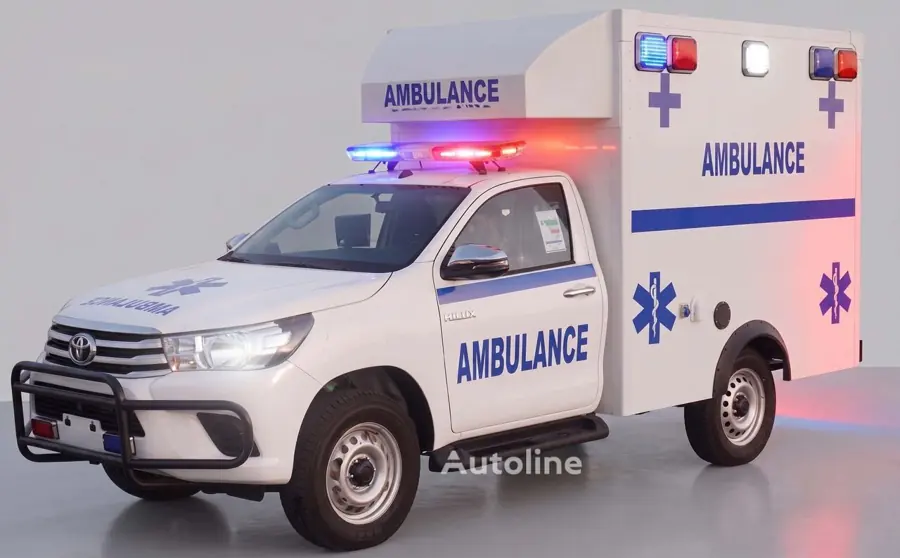
The separate patient body is the defining feature. The pickup cab remains at the front, with a tall enclosed medical compartment behind it. Six advertiser photographs provide exterior and interior evidence, including a particularly useful view along the stretcher and storage wall.
The listing does not provide a production year, first registration date or mileage. “New” therefore describes the seller’s condition classification; it does not independently establish an unregistered vehicle, zero use or a particular model year.
Understanding the Toyota Hilux Platform
The photographed front-end design is consistent with the eighth-generation Hilux family. This is a visual identification, not a confirmed chassis code or build date. Toyota’s eighth-generation model archive documents body-on-frame construction and several cab and powertrain choices.
For ambulance procurement, the frame supports a conversion whose weight and mounting must be assessed as part of the completed vehicle. A pickup brochure’s cargo capacity cannot simply be treated as the remaining medical payload after a box body has been fitted.
This Hilux is distinct from the LC78 hardtop ambulance and the separately advertised LC79 box-body ambulance. Although the latter also has a separate patient box, neither its engine options nor its medical interior establish the Hilux specification. The individual body, mounting design and completed weights govern the comparison.
Engine, Transmission and Drivetrain
Three important purchase facts are explicit: diesel fuel, a nominal 2.4-litre engine and manual transmission. Four-wheel drive also appears in the listing’s axle information. The number of forward gears, engine code, rated power, torque and emissions standard are not published for this particular offer.
For context, Toyota’s 2024 UK technical reference identifies a 2GD-FTV 2.4-litre engine, with 2,393 cc displacement, 110 kW and 400 Nm. Those are market-specific reference values, not verified ratings for the advertised export ambulance. Obtain its engine identification and homologation documents before using any figure in a tender.
A manual gearbox places gear selection and clutch operation with the driver. Training should cover the delivered transmission and drivetrain controls, especially manoeuvring and starting on gradients with the completed ambulance loaded. No fuel economy, range or acceleration figure is established for this conversion.
4×4 Capability and Remote-Area Applications
The confirmed seller-stated 4×4 configuration makes route-access requirements a relevant part of the buying discussion. It does not establish differential locks, a winch, a raised intake or a particular ground clearance. None of those accessories should be added to the specification from assumptions about other Hilux vehicles.
Toyota’s eighth-generation documentation describes a selectable four-wheel-drive system with low-range operation. That is platform context; the supplied transfer case and controls should be confirmed against the actual chassis and operating manual.
The photographed front protection bar and cab step are visible accessories. A protection bar is not proof of a rated recovery point. Similarly, the box body’s rear overhang and height require assessment on the intended route: departure clearance, overhead obstructions and patient ride quality matter alongside traction.
Ambulance Conversion and Body Design
The exterior photograph shows a single cab, steel wheels and a tall separate white ambulance body. Its upper forward section extends over the cab. Warning lamps and medical markings are integrated into the exterior presentation. The rear photograph shows double loading doors and a rear step or bumper area.
The converter is not named. Interior panel composition, insulation, structural mounting details and electrical drawings are also unpublished. Request the converter’s identity and completed-vehicle documentation so that body support, servicing and replacement parts have an identifiable source.
The rear exterior carries a different stripe treatment from the main presentation photograph. Buyers should agree which body finish, door layout and light arrangement the quotation covers. The gallery demonstrates the advertised conversion concept without proving that every pictured detail belongs to one allocated vehicle.

Patient Compartment and Interior Layout
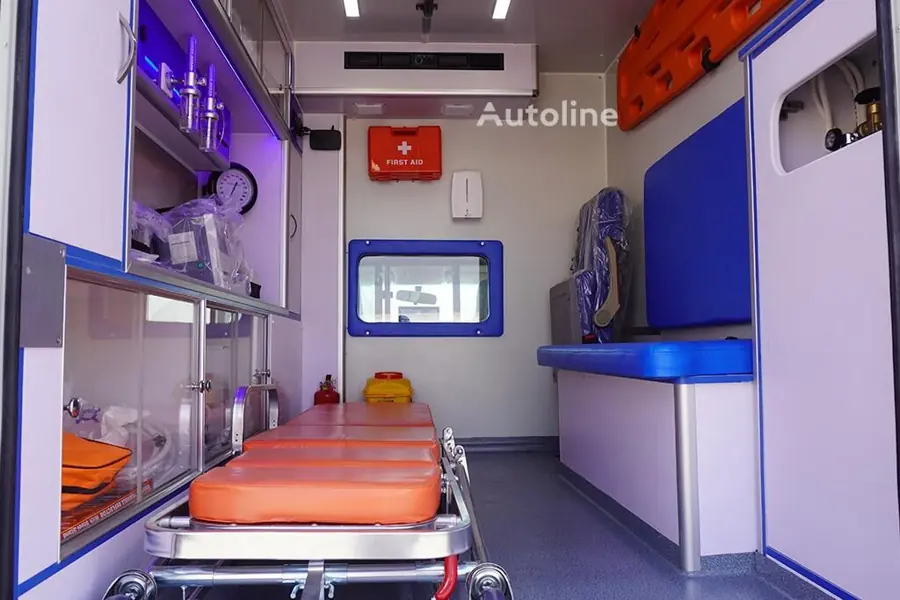
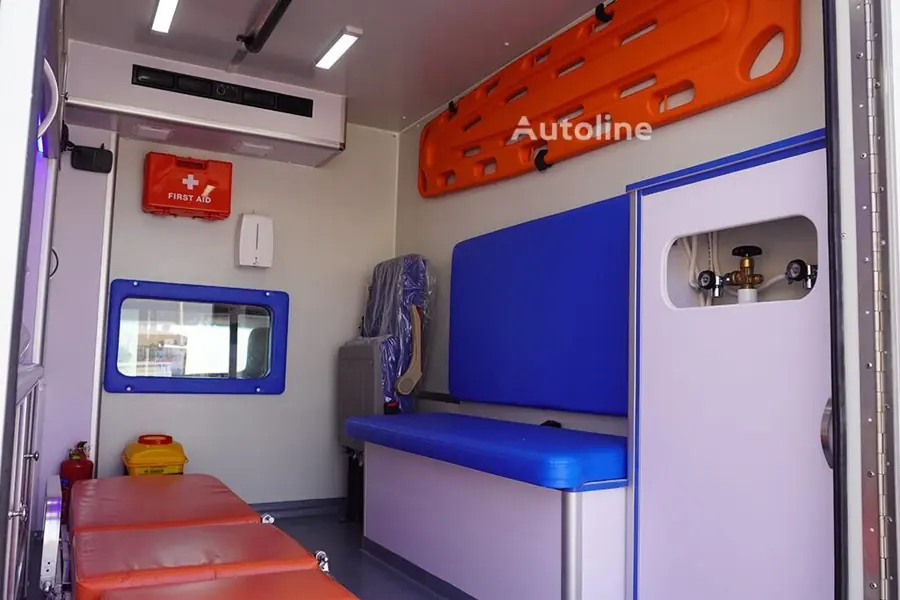
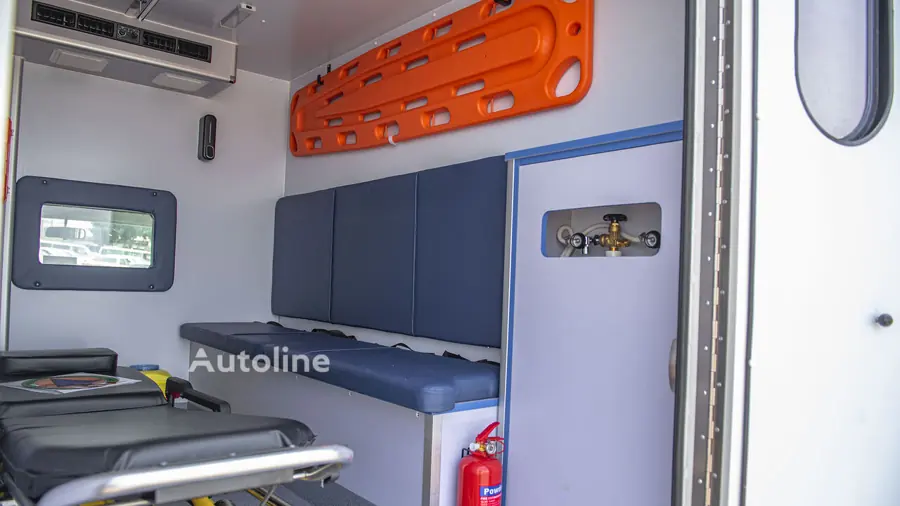
The main interior views place the stretcher lengthwise beside a cabinet wall, leaving an aisle towards a forward bulkhead window. A padded bench occupies the opposite side, with a separate upright seat visible near its forward end. Overhead and lower storage provide several equipment positions.
This arrangement raises practical questions that a floor plan can answer: can an attendant reach the patient and essential supplies from an approved travel seat, and can the loaded stretcher pass through the doors without interference? A procurement demonstration should use the actual stretcher and the organization’s equipment.
Another photograph shows darker seat and stretcher upholstery and different cabinet detailing. It is presented here as an additional gallery configuration, rather than combined into a single guaranteed equipment package. Interior dimensions, approved seating capacity and patient capacity remain unconfirmed.
Stretcher and Patient Handling Equipment
A wheeled stretcher with orange upholstery is clearly visible in the main interior. The alternate view shows dark upholstery. An orange rigid transport board is mounted high on the seating-side wall. Brands, models, safe working loads and the exact supply schedule are not identified.
The buyer should obtain the stretcher specification, vehicle retention-system details and patient-restraint arrangement together. Loading height and handling procedures need to match the equipment supplied, including any assistance required at the rear doors. No powered lift or loading ramp is verified.
During handover, demonstrate loading, locking, release and patient access using the manufacturer’s instructions. A photograph of a stretcher inside a vehicle does not certify the retention system or establish approval for a particular patient transport service.
Medical Equipment and Storage
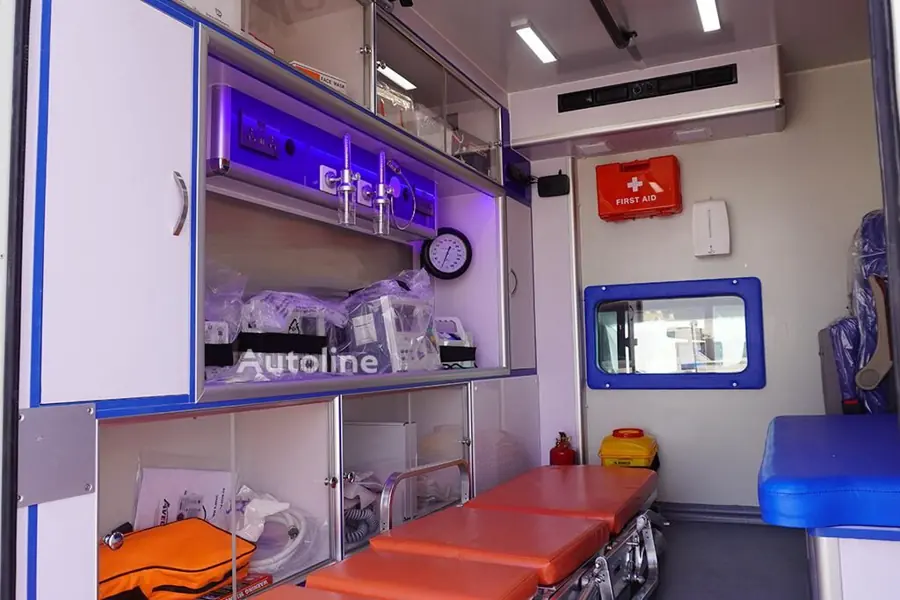
The cabinet photographs show glass-fronted storage, medical-style fittings, gauges and flowmeter-like components, a first-aid-labelled case, bags and other supplies. A regulator arrangement is visible through an opening beside the bench. A fire extinguisher and a yellow container also appear.
These observations help define the questions to ask, but do not establish a functioning oxygen or suction system. Gas identity, cylinder capacity, pipework, outlet types and service condition require documentation. No identifiable defibrillator, patient monitor or ventilator is expressly confirmed as included.
The seller describes the ambulance as supplied with equipment without publishing an itemized inventory. Distinguish the fitted cabinets and mounting positions from removable devices and consumables. Ask for a signed list stating what is installed, what is included, what is illustrative and what is optional, with model numbers and service information where applicable.
DISCOVER THE AMBULANCE EQUIPMENT
Emergency Warning and Communication Systems
The principal exterior shows a red-and-blue roof lightbar, high body-mounted warning lamps and a white exterior lamp. Ceiling light strips are visible inside. The rear picture also shows upper lamps, but does not establish a complete lighting specification.
Siren equipment, scene-light output, radio installation and warning-system controls are not itemized. Confirm their inclusion, operation and compatibility with the destination’s requirements. The small dark unit visible inside should not be assigned a communication function without identification.
Driver Cabin and Medical Crew Accommodation
The gallery establishes the single-cab arrangement but does not provide a detailed dashboard or driver-controls photograph. Steering position, cab seating approval, infotainment, airbags and assistance systems therefore need confirmation for the supplied chassis.
The patient area has visible padded accommodation, including a side bench and upright seat. These do not establish the number of approved travel positions. Request the seating and restraint documentation, and check access to clinical equipment while seated. Specify how crew members communicate between the separated cab and patient body.
Heating, Ventilation and Climate Control
A forward, ceiling-mounted climate unit with vents is visible in the patient compartment. The photographs do not establish its cooling output, heating capability, fresh-air arrangements or performance when stationary. Cab climate-control equipment is also not specified in the listing.
For a hot-weather or remote assignment, agree operating conditions and acceptance measurements with the supplier. These should reflect the closed patient compartment, crew and equipment load. Auxiliary batteries, shore power, inverter capacity and engine-off runtime are not documented; request an electrical load schedule before adding powered medical devices.
Dimensions, Payload and Capacity
No completed ambulance dimensions, gross vehicle weight, axle ratings or remaining payload are published. Toyota’s UK reference lists a 3,085 mm wheelbase for its eighth-generation pickup configurations, but this remains a platform reference rather than a measurement of the offered conversion.
Ask for overall length, width and height including lamps, plus rear loading height and patient-compartment dimensions. Obtain completed-vehicle axle weights and a loading schedule covering fuel, crew, patient, cylinders and equipment. This establishes usable capacity more directly than an unconverted pickup’s nominal payload.
Healthcare and Emergency Medical Applications
The advertised ambulance body and 4×4 drivetrain make this offer relevant to organizations assessing rural patient transport, industrial medical support or routes with unsealed access. Actual deployment depends on the final equipment, crew arrangements, legal approvals and the service’s clinical requirements.
A hospital, mine or humanitarian operator should define the patient journey before choosing the inventory: access route, travel duration, attendant requirements, climate and the equipment needed during transport. The listing does not establish basic life support, advanced life support, intensive care capability or certification under EN 1789.
Safety and Operational Considerations
Procurement should include training on the delivered drivetrain, stretcher system, warning controls and conversion electrics. Maintain the vehicle to its applicable Toyota schedule and inspect body mountings, tyres, restraints and equipment retention according to the relevant manufacturers’ instructions.
Have the clinical team approve the cleaning procedure and patient-area materials. Any supplied medical gas installation should come with suitable documentation and inspection arrangements. Oxygen cylinders require appropriate securing and handling; device mounting and electrical connections should match the equipment manufacturers’ requirements.
These are acceptance and operating considerations, not findings of defects. Their purpose is to turn a promising advertised configuration into a documented vehicle specification that the operator can support.
Technical Specifications
Toyota Hilux Base Vehicle Specifications
| Specification | Evidence and scope |
|---|---|
| Manufacturer / model | Toyota Hi Lux (Hilux), seller-listed |
| Cab configuration | Single cab, photographed |
| Condition | New, seller classification |
| Engine / fuel | 2.4-litre diesel, seller-stated |
| Transmission | Manual; forward gear count unspecified |
| Drivetrain / axles | 4×4 / two axles, seller-listed |
Ambulance Conversion and Medical Equipment Specifications
| Specification | Evidence and scope |
|---|---|
| Body | Separate ambulance box body, seller-described and pictured |
| Rear access | Double loading doors and rear step/bumper area pictured |
| Patient handling | Wheeled stretcher and wall-mounted rigid board shown |
| Accommodation | Bench and upright attendant seat pictured; approval/count unspecified |
| Storage / lighting | Cabinets, shelving and ceiling lights pictured |
| Climate unit | Overhead patient-compartment unit pictured; performance unspecified |
| Included equipment | Seller says equipment supplied; itemized inventory unpublished |
Production year, registration, mileage, exact engine rating, gear count, emissions class, final weights and dimensions were not provided. Reference-platform figures are explicitly separated from the seller’s vehicle specifications.
VIEW CURRENT PRICE & AVAILABILITY
Current Seller Offer — Verified 25 October 2026
Product Location: Dubai, United Arab Emirates. This is the advertisement’s product-location field.
| Specification | Evidence and scope |
|---|---|
| Seller / reference | Fire Trucks 4 Africa / TP52724 |
| Asking price | US$48,400; taxes and delivered total not specified |
| Production / registration / mileage | Not specified |
| Condition | New, seller-stated; unused status not independently documented |
| Engine / transmission / drivetrain | 2.4-litre diesel / manual / 4×4, seller-stated |
| Conversion / equipment | Box-body ambulance with unitemized equipment |
| Converter / clinical classification | Not identified / not verified |
| Availability | Listing accessible; allocated stock and delivery lead time unverified |
| Export | Outside EU countries only, seller restriction |
| Shipping | Destinations, arrangements and transport terms unspecified |
The asking price is not a confirmed landed or delivered total. Taxes, registration, payment arrangements, warranty, collection timing and an allocated vehicle’s availability should be agreed in writing. The advertisement’s placement date is not its production year.
Delivery destinations, shipping arrangements, and applicable transport terms were not specified in the information reviewed. Prospective buyers should confirm these details directly with the seller.
A marketplace delivery-service feature does not establish a supplier shipping commitment. The seller’s restriction to export outside EU countries must be considered separately from the destination’s import and registration eligibility.
What Buyers Should Confirm Before Purchasing
Request a VIN-linked quotation with the chassis code, engine, emissions information, steering position, transmission and registration history. Ask for current dated photographs matching that vehicle and its interior, particularly because the gallery contains alternative upholstery and exterior markings.
Attach an equipment schedule and dimensioned floor plan to the order. Include stretcher and seat approvals, medical device identities, maintenance records where applicable, electrical drawings and completed weights. Agree a handover demonstration, inspection opportunity, export documents and transport responsibilities before payment.
Video: What Is Available?
No advertiser-supplied video was found in the listing reviewed. The official Toyota material below is general Hilux information, not footage of this ambulance or verification of its medical equipment.
Explore Toyota’s official eighth-generation Hilux media archive for platform background. It is not an ambulance equipment demonstration.
Frequently Asked Questions
1. What Toyota model is this ambulance based on?
The seller calls it a Toyota Hi Lux. The exterior shows a single-cab Hilux with a separate ambulance box; its precise chassis code and production year are unpublished.
2. Is the advertised vehicle new?
The seller classifies it as new. Mileage and registration history are not supplied, so unused or factory-new status is not independently established.
3. What engine and transmission does it have?
The description specifies a 2.4-litre diesel and manual gears. Engine code, power, torque and gear count need confirmation.
4. Does it have four-wheel drive?
Yes, the seller lists 4×4. Confirm the delivered transfer case, operating controls and any differential-lock equipment separately.
5. Are a stretcher and oxygen system included?
Stretchers and medical-gas-style fittings appear in the gallery. The seller says equipment is supplied, but does not itemize the stretcher or establish an included, tested oxygen installation.
6. What level of patient care is it configured for?
It is advertised as an ambulance. No documented BLS, ALS, intensive care or regulatory classification was supplied; the operator must assess the agreed configuration.
7. Where is it located and what is the asking price?
The product is listed in Dubai, United Arab Emirates, at US$48,400 when checked on 25 October 2026. Confirm the current offer and additional charges.
8. Does the seller provide international shipping?
The description permits export outside EU countries only, but does not specify shipping destinations, costs or transport terms. Use the seller’s offer button to request these details.
Final Verdict
This Toyota Hilux ambulance offer has a clearly stated mechanical starting point: 2.4-litre diesel, manual transmission and 4×4. Its single-cab box conversion, illustrated storage and rear patient loading give professional buyers a concrete layout to evaluate.
The next step is a vehicle-specific equipment and acceptance schedule. Confirm which photographed interior is supplied, document the medical installation and verify the completed vehicle’s capacities. That approach keeps the purchase focused on the patient service and route the ambulance must support.
For further configuration context, explore our separate Hyundai Staria petrol ambulance review and IVECO Daily 4×4 ambulance review. Their equipment and specifications do not transfer to this Hilux.
Join the Conversation
What matters most for your ambulance fleet: route access, patient handling, crew seating or equipment storage? Share your priorities in the comments below.
Your experience matters
Share your thoughts on this page
Have a question, a useful experience or a suggestion? Add your input below.
Comments are public. Keep them respectful and relevant. Do not share contact details, confidential information or emergency reports.
Comments on this page
Loading comments…