Product Reviews · Emergency Medical Vehicles
New IVECO Daily 4x4 Ambulance Review: Patient Layout and Export Buying Guide
Affiliate Disclosure: Worksite Safety Hub may earn a commission if you make a qualifying purchase through links in this article. This does not change the price you pay.
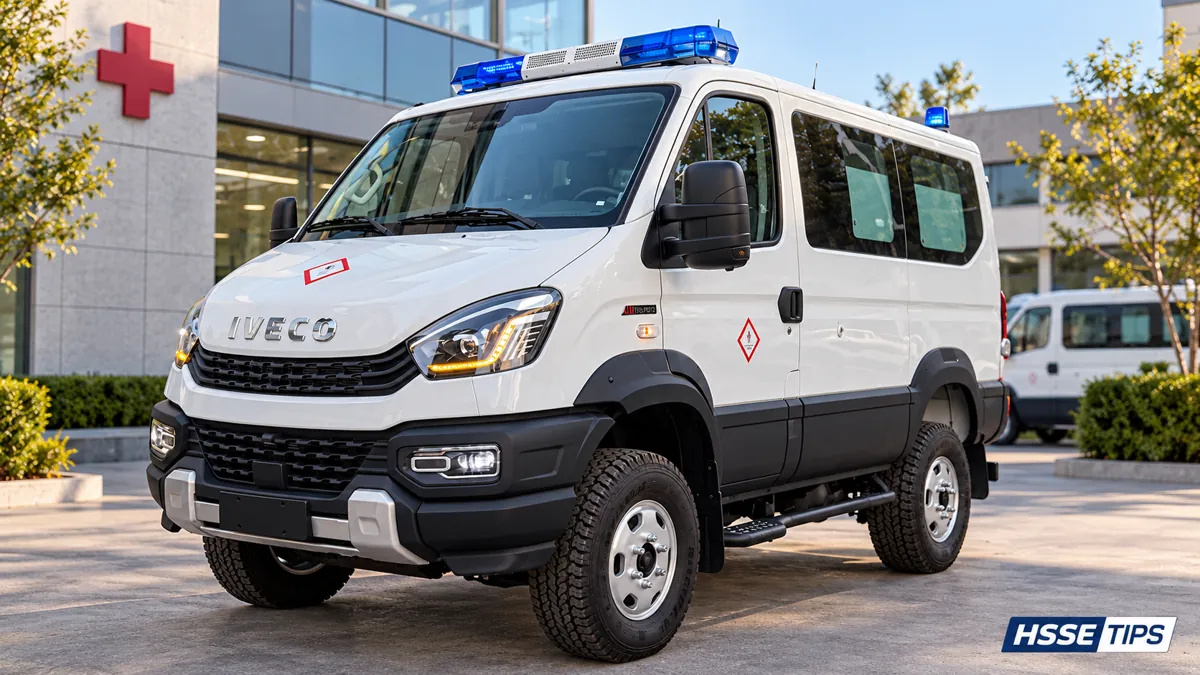
For a medical fleet, reaching the patient and transporting that patient are two parts of one decision. The drivetrain needs to suit the route, while the interior must support the planned crew, patient-handling system and medical equipment.
This advertised new IVECO ambulance brings those questions together. The rear photograph identifies the Daily model family, and the seller specifies a 3.0-litre diesel, ZF automatic transmission, four-wheel drive and three differential locks. Its gallery also shows a dedicated patient compartment with a wheeled stretcher and blue-upholstered seating.
For hospitals, ambulance operators and industrial medical teams, the offer warrants a structured look at both vehicle and conversion. This research-based review explains the available evidence and the documents needed to turn an advertised configuration into a procurement specification. No road test or clinical commissioning inspection has been performed.
New IVECO Ambulance: Overview
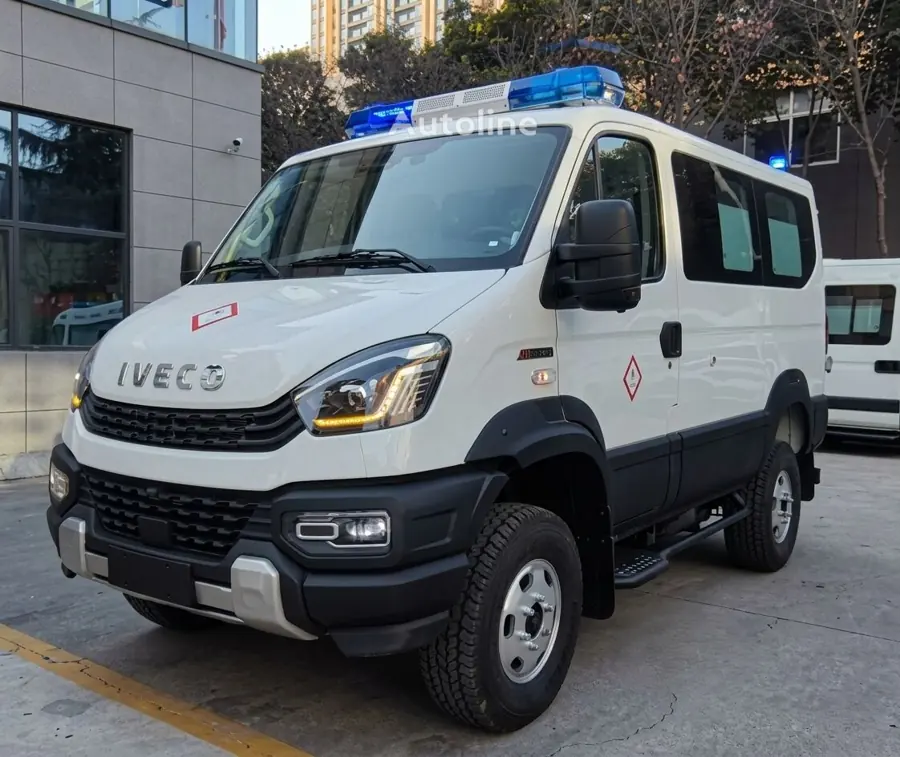
The advertisement describes a new IVECO ambulance with a white van body, two axles and 4×4 drive. Photographs document rear patient access and a fitted medical transport interior. The seller says it comes with standard equipment, but does not itemize that package.
Additional advanced-life-support equipment can be quoted separately. This is an important purchasing distinction: it does not establish that the advertised price includes an ALS equipment package, or that the vehicle has a particular clinical classification. The intended level of care must be documented with the final equipment and approval specification.
Understanding the IVECO Daily Platform
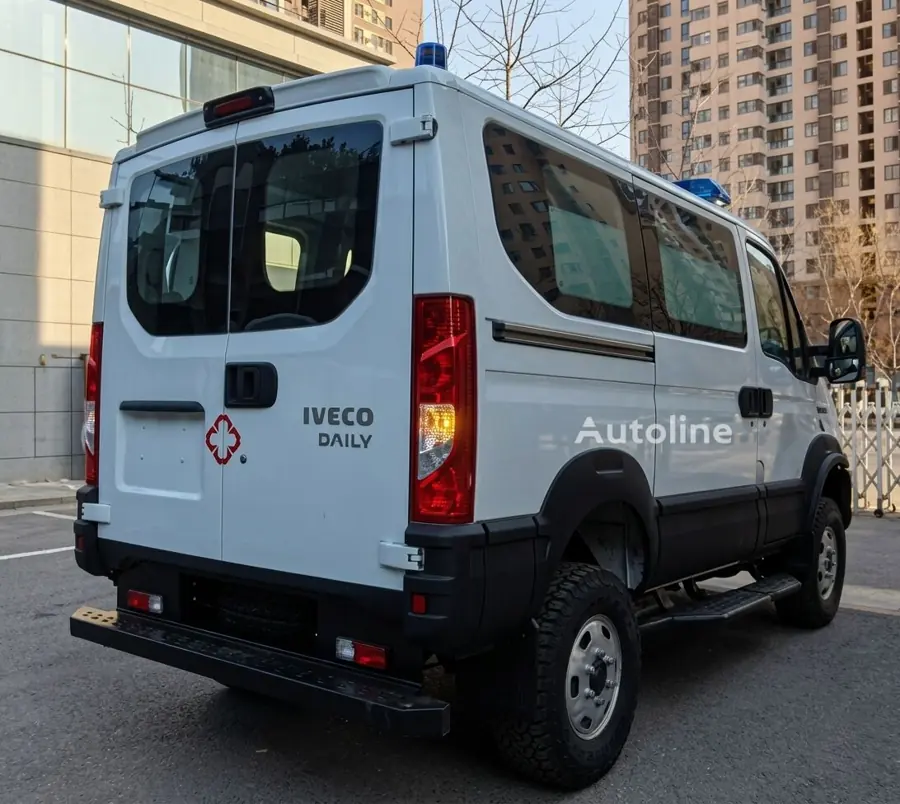
The listing’s brand field says IVECO without a detailed model code. The rear door clearly carries an IVECO DAILY badge, providing evidence for the model family. The exact variant, generation, chassis code and conversion manufacturer remain unverified; they should come from build plates and vehicle documents.
IVECO’s official account of the New China Daily describes a commercial-vehicle range developed for goods, passenger and special applications, using body-on-frame construction. That is useful platform context. It does not establish this ambulance’s chassis specification, production plant or individual equipment.
What Does “New” Mean Here?
The advertiser explicitly classifies the condition as new. The review therefore uses “new” as a seller-provided condition description. A production year, first-registration date, mileage reading and confirmation of unused status were not provided in the information reviewed.
Engine, Transmission, and Drivetrain
The seller describes a 3-litre diesel engine and identifies the automatic gearbox as ZF. The engine code, precise displacement, rated power, torque, gearbox model and number of ratios are not specified. A general IVECO or ZF brochure cannot fill those gaps reliably.
Four-wheel drive and differential locks
The listing specifies 4×4 drive and front, centre and rear differential locks. A differential lock limits relative rotation across the differential it controls, which can assist traction in suitable conditions. It cannot establish braking grip, safe slope limits or the ability to cross an unspecified obstacle.
The transfer arrangement, reduction ratios, lock engagement sequence, suspension and measured ground clearance are not verified. Obtain the correct operating manual and provide vehicle-specific driver training. IVECO’s general Daily 4×4 material illustrates why variant identification matters: a broad range of bodies and driveline specifications exists.
Emissions description and export eligibility
The structured listing says Euro 6, while the description calls it a Chinese Euro 6 engine standard. Retain that seller wording and request the exact emissions certificate and approval jurisdiction. Neither wording alone establishes approval for registration in a particular destination.
The seller expressly limits the offer to export outside EU countries. Buyers should resolve destination eligibility before discussing transport or payment. The export restriction and the emissions description are separate issues from the ambulance’s clinical equipment and operating approval.
Ambulance Conversion and Body Design
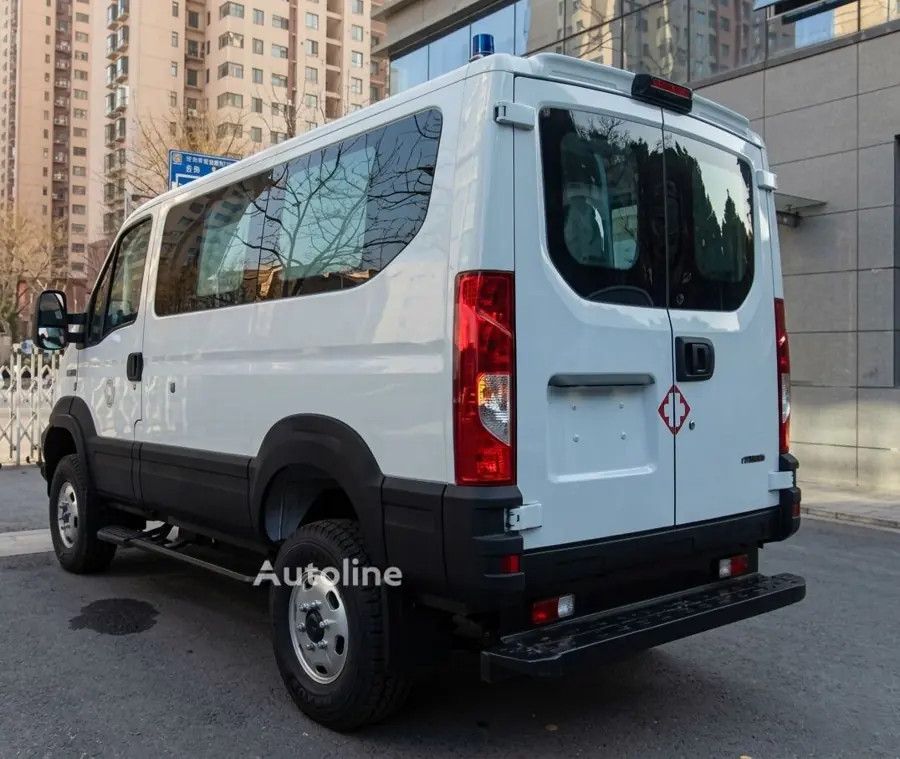
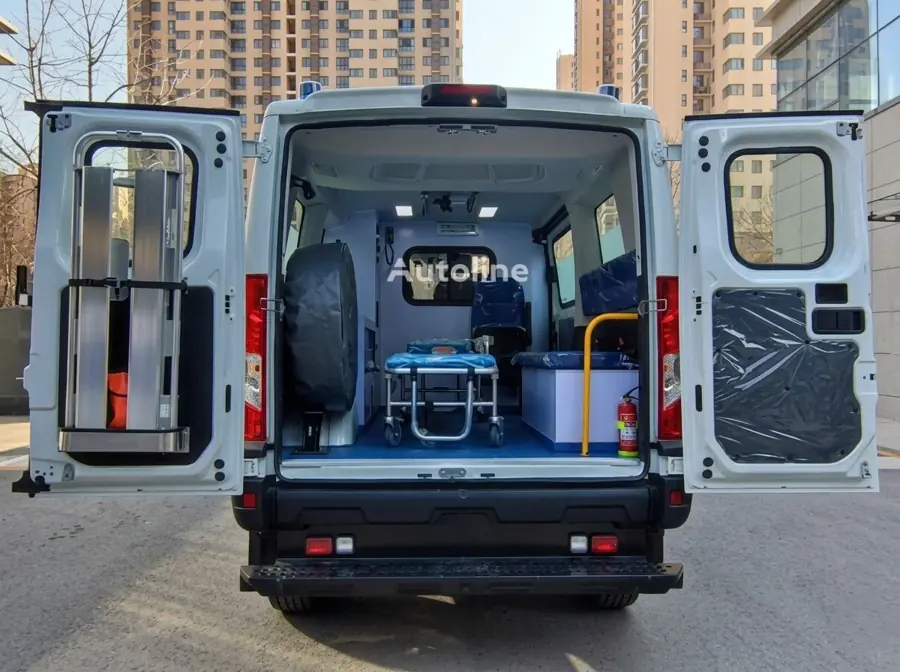
The photographs show a van-based conversion rather than a separate box body. Large side windows, rear double doors, an external rear step and side steps form part of the visible arrangement. Black lower-body cladding and a front roof lightbar distinguish its exterior.
The converter’s name is not established. Request the conversion plate, drawings and electrical documentation alongside the base-vehicle records. These identify who supports body fittings, patient-handling mounts and any auxiliary systems after delivery.
Patient Compartment Layout
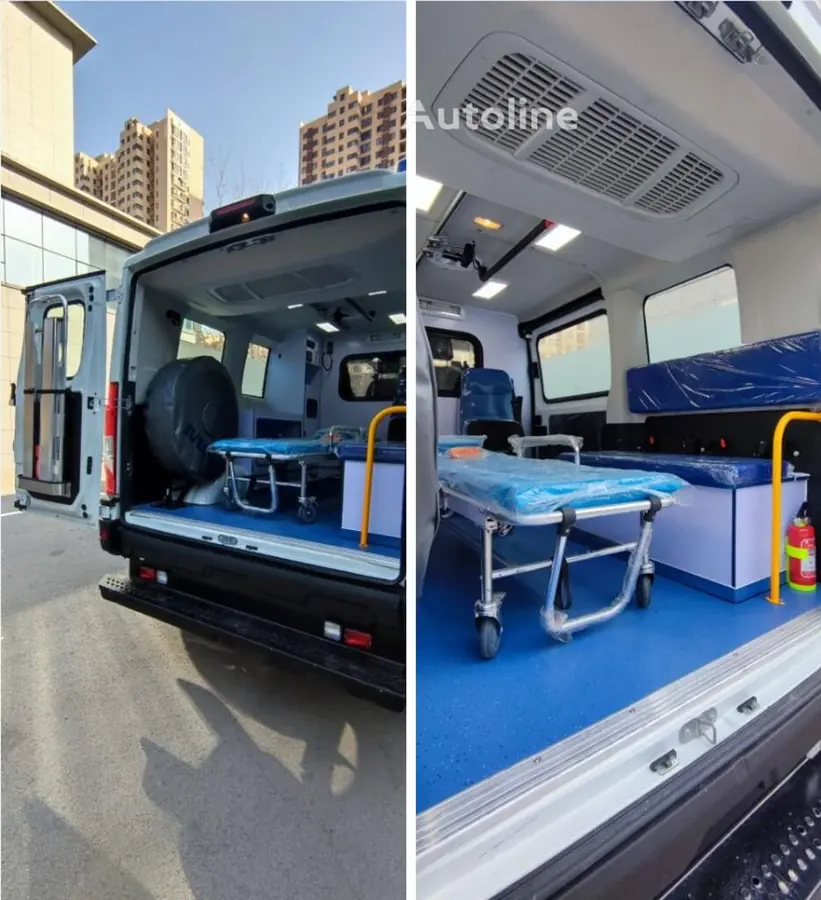
The gallery shows a blue floor, a lengthwise wheeled stretcher and blue-upholstered seating along one side. White lower storage structures, windows and ceiling lighting define the patient space. A spare wheel is also visible inside the rear compartment in some photographs.
These images help buyers examine access, but they do not establish interior dimensions or an approved occupancy. Review the layout with the proposed stretcher and equipment installed. Check access to the patient, attendant reach, door clearance, cabinet opening space and a clear exit path.
Stretcher and Patient Handling Equipment
A wheeled stretcher with a blue-covered patient surface is visible. Its manufacturer, model, working load, locking interface and restraints are not specified. The listing’s reference to standard equipment is not an itemized commitment to supply this exact stretcher.
No loading lift or ramp is confirmed. Ask for a demonstration of the supplied loading system, written compatibility between stretcher and vehicle mount, and relevant inspection documents. Rear access height and the external step should be assessed using the completed vehicle, rather than estimated from photographs.
Medical Equipment and Storage
The photographed seating bases and storage structures offer a starting point for equipment planning. A red portable fire extinguisher, interior lights and yellow grab rails are visible. Their presence in the gallery should be recorded separately from a signed delivery inventory.
- Visible fitted features: interior seating, storage structures, flooring, lighting, ventilation grilles and grab rails.
- Advertised supply: standard equipment is stated, but no item-by-item included list was supplied.
- Visible movable items: stretcher, spare wheel and fire extinguisher require confirmation of inclusion and secure operational stowage.
- Optional equipment: additional advanced-life-support equipment is available for quotation; no specific optional device models or prices are given.
An oxygen system, suction device, defibrillator, monitor, ventilator and emergency bags are not confirmed as installed or included. Agree a bill of equipment with model numbers, quantities, mounting requirements and service documentation. A clinical team can then assess that inventory against the intended service.
DISCOVER THE AMBULANCE EQUIPMENT
Emergency Warning and Communication Systems
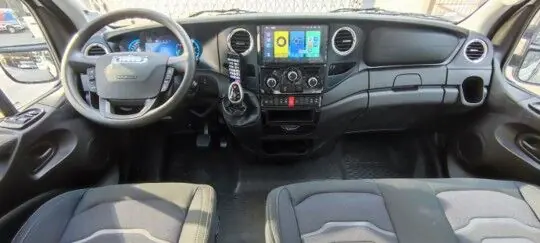
A blue front roof lightbar and rear roof beacon are visible. The dashboard image also shows a central display and switchgear, but does not establish a radio specification or complete emergency-control system.
Siren output, warning-light patterns, scene lighting and communication equipment need confirmation and demonstration. Check compatibility with the destination’s emergency-vehicle rules. A visible blue lamp is evidence of a fitting, not permission to use it on public roads.
Driver Cabin and Crew Accommodation
The original cabin photograph shows left-hand-drive steering, front seating, a central display, dashboard controls and circular air outlets. The rear gallery shows additional seating in the patient space. The number of legally approved travelling seats is not stated.
Confirm the seating schedule, belt arrangements and approved travelling positions. For fleet planning, distinguish a place where someone can sit while stationary from an approved seat during transport. Driver assistance systems, airbags, braking-system details and trim equipment should come from the actual vehicle specification.
Heating, Ventilation, and Climate Control
The patient-compartment photographs show a substantial ceiling grille and rectangular lights. Cab air outlets and climate-style controls are also visible. Their appearance does not establish heating or cooling capacity, auxiliary power, or temperature performance at idle.
Request a demonstration of both cab and patient-space systems under the intended electrical load. Confirm any external power connection, auxiliary batteries, inverter, outlets and protection devices from a wiring schedule. These are procurement questions; the available evidence does not establish their installation.
Dimensions, Payload, and Capacity
Wheelbase, external dimensions, interior measurements, gross vehicle weight and payload are not verified. Do not borrow the capacity of another Daily 4×4, or treat the conversion’s appearance as a weight specification.
Obtain permitted gross and axle weights, a completed-vehicle weighing and the proposed operational load. The calculation must account for crew, patient, fuel, stretcher, medical devices, spare wheel and supplies. Check garaging and transport clearances using actual completed dimensions, including the roof lights and steps.
Emergency Medical and Healthcare Applications
The combination of a seller-described 4×4 drivetrain and a photographed patient compartment may interest hospital fleets, private transport providers and industrial medical teams assessing routes with variable access conditions. The useful question is whether the documented vehicle and equipment meet a defined service requirement.
Emergency transport, hospital transfers, remote-site work and event medical support require different clinical equipment, staffing and approval arrangements. None is established as a ready-to-operate capability by the general listing. An ALS quotation is an opportunity to specify equipment, rather than evidence of included intensive-care capability.
Safety and Operational Considerations
Commission the vehicle and medical conversion together. Check seating and restraints, stretcher locks, secured equipment, doors, steps, tyres, brakes and electrical protection. Train drivers in the supplied four-wheel-drive and differential-lock procedures, including their operating limits.
Confirm cleaning procedures compatible with the actual interior materials and equipment instructions. Any oxygen equipment included in the final order needs documented cylinder restraint, inspection and operating arrangements. A qualified team should verify the applicable ambulance and medical-device requirements for the destination.
EN 1789 addresses road-ambulance design, testing and equipment, as described by BSI. No specific EN 1789 category, BLS/ALS certification, crash-test approval or clinical authorization was verified for this offer. Request the relevant documents for the completed configuration.
Technical Specifications
IVECO Base Vehicle Specifications
| Specification | Verified information |
|---|---|
| Brand / model family | IVECO / Daily badge visible in rear photograph |
| Advertised condition | New, seller-classified |
| Fuel / engine size | Diesel / 3 litre, seller-described |
| Transmission | ZF automatic, seller-described |
| Axles / drive | 2 axles / 4×4, seller-listed |
| Differential locks | Front, centre and rear, seller-described |
| Emissions wording | Listing field: Euro 6; description: Chinese Euro 6 engine standard |
| Exterior colour | White |
| Steering position | Left-hand drive visible in cab photograph |
Exact variant, generation, production and registration dates, mileage, engine output, gear count, wheelbase, dimensions, gross weight and payload remain unverified.
Ambulance Conversion and Medical Equipment Specifications
| Specification | Verified information |
|---|---|
| Body configuration | Van-based patient compartment; rear double doors and external step visible |
| Patient handling | Wheeled stretcher visible; model, mounting and inclusion unconfirmed |
| Interior arrangement | Blue floor, blue-upholstered seating and storage structures visible |
| Interior fittings | Ceiling lights, ventilation grille and yellow grab rails visible |
| Warning equipment | Blue roof lightbar and rear roof beacon visible |
| Advertised equipment supply | Standard equipment unspecified; additional ALS equipment can be quoted |
Converter, clinical classification and itemized included medical equipment are not established. Photographed fittings require confirmation in the final specification and sale inventory.
VIEW CURRENT PRICE & AVAILABILITY
Current Seller Offer — Verified 24 October 2026
Product Location: Xi’an, China. This is the vehicle location given in the advertisement.
Fire Trucks 4 Africa advertises the ambulance under reference UD52016. The directly reviewed listing displays an asking price of US$59,000. Some indexed versions still show price on request, so obtain a current written quotation specifying taxes, equipment and delivery costs.
- Condition: new, according to the seller; unused status and prior registration are not independently established.
- Dates and mileage: production year, first registration and odometer reading not specified.
- Vehicle: Daily family identified by the photographed badge; exact chassis variant unconfirmed.
- Powertrain: seller-described 3-litre diesel, ZF automatic, 4×4 and three differential locks.
- Conversion: patient compartment shown; converter and approved ambulance class not specified.
- Equipment: standard package not itemized; additional ALS equipment available for quotation.
- Export limitation: explicitly offered for export outside EU countries only.
- Availability: advertisement accessible on the verification date; stock, build lead time and warranty terms require confirmation.
Delivery destinations, shipping arrangements, and applicable transport terms were not specified in the information reviewed. Prospective buyers should confirm these details directly with the seller.
The non-EU export limitation does not establish acceptance in every other country. Confirm destination approval, collection or delivery arrangements, freight charges, insurance, documentation and applicable Incoterms in writing.
Questions Buyers Should Ask Before Contacting the Seller
Prepare a service specification and request one coordinated vehicle-and-conversion quotation. Key questions include:
- What are the VIN, exact Daily variant, build date, mileage and registration status?
- Which engine, ZF gearbox and transfer system are installed, and what manuals support them?
- Who converts the ambulance, and which documents establish seating, weight and destination eligibility?
- Which stretcher, locking system, restraints and medical devices are included at the quoted price?
- What specifically changes in an ALS quotation, including equipment, mounts, electrical loads and approvals?
- Can the supplier demonstrate loading, warning lights, climate systems and electrical protection?
- What are the inspection, warranty, spare-parts, payment, export and delivery arrangements?
Official IVECO Video: Platform Background
No advertiser video of this ambulance was identified. The following IVECO Australia induction video shows a different Daily 4×4 specification. It provides manufacturer background, not operating instructions or performance evidence for this China-listed ambulance.
Frequently Asked Questions
What model is the advertised IVECO ambulance?
The rear photograph identifies the Daily family. Its exact variant, generation and chassis code require confirmation.
Is it factory-new or unused?
The seller classifies it as new. Production date, first registration, mileage and confirmation of unused status were not supplied.
Does it have four-wheel drive?
The seller specifies 4×4 drive and front, centre and rear differential locks. The exact transfer system and operating procedures need documentation.
What engine and gearbox are advertised?
A 3-litre diesel and ZF automatic gearbox. Engine output, engine code, gearbox model and gear count are not specified.
Are the stretcher and medical devices included?
A stretcher is photographed, but the standard package is not itemized. Request a signed list of everything supplied.
Is this an advanced-life-support ambulance?
The seller offers additional ALS equipment for quotation. An included ALS package or certified clinical classification is not established.
Where is it located, and can it be exported to the EU?
The advertised vehicle location is Xi’an, China. The seller expressly restricts this offer to export outside EU countries.
How can buyers contact the seller?
Use the tracked offer buttons in this review to reach the listing and request the full specification, equipment inventory and written quotation.
Sources and Related Reading
Vehicle-specific information comes from the advertisement and its original gallery, checked on 24 October 2026. Platform context uses IVECO’s New China Daily technical background and its Daily 4×4 range information. These sources do not establish the individual ambulance’s variant. The standards discussion uses BSI’s road-ambulance standard scope.
For another documented conversion layout, read our Sprinter 316 CDI ambulance review. Its specifications and medical equipment are separate from this IVECO. Our first-aid training review provides related preparedness reading.
Final Verdict
This IVECO Daily ambulance offer combines an advertised automatic 4×4 drivetrain and three differential locks with a photographed patient transport interior. The original gallery makes the seating, stretcher arrangement and access points useful subjects for a focused supplier discussion.
Its procurement value depends on the completed specification: exact vehicle identity, approved capacity, included equipment, clinical requirements and destination eligibility. For an eligible non-EU buyer whose route and service requirements match the documented configuration, the next step is a full quotation and a vehicle-and-conversion inspection.
Join the Conversation
Which matters most to your ambulance fleet—route access, patient loading, crew space or a clearly defined equipment package? Share your priorities in the comments below.
Your experience matters
Share your thoughts on this page
Have a question, a useful experience or a suggestion? Add your input below.
Comments are public. Keep them respectful and relevant. Do not share contact details, confidential information or emergency reports.
Comments on this page
Loading comments…