HSSE TIPS · Product Reviews · Critical Care Transport
Mercedes-Benz Intensive Care Ambulance RHD Review: Equipment, Specifications & Buying Guide
Affiliate Disclosure: Worksite Safety Hub may earn a commission if you make a qualifying purchase through links in this article. This does not change the price you pay.
Introduction — Specialist Transportation for Patients Requiring Advanced Care
For a hospital arranging a complex transfer, the ambulance is part of the care environment. Access to the patient, secure equipment, dependable power and a documented oxygen supply matter alongside the vehicle beneath the conversion. Procurement therefore starts with the intended mission and ends with a demonstrably compatible vehicle, equipment package and clinical team.
The advertised Mercedes-Benz Intensive Care Ambulance RHD offers a useful starting point: photographs show a high-roof Mercedes van, a teal stretcher, attendant accommodation, medical cabinetry and gas-system components. Its right-hand-drive configuration is seller-stated; the gallery does not provide a clear dashboard photograph to verify it independently. This documentary review examines those original images and identifies the evidence buyers need before commissioning critical care transport.
EXPLORE THE MERCEDES-BENZ INTENSIVE CARE AMBULANCE
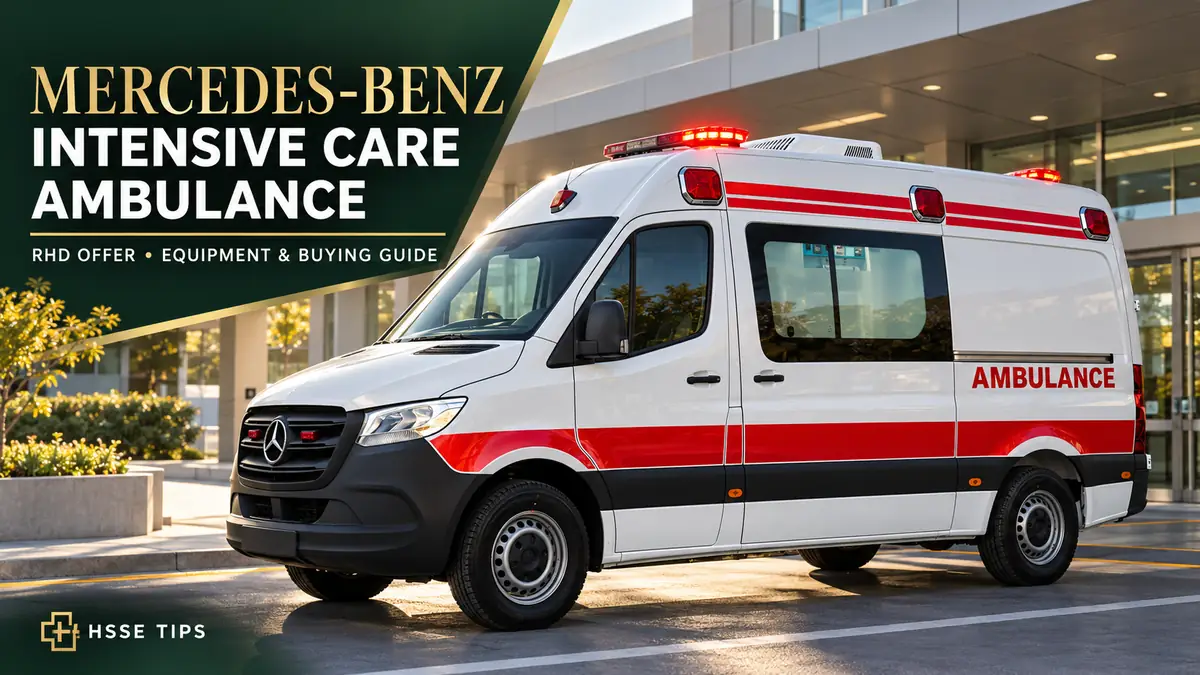
Mercedes-Benz Intensive Care Ambulance Overview
Autoline advert EG35992 names Mercedes-Benz and “Intensive Care Ambulance RHD.” The gallery shows a Sprinter-family van; the supplier-related EOW product page also describes a Mercedes Sprinter RHD ICU configuration. Neither establishes the precise Sprinter derivative, chassis identification or equipment inventory of the vehicle offered.
A documentation mismatch needs resolving: the advertisement’s detailed Turkish description refers repeatedly to a Volkswagen Crafter, including orange interior cabinetry, while the Mercedes photographs show teal fittings. Its manual gearbox, material thickness, ventilation and electrical claims cannot responsibly be transferred to this Mercedes. Request a corrected, vehicle-specific specification before comparing quotations.
Understanding the Mercedes-Benz Platform
The photographed vehicle uses a van body with a high roof and integrated medical interior. Identifying its exact Mercedes variant matters because wheelbase, permissible masses, suspension and approved conversion provisions depend on the actual chassis. A model-family resemblance cannot establish a 319, 419 or another derivative.
Mercedes-Benz publishes Body and Equipment Guidelines for professional upfitters. The applicable edition should be matched to the VIN, market and production series. Buyers should ask the converter to explain how the finished ambulance’s mounts, electrical additions and weight distribution comply with the relevant chassis requirements.

Right-Hand Drive Configuration
The title and steering field advertise right-hand drive. None of the reviewed gallery photographs clearly shows the steering wheel and dashboard. RHD must therefore remain an advertiser claim until supported by a current cabin photograph and chassis documentation.
RHD may suit fleets operating where traffic normally keeps left, but that does not establish import eligibility. The destination authority must confirm steering rules, vehicle age and emissions limits, ambulance registration, warning-light permissions and inspection requirements. Include these approvals in the procurement timetable before paying for international transport.
Engine, Transmission and Drivetrain
Structured listing fields state diesel fuel, four inline cylinders, 190 HP / 140 kW, Euro 6 and six gears. These are advertiser entries rather than independently authenticated manufacturer specifications. The engine code, displacement and torque are not established, and the listing does not reliably identify manual versus automatic transmission for the Mercedes.
Ask for the VIN-linked build record, engine plate and gearbox identification. Driven axles are also unverified: neither the Mercedes badge nor the medical conversion proves rear-wheel drive, all-wheel drive or off-road capability. No verified fuel consumption, driving range or performance figure is available for the completed ambulance.
Chassis, Dimensions and Gross Vehicle Weight
The advertisement records 5.986 m length, 2.345 m width and 2.292 m height. Treat these as seller-entered dimensions pending measurement, including clarification of mirrors and rooftop fittings. Wheelbase, patient-room dimensions, gross vehicle weight, permitted axle loads and remaining payload are not established.
Weigh the finished ambulance with its intended equipment and consumables, then account for patient and crew loading within gross and individual axle limits. Conversion furniture, cylinders, batteries and medical devices all consume capacity. Without a completed-vehicle weight record, a usable payload calculation would be speculation.
Ambulance Body and Exterior Design
White bodywork, red striping, an ambulance-marked exterior and integrated roof warning-light housings define the advertised appearance. The sliding side door and rear doors provide access to different working areas. Photographs do not establish finished doorway clearances, loading height or the conversion’s structural certification.
EOW branding appears on the loading platform and in factory imagery. It identifies a relevant supplier connection, but the legal conversion manufacturer and final approval must come from the converter plate and handover documents. Retained markings and warning colours also require destination-market review.

Patient Compartment Layout
Rear-facing photographs show a lengthwise stretcher, upholstered side seating, a forward attendant seat, cabinets and ceiling fittings. Teal upholstery distinguishes this interior from the orange Crafter description. This arrangement gives buyers a practical basis for assessing access around the patient and reach to installed systems.
Seat count, restraint approvals and the usable working envelope are not proven by upholstery alone. Arrange a demonstration with the intended crew and equipment: assess access at the patient’s head and sides, door clearance and the ability to reach controls while seated and restrained.

Stretcher, Patient Securing and Loading Systems
The gallery shows a teal stretcher with side rails and several black straps above a metal loading platform. The EOW mark belongs to the visible platform; it does not independently identify the stretcher manufacturer or model. No verified load rating or powered-loading specification accompanies the images.
Require the stretcher and floor-lock identification, compatible restraint instructions and a witnessed loading, locking and release demonstration. Confirm manual recovery arrangements for any powered components actually supplied. Nothing reviewed establishes an electric bariatric stretcher or an automatic loading system.

Critical Care Equipment and Medical Storage
Wall-mounted electronic devices and storage are visible, but readable identification and service records are absent. The related EOW configuration page mentions categories such as ventilation, monitoring/defibrillation and infusion equipment. That range description is not a contractual inventory for this advertisement.
Separate procurement evidence into five categories: fixed installations visible in the gallery; equipment expressly listed in the signed sale inventory; photographed removable devices awaiting inclusion confirmation; optional equipment quoted separately; and equipment the buyer must supply. At present, no model-specific monitor, defibrillator, ventilator or pump inclusion is independently established.

DISCOVER THE CRITICAL CARE EQUIPMENT
Oxygen and Medical Gas Systems
Close-ups show blue cylinders, regulators, an oxygen-labelled panel, flow-control components and clear collection jars. These demonstrate photographed gas and collection-system hardware, not verified cylinder capacity, fill state, pressure performance or clinical readiness.
Obtain cylinder inspection records, regulator identification, installation tests and the gas-system diagram. Confirm securing arrangements, outlet compatibility and servicing responsibilities. The clinical operator must establish adequate supplies for the planned mission; a photograph cannot establish oxygen endurance or redundancy.

Electrical Power and Backup Systems
Photographs show electrical outlets and installed devices, but their supply ratings, circuit protection, battery capacity and backup duration are not established. The Crafter description’s 12 V/220 V statements cannot be used as this Mercedes specification. Likewise, an inverter or UPS mentioned on the related product page does not prove its inclusion here.
Request a circuit schedule and load assessment covering the exact devices supplied. Commissioning should demonstrate operation on the approved supplies and the response to a supply interruption. No included generator has been verified.
Heating, Ventilation and Air Conditioning
Ceiling fittings and grilles are visible; the listing also carries a climate-control entry. Neither proves patient-compartment cooling capacity, separate rear controls or performance in the destination climate. Ask for identification of the installed heating and cooling equipment and a functional test under representative conditions.
No documented HEPA filtration, negative-pressure capability or specialized infection-control certification was found. Cleaning access and maintenance instructions should be assessed alongside thermal comfort.
Emergency Warning and Communication Equipment
Roof housings and frontal warning-light elements are visible. Their operating modes, colour legality and performance need demonstration and local approval. Siren capability and any driver-to-patient communication arrangement have not been functionally verified.
A portable-radio or navigation checklist entry does not identify an approved dispatch communications system. Confirm the actual radios, frequencies, licenses and installation scope required by the intended operator.
Critical Care Transport Applications
A correctly specified vehicle of this type may support hospital transfer fleets or specialist transport operators once the medical package, crew access and operational authorization are established. The advertised interior merits evaluation against those missions, rather than acceptance solely on the “intensive care” label.
The evidence does not establish invasive ventilation transport, neonatal services or other specialized modalities. Humanitarian and emergency-service buyers should apply the same mission-specific equipment, staffing and maintenance acceptance process before deployment.
Intensive Care Ambulance vs Standard Ambulance
An intensive care transport service must match its patients’ needs with appropriate equipment, staffing, supplies and transfer arrangements. A standard ambulance and a critical care ambulance can share a base-vehicle family while carrying materially different medical systems. The badge, external livery and stretcher alone do not define clinical capability.
For an alternative platform review, see our Mercedes-Benz Sprinter 419 CDI ambulance guide. Compare documented configurations individually; its specifications do not apply to this vehicle.
Safety, Hygiene and Regulatory Considerations
Qualified clinical and fleet teams should jointly accept the ambulance. Verify stretcher retention, approved crew restraints, secured medical devices, cylinder retention, fire protection and electrical protection. Establish cleaning, clinical-waste arrangements and scheduled servicing without assuming that visible cabinets or equipment establish compliance.
The Intensive Care Society’s 2026 adult-transfer guidance addresses equipment, documentation and pre-transfer planning. It provides useful operational context, not certification of this ambulance or universal destination law. Applicable ambulance standards and medical-device requirements must be demonstrated with relevant documents, including their scope and vehicle identity.
Technical Specifications
These tables summarize the evidence reviewed. Seller entries are labelled accordingly; photographs establish appearance rather than tested performance.
| Item | Advertiser evidence |
|---|---|
| Advertised manufacturer/model | Mercedes-Benz; Intensive Care Ambulance RHD |
| Vehicle family | Sprinter-family van appearance; related EOW page names Sprinter. Exact derivative unverified. |
| Fuel and output | Diesel; 190 HP / 140 kW; four inline cylinders — advertiser entries |
| Transmission/emissions | Six gears; Euro 6 — advertiser entries. Gearbox type and drivetrain unverified. |
| Steering | Right-hand drive — seller-stated; clear dashboard evidence not supplied |
| Item | Advertiser evidence |
|---|---|
| Body and dimensions | High-roof van in photographs; 5.986 × 2.345 × 2.292 m seller entry, measurement scope unverified |
| Patient layout | Teal stretcher, side seating, forward attendant seat and cabinetry visible |
| Loading arrangement | Metal platform with EOW marking; stretcher model and load rating unverified |
| Weight capacity | Gross vehicle weight, axle limits and payload not established |
| Item | Advertiser evidence |
|---|---|
| Medical devices | Mounted electronic devices visible; models and sale inclusions unconfirmed |
| Gas hardware | Blue cylinders, regulators, oxygen-labelled controls and collection jars visible |
| Electrical/HVAC | Outlets and ceiling fittings visible; supply ratings, backup duration and rear HVAC performance unverified |
VIEW CURRENT PRICE & AVAILABILITY
Current Seller Offer — Verified 25 October 2026
Checked against Autoline EG35992 on this date. “Verified” identifies the source-check date; it does not mean the vehicle has been inspected or its clinical systems certified.
- Product: Mercedes-Benz Intensive Care Ambulance RHD
- Seller: AMBULANCEMED LTD.ŞTİ
- Product Location: Ankara, Türkiye — advertisement’s location field; exact physical dispatch site not independently confirmed
- Asking Price: €70,000; VAT, equipment and freight basis require confirmation
- Production Year / Condition: June 2025 / new — advertiser entries
- First Registration / Mileage: Not established in the reviewed information
- Engine / Transmission: Diesel, 190 HP / 140 kW; six gears stated; engine code and gearbox type unverified
- Gross Vehicle Weight: Not established
- Conversion / Included Equipment: EOW-marked platform visible; legal converter identity and signed equipment inventory required
- Availability / Warranty: Listing accessible; individual stock allocation unconfirmed. A 12-month warranty entry requires written scope and territory.
- Delivery / Export: No unit-specific destinations, shipping quotation or export terms verified
Delivery destinations, shipping arrangements, and applicable transport terms were not specified in the information reviewed. Prospective buyers should confirm these details directly with the seller.
What Buyers Should Confirm Before Purchasing
First obtain the corrected Mercedes specification, VIN, dashboard photograph and current unit video. Reconcile the June 2025 production entry with chassis and conversion records. Then require an itemized inventory stating device model, serial number, condition, service history and whether each item is included.
Make payment milestones depend on agreed acceptance evidence: measured dimensions, loaded weights, stretcher compatibility, gas-system tests, power checks and rear climate-control operation. Define training, manuals, spare parts and warranty responsibilities. The quotation should separately identify transport insurance, collection point, customs documents and agreed Incoterms. Confirm destination import and ambulance approval before shipment.
For different healthcare missions, consult our IVECO Daily mobile clinic guide and Isuzu maternity clinic review. Clinical workspace and transport capability require separate assessment.
Frequently Asked Questions
Is this definitely a Mercedes-Benz Sprinter?
The photographs and related EOW page support the Sprinter family. The exact derivative and chassis specification still require VIN-linked records.
Is right-hand drive independently confirmed?
No. RHD appears in the title and listing field, but no clear steering-wheel photograph was available. Ask for current cabin evidence.
Is it fully equipped for intensive care?
That is not established. Obtain the exact inventory, service records and mission-specific acceptance before treating the advertised designation as operational capability.
Does it include a ventilator and defibrillator?
Related EOW material mentions these equipment categories. Their exact models and inclusion in this sale remain unconfirmed.
Is the stretcher electrically powered?
No powered lifting or loading function was verified. The photographs show a stretcher, straps and a metal platform without a readable model or capacity plate.
What is the asking price?
The checked listing showed €70,000. Confirm tax treatment, selected equipment, warranty and freight in a written quotation.
Can it be imported into any RHD market?
No universal eligibility is established. The destination authority must assess age, emissions, steering, ambulance approval and equipment requirements.
Are original photos and a vehicle video available?
Six original advertiser photographs appear in this review. No verified unit-specific video was found in the listing or related page reviewed.
Why does the description mention Volkswagen Crafter?
The listing contains conflicting model text. Its Crafter-specific equipment and construction claims have been excluded from the Mercedes specification pending correction.
Final Verdict
The advertised Mercedes offers an identifiable high-roof ambulance layout with photographed patient handling, medical storage and gas-system hardware. Those original views give institutional buyers more to assess than a generic ICU label. Its value as a procurement candidate depends on the corrected chassis specification, independent RHD confirmation and a contracted medical inventory.
Request those records and a current demonstration through the seller’s offer, then evaluate the completed vehicle against the intended transfer service. This is a documentary buying review, not a road test or clinical endorsement.
Join the Conversation
Which evidence matters most to your fleet when accepting a critical care ambulance: loaded weights, equipment integration, crew access or local registration? Share your procurement experience through Worksite Safety Hub’s comments. Every Task. Every Person. Home Safe.
Sources and Editorial Method
Original advertiser: Autoline EG35992, checked 25 October 2026; gallery reviewed for visible features. Related configuration: EOW Mercedes Sprinter RHD ICU page. Engineering reference: Mercedes-Benz Body and Equipment Guidelines. Operational context: Intensive Care Society, 2026 adult-transfer guidance announcement. No unit video, converter certificate or model-specific device manuals were verified. The original advertiser listing is used for research; commercial enquiries use the tracked offer buttons above.
Your experience matters
Share your thoughts on this page
Have a question, a useful experience or a suggestion? Add your input below.
Comments are public. Keep them respectful and relevant. Do not share contact details, confidential information or emergency reports.
Comments on this page
Loading comments…