Product Reviews · Emergency Medical Vehicles
Mercedes-Benz Sprinter 316 CDI Ambulance Review: DELFIS Layout and Buyer Guide
Affiliate Disclosure: Worksite Safety Hub may earn a commission if you make a qualifying purchase through links in this article. This does not change the price you pay.
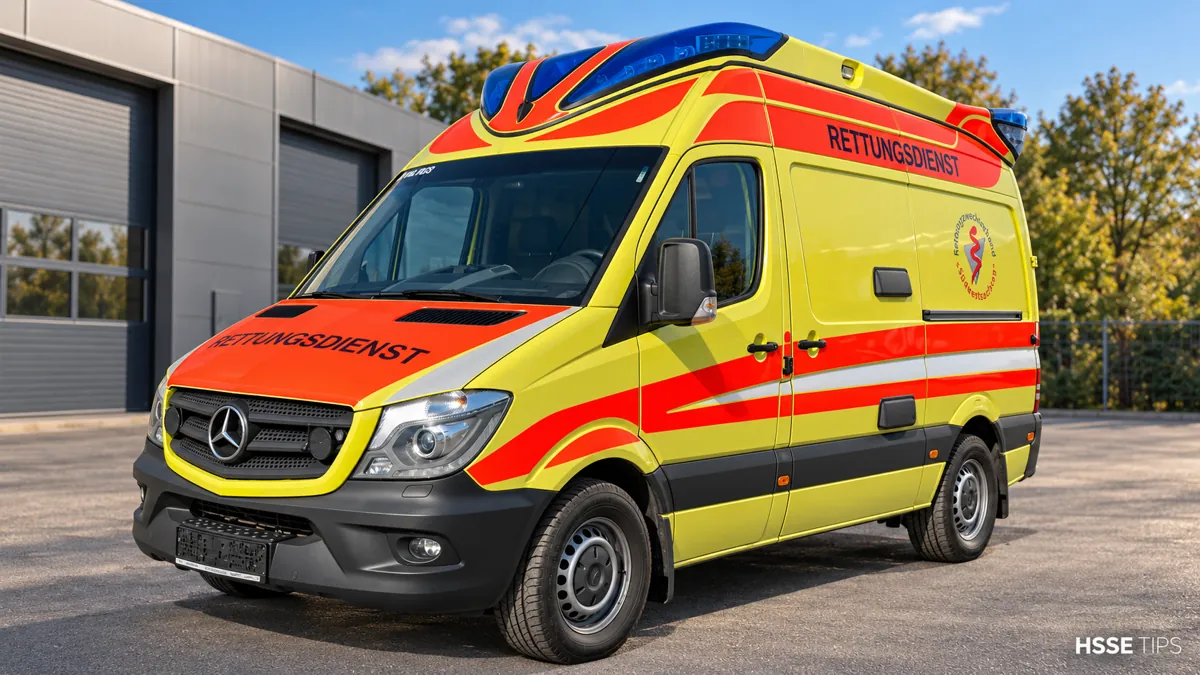
A medical transport vehicle needs more than a recognizable badge and blue lights. Its patient loading arrangement, attendant access, secured storage and vehicle capacity must work together around the service it will deliver.
The Mercedes-Benz Sprinter 316 CDI Ambulance reviewed here combines an advertised 120 kW diesel engine and automatic gearbox with a DELFIS conversion. Original photographs reveal a longitudinal stretcher-support table, attendant seating, fitted cabinets and an Ambulanz Mobile control touchscreen—useful detail for a healthcare fleet assessment.
This is a research-based review of the advertised vehicle, without a road test or clinical equipment inspection. It separates visible conversion features from medical devices confirmed as included, and keeps the changing seller offer in its own dated section.
EXPLORE THE SPRINTER 316 CDI AMBULANCE
Mercedes-Benz Sprinter 316 CDI Ambulance: Overview
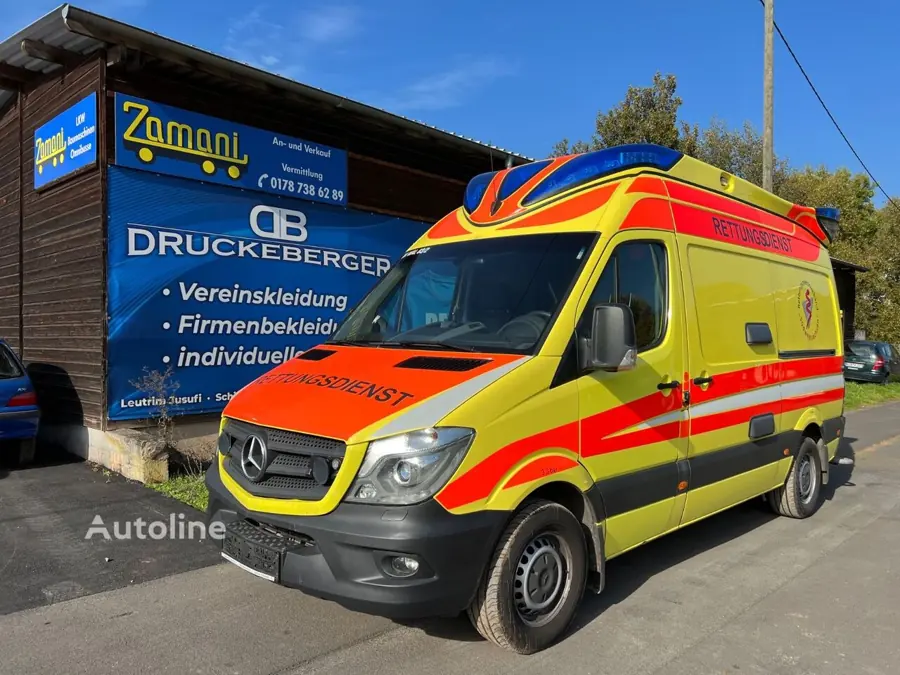
The seller describes a used Rettungswagen, or ambulance, first registered in November 2017. That establishes the advertised registration date, not the production date. The listing records 246,101 km and identifies a DELFIS body conversion.
The photographs show a dedicated patient compartment rather than an ordinary passenger van. However, neither an advanced-life-support designation nor a documented ambulance class is established. Its present clinical role must follow the equipment inventory, approval documents and requirements of the receiving operator.
Understanding the Mercedes-Benz Sprinter 316 CDI Platform
Mercedes-Benz places the second-generation Sprinter, internally known as NCV3, between 2006 and 2018 in its official history. The photographed facelift body and November 2017 registration are consistent with that generation; the VIN and factory data card should establish the exact build specification.
The base vehicle provides the road-going structure, drivetrain and cab. The ambulance conversion adds the specialized roof, interior fittings, electrical controls and patient-handling installation. Both need their own service information. Current Sprinter brochures cannot establish the dimensions, driver assistance systems or equipment fitted to this older example.
Engine, Transmission, and Drivetrain
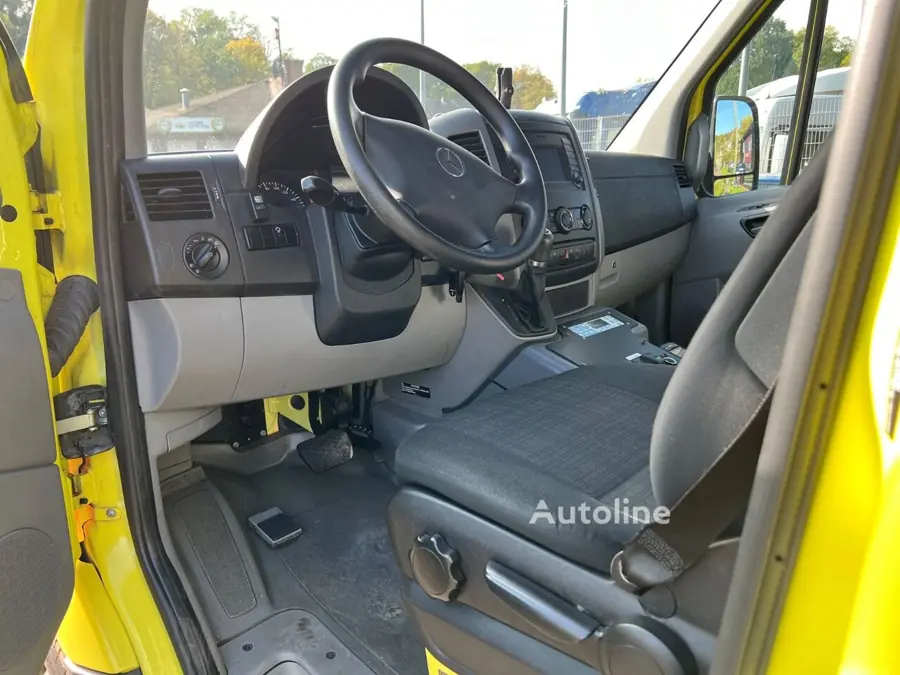
The advertisement specifies a 2,143 cm³ diesel engine rated at 120 kW, displayed alongside 163 hp, and Euro 6 emissions. It also specifies an automatic gearbox, supported by the dashboard selector visible in the cabin photograph.
Automatic shifting can reduce the gear-changing workload in urban transport, but it does not establish ride quality, fuel consumption or acceleration. Those characteristics depend on vehicle condition, loading and operation. No driving impressions are claimed here.
The engine code, torque, gearbox model, gear count and driven-wheel arrangement were not established. Buyers should obtain the VIN data card before ordering parts or planning a duty cycle. In particular, there is no verified basis for advertising this ambulance as four-wheel drive.
Ambulance Conversion and Body Design
The listing names a DELFIS conversion, while the interior touchscreen carries Ambulanz Mobile identification. Ambulanz Mobile’s own history identifies DELFIS as a conversion family introduced in 2006. The exact suffix, conversion date and individual build number for this ambulance remain unconfirmed.
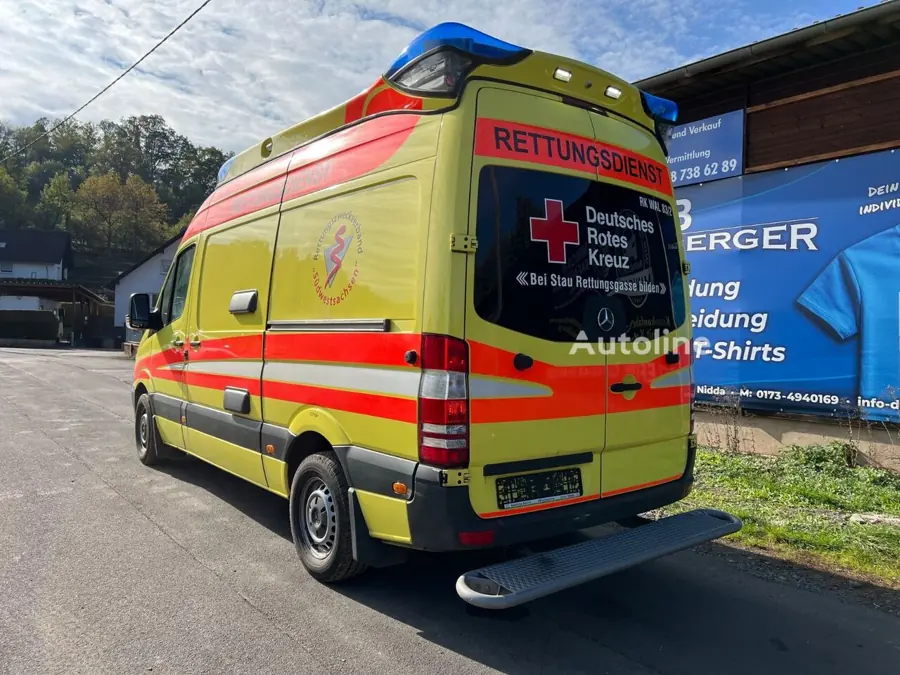
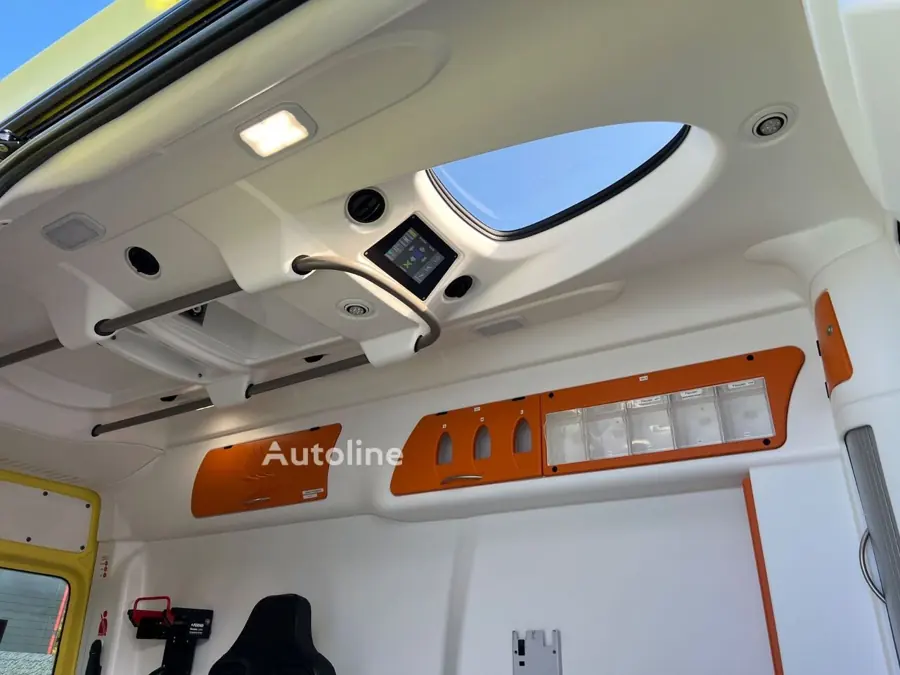
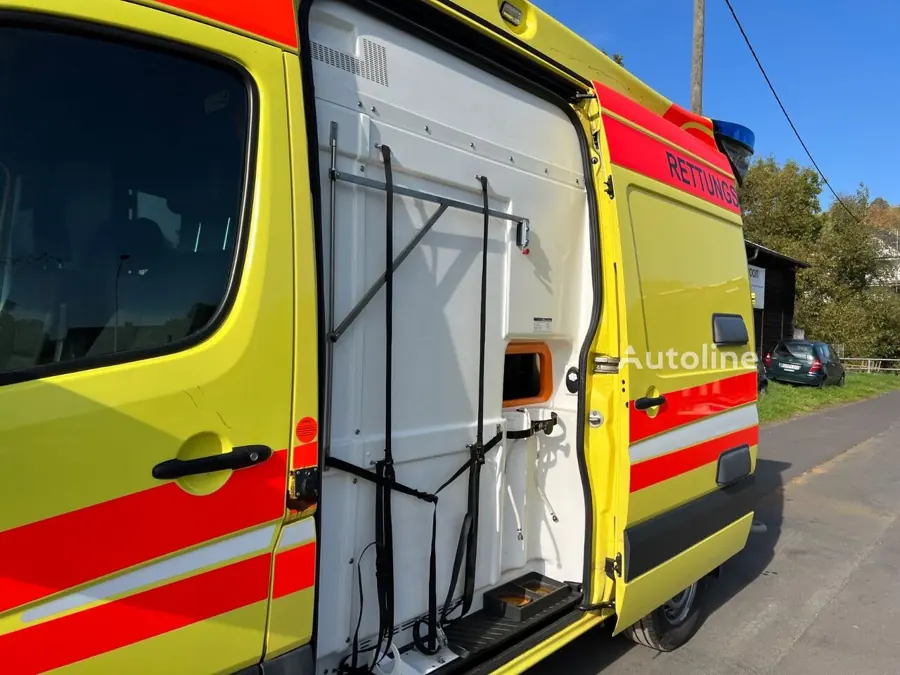
Its most visible distinguishing feature is the sculpted raised roof with integrated warning-light housings. The yellow body and orange-red bands are clearly documented in the gallery. Rear doors, a rear access step and side access form part of the photographed arrangement. Door operation, step security and actual loading clearances belong in the inspection.
Patient Compartment Layout
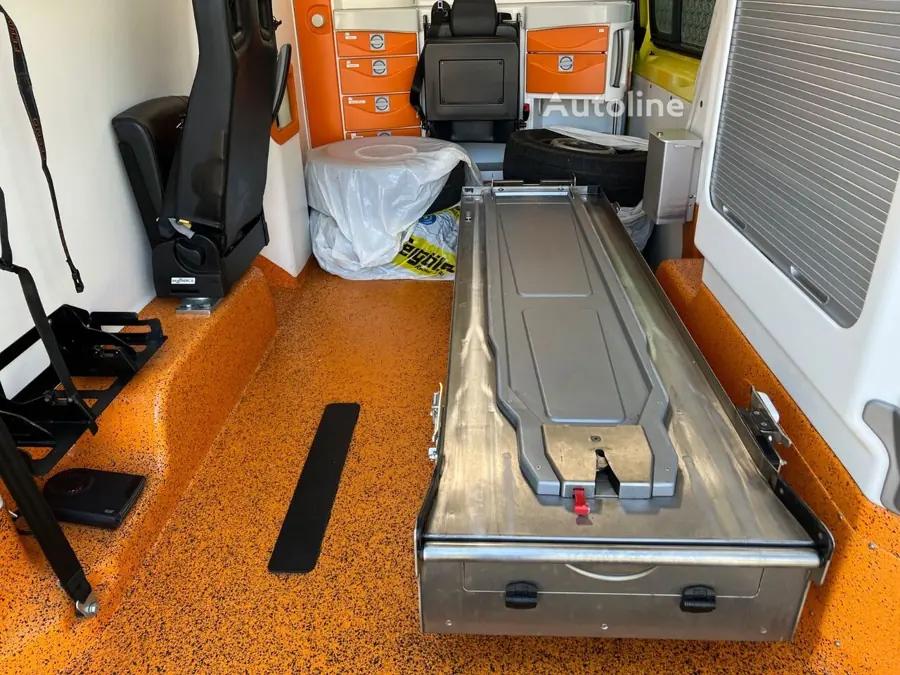
The rear view shows a lengthwise metal stretcher-support table, with a walkway beside it, attendant seating and cabinets toward the front. White molded-looking panels, orange drawers and overhead cupboards define separate working and storage areas. The precise material composition is not specified.
This layout gives buyers a concrete starting point for assessing reach and access. During inspection, use the proposed stretcher and equipment plan to check access around a patient, seat clearance, cabinet opening space and unobstructed exits. Photographs cannot establish usable interior dimensions or ergonomic compliance.
Stretcher and Patient Handling Equipment
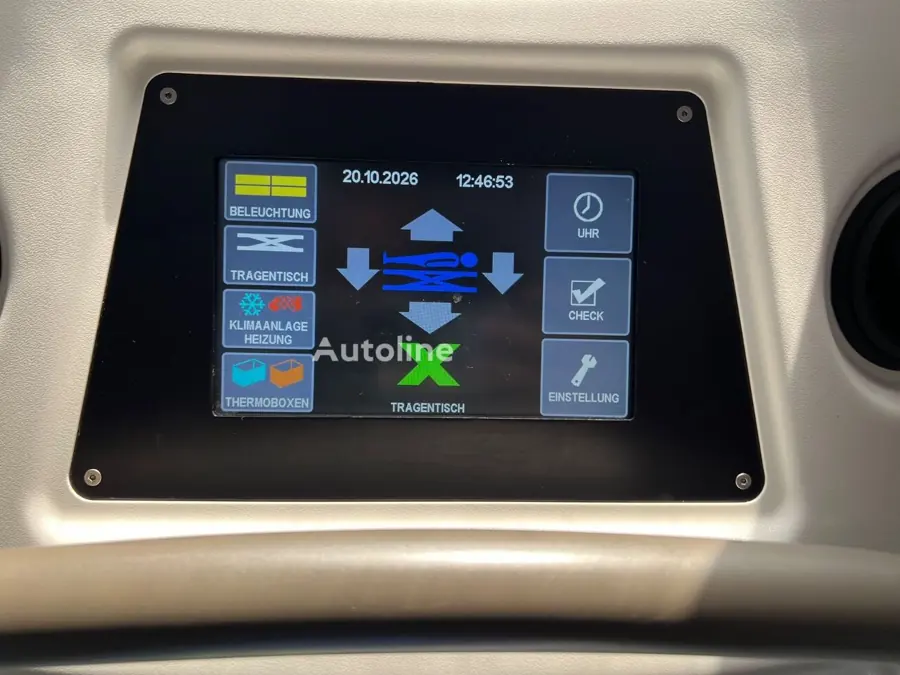
A stretcher-support or loading table is visible; a complete patient stretcher with a mattress is not confirmed as included. The control screen has a Tragentisch label, meaning stretcher table, and related movement icons. This supports identification of the control interface without verifying the mechanism’s operation or capacity.
Ask for the table manufacturer, model, load limit, operating manual and maintenance record. Confirm the exact compatible stretcher, locking interface, loading procedure and patient restraints as a matched system. A support table alone does not establish a complete, approved patient transport installation.
Medical Equipment and Storage
The strongest visible equipment evidence concerns the fitted interior: cabinets, drawers, seating, mounting provisions, grab handles and the support table. Storage can be assessed against a proposed equipment list, including secure placement and access while attendants remain restrained.
The sale inventory needs four clear distinctions:
- Fixed features visible: conversion cabinetry, seating, table and control interfaces; confirm these remain with the vehicle.
- Medical devices expressly included: no itemized included-device list was established.
- Movable items shown: the gallery includes stored wheels and wrapped objects; their presence does not establish a medical equipment package or sale inclusion.
- Optional equipment: no separately priced medical-device options were verified.
An oxygen supply, suction unit, monitor, defibrillator, ventilator and emergency bags are not confirmed. The side compartment contains a mounting framework and straps, but this is insufficient to identify a complete oxygen installation. Obtain a signed inventory with serial numbers and relevant service records.
DISCOVER THE AMBULANCE EQUIPMENT
Emergency Warning and Communication Systems
Blue warning-light housings are visible within the roof design, together with rear-facing lamps and a cab emergency-control panel. The photographs document fittings, not a functional test of warning patterns, audible warning output or scene illumination.
No operational two-way radio specification or communication subscription is confirmed. Check the siren, lighting controls, interlocks and any radio hardware during inspection. Compatibility with local emergency-lighting rules and communications arrangements must be established before operational use.
Driver Cabin and Crew Accommodation
The front cabin photograph shows individual driver and passenger seats. The listing records two seats, while the patient compartment visibly contains attendant seating. These observations do not establish the total legally approved seating capacity after conversion.
The seller lists ABS, ESP, power steering, central locking, GPS, air conditioning and an auxiliary heater. A dashboard screen displays a reversing-camera view. Confirm the equipment specification and operation rather than assuming newer Sprinter assistance features. Record all approved travelling positions, belt arrangements and seating labels from the vehicle documents.
Heating, Ventilation, and Climate Control
Ceiling vents, interior lights and a roof window are visible. The conversion touchscreen includes labels for lighting, stretcher-table functions, air conditioning/heating and thermal boxes. These are useful inspection prompts; they do not establish working cooling capacity, installed thermal-box contents or backup electrical arrangements.
Check cab and patient-compartment climate functions separately, including operation at idle and with the intended electrical loads. Obtain the conversion wiring diagram, battery specification and any external-power information. An inverter, shore connection, auxiliary battery capacity or automatic power management cannot be assigned from the available evidence.
Dimensions, Payload, and Capacity
The advertisement records a net weight of 3,364 kg. Its structured gross-weight field says 3,500 kg, while the German description states a permissible gross weight of 4,050 kg. Those figures conflict, so a usable payload cannot responsibly be calculated from this listing.
Resolve the permitted gross and axle weights against registration documents, manufacturer/converter plates and a current weighing. The operational load must include fuel, crew, patient, stretcher, medical equipment and all other carried items. Dimensions, wheelbase and interior measurements were not verified; obtain measured clearances for garaging, loading and transport planning.
Healthcare and Emergency Medical Applications
This vehicle is most relevant to organizations evaluating an existing ambulance conversion for an appropriately specified medical transport service. Hospitals and private operators can assess its patient layout; industrial medical teams can examine whether its accommodation and equipment plan match their service requirements.
Hospital transfers, event medical transport or emergency response are potential procurement discussions, subject to clinical equipment, staffing and local approval. None is established as a ready-to-deploy capability by the advertisement. Remote-site buyers also need to assess routes and support arrangements; off-road suitability is not verified.
Safety and Operational Considerations
Commissioning should cover the road vehicle and its medical conversion together: brakes, tyres, suspension, electrical circuits, secured equipment, approved seating, table locks and stretcher restraints. Staff need vehicle-specific familiarization and documented loading procedures.
Confirm cleaning methods that suit the actual interior and equipment manufacturers’ instructions. If oxygen equipment is subsequently included or installed, verify its mounting, inspection and operating documentation. Do not infer cylinder safety or electrical certification from cabinet fittings.
BSI describes EN 1789 as covering road-ambulance design, testing, performance and equipment. This review does not establish this vehicle’s conformity, category or applicable approval edition. Request the actual conversion and registration records, and confirm requirements with the authority responsible for its intended service.
Technical Specifications
Mercedes-Benz Sprinter Base Vehicle Specifications
| Specification | Verified information |
|---|---|
| Manufacturer / model | Mercedes-Benz Sprinter 316 CDI |
| First registration | November 2017; production date not established |
| Advertised condition / mileage | Used / 246,101 km |
| Fuel / displacement | Diesel / 2,143 cm³ |
| Advertised engine power | 120 kW; listing also displays 163 hp |
| Transmission | Automatic |
| Emissions standard | Euro 6, seller-listed |
| Axles | 2 |
| Listed net weight | 3,364 kg |
| Seller-listed cab features | Air conditioning, auxiliary heater, GPS, power steering, ABS and ESP |
Gross weight is unresolved: 3,500 kg in the structured listing versus 4,050 kg in its description. Payload, drivetrain details and dimensions are withheld pending documentation.
Ambulance Conversion and Medical Equipment Specifications
| Specification | Verified information |
|---|---|
| Conversion family | DELFIS, seller-described; Ambulanz Mobile identification visible |
| Body arrangement | Van-based ambulance with sculpted raised roof, rear doors and rear step visible |
| Patient handling installation | Longitudinal stretcher-support table visible |
| Storage | Fitted drawers, overhead cabinets and mounting provisions visible |
| Attendant accommodation | Patient-compartment seating visible; approved total seating unverified |
| Conversion controls | Touchscreen with lighting, table and climate menu labels visible |
| Warning equipment | Integrated blue roof housings and emergency control panel visible |
These observations establish photographed features, not a guaranteed sale inventory or operational test. No included medical-device specification or ambulance clinical classification was verified.
VIEW CURRENT PRICE & AVAILABILITY
Current Seller Offer — Verified 24 October 2026
Product Location: Nidda, Germany. This is the location shown for the advertised vehicle.
The accessible advertisement, reference JP52906, is offered by ZAMANI GmbH at €14,950. The reviewed price was not established as VAT-inclusive or VAT-exclusive. Confirm the total payable amount and current stock before making arrangements.
- Vehicle: used Sprinter 316 CDI ambulance; first registration November 2017; production year not stated.
- Mileage: 246,101 km, as advertised.
- Powertrain: 2,143 cm³ diesel, 120 kW, automatic, Euro 6; driven-wheel arrangement not verified.
- Conversion: seller-described DELFIS; visible fitted interior and warning-light housings. No itemized included medical-device inventory or clinical class supplied.
- Seller statements: one owner; last service December 2025 at 237,905 km; technical inspection listed until November 2026. These require documentary confirmation and do not establish clinical readiness.
- Weight: conflicting gross-weight entries require registration-document confirmation.
- Availability and warranty: advertisement accessible on the verification date; current stock and any warranty must be confirmed.
Delivery destinations, shipping arrangements, and applicable transport terms were not specified in the information reviewed. Prospective buyers should confirm these details directly with the seller.
Questions Buyers Should Ask Before Contacting the Seller
Prepare the intended service specification first, then request documents that connect the road vehicle, conversion and equipment. A focused enquiry should cover:
- VIN, build date, engine and gearbox codes, drivetrain, registration documents and permitted axle/gross weights.
- DELFIS build plate, conversion manuals, approved travelling seats and applicable ambulance approval records.
- Signed sale inventory, compatible stretcher, table load rating, restraints and patient-loading demonstration.
- Medical-device serial numbers, ownership, service and calibration records for anything included.
- Vehicle service evidence, warning-system test, climate-control operation and electrical inspection records.
- Independent inspection access, total tax-inclusive cost, payment procedure, collection, export documents and written delivery quotation.
Manufacturer Video: DELFIS Background
No advertiser video of this particular ambulance was identified. The following official Ambulanz Mobile video demonstrates a DELFIS crash test. It is background footage of another vehicle, not an inspection, certification or performance demonstration of the advertised unit.
Frequently Asked Questions
What is the Mercedes-Benz Sprinter 316 CDI Ambulance?
It is a Sprinter-based medical transport conversion. This advertised example has a DELFIS interior and first registration in November 2017; its exact clinical classification is unverified.
Is the advertised ambulance new or used?
The seller lists it as used, with 246,101 km. A production date was not established.
Who made the ambulance conversion?
The listing names DELFIS and the touchscreen identifies Ambulanz Mobile. Confirm the exact conversion variant and build number from its plate.
Does it include a stretcher and medical equipment?
A stretcher-support table is visible. A complete stretcher, oxygen equipment, defibrillator, monitor and other clinical devices are not confirmed as included; request an inventory.
What engine and transmission does it use?
The seller specifies a 2,143 cm³ diesel rated at 120 kW and an automatic gearbox. Detailed engine, gearbox and driven-wheel specifications need confirmation.
How many crew members can it carry?
The listing records two seats and photographs show attendant seating in the rear. The total approved travelling capacity must be checked in the conversion and registration documents.
Where is it located, and is international delivery offered?
The product location is Nidda, Germany. No confirmed international delivery destinations, shipping charges or export terms were identified.
How can buyers contact the seller?
Use the tracked seller-offer buttons in this review, then submit an enquiry through the resulting listing. Confirm price, equipment inventory and inspection arrangements in writing.
Sources and Related Reading
Vehicle-specific facts come from the advertiser’s listing and original gallery checked on 24 October 2026. Platform context was checked against Mercedes-Benz’s official Sprinter history; conversion-family context against Ambulanz Mobile’s history. The standards discussion uses BSI’s road-ambulance standard scope. Manufacturer background does not establish this individual vehicle’s specification.
For broader preparedness reading, explore our first-aid training review. Compare how service-specific equipment changes procurement in our Sprinter fire-service vehicle review; its equipment is separate from this ambulance.
Final Verdict
The most useful strengths of this Sprinter offer are its identifiable DELFIS conversion, visible patient-compartment layout, automatic gearbox and extensive original photo evidence. Together, they give professional buyers a practical basis for a focused inspection.
The purchase decision should turn on the documented permitted weight, approved seating, compatible patient-handling system and included medical equipment. Match those findings to a defined service requirement, then commission the vehicle under the rules and clinical arrangements of its intended operation.
Join the Conversation
What matters most in your ambulance procurement—patient access, crew accommodation, equipment storage or vehicle configuration? Share your priorities in the comments below.
Your experience matters
Share your thoughts on this page
Have a question, a useful experience or a suggestion? Add your input below.
Comments are public. Keep them respectful and relevant. Do not share contact details, confidential information or emergency reports.
Comments on this page
Loading comments…