Product Reviews · Fire and Rescue Vehicles
2025 Ford Ranger Fire Truck Review: Crew, Hardtop and Fleet Buying Guide
Affiliate Disclosure: Worksite Safety Hub may earn a commission if you make a qualifying purchase through links in this article. This does not change the price you pay.
Not every useful fire-service vehicle needs to carry the same equipment as a pumping appliance. Getting a small team, its protective equipment and an agreed set of tools to the right place can be a clearly defined fleet role in its own right. The vehicle specification should follow that role.
The 2025 Ford Ranger Fire Truck advertised here brings together five seats, a 170 hp diesel engine, manual transmission and seller-described 4×4 drive. Its fire-service conversion centres on a hardtop, warning lighting and identifying markings. That combination deserves attention from brigades evaluating a pickup for personnel and equipment support.
Our review examines what this particular offer confirms, how the hardtop conversion can be assessed, and which documents turn an attractive proposal into a usable fleet specification. It is based on desk research, not a personal inspection, road test or firefighting demonstration.
EXPLORE THIS 2025 FORD RANGER FIRE TRUCK
2025 Ford Ranger Fire Truck: Overview
The vehicle is offered by STRAŻAK SAM in a separate advertisement identified as LK39388. The seller describes a red Ford Ranger with a fire-service hardtop conversion, warning lighting, fire-service markings and special fire-vehicle documentation.
Although it is listed in the fire-truck category, the confirmed package is best evaluated as a fire-service support pickup. A water tank, pump, foam system or hose reel is not specified in the offer reviewed. Those systems should therefore have no place in an assumed equipment inventory or purchase justification.
The appeal is a different kind of operational integration: a crew-accommodating cab ahead of an enclosed load area, with a documented emergency-service conversion. For a fleet buyer, the task is to match that arrangement to a defined response duty and the equipment that will actually travel with it.
Understanding the 2025 Ford Ranger Platform
Production year, model year and condition
The listing’s year-of-manufacture field reads January 2025. That supports describing this as an advertised 2025-production Ranger. It does not establish the official Ford model year, first registration date or date when the conversion was completed. Those dates should be checked separately.
The condition field says new and the mileage is listed as 1 km. These are the advertiser’s statements, not independently inspected findings. No registration history or VIN was available in the reviewed description, so “new” should not be expanded into a claim that the vehicle is unregistered or has never been used.
Which generation and variant?
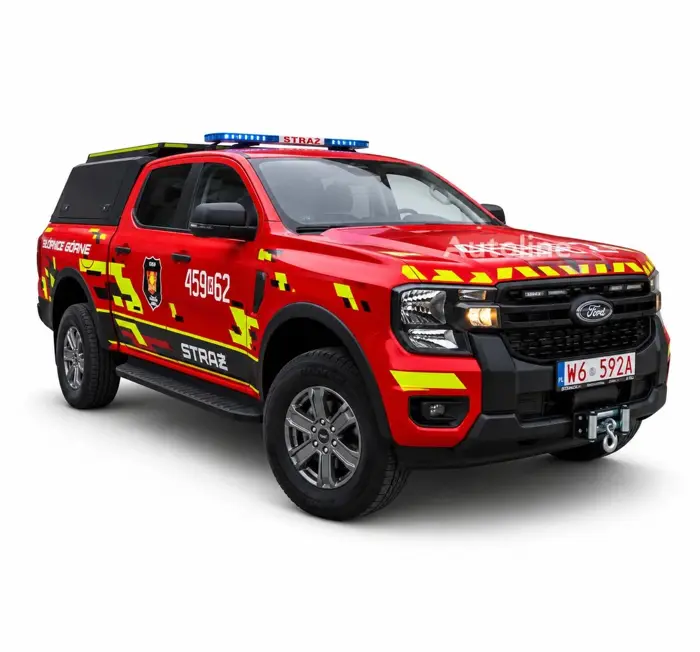
The gallery examples show the contemporary Ranger body family with its distinctive upright front and C-shaped headlamp treatment. Ford introduced that new-generation design in 2021. However, the seller explicitly labels its photographs illustrative, so they cannot establish the exact build identity of the vehicle supplied.
Five seats are listed, and the examples show double-cab pickups. A full derivative and trim are not confirmed in this advertisement. In particular, neither an XLT label from the converter’s separate catalogue nor equipment from a Wildtrak or Raptor brochure should be assigned to this offer.
The underlying pickup arrangement separates the passenger cabin from the rear load area. Adding a hardtop encloses that area for an agreed equipment layout. The conversion should be assessed together with the Ford base-vehicle documents, rather than treating the canopy as an independent accessory with no effect on loads or access.
Engine, Transmission and Drivetrain
The seller specifies a Ford four-cylinder, in-line diesel engine of 2,000 cm³, producing 170 hp or 125 kW, with Euro 6 classification. The written description confirms manual transmission and 4×4 drive. Those are the powertrain facts supported by this offer.
The marketplace drive field uses “All-Wheel Drive.” That wording does not establish permanent all-wheel drive, a particular transfer-case control system or a differential lock. Request the Ford build specification and operating instructions to identify the exact hardware and selectable modes.
Forward gear count also requires clarification. The structured advertisement shows “5+1,” while Ford’s published Ranger range material describes a six-speed manual for its 170 PS diesel configuration. Manual transmission is confirmed; a specific number of forward gears should wait for documentation of this vehicle.
Torque, engine code and fuel consumption are not verified here. The relevant fleet assessment is how the documented driveline fits the organization’s routes, drivers and loaded duty. A power figure alone does not establish response performance or authorize a particular terrain assignment.
Firefighting Conversion and Body Design
STRAŻAK SAM states that it manufactures fire vehicles. Its bodywork information describes equipment installations, drawers, rails and electrical adaptations. The advertiser’s own conversion description for this Ranger is more concise: hardtop, warning lighting, fire-service markings and documentation.
A hardtop changes an open pickup bed into enclosed equipment accommodation. For a fire-service buyer, the useful questions concern access, restraint points, weather protection, internal lighting and the space available after the chosen mounts are installed.
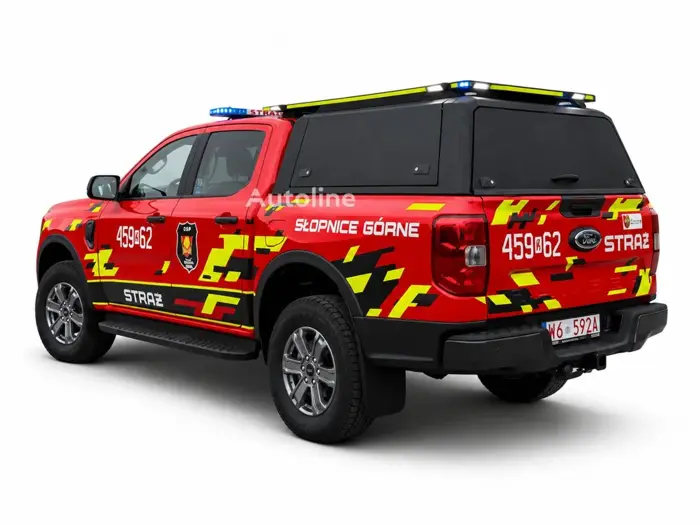
The gallery contains different liveries and completed examples. One shows an angular dark canopy, while other views have different canopy details and markings. The buyer should agree the body style, finish and access arrangement in the quotation, with current photographs of the actual supplied vehicle.
The listing does not confirm a particular canopy material, locker count, roof load or certified equipment-rack capacity. These details matter to the conversion specification, but they should come from the bodybuilder’s drawings and instructions rather than visual estimates.
Firefighting Equipment and Systems
No water-storage volume, pump make or pump performance is given in this offer. A foam tank, proportioning system, hose reel and monitor are also not confirmed. It would therefore be misleading to present this Ranger as a self-contained water-delivery appliance on the evidence available.
For a support role, the equipment schedule can instead begin with the organization’s actual requirement: which items need to travel, how much they weigh, where they are secured and who retrieves them. The final inventory may include department-supplied equipment, but its inclusion must be documented.
If a buyer wants an extinguishing module, that should become a separate engineered proposal. Tank and pump mass, fluid movement, mounting, electrical supply and the completed vehicle’s weight allowances all need to be assessed. Nothing in this review implies that such a module is already fitted or included in the price.
The converter’s wider product catalogue is useful background, not proof of an accessory on this specific Ranger. Ask for a signed delivered-equipment list, including brands, quantities, manuals and any relevant service or test records.
DISCOVER THE FIREFIGHTING EQUIPMENT
Emergency Warning Lights and Communication Equipment
Warning lighting is explicitly included in the seller’s description, and the illustrative photographs show blue roof bars and supplementary lamps. The exact make, lamp arrangement, control system and approvals for the supplied vehicle are not specified.
No siren model, communications radio or scene-lighting specification was verified for this advertisement. Those should be agreed according to the fleet’s requirements. A visible roof bar does not establish the presence of a radio, public-address system or a complete incident communications package.
For commissioning, request a wiring diagram, circuit protection details and instructions for additional controls. Confirm which equipment can be used with the engine stopped and the recommended electrical operating limits. These are practical integration questions for the converter.
Crew Cabin and Operator Environment
Five advertised seats give this configuration a clear personnel-carrying purpose. The double-cab gallery examples also illustrate the separation between occupied seating and the enclosed rear equipment area.
The exact seating trim, air conditioning, multimedia equipment and assistance systems are not established in the listing. An illustrative dashboard photograph is not enough to identify the supplied trim or transmission. Obtain a cabin walk-around tied to the actual vehicle.
During an inspection, evaluate entry while wearing the organization’s normal response clothing, restraint access and the location of added switches. Agree how helmets, bags and portable equipment will be stored. An approved seat count should be considered alongside a realistic crew-and-equipment load plan.
Equipment Storage and Operational Layout
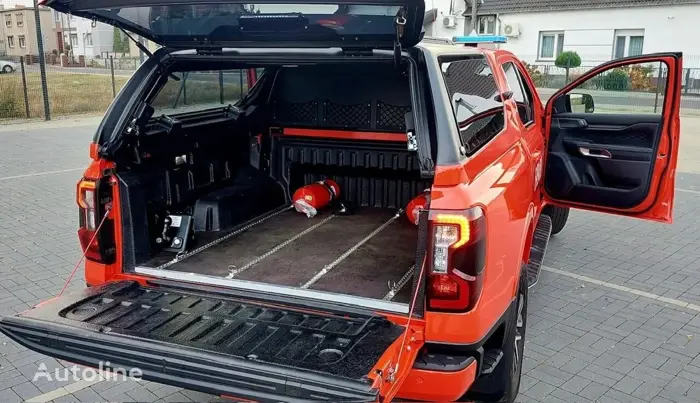
The gallery includes a rear-access example with a fitted load-area structure. Because the photographs are illustrative, its rails and mounts cannot automatically be treated as inclusions. They are useful prompts for discussing a layout that suits the buyer’s inventory.
A good procurement exercise starts with the retrieval sequence. Identify what must be reached first, whether access is needed from a side or the rear, and how equipment is restrained when travelling. Ask the converter to map that sequence onto the proposed hardtop and mounting layout.
Also establish usable space after installation. The empty pickup bed’s dimensions do not describe the room left around a rack or drawer system. Check hatch clearances, loading height, locks, lighting and maintenance access on the completed body.
Vehicle Dimensions, Payload and Capacity
Overall dimensions, wheelbase, gross vehicle weight and completed-conversion payload were not confirmed in this advertisement. A generic Ranger maximum should not be substituted: Ford range capacities depend on the derivative and equipment, and the conversion adds its own mass.
Request the base vehicle’s limits, the converter’s completed weight and a load calculation covering occupants, fuel, bodywork and the planned equipment. Where appropriate, verify the operating configuration on a weighbridge and check each axle against its permitted limit.
Confirm overall height with the warning bar and canopy fittings, and width including the relevant projections, before assessing station doors or arranging transport. These measurements should refer to the finished vehicle rather than an unconverted brochure example.
Firefighting and Emergency Response Applications
The documented five-seat, hardtop arrangement makes this offer relevant to departments considering crew and equipment support. Municipal and rural fire organizations can assess it against staffing, station access, equipment carriage and the role it would play alongside other appliances.
Industrial brigades and infrastructure operators can apply the same approach to site support duties. The specification must match the site’s access routes, communications needs and permitted equipment loads. The fact that a vehicle carries fire-service markings does not establish suitability for every industrial hazard.
Four-wheel drive is a confirmed seller description, but no slope, wading or off-road performance figures are verified for this converted vehicle. Route suitability should follow the actual Ford operating limits, tyres, conversion configuration and driver competence.
Direct firefighting, specialist rescue and airport rescue-and-firefighting capability are not demonstrated by the reviewed package. A clearly defined support assignment gives buyers a sounder basis for evaluation than assuming all functions from the fire-truck category.
Safety and Operational Considerations
Fleet acceptance should include familiarization with the base vehicle, warning controls and equipment layout. Drivers need the correct instructions for the supplied 4×4 system, together with the organization’s procedures for emergency response and local road use.
Equipment retention and loaded weight deserve attention before operational deployment. Inspect mounts, closures and access arrangements with the intended inventory installed. Establish routine checks for conversion electrics and body fittings alongside normal vehicle servicing.
The seller states that special fire-vehicle documentation is part of the package. Ask what that documentation covers and whether the destination registration authority accepts it. It should not be interpreted as evidence of a particular international apparatus certification without the relevant documents.
Technical Specifications
Ford Ranger Base Vehicle Specifications
| Item | Advertised information |
|---|---|
| Manufacturer / model | Ford Ranger; full trim and derivative to confirm |
| Manufacture date | January 2025; official model year not established |
| Condition / mileage | Seller-listed new / 1 km |
| Engine | Ford in-line four-cylinder diesel; 2,000 cm³ |
| Power / emissions | 170 hp / 125 kW; Euro 6 |
| Transmission | Manual; forward gear count requires clarification |
| Drive | Seller describes 4×4; structured field says All-Wheel Drive |
| Seats / axles / colour | 5 / 2 / red |
Firefighting Conversion and Emergency Equipment Specifications
| Item | Confirmed description |
|---|---|
| Seller / conversion provider | STRAŻAK SAM; seller states it manufactures fire vehicles |
| Body conversion | Hardtop fire-service conversion |
| Warning system | Warning lighting listed; exact equipment to agree |
| Identification / documentation | Fire-service markings and special fire-vehicle documentation listed |
| Gallery status | Seller explicitly describes photographs as illustrative |
Tank and pump specifications, foam equipment, torque, completed payload and overall measurements are not supplied as verified values.
VIEW CURRENT PRICE & AVAILABILITY
Current Seller Offer — Verified 24 October 2026
Product Location: Ciechanów, Poland. This is the location shown in the advertisement’s vehicle field.
- Offer reference: LK39388.
- Asking price: €47,000. The reviewed offer did not clearly establish the tax treatment; confirm VAT and the final invoice total.
- Manufacture date: January 2025. Official model year, first registration and conversion completion date require confirmation.
- Condition and mileage: new and 1 km, as advertised.
- Configuration: red Ford Ranger, five seats, 170 hp diesel, manual transmission and seller-described 4×4.
- Conversion package: hardtop, warning lighting, fire-service markings and stated special fire-vehicle documentation.
- Availability: the seller describes the offer as immediately available; confirm current stock and the actual supplied specification.
- Warranty: a specific coverage period and scope were not confirmed.
A vehicle-delivery service is indicated, but its geographical coverage and detailed terms were not given. Delivery destinations, shipping arrangements, and applicable transport terms were not specified in the information reviewed. Prospective buyers should confirm these details directly with the seller.
Buyer Considerations Before Contacting the Seller
Ask first for the VIN, complete derivative, model year and manufacture record. Clarify registration status and what the seller’s new condition covers. Request current vehicle-specific photographs, since the published gallery is illustrative.
Confirm the engine code, manual gearbox, forward gear count and 4×4 hardware. Obtain the hardtop specification, warning-equipment list, electrical documentation and exact supplied inventory. If an extinguishing system is required, ask for a separate written specification and load assessment.
Finally, agree completed weights, approved seating, inspection arrangements, destination documentation, servicing and spare-parts support. Record warranty terms, payment milestones, VAT, collection or delivery responsibilities, transport charges and any export or customs arrangements in the quotation.
Compare configurations in our separate Ford Ranger 4x4 review, or explore the Ford Transit review with an advertised 400-litre tank and Transit 4x4 review. Each article concerns a different offer and equipment package.
Official Ford Platform Video
Ford’s development footage provides general context for the Ranger platform. It does not show this advertised fire-service vehicle, validate its conversion or establish its equipment and operating limits.
Source: the video embedded in Ford Polska’s official Ranger testing announcement. No advertiser-supplied video was found in the reviewed listing.
Buyer FAQs
What is the 2025 Ford Ranger Fire Truck?
It is a seller-advertised January 2025-production Ranger with a hardtop fire-service conversion, five seats, warning lights, markings and stated special fire-vehicle documentation.
Is the advertised vehicle new or used?
The seller lists it as new with 1 km. Registration history, official model year and the date of conversion were not established in the reviewed description.
What firefighting equipment is installed?
The confirmed conversion description includes the hardtop, warning lighting and markings. A detailed tool or extinguishing-equipment inventory must be agreed with the seller.
Does it have a fire pump or water tank?
Neither is specified in this offer. Do not assume a pump, tank, foam system or hose reel is included.
What engine and drivetrain does it use?
The listing specifies a 2,000 cm³ four-cylinder diesel rated at 170 hp / 125 kW, manual transmission and 4×4 drive. Exact drive hardware and forward gear count need confirmation.
Where is the advertised vehicle located?
The vehicle location is listed as Ciechanów, Poland.
Does the supplier offer international delivery?
A delivery-service field is present, but international destinations, charges and detailed terms were not specified. Ask for a destination-specific written quotation.
How can buyers contact the seller?
Use this review’s offer buttons to reach the tracked advertisement and enquire about the current vehicle, equipment schedule and purchase terms.
Final Verdict
The strongest confirmed features of this Ranger are straightforward: five seats, a 170 hp diesel, manual transmission, seller-described 4×4 and a hardtop fire-service package. Together, they form a useful proposal for departments assessing personnel and equipment support.
The purchase decision should connect those features to a documented role, a current vehicle-specific build record and an agreed inventory. For buyers whose requirements fit that support configuration, the next step is to examine the seller’s offer and request the complete specification.
Sources and Media Notes
Research checked 24 October 2026: advertiser offer LK39388, official Ford Ranger range and generation information, Ford Polska’s testing announcement, and STRAŻAK SAM’s published conversion material. A separate 2026 converter catalogue was reviewed for context; its trim, radio, winch and capacity figures were not transferred to this 2025 offer.
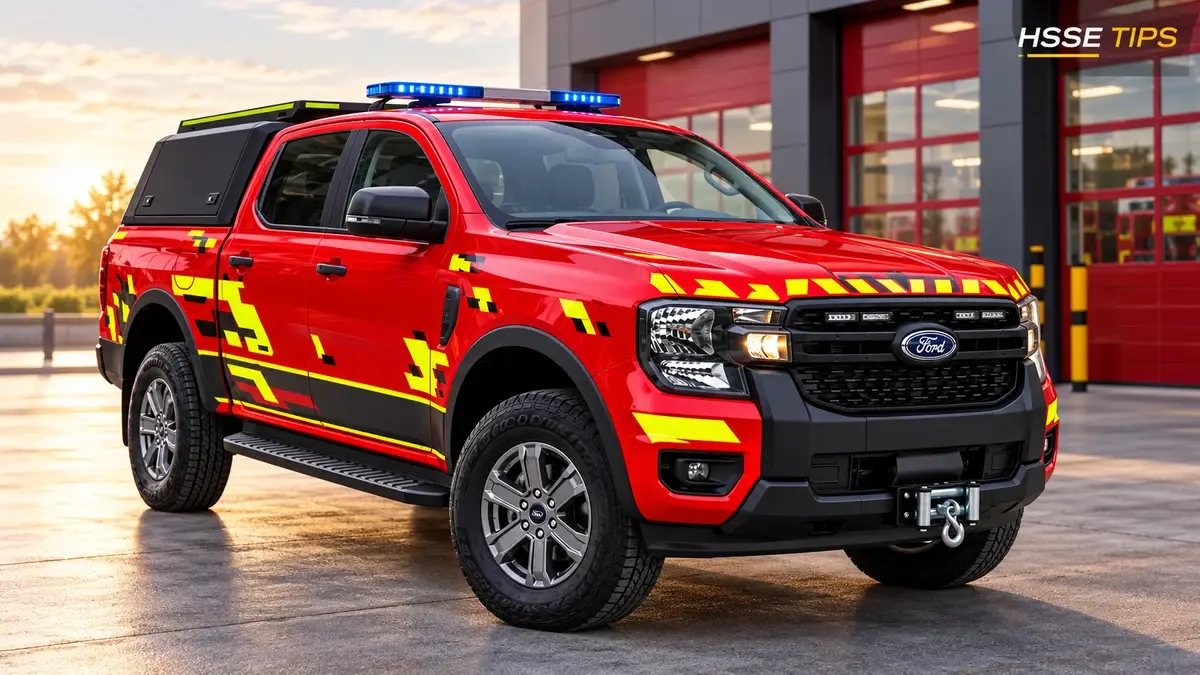
The seller labels its photographs illustrative. Three original advertiser gallery photographs appear above with watermarks retained. They illustrate conversion examples rather than establishing a vehicle-specific equipment inventory. Offer buttons preserve access to the complete original gallery. Featured and Pinterest visuals are generated promotional artwork informed by a gallery reference; they do not document the supplied vehicle’s condition, location or complete equipment.
Join the Conversation
What matters most when choosing a fire-service pickup—crew space, equipment access, drivetrain or conversion layout? Share your thoughts in the comments below.
Your experience matters
Share your thoughts on this page
Have a question, a useful experience or a suggestion? Add your input below.
Comments are public. Keep them respectful and relevant. Do not share contact details, confidential information or emergency reports.
Comments on this page
Loading comments…