Product Reviews · Fire and Rescue Vehicles
Ford Ranger 4x4 Fire Truck Review: Crew, Mobility and Fit-Out
Affiliate Disclosure: Worksite Safety Hub may earn a commission if you make a qualifying purchase through links in this article. This does not change the price you pay.
Getting a crew to an incident is only part of the job. The vehicle also has to carry the right equipment, provide usable access to it and fit the routes the brigade actually travels. A pickup-based fire-service vehicle brings those decisions into a compact, adaptable format.
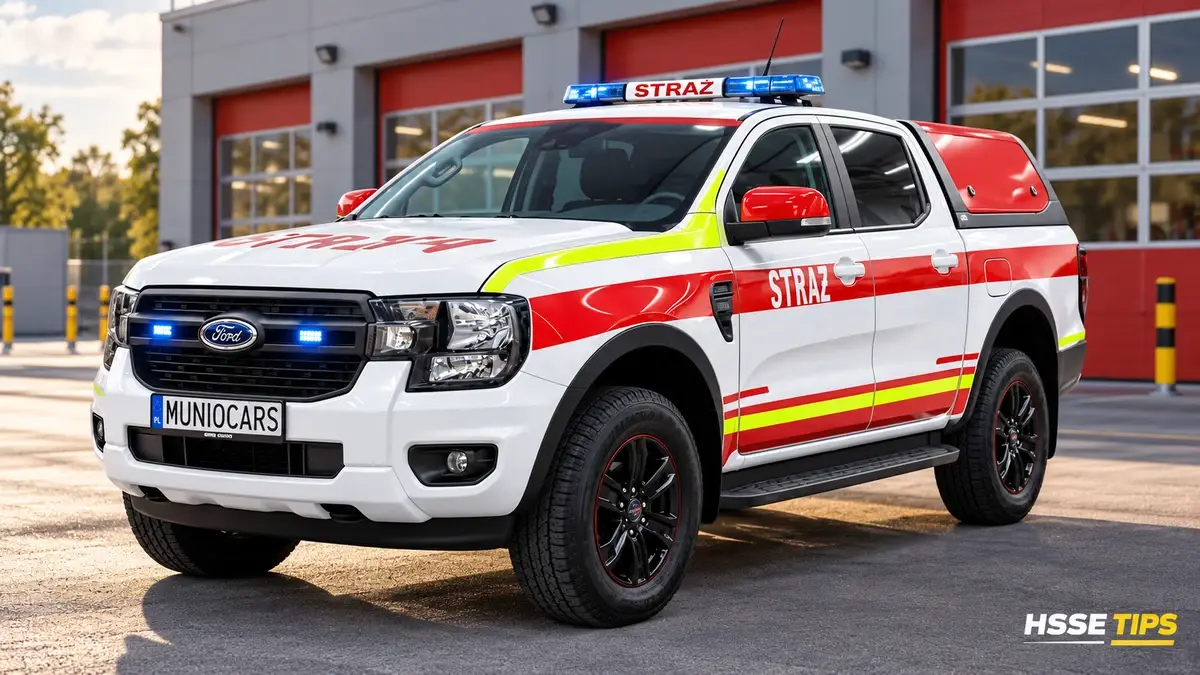
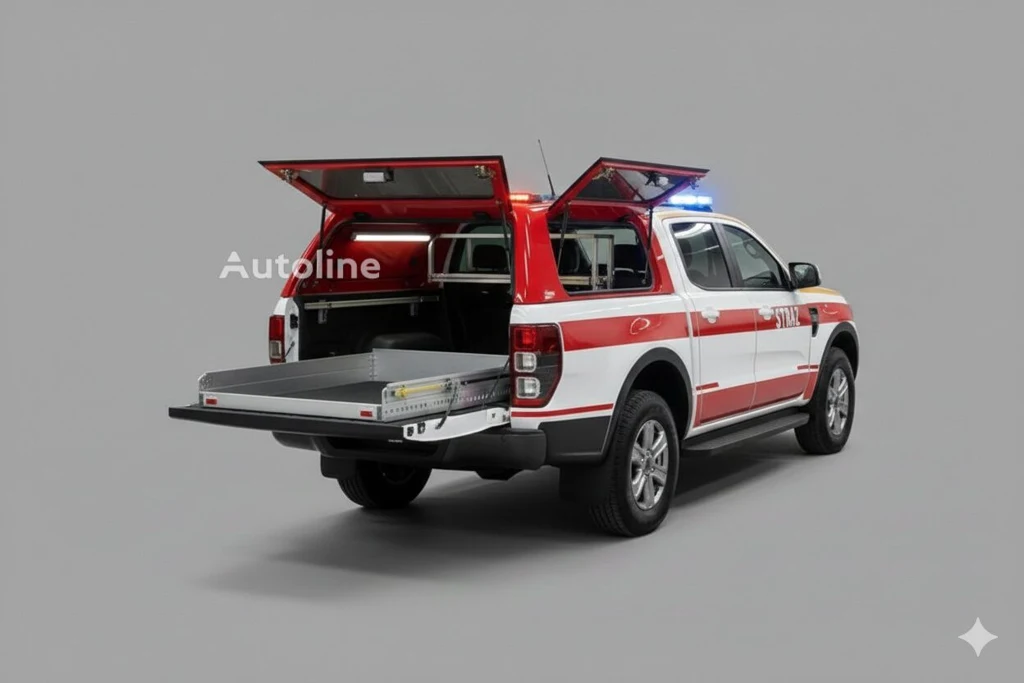
The Ford Ranger 4x4 Fire Truck offered here starts with a five-seat Ranger, a 1,996 cm³ diesel engine, 170 hp and a six-speed manual gearbox. The seller describes a new vehicle and offers additional fit-out, including a hardtop, sliding tray, radio communications and equipment. The gallery shows fire-service markings and warning lights, alongside an example of rear-compartment access.
This makes it a relevant prospect for buyers planning a configurable support or equipment-carrying vehicle. Its water-carrying and pumping capability is not established by the listing. This review examines the documented Ranger platform and the conversion choices a professional purchaser should define; it does not claim a road test, inspection or operational trial.
EXPLORE THIS FORD RANGER FIRE TRUCK
Ford Ranger 4x4 Fire Truck: Overview
The advertisement concerns one Ford Ranger offer. The Polish, Czech/Slovak, French/Romanian and German firefighting terms in its long marketplace title help describe the fire-service category; they are not separate Ford variants. For an English-language fleet assessment, “Ford Ranger 4x4 Fire Truck” is the clearer description.
The verified foundation is a four-wheel-drive, two-axle diesel pickup with five seats and a listed gross vehicle weight of 3,200 kg. A winch appears in the equipment fields. The seller’s Polish description says that a hardtop, sliding tray, radio communications and equipment can be installed.
The useful purchasing opportunity is therefore a defined vehicle plus a fit-out discussion. Translate the intended assignment into an equipment schedule before comparing quotations: personnel movement, equipment delivery and incident support each call for a different arrangement.
Ford Ranger Platform and Vehicle Engineering
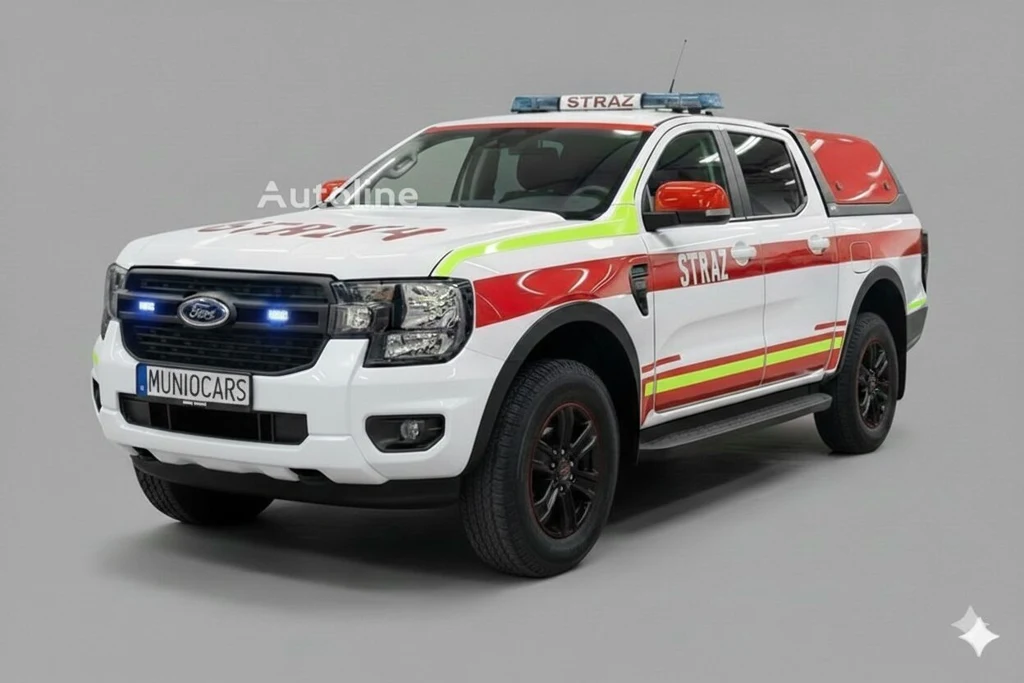
The supplied images show a four-door double cab and the squared front styling of the newer Ranger family. The listing gives manufacture as October 2025 and first registration as 2026. Its appearance is consistent with the Next-Gen Ranger body introduced to European customers in 2023; the exact factory derivative and trim require the VIN and build record.
Ford’s Polish documentation for 2025-production vehicles identifies several cab, engine, gearbox and grade combinations. That distinction matters: XL, XLT, Wildtrak and other versions do not establish a single universal Ranger specification. Neither a model-year reference nor fire-service graphics identify the complete factory equipment package.
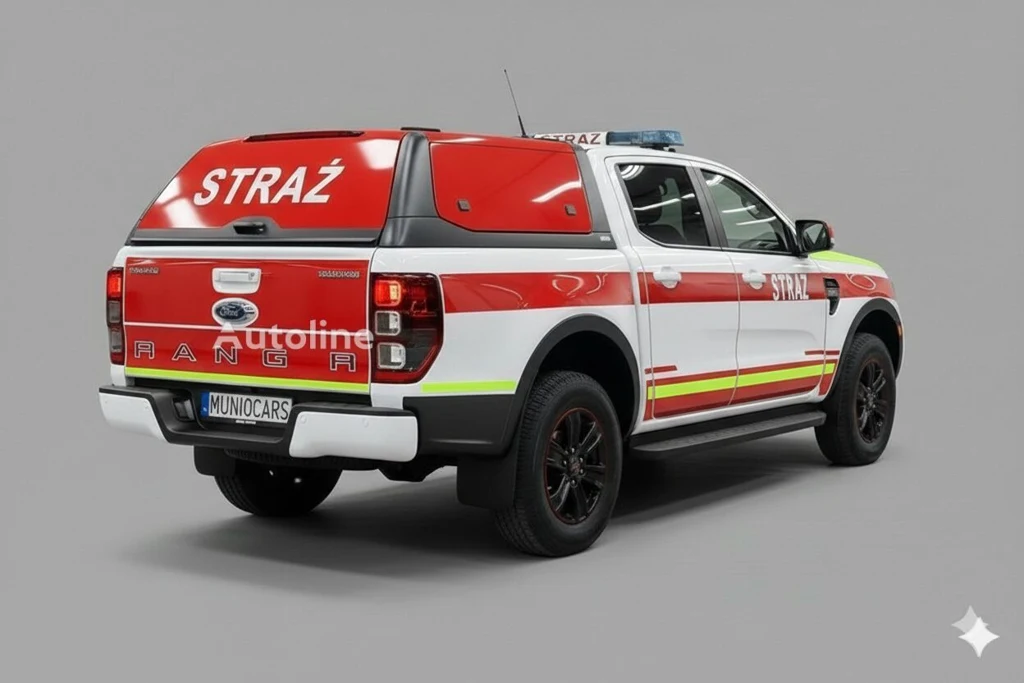
Here the double cab and pickup bed create separate passenger and load areas. A canopy or storage installation can be selected around that layout. The final body drawing should record how the accessories mount, how the rear opening works and what dimensions the finished vehicle occupies.
Four-Wheel-Drive System and Mobility
4×4 drive is confirmed in the vehicle listing. Ford’s contemporary Polish range includes manually selectable 4WD versions and other derivatives with e-4WD. The advertisement does not specify this unit’s transfer-case modes or differential-lock equipment, so those features should be confirmed from its build data and controls.
The marketplace suspension field reads “spring/spring.” This is a broad listing description, not a detailed identification of the springs, dampers or any conversion-related suspension work. Ground clearance, wading depth and approach or departure angles for the supplied fit-out have not been verified.
For rural services or infrastructure operators, a route assessment is more useful than a general terrain promise. Check the completed vehicle’s clearance at gates, access through station doors, manoeuvring space near equipment stores and ground conditions on assigned routes. Driver familiarization should use the actual four-wheel-drive controls supplied.
Firefighting Conversion and Equipment Configuration
The gallery shows white-and-red fire-service presentation, a rear canopy, blue warning lighting and an opened rear load area. Those images are valuable for understanding possible packaging. However, the description specifically offers hardtop, sliding tray, radio and equipment installation as options; the order must identify which illustrated items are included.
The conversion manufacturer is not identified in the reviewed text. A display plate visible in the gallery is not enough to establish the bodybuilder or component supplier. Ask for the installation company’s details and the technical documentation covering the completed build.
An effective quotation should separate the base pickup from conversion work, electrical equipment, storage, communications and carried tools. That gives both buyer and seller a clear reference for inspection, invoicing and handover, and keeps the review useful as individual offers change.
Engine, Transmission and Vehicle Performance
The seller specifies a Ford inline four-cylinder diesel with 1,996 cm³ displacement, turbocharging and an intercooler. Listed output is 170 hp / 125 kW. Euro 6, a particulate filter and an AdBlue tank are also recorded.
The gearbox is described as manual with “6+1” gears, meaning six forward ratios and reverse. This is distinct from the automatic transmissions available elsewhere in the Ranger range. The advertisement calls the engine 2.0 TDCI; Ford’s contemporary range literature uses EcoBlue terminology. The exact engine code should be checked on the vehicle documentation.
Ford’s Polish technical reference lists 405 Nm for its 170 KM 2.0 EcoBlue manual variants. That is manufacturer context, not a torque value independently verified for this VIN. It is excluded from the exact-vehicle specification table below.
No acceleration, fuel-consumption or loaded handling result is claimed here. For fleet selection, an appropriately loaded demonstration can assess driving position, visibility, gearing and the vehicle’s interaction with the intended equipment arrangement.
Water Tank and Fire Pump
The reviewed offer does not specify an installed water tank or fire pump. No tank volume, pump model, flow rate, pressure rating or pump-drive arrangement is documented. The fire-truck category and emergency graphics do not supply those technical values.
A support pickup can still have a well-defined brigade role through crew and equipment transport. If the intended duty includes onboard water delivery, ask for a separately engineered configuration with documented usable tank volume, mounting, pump duty and loaded axle weights. Any proposed system should be assessed as part of the completed vehicle.
Where a pump is subsequently specified, request the matched hose, nozzle and test documentation. A performance claim should identify the operating pressure and complete delivery arrangement rather than a flow figure by itself.
Hose Reels, Fire Monitors and Firefighting Accessories
No hose reel, vehicle-mounted monitor, suction connection or discharge outlet is confirmed in the listing. The opened load-area image instead provides an example of a slide-out arrangement for accessing cargo. Its load rating and inclusion in the advertised price need to be agreed.
The winch is explicitly listed, but manufacturer, model, rated pull, mounting and supplied recovery accessories are not stated. Ask for those details and the operating instructions. A winch entry alone does not define a complete recovery system or a particular rescue capability.
For equipment carriage, start with the actual inventory: dimensions, mass, retrieval order and restraint requirements. This makes the tray and canopy selection a practical design exercise rather than an assumption based on the exterior appearance.
Foam Systems and Additional Equipment
A foam tank, proportioner, concentrate package and portable extinguishers are not specified. The seller’s general reference to fitting equipment should become an itemized schedule before those accessories are described as supplied.
The same approach applies to rescue tools, breathing apparatus and portable lighting. Define their mounting and access needs if they form part of the buyer’s planned role. The advertisement does not establish hazardous-area approval or a specialized industrial extinguishing package.
DISCOVER THE FIREFIGHTING EQUIPMENT
Emergency Warning Lights and Communication Equipment
The supplied exterior images show a roof-mounted blue light bar and blue grille lights. The roof sign and body lettering identify the illustrated presentation as a Polish fire-service vehicle. The technical fields also list signal horns; they do not establish an emergency siren’s model, tones or approvals.
Radio communications are offered as an installation possibility. A radio set, antenna arrangement, programming, frequency authorization and interoperability package are not confirmed as included. For an established brigade, those details should align with its communications plan.
The electrical handover should identify switches, fuses, wiring diagrams and the installed equipment inventory. Confirm warning-light legality and any required operational permissions for the destination. No separate scene-lighting mast is documented.
Crew Cabin and Operator Environment
The listed accommodation is five seats. Fabric upholstery, driver-seat manual height adjustment, steering-wheel adjustment, power steering and front and rear powered windows are recorded. Climate control, cruise control, a multifunction steering wheel, rain sensing and powered mirrors are also listed.
These details support a useful crew-transport assessment without inventing interior features. Check seating and belt arrangements with the intended personnel equipment, cab access and the placement of any added radio controls. No dedicated breathing-apparatus seats or medical accommodation are specified.
The listed onboard computer and car stereo are base-vehicle conveniences. A particular SYNC version, screen size, navigation system or camera package cannot be assigned simply because it appears in another Ranger brochure.
Payload, Equipment Integration and Operational Practicality
The seller records a 3,200 kg gross vehicle weight. This is not a 3,200 kg payload allowance. The finished vehicle, occupants, fuel and all installed or carried equipment must fit within the applicable vehicle and axle limits.
Ford’s Polish range reference gives different masses and payloads for different derivatives. The exact unit’s registration and identification plates therefore take priority over a generic brochure figure. Request its unladen or ready-for-service weight, axle limits and a weight record for the agreed fit-out.
A canopy, slide-out tray and communications installation each form part of the load calculation. If a future design includes water, allow roughly one kilogram for every litre of water before adding the tank, supports, pump and other equipment. That is a planning relationship, not a tank capacity assigned to this Ranger.
For access, demonstrate the tray with its intended cargo and confirm its deployment clearance, latching and loading instructions. The gallery contains different wheel presentations; agree the supplied wheels, tyres and final installation in the quotation.
Firefighting Applications and Ideal Buyers
This Ranger merits consideration by municipal, rural and industrial fleets seeking a five-seat 4×4 support platform with configurable rear storage. Potential assignments include bringing personnel or an agreed equipment load to an incident, site inspection and brigade support, subject to the completed specification.
For forestry, mining or remote infrastructure use, begin with the route, carried inventory and operating environment. Those requirements determine whether additional approved equipment is needed. No verified evidence establishes this offer as an airport rescue appliance, a structural pumping engine or a vehicle approved for explosive atmospheres.
Buyers comparing roles can also read our Toyota DC 4x4 AT GL review, Toyota LC79 fire-truck review and Mercedes-Benz Vito fire-service review. Each describes a different documented configuration.
Safety and Operational Considerations
The advertisement lists ABS, ESP and airbags, alongside an alarm, immobiliser and central locking. These are seller-described vehicle features; a specific package of lane assistance, automatic emergency braking or other advanced systems needs the factory build record.
Commissioning should cover driver training, safe load restraint, accessory operation, inspections and maintenance. Confirm vehicle and axle weights, electrical documentation and any winch training needed. Follow the supplied manuals and operating limits for the exact vehicle and installed equipment.
For a public-service purchase, establish the road-registration and apparatus-acceptance requirements that apply to the proposed duty. Emergency markings and a registered vehicle do not independently demonstrate compliance with a particular fire-apparatus standard.
Ford Ranger 4x4 Technical Specifications
Ford Ranger Base Vehicle Specifications
| Item | Advertiser-supported information |
|---|---|
| Manufacturer / model | Ford Ranger 4×4 |
| Manufacture / first registration | October 2025 / 2026 |
| Cab / seats | Double cab shown / 5 seats listed |
| Engine | Ford inline 4-cylinder diesel, turbo and intercooler |
| Displacement / power | 1,996 cm³ / 170 hp (125 kW) |
| Transmission | Manual, 6 forward gears plus reverse |
| Axles / drive | 2 / 4×4 |
| Emissions equipment | Euro 6; particulate filter; AdBlue tank |
| Gross vehicle weight | 3,200 kg, as listed |
| Listed safety equipment | ABS, ESP, airbags |
| Cabin features | Climate control, cruise control, fabric seats, powered windows and mirrors |
Fire-Service Conversion and Equipment Specifications
| Item | Evidence and status |
|---|---|
| Winch | Listed; model and rating unspecified |
| Warning-light presentation | Blue roof light bar and grille lights shown in supplied images |
| Hardtop / sliding tray | Shown in gallery; offered as fit-out options in description |
| Radio communications / equipment | Available for installation; exact inventory to be agreed |
Water and foam capacities, pump duty, payload, finished dimensions, wheelbase and conversion certification are not established for this offer and have not been substituted from another Ranger.
VIEW CURRENT PRICE & AVAILABILITY
Current Seller Offer — Verified 24 October 2026
Product Location: Świętoszówka, Poland. This is the advertised vehicle-location field. The seller’s full contact address is not presented as an additional product location.
- Seller: F.H.U. Józef Stroka.
- Listing reference: PP49601.
- Condition: advertised new; technical fields describe garage storage and working condition.
- Manufacture: October 2025; first registration 2026.
- Mileage: 300 km, as advertised.
- Asking price: PLN 260,000 gross, including 23% VAT. The reviewed international page displayed €59,400 gross and €48,292.68 net as its euro figures; request a quotation in the seller’s invoicing currency.
- Configuration: 1,996 cm³ diesel, 170 hp, six-speed manual, 4×4, five seats; winch listed; additional fit-out as discussed above.
- Warranty: 12 months advertised; scope, provider and conditions require confirmation.
The seller states that the vehicle is registered and can be driven away after purchase. This is an advertiser statement checked on the date above, not a guarantee of allocated stock, registration validity in another country or present availability.
A vehicle-delivery service is indicated on the listing, but its coverage and export-document support are not explained. Delivery destinations, shipping arrangements, and applicable transport terms were not specified in the information reviewed. Prospective buyers should confirm these details directly with the seller.
Official Ford Video: General Ranger Context
Ford Europe’s “Ford Ranger | Performance” introduces the wider Ranger family. It shows multiple powertrains and optional technologies; it is not footage of listing PP49601 and does not establish this fire-service vehicle’s equipment.
No advertiser-supplied video of this particular vehicle was identified.
Questions Buyers Should Ask Before Contacting the Seller
- What are the VIN, factory trim, engine code, registration history and exact four-wheel-drive specification?
- Which illustrated hardtop, tray, wheels, warning lights and accessories are included in the quoted price?
- Who installs and documents the conversion, and what approvals accompany the completed vehicle?
- What winch and mounting are supplied, with what rating and instructions?
- What are the finished dimensions, permitted axle loads and available payload after the agreed fit-out?
- If pumping equipment is required, what separate tank, pump, foam and hose specification is proposed, and what test records will be supplied?
- Can the seller provide service records, inspection arrangements, spare-parts support, warranty terms, delivery destinations, freight costs and payment procedures?
Buyer FAQs
What is the advertised Ford Ranger 4x4 fire truck?
It is a five-seat diesel Ranger marketed for fire-service use, with a winch listed and additional storage, radio and equipment fit-out offered.
Which engine and gearbox are specified?
The advertisement states 1,996 cm³, four cylinders, 170 hp / 125 kW and a manual gearbox with six forward ratios plus reverse.
Does it have a water tank or fire pump?
Neither is specified in the reviewed offer. Request a documented configuration if onboard water delivery is part of the intended role.
Are the hardtop and sliding tray included?
The gallery shows them, but the text describes installation possibilities. Inclusion and exact models must be agreed in the quotation.
How many crew seats are listed?
Five. The supplied exterior images show a double cab; confirm the final seating and restraint arrangement.
Where is the vehicle located?
The advertised product location is Świętoszówka, Poland.
Does the seller offer shipping?
A vehicle-delivery service is indicated. Destinations, international coverage, export support and costs need confirmation.
How can buyers request details?
Use this review’s seller-offer buttons to request a current, itemized quotation and vehicle documentation.
Final Verdict
The Ford Ranger 4x4 offer brings together five-seat accommodation, a 170 hp diesel engine, a six-speed manual gearbox and four-wheel drive. Its configurable rear load area is the central commercial consideration for a brigade planning personnel and equipment support.
The next step is to define the supplied build: the canopy, tray, winch, communications, warning equipment and carried inventory. With that specification, documented weights and agreed support terms, buyers can judge how this Ranger fits their response fleet.
Sources and Editorial Notes
Checked 24 October 2026: advertiser listing PP49601, including four gallery images and its Polish fit-out description; Ford Poland’s 2025-production Ranger technical reference; and Ford Europe’s official model video. This is a documentary review, not an inspection or operational test. All commercial enquiries use the supplied affiliate link.
Manufacturer reference: Ford Poland Ranger technical reference. Manufacturer range figures and optional equipment have not been treated as this vehicle’s confirmed build.
Join the Conversation
What matters most when choosing a fire-service pickup—crew space, mobility, equipment access or support? Share your thoughts in the comments below.
Your experience matters
Share your thoughts on this page
Have a question, a useful experience or a suggestion? Add your input below.
Comments are public. Keep them respectful and relevant. Do not share contact details, confidential information or emergency reports.
Comments on this page
Loading comments…