Process Safety · Lesson 57 · 9 min read
Hydrogen Sulfide Can Exceed the Range of a Standard Detector
Hydrogen sulfide can build in an FPSO cargo or slop tank even when the production process does not show the same concentration. If the gas level exceeds the measuring range of ordinary portable equipment, the reading may no longer describe the true hazard. Venting, sampling, breaking containment or a small integrity failure can then expose people to a toxic cloud that is difficult to recognise without the right monitoring strategy.
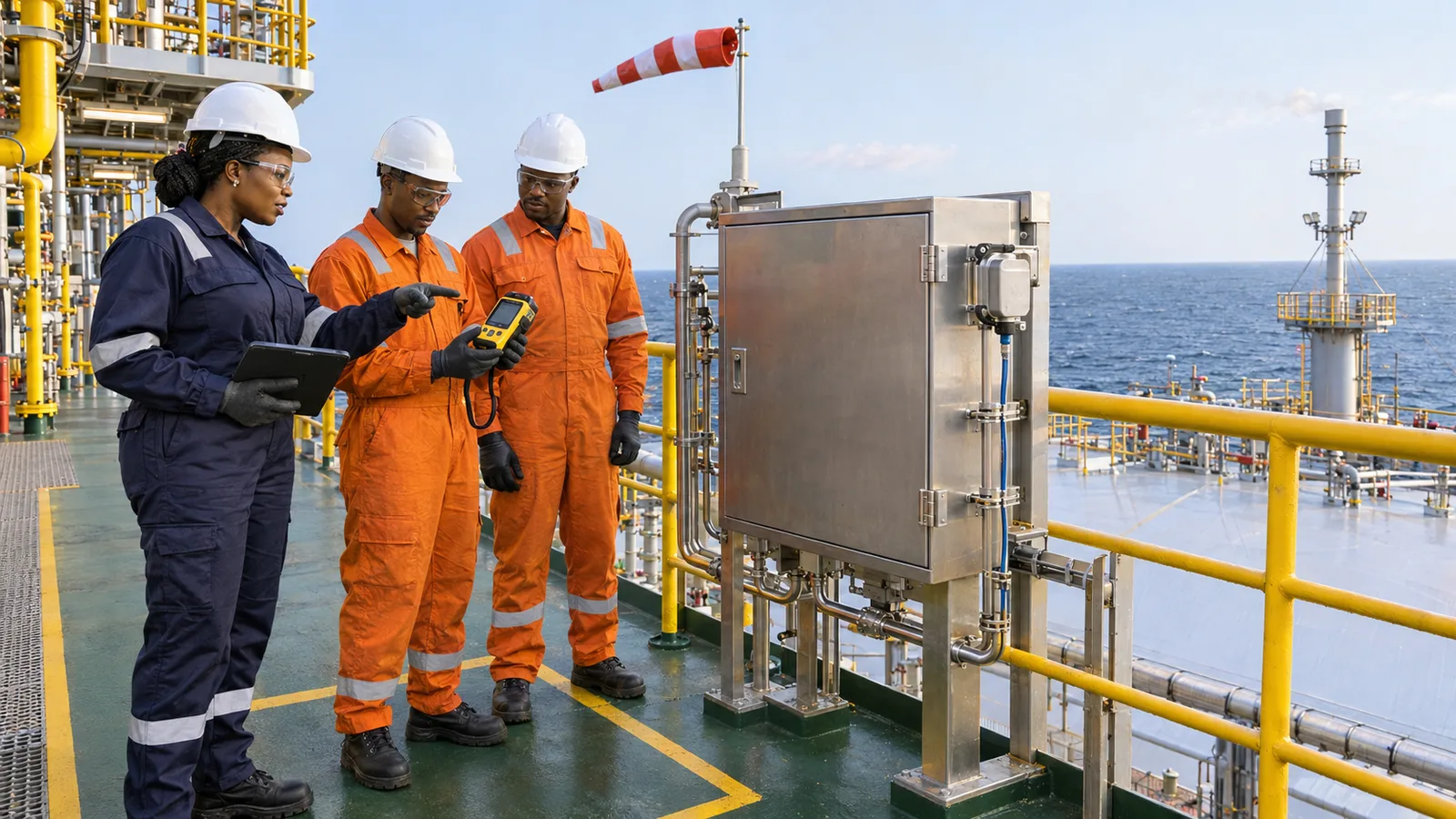
The hazard mechanism: the tank can generate its own toxic inventory
Hydrogen sulfide, or H2S, is a very toxic and flammable gas. It can occur in produced fluids and may also be generated by sulphate-reducing bacteria where water and hydrocarbons remain together in cargo or slop tanks. Increasing water cut, ineffective dewatering and stagnant areas can therefore change the ullage atmosphere over time even if earlier measurements were low.
H2S is heavier than air and can accumulate in low areas. Odour is not a reliable warning because the gas rapidly impairs the sense of smell. A release from a low-pressure tank can still create a serious exposure: in low wind, gas may remain on deck or collect in sheltered pockets instead of dispersing.
Official FPSO evidence
UK HSE Safety Notice ED2-2023 was issued specifically for FPSO, FSO and floating-storage operators. HSE reported H2S concentrations of up to 16,000 ppm in some cargo and slop tank ullage spaces. Those concentrations were above the upper measuring limits of standard portable gas-monitoring equipment generally used on tankers and FPSOs and could therefore remain unrecognised.
The same notice states that concentrations above 1,000 ppm can cause immediate collapse with loss of breathing after a single breath. It also warns that toxic gas from low-pressure releases may fail to disperse in low wind and can accumulate in isolated pockets. These figures are regulator findings, not universal site limits; each installation must use its approved exposure criteria, alarm philosophy and emergency arrangements.
Why an ordinary reading may mislead the decision
A detector has a defined sensor type, range, response time, calibration basis and operating limitation. A displayed maximum, over-range signal, fault indication or unexpectedly stable value must be interpreted according to the instrument manual and the site's procedure. It must never be converted into an assumed concentration. The key operational question is whether the selected equipment can measure the credible atmosphere safely and whether the sampling system keeps the operator away from the discharge.
Process-train samples may not represent the tank ullage. Conditions vary between tanks, layers and sampling points, and a sample line can contain residual gas or liquid. The outlet from monitoring equipment is also a release point. Its destination, wind direction, nearby work, ventilation and access control therefore form part of the sampling plan.
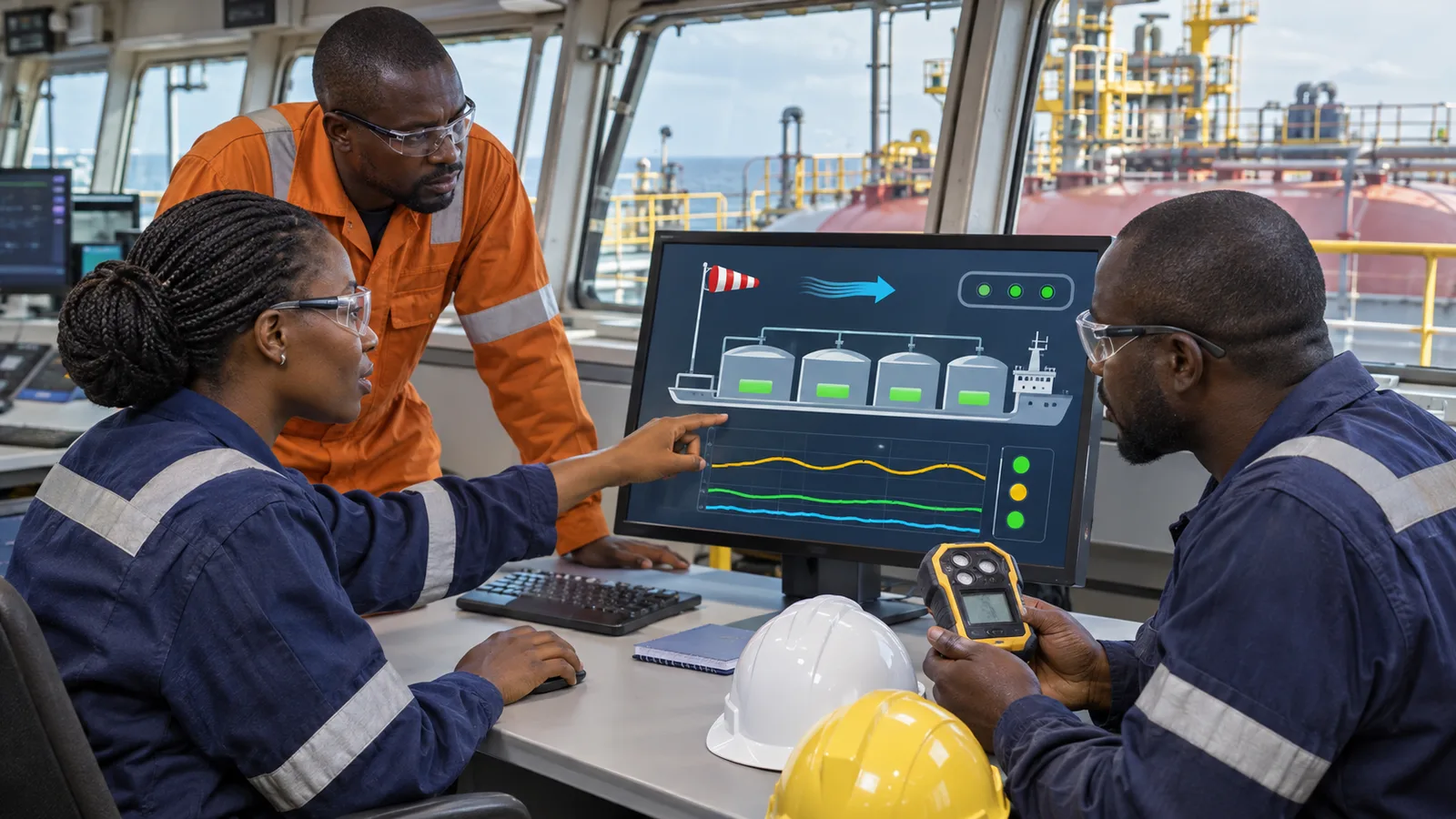
Critical controls
Representative monitoring: use equipment with an appropriate range and sampling arrangement for the credible H2S concentration. Confirm calibration, sensor condition, response checks and the meaning of over-range or fault indications before the task.
Release control: route sampled or vented gas to an approved safe location. Check wind speed and direction, deck occupancy, air intakes, ignition control and nearby simultaneous work. Establish access restrictions and stop criteria.
Exposure and rescue protection: classify the area, select fixed, portable and personal detection as required, and provide the approved respiratory and escape equipment. Emergency teams must be trained and protected; an unprotected responder can become the next casualty.
Prevention and integrity: manage tank water, bacterial activity, stripping-system availability and attached pipework integrity. Trend each tank's H2S results so a creeping change becomes an operating decision rather than a surprise.
Hypothetical FPSO example: a reading reaches the instrument limit
Hypothetical example—not a documented incident: A marine team plans a routine slop-tank ullage sample. The portable instrument rises to the top of its range, while the process-train sample remains much lower. Wind is light, and maintenance personnel are working downwind on the main deck.
The team stops the task and treats the atmosphere as unknown above the instrument range. They restrict access, notify the control room, review wind and ventilation, and bring in competent H2S support with suitable higher-range equipment and a pressure-contained sampling method. The downwind work is reassessed. Operations review dewatering, bacterial control and the tank trend before authorising further sampling or venting. No one relies on smell or assumes that a low-pressure tank means a low-consequence release.
Leadership actions
Leaders should define which tanks can contain H2S, the credible concentration range, the approved instruments and the response to high, over-range or failed readings. The monitoring programme must include competent ownership, recorded trends, maintained equipment and clear authority to stop deck work.
Barrier reviews should connect toxic-gas monitoring with cargo operations, hull and piping integrity, tank venting, emergency response and simultaneous work. A recurring increase needs investigation and control, not repeated measurement without a decision.
Three practical actions
- Check the range: confirm that every detector and sampling system can measure the credible tank atmosphere and clearly indicate over-range or failure.
- Control the outlet: trace where sampled or vented gas will discharge, then verify wind, deck occupancy, air intakes and exclusion requirements.
- Trend and act: compare results by tank and date, investigate increases, and link findings to dewatering, bacterial control, integrity and operating restrictions.
Official video: Silent Killer
The U.S. Chemical Safety Board's Silent Killer video examines the fatal 2019 H2S release at an onshore waterflood station in Odessa, Texas. It is not an FPSO incident, but it directly demonstrates how toxic gas, inadequate detection and an unprotected rescue attempt can turn one release into multiple fatalities.
Watch Silent Killer on the official CSB website.
Takeaway and team discussion
Key takeaway: a detector protects only when its range, sampling method and response actions match the credible H2S atmosphere.
Discussion question: if an FPSO cargo-tank sample reaches the top of our instrument range today, what exact actions prevent us from mistaking an unknown concentration for a safe one?
Continue in the Process Safety hub, and connect this lesson with complete gas-detection function, gas dispersion beyond the visible cloud and protected emergency response.
Verified primary references
- UK HSE Safety Notice ED2-2023: High concentration of hydrogen sulfide in cargo and slop tanks.
- UK HSE Offshore COSHH Essentials OCE6: Hydrogen sulphide.
- U.S. CSB: Aghorn Operating waterflood-station H2S release investigation.
- U.S. CSB: Silent Killer official safety video.
Published and sources checked 8 November 2026. Educational discussion only: apply the installation's safety case, H2S management plan, exposure limits, alarm philosophy, tank operating procedures and equipment-specific instructions.
Your experience matters
Share your thoughts on this page
Have a question, a useful experience or a suggestion? Add your input below.
Comments are public. Keep them respectful and relevant. Do not share contact details, confidential information or emergency reports.
Comments on this page
Loading comments…