Process Safety · Lesson 19 · 6 min read
A Distress Call Does Not Make the Atmosphere Safe
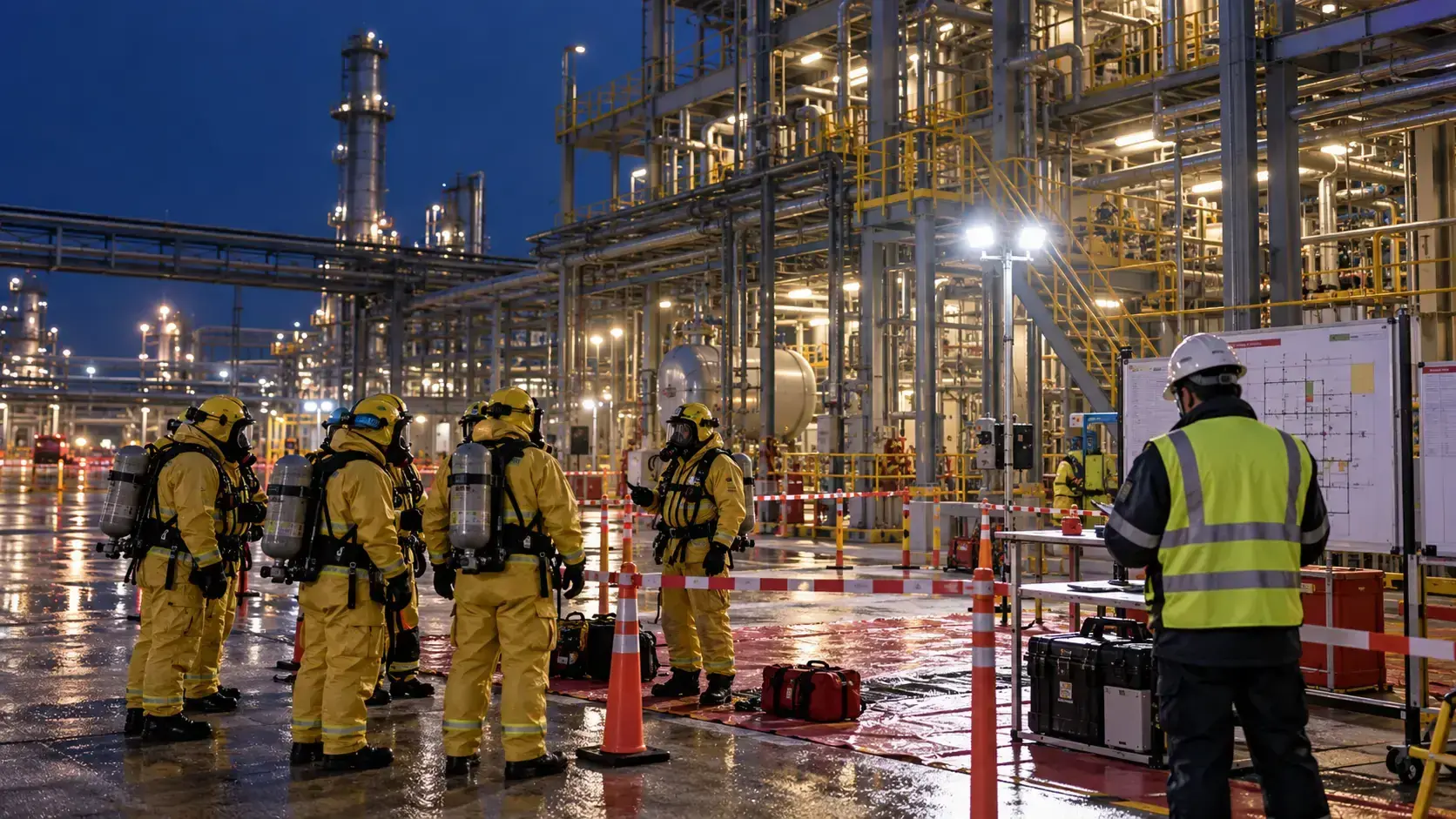
During a toxic release, an urgent call for help does not make entry safe. The response must protect potential rescuers while the source, atmosphere and location of missing people are established.
Why instinctive rescue can multiply casualties
A distress call creates urgency, but it may provide little reliable information about the atmosphere. Toxic vapour can be invisible, and a substance may also create an oxygen-deficient or flammable environment. Workers approaching without suitable respiratory protection can be overcome before they reach the first casualty. Their entry then creates more missing people and divides the response team’s attention.
The safe question is not simply, “Who can get there fastest?” It is, “What response can reach the person without creating another victim?” That requires immediate recognition of a chemical emergency, a controlled hot zone, trained responders, suitable protective equipment, atmospheric monitoring and a plan to stop the release from a safe location.
The DuPont La Porte warning
On 15 November 2014, approximately 24,000 pounds of highly toxic methyl mercaptan were released inside an insecticide manufacturing building at the DuPont facility in La Porte, Texas. Four workers died and a fifth was injured. The U.S. Chemical Safety Board (CSB) reported that the release filled the poorly ventilated building with toxic vapour.
The CSB found that three workers responded to a colleague’s distress without respiratory protection because the major toxic release had not been recognised or effectively communicated. One of those responding workers died, and two were exposed to dangerous concentrations. The building’s detection and alarm arrangements did not readily warn people of the emergency. Later emergency-response entries also faced uncertainty about the atmosphere, worker locations and the process source.
This was not solely a failure of individual judgement. The system did not provide timely warning, clear entry control, adequate information or a reliably organised response before people entered danger.
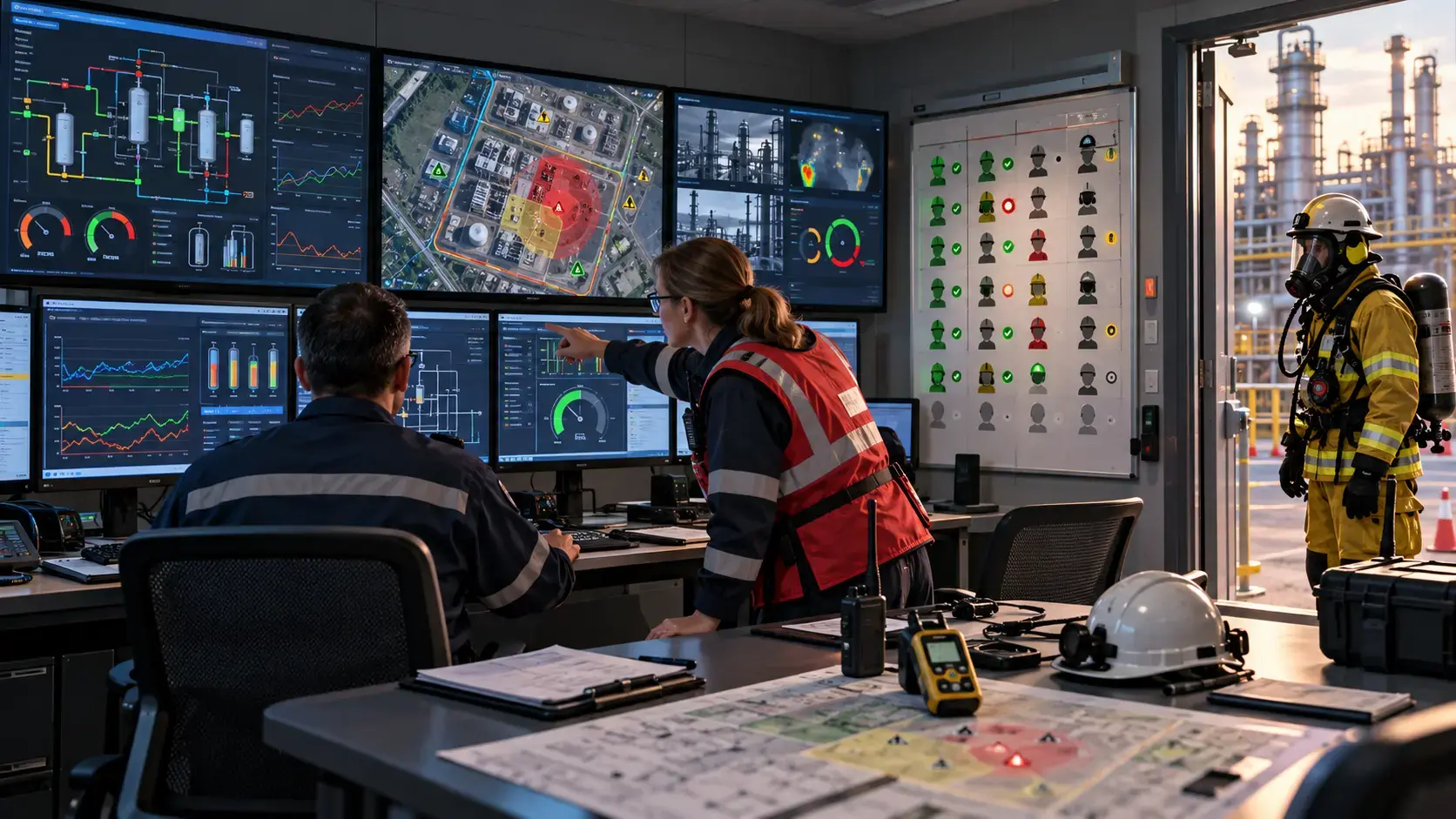
Critical controls before anyone enters
Recognise and announce the emergency. Toxic-gas detection and alarms must warn people where action is required, at setpoints suited to the hazard. Audible and visible warnings, control-room indication and a clear plantwide notification route reduce dependence on word of mouth.
Control the hot zone. Establish boundaries early, prevent spontaneous entry and appoint one incident commander. Only trained and equipped responders operating under an entry plan should cross the boundary. A well-intentioned worker without the required protection is not a rescue resource.
Characterise the atmosphere. Monitor for the toxic substance and other relevant hazards, including oxygen and flammability, using suitable instruments. Unknown conditions must be treated conservatively. Respiratory protection must match the credible atmosphere and the approved response procedure.
Account for people and support the entry. Know who is missing, their last known location and the likely access route. Entry teams need communications, backup, adequate air supply and a retrieval or withdrawal plan. Current maps and reliable personnel-accountability information should be available without asking a busy operator to reconstruct them during the emergency.
Diagnose and isolate remotely where practicable. Use process trends, inventories and flow information to identify the source. Stop pumps and close emergency isolation from a safe location when the design allows. The CSB reported that turning off the methyl mercaptan pump significantly slowed the release, while full tank isolation occurred about seven hours after the release began.
Watch the official CSB incident animation
The CSB animation explains the DuPont La Porte release and the sequence in which workers were exposed. It is directly relevant to toxic-release recognition and controlled emergency response.
A question for today’s team
If a worker sends a distress call from a process area now, what prevents an unprotected colleague from entering—and how will the response team know the atmosphere, casualty location and safest isolation action before committing an entry team?
Your experience matters
Share your thoughts on this page
Have a question, a useful experience or a suggestion? Add your input below.
Comments are public. Keep them respectful and relevant. Do not share contact details, confidential information or emergency reports.
Comments on this page
Loading comments…