Original summaries of relevant industry developments, with clear source attribution and direct links to official publications.
Page 8 of 11 · HSSE news items 85–96 of 125
Environment · World Wildlife Fund (WWF) ·
WWF calls for nature to be integrated into climate resilience and business decisions
Ahead of Climate Week NYC and the UN General Assembly high-level week, WWF outlines why climate action and nature protection should be planned together. The article highlights nature-based resilience, freshwater and ocean priorities, biodiversity finance and the need for organisations to move from public commitments into strategy, budgets and implementation.
Why it matters: Environmental management is stronger when climate risk, water dependency, land use and biodiversity are considered in operational and investment decisions rather than managed as separate campaigns. Organisations can translate this principle into site-specific risk registers, capital-project screening, supply-chain expectations, measurable action plans and verification of whether promised outcomes are actually delivered.
EPA collection initiative highlights safe handling of mercury-containing products
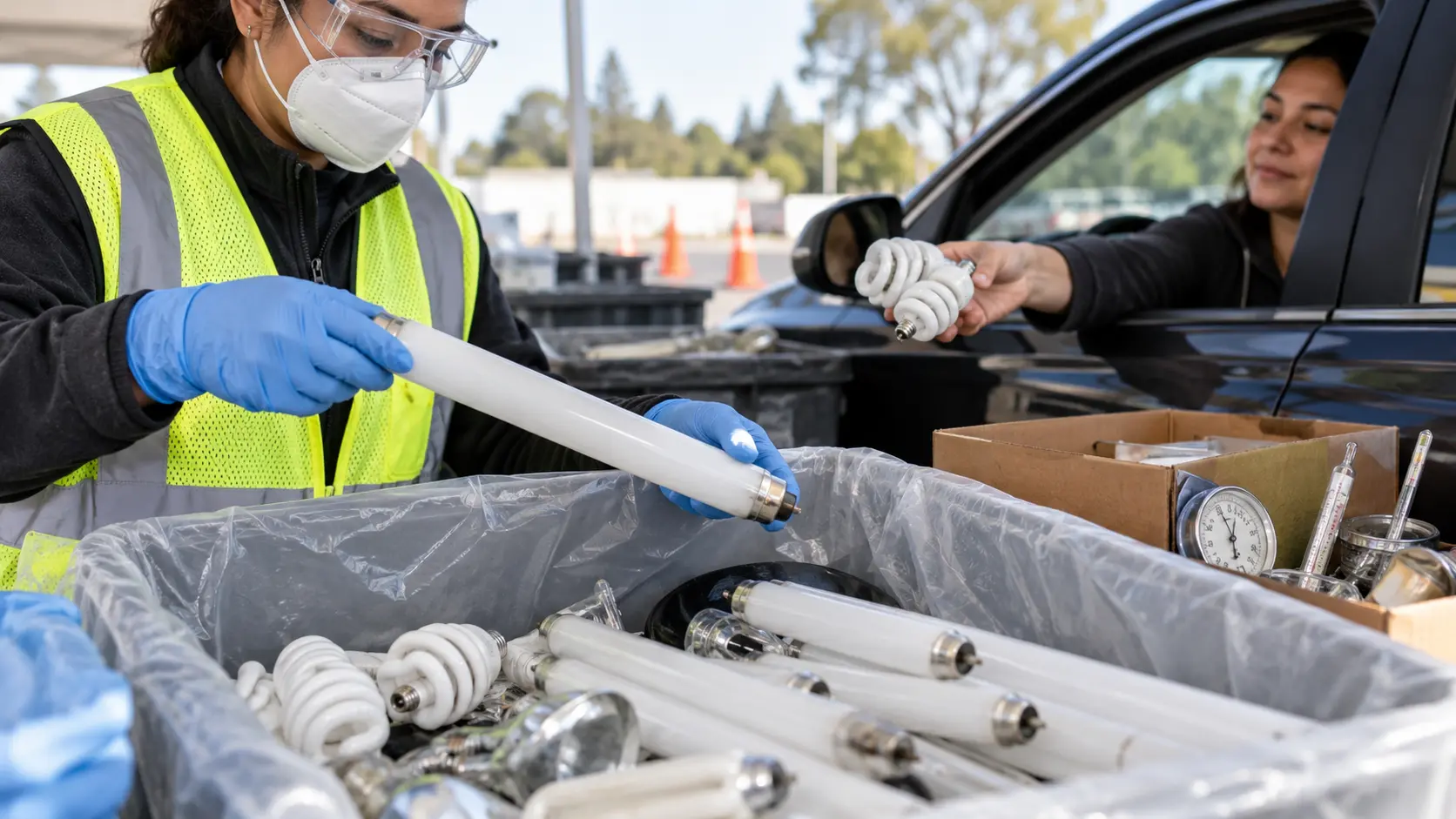
The U.S. Environmental Protection Agency and Utah Department of Environmental Quality announced September collection events for household products that may contain mercury, including some thermometers, batteries, fluorescent lamps, older appliances and electronics. The agencies are directing these materials to specialised hazardous-waste collection rather than ordinary disposal, with packing and transport instructions provided for participants.
Why it matters: Worksites can still encounter mercury in legacy instruments, lighting and equipment. A controlled inventory, careful removal, intact packaging, secure temporary storage and a verified hazardous-waste route help prevent breakage, vapour exposure and environmental release. Suspect items should not be opened, dismantled or placed in general waste while their contents and disposal requirements are being confirmed.
OSHA silica case highlights gaps across exposure control and respiratory protection
OSHA reported citations following an inspection of a Pennsylvania brick-manufacturing plant where the agency said employees were exposed to respirable crystalline silica above permissible levels. The release identifies alleged failures involving exposure controls, respirator use and annual fit testing, regulated areas, assessment of silica-related jobs and medical examinations. The employer may contest the citations, so the release should be read as an enforcement allegation rather than a final adjudication.
Why it matters: Silica risk is not controlled by issuing respirators alone. A reliable programme identifies every dust-generating task, uses engineering and work-practice controls, verifies exposure, defines restricted areas, manages respirator selection and fit, and connects eligible workers with health surveillance. Sites should review the whole control system when monitoring, fit testing or medical follow-up is incomplete instead of treating each gap as an isolated administrative issue.
CSB update links fatal tank failure to a prior unfit-for-service finding
The U.S. Chemical Safety Board reported preliminary findings from its investigation of the May 26, 2026 catastrophic failure of an atmospheric storage tank at the Nippon Dynawave Packaging pulp and paper mill in Longview, Washington. According to the update, a July 2025 external inspection identified shell areas below the calculated minimum safe thickness, recommended internal inspection and repair, and stated that the tank was not fit for continued service unless repaired; it remained in service until the failure.
Why it matters: An inspection finding has value only when it produces a controlled decision. Organisations should define who can accept or reject continued service, isolate equipment when fitness-for-service limits are not met, track recommendations to verified closure and prevent production pressure or ambiguous ownership from overriding a documented high-consequence condition. The CSB investigation remains open, so these are practical lessons from the agency's update rather than final causal conclusions.
WWF highlights infrastructure and investment needs for Rio Grande resilience
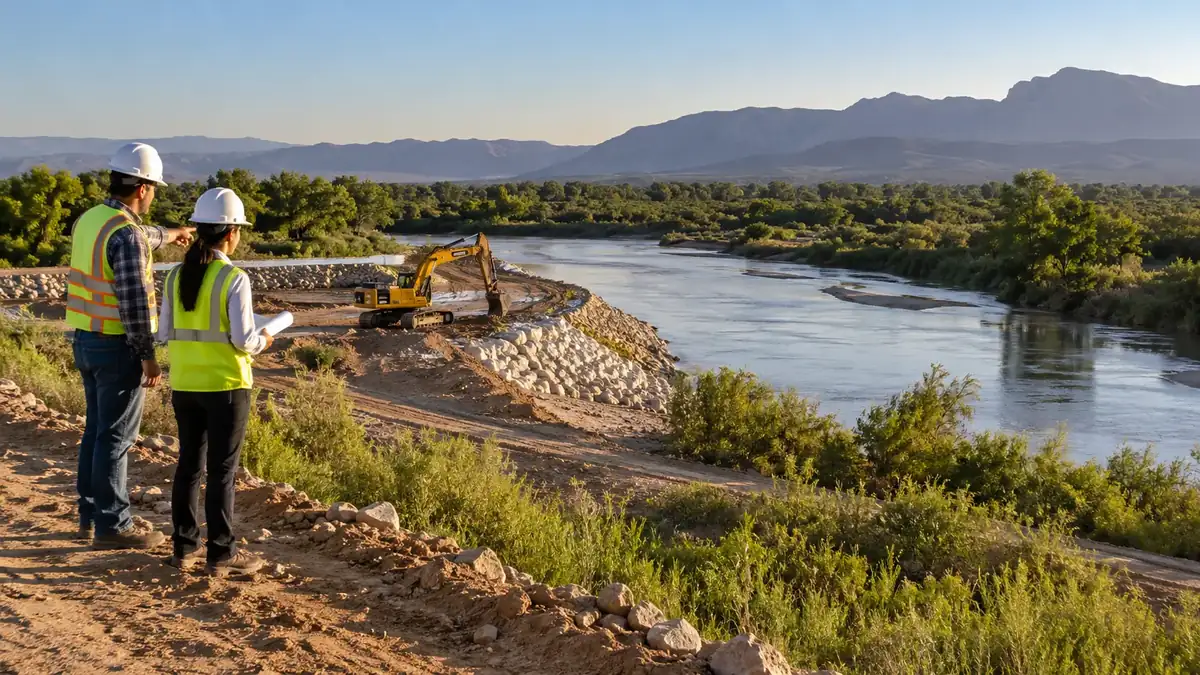
WWF describes how prolonged drought, rising wildfire risk, ageing water infrastructure and demand on limited supplies are placing pressure on the Rio Grande basin. It identifies proposed updates to the Rio Grande Environmental Management Program and continued WaterSMART investment as opportunities to support habitat, watershed health, water efficiency and community resilience.
Why it matters: Water stewardship requires a basin-level view of cumulative demand, ecosystem needs and infrastructure condition—not only compliance at an individual discharge point. Organisations can strengthen resilience by maintaining an accurate water balance, detecting losses, improving efficiency, considering downstream and biodiversity effects, and using verified trends to prioritise collaborative action before scarcity becomes an operational or community crisis.
HSE case highlights repeated hydrocarbon leaks from corrosion under insulation
The UK Health and Safety Executive reported enforcement following five leaks of flammable hydrocarbons from insulated pipework at the Fife Ethylene Plant. HSE’s investigation attributed the leaks to corrosion under insulation and found that the arrangements for inspecting insulated pipework were inadequate; one known leak continued for about four months before repair.
Why it matters: Corrosion under insulation can remain hidden while a line appears externally intact, so inspection programmes must be risk-based, cover credible damage locations and convert findings into timely action. Repeated leaks, odour, damaged cladding and temporary operating decisions should be treated as connected loss-of-containment warnings, with clear escalation, operating limits and repair ownership rather than normalised as isolated defects.
WWF examines how company decisions and policy can reduce plastic pollution
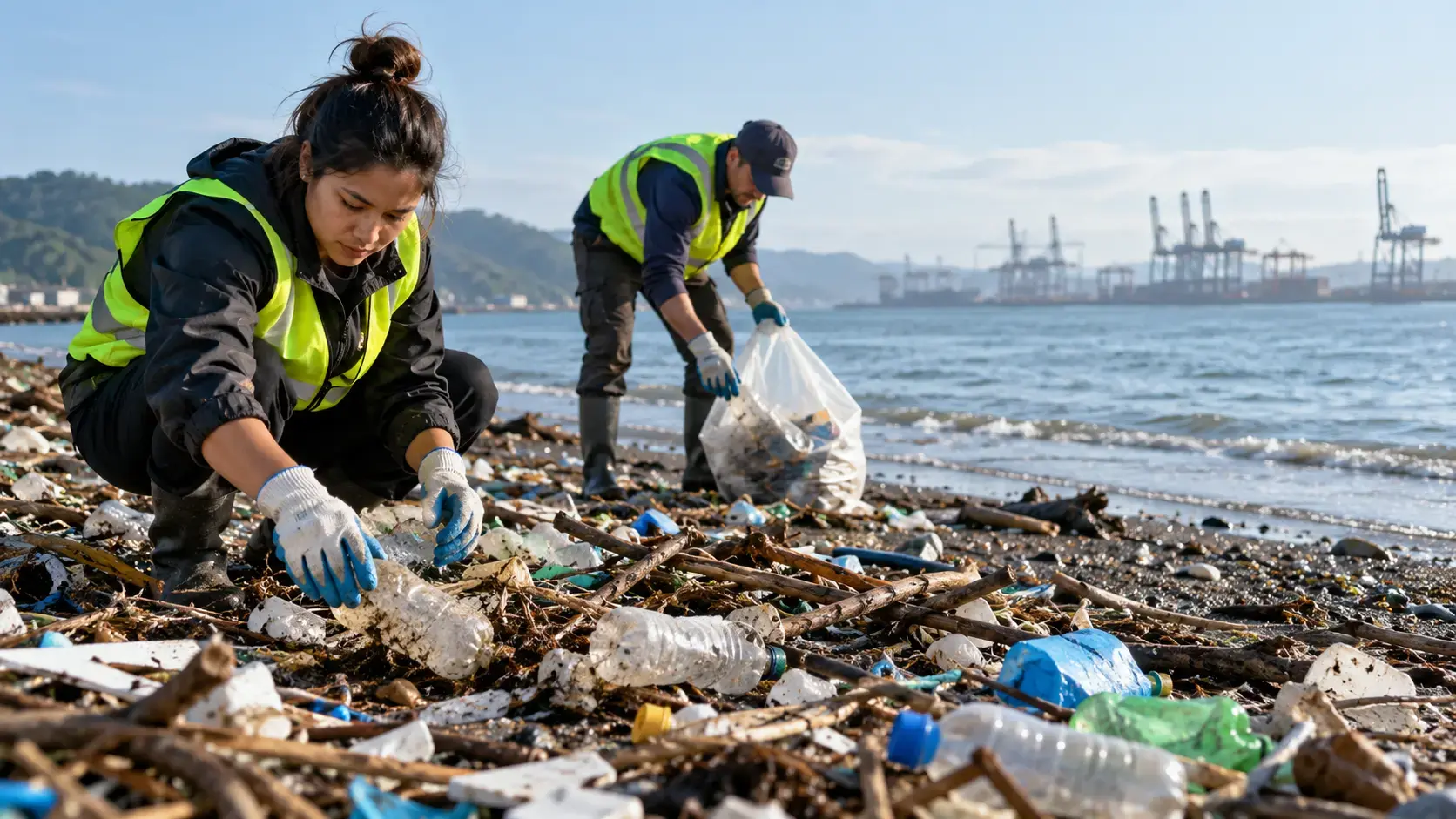
In the second part of its Plastic Crisis series, WWF examines what businesses are doing to improve packaging, recycled content, refill and reuse systems, and why voluntary commitments alone may not create consistent collection and recycling outcomes. The discussion also explores extended producer responsibility and the practical tension between packaging design, consumer behaviour, infrastructure and policy.
Why it matters: Worksite environmental programmes should not treat plastic only as a disposal problem. Procurement specifications, packaging choices, supplier engagement, segregation quality and verified recovery routes all influence whether material is prevented, reused or genuinely recycled. Teams should test environmental claims against local infrastructure and measurable outcomes instead of assuming that a recycling symbol guarantees recovery.
IMO maintains operational information for seafarers affected by Middle East instability
The International Maritime Organization’s official information page reports that it is monitoring the rapidly changing situation affecting shipping and seafarers in the Strait of Hormuz and wider Middle East. The page brings together current incident information, regional contacts, official statements and guidance, and notes that an IMO-coordinated evacuation plan is presently paused.
Why it matters: Maritime security conditions can change faster than static voyage plans. Operators should rely on current official information, maintain contact and escalation arrangements, verify route and crew-welfare implications, and ensure that any operational decision remains aligned with flag-state, coastal-state, company and competent-authority requirements.
CSB update highlights chemical-disposal and rescue risks during decommissioning
The U.S. Chemical Safety Board reported preliminary information from its continuing investigation of an April 2026 hydrogen-sulfide release at a West Virginia catalyst-refining facility undergoing decommissioning. The update describes a reaction during chemical disposal into a wastewater receiving tank and identifies chemical incompatibility, decommissioning hazard analysis, disposal procedures, atmospheric monitoring, protective equipment and oversight as issues still being examined.
Why it matters: Shutdown or decommissioning does not remove process hazards. Residual chemicals, altered operating arrangements and non-routine disposal work need competent compatibility review, written procedures, atmospheric controls and an emergency plan that prevents unprotected workers from entering a contaminated area to attempt a rescue. The investigation remains open, so organisations should use the update as a prompt to verify their own controls rather than treat preliminary information as a final finding.
EPA sets zone-specific cleanup approach for contaminated tidal marsh
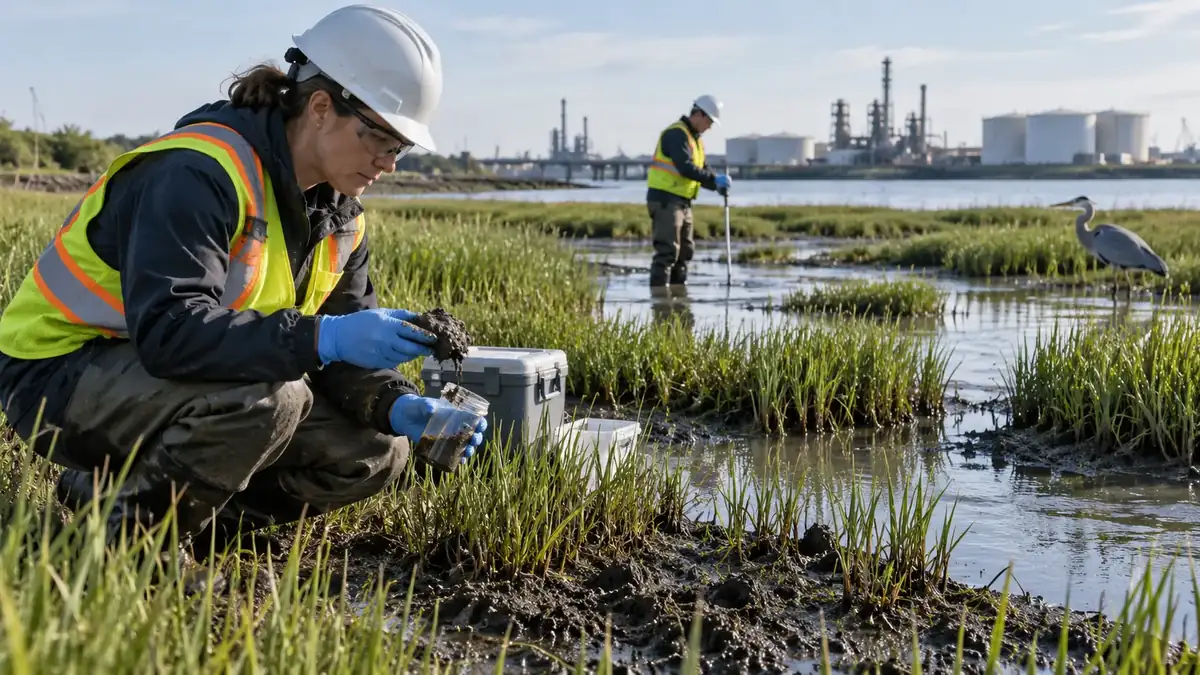
The U.S. EPA announced cleanup milestones at the former Kerr-McGee wood-treatment site in Navassa, North Carolina. Its proposed marsh plan uses different responses for different contamination zones, including removal and off-site disposal in the most affected area, enhanced monitored natural recovery in other areas and no cleanup action where the assessment does not support intervention.
Why it matters: Remediation should match verified site conditions rather than apply one method everywhere. Delineating contamination, selecting proportionate controls, managing removed material, monitoring natural recovery and involving affected communities create a clearer basis for demonstrating that cleanup decisions remain protective over time.
EPA checklist promotes earlier action on drinking-water system weaknesses
The U.S. EPA released voluntary checklist guidance to help state agencies identify, track and resolve systemic issues during existing assessments of public water systems. Examples include source-water demand approaching capacity, malfunctioning treatment equipment and repeated water-main breaks that could eventually disrupt service or threaten public health.
Why it matters: Environmental assurance is strongest when recurring defects and capacity warnings are treated as connected system signals rather than isolated maintenance events. Trend review, named ownership, documented follow-up and timely corrective action can prevent a manageable weakness from becoming a loss of reliable water service or a wider health risk.
HSE case shows why unsafe ladders must be removed from use
The UK Health and Safety Executive reported enforcement after a worker fell when a stepladder collapsed. Its investigation found that ladder use was not effectively controlled: equipment known to be in poor condition remained accessible, and employees had not been trained to assess whether a ladder was safe to use.
Why it matters: Inspection is ineffective when failed equipment remains available. Organisations should select suitable access equipment, keep it maintained, teach users what to check and physically quarantine defective ladders so convenience cannot turn a known defect into another exposure.
 Environment · World Wildlife Fund (WWF) ·







Your experience matters
Share your thoughts on this page
Have a question, a useful experience or a suggestion? Add your input below.
Comments are public. Keep them respectful and relevant. Do not share contact details, confidential information or emergency reports.
Comments on this page
Loading comments…