Original summaries of relevant industry developments, with clear source attribution and direct links to official publications.
Page 9 of 11 · HSSE news items 97–108 of 125
Environment · U.S. Environmental Protection Agency ·
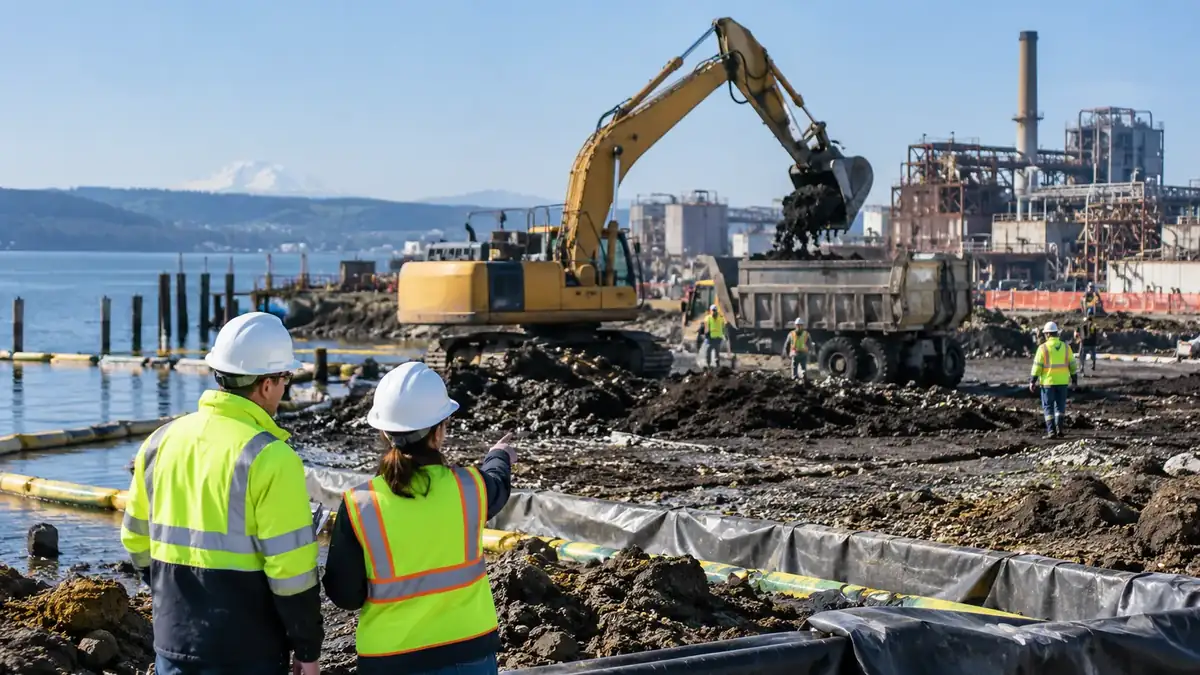
EPA reports major removal-action milestone at contaminated industrial site
The U.S. EPA and state and local partners completed a time-critical phase of removal work at the Fairmont Brine Site in West Virginia following a 2023 industrial fire. The agency reports that the response secured the site, removed hazardous and radioactive wastes, dismantled compromised infrastructure and used continuing surveillance, air monitoring and community communication while further site evaluation continues.
Why it matters: Complex environmental response needs more than waste removal. Clear command arrangements, perimeter and containment controls, competent waste handling, exposure monitoring, transparent community communication and a defined transition into longer-term monitoring help prevent an immediate incident from becoming an unmanaged residual risk.
CSB final report highlights procedural drift, facility siting and process-safety weaknesses
The U.S. Chemical Safety Board released its final report on the August 2025 coke-oven-gas explosion at U.S. Steel’s Clairton Coke Works. The investigation identified an informal valve-cleaning practice that was absent from the written procedure, alongside facility-siting and process-safety-management weaknesses.
Why it matters: Tasks that evolve informally can introduce hazards that the approved procedure and risk analysis never addressed. Organisations should capture how work is actually performed, formally assess changes, control hazardous energy and verify that occupied buildings are suitably located or protected from credible releases, fires and explosions.
WWF reports new elephant-distribution data supporting coexistence planning
WWF describes a statewide assessment in Arunachal Pradesh that mapped elephant distribution, habitat pressures, landscape connectivity and areas of human-elephant interaction. The findings informed the state’s first action plan for managing conflict and supporting safer coexistence.
Why it matters: Environmental management should use current field evidence to understand where infrastructure, settlement and land-use change overlap with wildlife movement. Mapping corridors and interaction hotspots can strengthen siting decisions, community engagement, mitigation measures and long-term monitoring before conflict intensifies.
NEBOSH-backed report examines health and safety challenges in artisanal mining
NEBOSH announced an international report examining occupational health and safety risks affecting artisanal and small-scale miners and nearby communities. Drawing on research in Brazil, Colombia, Uganda and Zimbabwe, the work identifies opportunities to strengthen occupational-health systems, prevention and future policy.
Why it matters: The update shows why risk management must reflect the realities of dispersed and resource-constrained work. Practical improvements depend on accessible health support, relevant training, workable controls and collaboration among workers, communities, researchers, regulators and mining organisations.
HSE case reinforces effective guarding for conveyor machinery
The UK Health and Safety Executive reported enforcement following an incident involving access to an unguarded part of running conveyor machinery. Its investigation found that the company had not taken effective measures to prevent access to dangerous moving parts.
Why it matters: Machine guarding must work during real operating conditions, including material handling, cleaning and blockage response. Fixed or interlocked guards, suitable operating methods and verified isolation before access help prevent routine work from placing people within reach of moving equipment.
HSE case highlights the need to protect roof openings before work begins
The UK Health and Safety Executive reported enforcement after a worker fell through an unprotected rooflight during refurbishment work. Its investigation found that suitable fall-prevention measures had not been put in place, reinforcing the need for work at height to be properly planned, supervised and carried out with effective protection.
Why it matters: Rooflights and openings should be treated as fall hazards even when they appear obvious or are used briefly for access or material handling. Secured covers, guardrails, suitable platforms, controlled access and competent supervision should be selected before work starts and verified whenever the work area changes.
WWF highlights how wildlife-movement data can guide conservation action
WWF explains how movement data can reveal critical habitat, migration routes and ecological corridors, show whether protected areas are functionally connected, and provide early indications of pressure on wildlife populations. The article also describes how tracking information can support coexistence by helping communities anticipate animal movement near settled areas.
Why it matters: Environmental impact assessment should consider how a project changes movement across the wider landscape, not only the land directly occupied. Route surveys, seasonal observations, monitoring data and adaptive controls can help planners avoid fragmentation and verify that crossings, buffers and restoration measures remain effective.
EPA publishes protocol for its fluoride health-risk assessment
The U.S. EPA published the protocol it will use to develop a human-health toxicity assessment for fluoride in drinking water. The document sets out the planned evidence review and dose-response analysis, and the agency says a future draft assessment will be released for public comment before it informs any potential regulatory review.
Why it matters: Health and environmental decisions should follow a transparent method, distinguish an assessment plan from a final conclusion and remain open to review as evidence develops. Organisations can apply the same discipline by defining data-quality requirements before monitoring, documenting assumptions and communicating uncertainty without prejudging the outcome.
EPA begins month-long Great Lakes water-quality monitoring survey
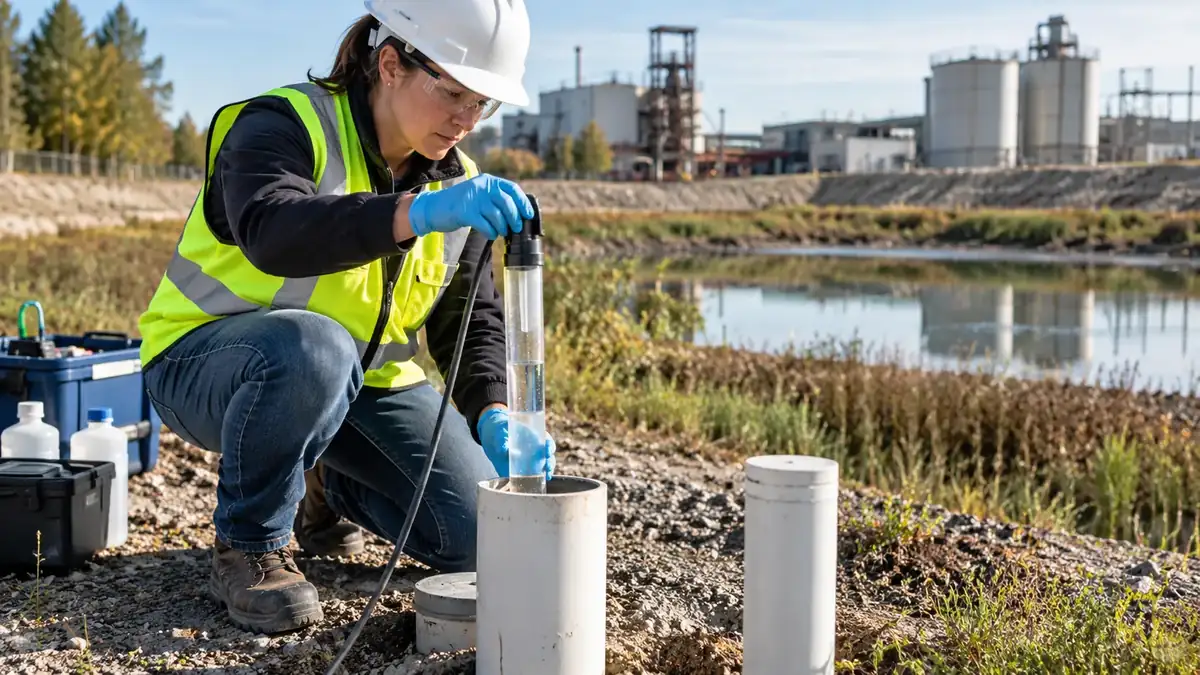
The U.S. EPA’s research vessel Lake Guardian began a summer survey across all five Great Lakes to collect water-quality and food-web data. The agency says the work will support drinking-water and recreational-water protection, assessment of ecosystem stressors and fisheries management.
Why it matters: Environmental decisions are stronger when monitoring is planned, repeatable and connected to management action. Organisations can apply the same principle by defining representative sampling locations, maintaining data quality and using trends to review controls before a weak signal becomes a wider impact.
NEBOSH General Certificate transition reaches an important assessment date
NEBOSH’s official transition guidance identifies 6 August 2026 as the final assessment date under the October 2018 General Certificate specification. The page explains how learner status affects movement to the revised qualification and the arrangements for referred unit-two assessments.
Why it matters: Learners and Learning Partners should confirm the applicable specification, assessment entry and transition position directly against the official NEBOSH guidance. Clear verification now can prevent assumptions about an approaching qualification deadline from disrupting a learner’s plan.
EPA proposes monitored natural recovery for a groundwater-cleanup site
The U.S. EPA proposed an updated plan for the Hopewell Precision Superfund site in New York after long-term data showed groundwater contaminant concentrations declining. The proposal combines naturally occurring recovery processes with continued monitoring and controls intended to prevent exposure to affected groundwater.
Why it matters: Environmental remediation needs evidence, defined performance checks and enduring exposure controls. Even when monitoring supports a less intensive treatment approach, organisations must maintain clear responsibilities, reliable data, access restrictions and review points until the required outcome is demonstrated.
HSE case reinforces planning and equipment selection for dismantling work
The UK Health and Safety Executive reported enforcement following an incident during the dismantling of an internal steel frame. Its investigation found that the work had not been properly planned or carried out safely and that unsuitable equipment had been used to lower a structural component.
Why it matters: Dismantling changes load paths and stability as the job progresses. A written sequence, suitable rated equipment, competent oversight, exclusion zones and clear stop-work points help prevent an improvised method from exposing the work party to an uncontrolled load.
 Environment · U.S. Environmental Protection Agency ·










Your experience matters
Share your thoughts on this page
Have a question, a useful experience or a suggestion? Add your input below.
Comments are public. Keep them respectful and relevant. Do not share contact details, confidential information or emergency reports.
Comments on this page
Loading comments…