Health · 9 min read
Industrial Exoskeleton Review: Ergonomic Support or Expensive Distraction?
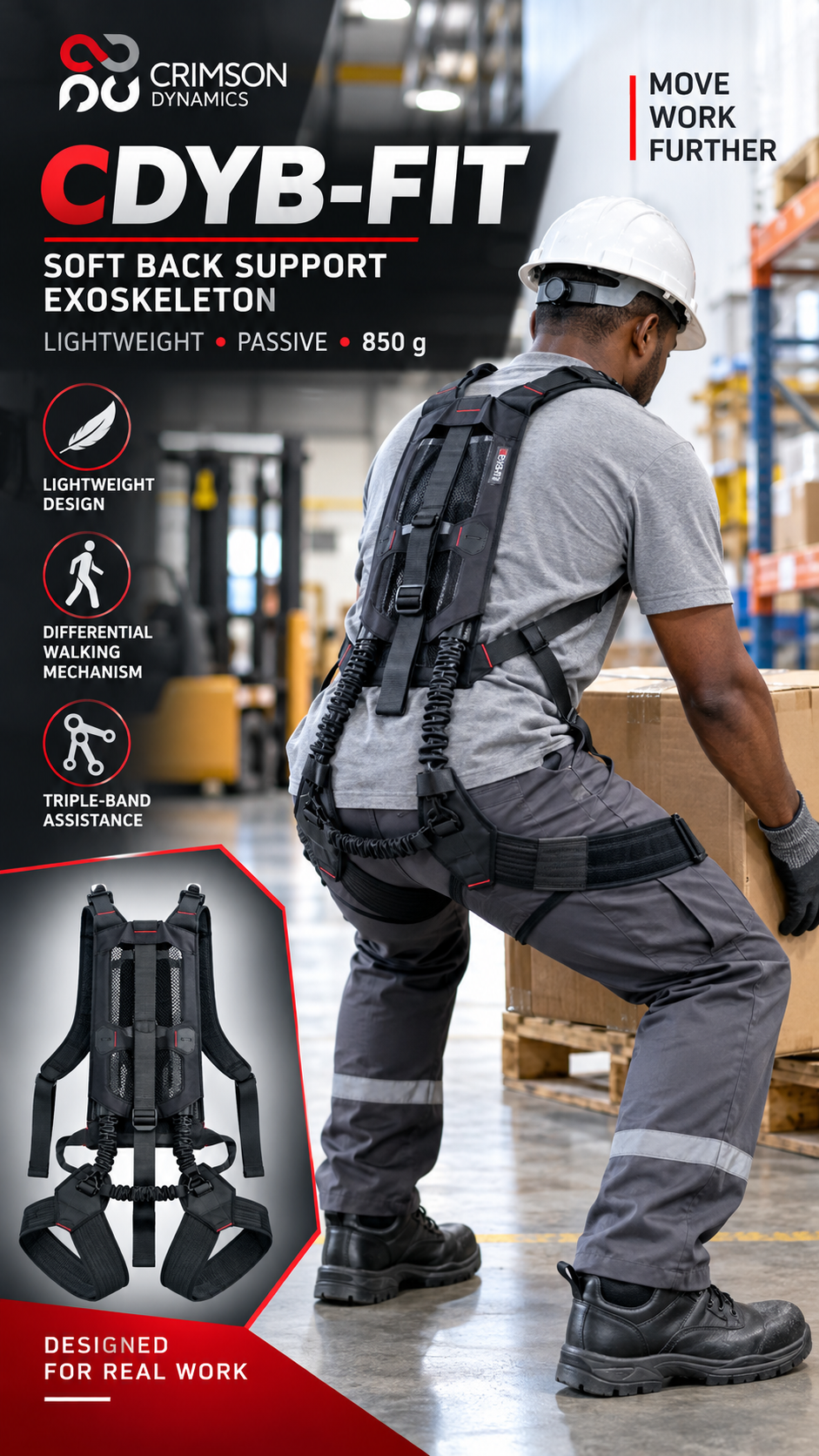
A balanced review of a wearable industrial exoskeleton for lifting and repetitive work, examining possible ergonomic benefits, risk transfer and the need for controlled workplace trials.
Affiliate disclosure and review basis
This review contains an affiliate link. Worksite Safety Hub may earn a commission if you buy through it, without adding to your purchase price. We have not conducted a biomechanical trial of the exact device; our verdict combines listing information with published occupational-safety guidance.
Exoskeleton performance is task- and user-specific. A device that helps during one posture may restrict another movement or transfer load elsewhere. Treat this as a technology-selection guide, not medical advice or proof of injury prevention.
Our verdict
Industrial exoskeletons are visually compelling and commercially interesting, but they require more careful evaluation than ordinary tools. Passive designs may use springs or elastic elements to support the back, shoulders or legs. For repetitive lifting, forward bending or overhead work, an appropriately matched device may reduce muscle demand for some users.
NIOSH highlights both possible benefits and unresolved risks, including altered balance, pressure points, restricted mobility and transfer of load to other regions. This product should be considered as a controlled ergonomic intervention—not as permission to retain a poorly designed manual-handling task.
Potential advantages
The appeal lies in assistance that moves with the worker where fixed automation or lifting aids are impractical. A lightweight passive unit may be easier to introduce than powered equipment.
- Possible reduction in muscle activity during a well-matched task.
- Support for sustained bending or overhead posture, depending on design.
- Portability across changing work locations.
- Potential value within a wider ergonomics programme.
- Strong demonstration potential for training and review content.
Risks buyers must not overlook
Assistance at one joint can transfer demand to the hips, legs, lower back or another region. Straps may create heat, rubbing or pressure. Added bulk can affect access, ladder work, emergency escape and compatibility with harnesses or other PPE.
Workers may lift more or work longer because the task feels easier, increasing exposure to vibration, noise or airborne contaminants. Hygiene matters when a device is shared, particularly in warm climates. Powered models introduce battery, control and unexpected-movement hazards.
How to trial it responsibly
Start with the task, not the device. Use the hierarchy of controls to determine whether the load, reach, frequency or workstation can be redesigned. If residual risk remains, involve ergonomics, occupational health, safety personnel and the workers performing the task.
Run a limited trial with defined success and stop criteria. Assess fit across body sizes, comfort over time, balance, range of motion, PPE compatibility and escape routes. Confirm whether the listing is passive or powered, adjustment range, device weight, user limits, maintenance needs, spare parts and return policy before ordering.
Confirm the exact model, specification, certification evidence, shipping terms and current price before ordering.
Sources
- AliExpress — Industrial exoskeleton product listingPublished Product listing; accessed 18 September 2026
- NIOSH — Industrial ExoskeletonsPublished 7 January 2020; accessed 18 September 2026
- NIOSH — Exoskeletons in construction workplacesPublished 3 February 2022; accessed 18 September 2026
Daily HSSE updates
Subscribe for practical HSSE updates.
Subscribe for the daily message, selected HSSE news and occasional new-resource alerts from Worksite Safety Hub.