Health · Product Reviews · 12 min read
Generic Full-Face Respirator Mask Review: Protection You Can Verify—or a Dangerous Guess?
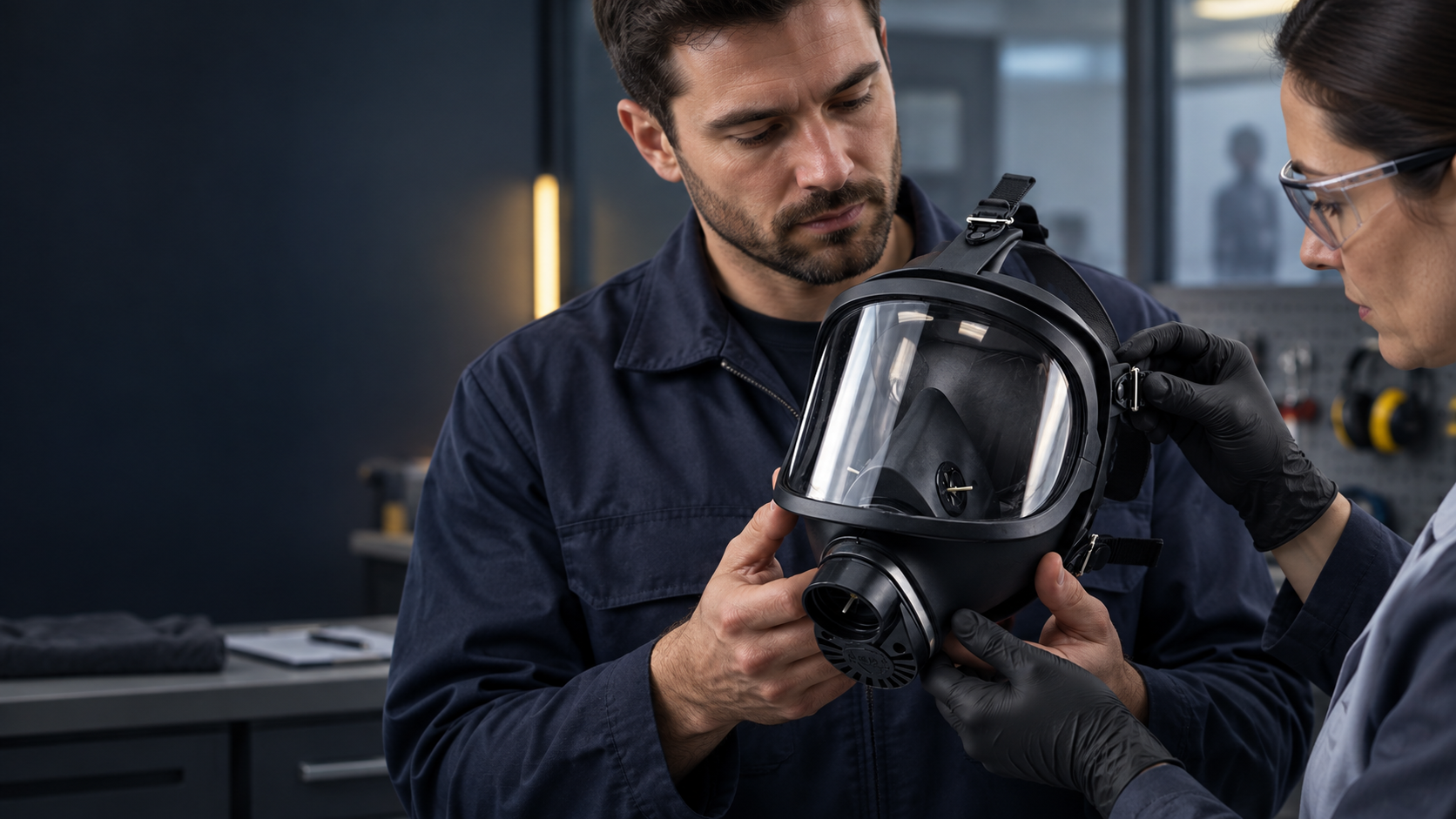
A safety-first review of this black full-face respirator, examining its visor, head harness, filter ports, fit, cartridge compatibility and the certification evidence required before hazardous use.
Affiliate disclosure and review basis
This independent review contains an affiliate link. Worksite Safety Hub may earn a commission if you make a qualifying purchase through it, at no additional cost to you. We assessed the supplied marketplace images and visible seller claims; we have not physically fit-tested, laboratory-tested or authenticated the exact facepiece, canister or valve assembly.
This article covers the generic black full-face respirator shown here. It is not the earlier combustible-gas detector, sound-level meter or indoor-air monitor reviewed on this site. Marketplace options can differ, so every safety conclusion must be tied to the exact model, filter and approval documents delivered—not merely to a similar photograph.
Quick verdict: do not buy on appearance alone
The facepiece has several desirable physical features: full-face coverage, a broad clear visor, multiple adjustable head straps and a replaceable filter connection. Those features may make it useful as a costume, display item or supervised training prop. They do not establish respiratory protection.
For genuine hazardous work, our verdict is conditional to the point of caution: do not use this product unless the seller supplies independently verifiable approval for the complete configuration—facepiece, valves, adapter and exact cartridge or canister—and a competent respiratory-protection programme confirms that configuration is appropriate. The listing images do not show enough evidence to make that determination.
What appears to be included—and what may be missing
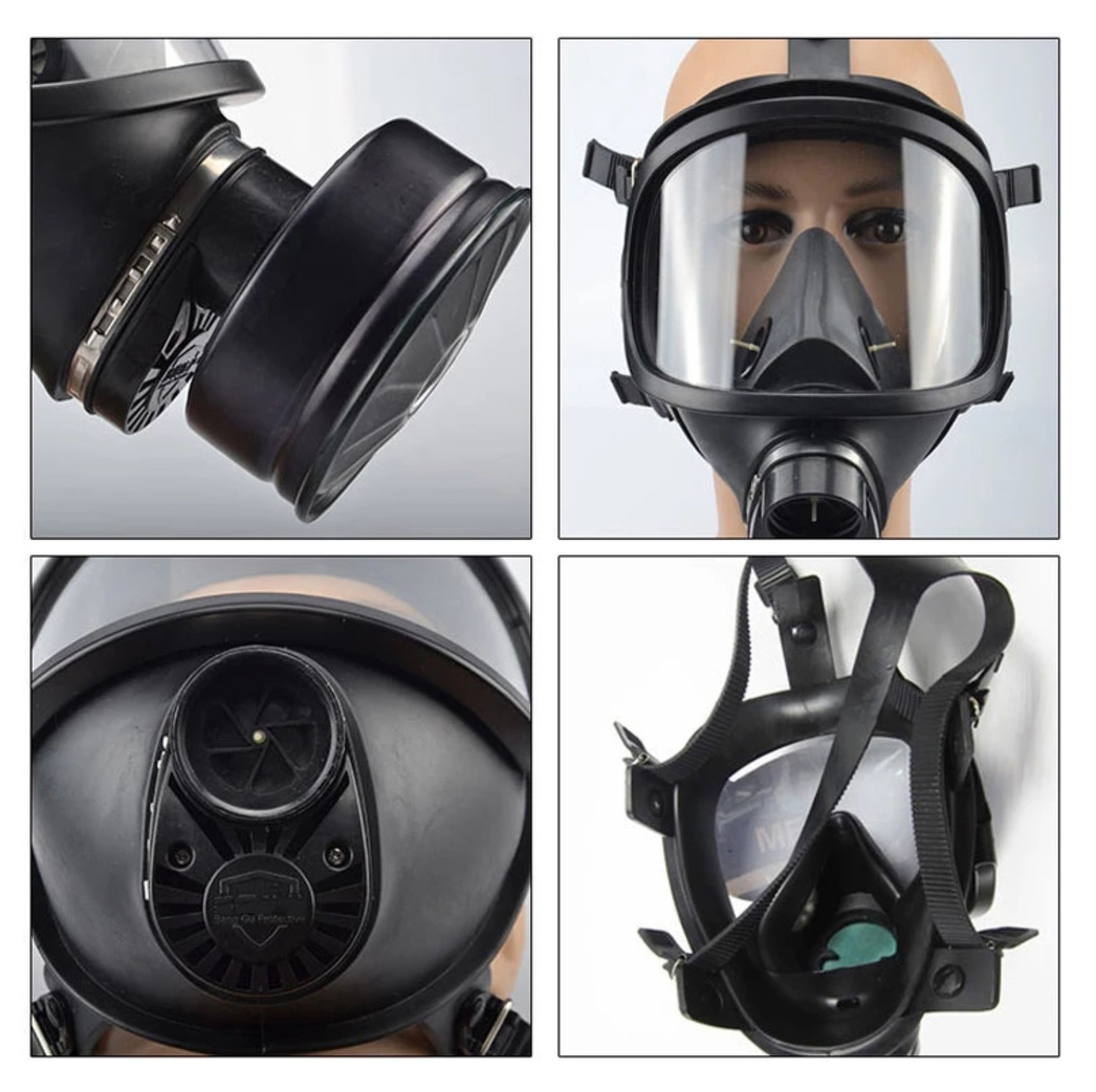
The supplied photographs show a molded black facepiece, clear full-face lens, internal nose cup, several head-harness straps, a front valve or speech-area assembly and at least one threaded or bayonet-style connection. Some images show a large black canister attached; another explicitly says the mask is supplied without a filter.
Confirm the exact checkout option. A facepiece without a certified compatible cartridge or canister does not filter the inhaled air. Even when a canister is pictured, buyers need the model, approval marking, contaminant class, capacity, expiry date, storage seal and change instructions. A generic black container is not evidence of protection.
A mask without a filter provides no contaminant filtration
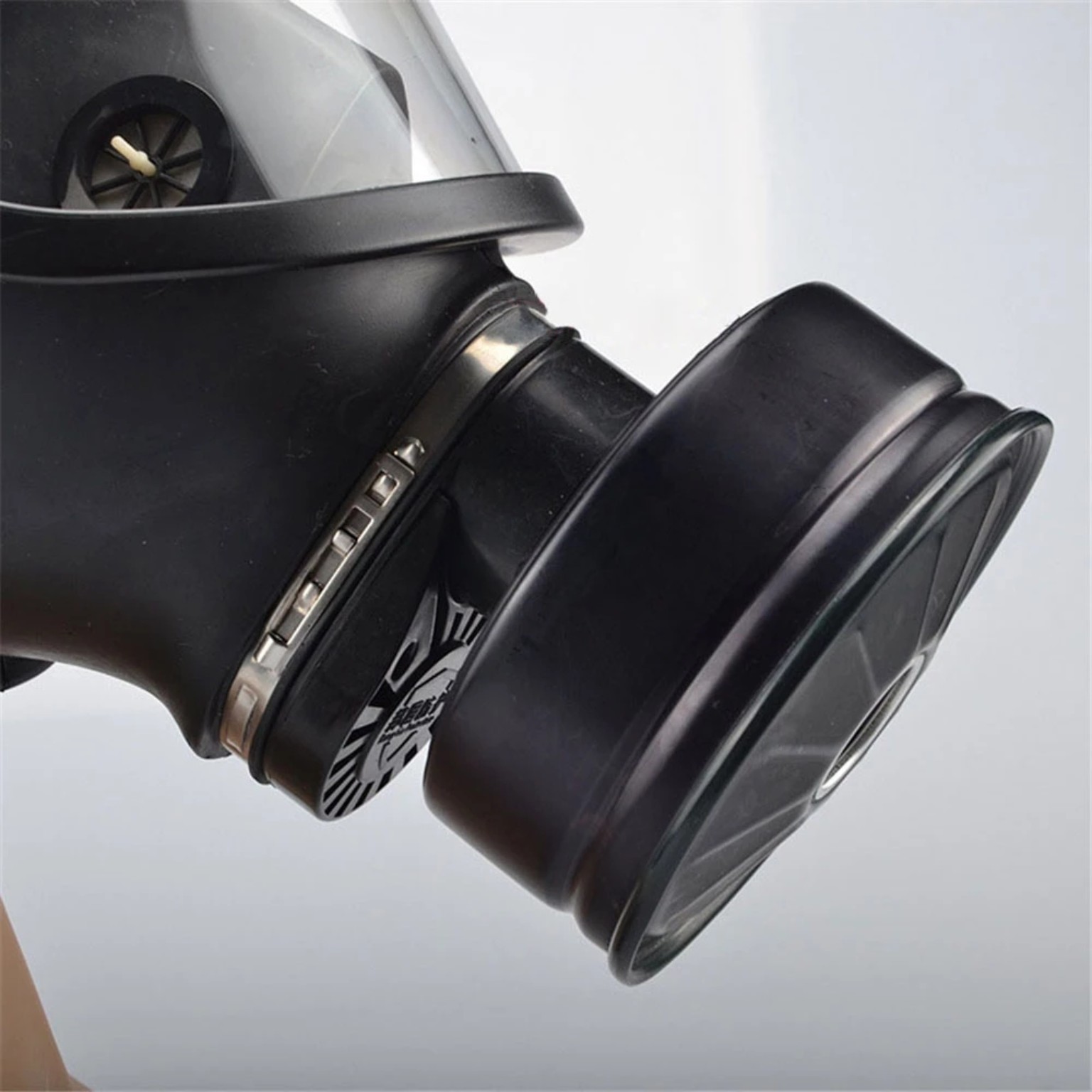
An air-purifying respirator works by drawing ambient air through a filter, cartridge or canister. The facepiece supplies the seal and airflow path; the filter media performs the particle or chemical removal. If the connection is empty—or if the attached filter is wrong, exhausted, counterfeit or incompatible—the wearer may inhale the hazard.
Physical attachment is not the same as certified compatibility. Do not improvise adapters, combine parts from unrelated manufacturers or assume that a familiar thread proves interchangeability. Approval applies to a tested configuration. In the United States, ask for the NIOSH approval number and verify the complete assembly in the Certified Equipment List; elsewhere, verify the relevant regional approval and documentation for the exact combination.
Cartridge selection is hazard-specific
Particulate filters, organic-vapour cartridges, acid-gas cartridges and multi-gas canisters are not interchangeable promises of safety. Selection requires identifying the contaminant, concentration, form, exposure limit, work duration and environmental conditions. Some substances have poor warning properties or require supplied air instead of an air-purifying respirator.
A chemical cartridge has finite capacity. It needs a documented change schedule based on objective information, not smell, taste or irritation. Keep sealed filters within shelf life, record when they are opened and replace them under the manufacturer's instructions and the employer's programme. Never rely on an unknown second-hand or unsealed canister.
- Identify the contaminant and expected concentration before selection.
- Match the exact filter class and approval to that hazard.
- Confirm service life, shelf life, storage conditions and change schedule.
- Check that the complete facepiece-filter combination is approved.
- Keep purchase and inspection records for traceability.
Where this respirator must not be used
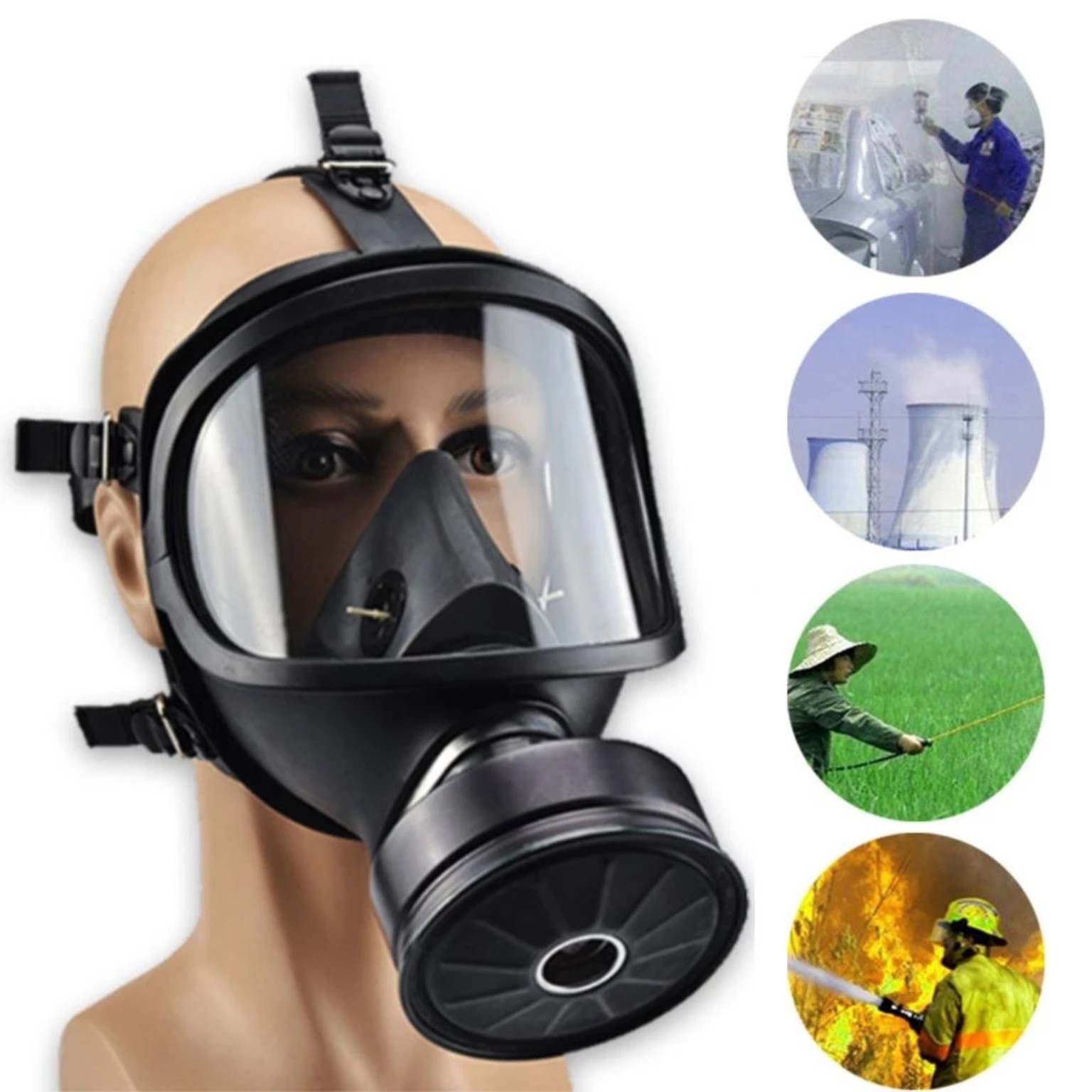
This is an air-purifying design: it does not supply oxygen. Do not use it in an oxygen-deficient atmosphere, an immediately dangerous to life or health atmosphere, a confined space with unknown conditions, an emergency release, an unknown gas or any atmosphere beyond the approved cartridge limits.
The listing's firefighting, industrial, agricultural and military-style images are illustrations—not evidence of suitability. A generic filter mask is not a self-contained breathing apparatus and must not be represented as appropriate for structural firefighting, wildfire smoke operations, chemical warfare agents, CBRN response or emergency escape. Those tasks require hazard-specific, approved equipment, training and incident controls.
Fit, face seal and head harness
A high-performing cartridge cannot compensate for a leaking face seal. OSHA's workplace rule requires medical evaluation before required respirator use and fit testing before initial use of a tight-fitting facepiece, whenever a different facepiece is used and at least annually thereafter. A user seal check is performed each time the mask is donned, but it does not replace fit testing.
Facial hair, stubble, head coverings, straps, scars and eyewear can cross or disturb the sealing surface. Ordinary spectacle arms can break a full-face seal; approved internal spectacle kits may be needed. The harness should draw the facepiece evenly against the face without overtightening, distortion or painful pressure points.
Visor, valves and practical usability
The large lens should provide better eye protection and peripheral vision than a half mask, but the listing does not state the lens impact standard, optical class, anti-fog treatment or chemical resistance. Scratches, crazing, clouding, heat damage and solvent attack can make a visor unsafe even when it still looks intact from a distance.
Inspect inhalation and exhalation valves for warping, debris, stiffness and correct seating. A damaged valve can create leakage or breathing resistance. The internal nose cup may reduce fogging and carbon-dioxide rebreathing, but its actual performance depends on fit and valve condition. Full-face respirators also add weight, heat and communication difficulty, so a realistic wear trial matters.
Size and claimed dimensions
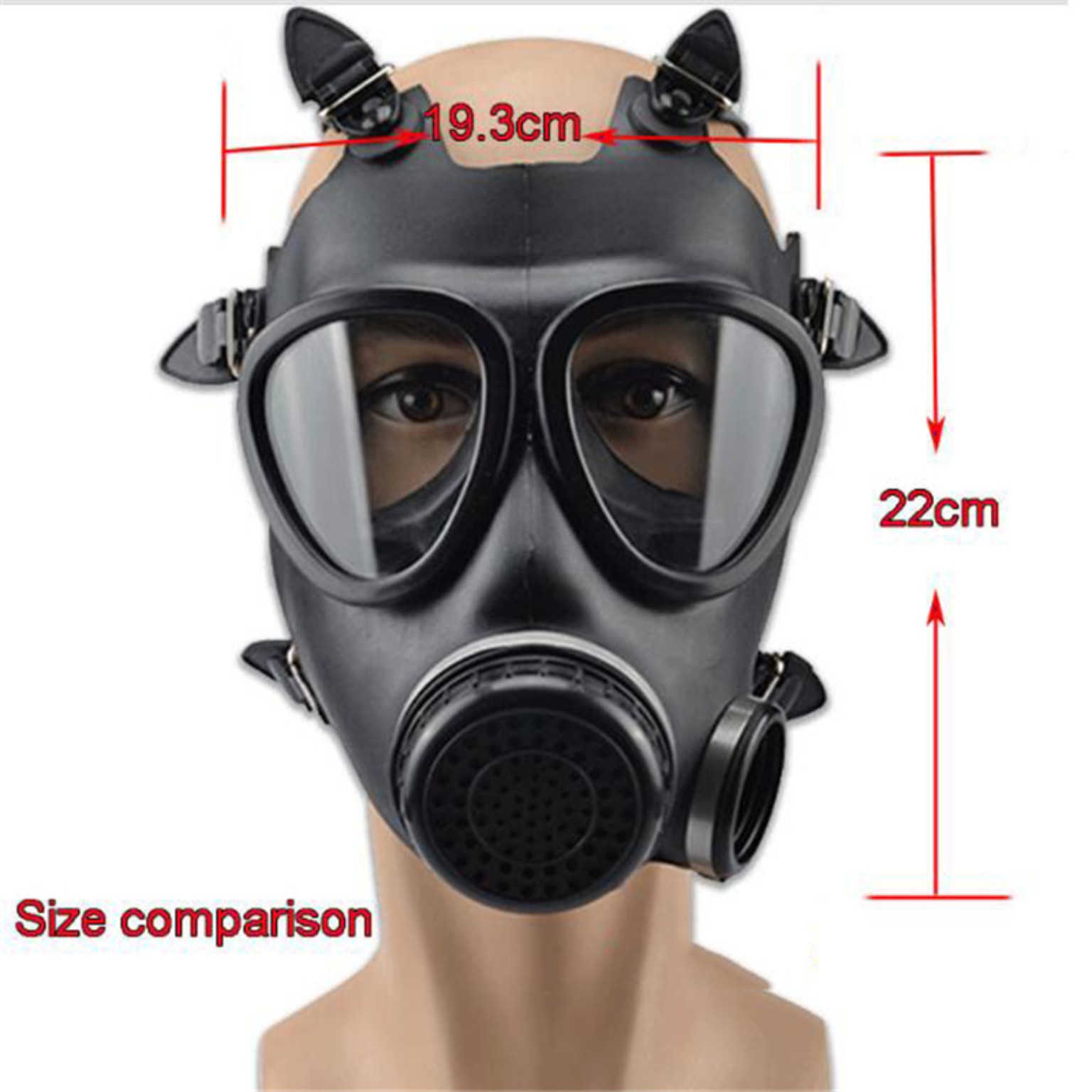
The seller graphic shows approximately 19.3 cm by 22 cm, but external dimensions do not tell you which faces the sealing surface accommodates. Ask whether more than one size is available, how size is selected and whether replacement harnesses, valves, seals and lenses can be obtained.
Do not solve a failed fit test by overtightening. If the model does not fit, select another approved size or facepiece. Comfort is a safety factor: pressure, fogging or excessive breathing resistance can encourage a wearer to loosen the mask or enter the hazard with an incomplete seal.
Certification: what evidence should look like
Request clear photographs of permanent markings on the facepiece and each filter, the model-specific manual, declaration or certificate, manufacturer identity and approval schedule. Cross-check those details directly with the issuing authority or searchable approval database. A marketplace title, test report for a different model or generic CE logo is not enough.
For U.S. occupational use, NIOSH approvals identify complete respirator configurations and include limitations. The facepiece and cartridge must appear together under the approval. Employers also remain responsible for OSHA 29 CFR 1910.134 requirements, including written programme administration, hazard evaluation, medical evaluation, fit testing, training, maintenance and programme evaluation.
Inspection, cleaning and storage
Inspect the facepiece before and after use: lens, sealing flange, harness, buckles, valves, ports, gaskets and threads. Remove the respirator from service if parts are missing, brittle, distorted, cracked, sticky, corroded or difficult to operate. Use only replacement parts permitted by the approval and manufacturer.
Clean and disinfect using the approved method; harsh solvents or excessive heat can damage rubber, valves and the lens. Remove cartridges when required by the instructions, prevent water entering filters, dry fully and store the facepiece clean, dry, protected from sunlight, chemicals, dust, deformation and temperature extremes. Keep emergency respirators accessible and inspect them on the required schedule.
Who should consider it?
A buyer may consider this item for costume, photography, display or controlled training where no respiratory protection is expected, provided visibility and physical safety are managed. For hazardous work, consideration should begin only after the exact approval and configuration are verified and a competent person selects it through the respiratory-protection programme.
If the seller cannot provide traceable manufacturer details, approval evidence and exact compatible filters, treat the product as non-protective. Do not let low price or intimidating styling substitute for evidence. For occasional DIY tasks, choose a clearly certified respirator from an authorised source with filters specified for the product label and hazard; follow local requirements and the manufacturer's instructions.
Pre-purchase checklist
Send these questions before ordering and keep the answers with screenshots of the selected variant. If a safety-critical answer is vague, contradictory or supplied only as marketing artwork, choose a traceable alternative.
- Exact manufacturer, facepiece model, size and country of origin.
- Verifiable NIOSH approval or applicable regional certification for the complete configuration.
- Exact cartridge/canister model, contaminant class and approval limitations.
- Whether the selected option includes filters—and their sealed expiry dates.
- Lens impact/optical standard and anti-fog information.
- Replacement valves, harness, seal, lens and filter availability.
- Model-specific instructions for fit checks, cleaning, storage and maintenance.
- Warranty, returns and authorised local support.
Final assessment
This product looks like a substantial full-face respirator, but respiratory protection cannot be judged by coverage, weight or appearance. The essential questions remain unanswered in the supplied imagery: who approved the exact model, which filter configuration was tested, which hazards and concentrations it covers, and where the limitations are documented.
Our recommendation is simple: verify first, fit-test second and expose only under a compliant programme. Until that evidence exists, regard it as an unverified facepiece—not as protection for fire, smoke, pesticides, industrial gases, CBRN agents, confined spaces or unknown atmospheres.
Confirm the exact model, specification, certification evidence, shipping terms and current price before ordering.
Sources
- AliExpress — Full-face respirator mask product listingPublished Product listing; accessed 20 September 2026
- OSHA — Respiratory Protection, 29 CFR 1910.134Published Current standard; accessed 20 September 2026
- NIOSH — Certified Equipment ListPublished Current approval database; accessed 20 September 2026
Daily HSSE updates
Subscribe for practical HSSE updates.
Subscribe for the daily message, selected HSSE news and occasional new-resource alerts from Worksite Safety Hub.