Security · HSSE Watch
Reported Tanker Engine-Room Strike: Review Critical-Function Readiness
Published
UKMTO Warning 195-26: incident dated 3 November 2026, 19:00 UTC. Archive issue date: 3 November 2026. Article and source checks: 4 November 2026. Preliminary report; investigation continuing.
A report that mentions an engine room should prompt a careful readiness review—not an assumption that propulsion, electrical power or firefighting systems have failed. Check the dependencies before an emergency makes them urgent.
What UKMTO reported
Warning 195-26 records an incident on 3 November 2026 at 19:00 UTC, approximately 14 nautical miles northeast of Lima, Oman. Its stated source is the Company Security Officer, reporting two unidentified projectiles striking a tanker's engine room. No casualties or environmental impact were reported at that time.
The November archive lists the warning under 3 November. Authorities are investigating. The document does not name the tanker, identify an attacker or weapon, describe machinery damage, confirm a fire or establish the vessel's subsequent operating condition. Do not combine it with other nearby warnings without authoritative confirmation.
UKMTO advises vessels to transit with caution and report suspicious activity. This article cannot establish a safe route, an exclusion zone or a current all-clear.
The practical lesson: map functions, not just equipment
The following is an original preparedness application, not a finding that any safeguard failed aboard the reported tanker. Engineering and bridge teams should review what the vessel needs to maintain or safely manage navigation, power, communications, alarm response, emergency lighting and firefighting.
For each critical function, identify its supporting power, controls, access and communications. Ask whether the alternative depends on the same space or service. An item listed as “backup” may share a vulnerability that only becomes clear when the complete function is considered.
Use vessel-specific approved arrangements
Qualified personnel should check relevant emergency plans, current equipment status, maintenance records and outstanding defects. Refer to the vessel's safety management system, security plan and current authority advice. Do not publish detailed ship-security vulnerabilities or sensitive layouts in open learning material.
This is not an instruction to test emergency shutdowns, isolate live machinery, enter damaged compartments or activate fixed firefighting systems. Such actions require the applicable procedures, authority, training and real-time assessment.
Plan for communication and accountability to be interrupted together
Confirm how the bridge, engineering team and company will exchange verified information if a normal channel is unavailable. Identify how the team will account for people without sending someone into an unsafe area to investigate.
Keep personnel status, environmental condition and machinery availability as separate fields. “No casualties reported” does not prove all systems are available. An initial statement of no environmental impact is a dated report, not a guarantee against a later release.
Exercise decisions, not hazardous operations
AMSA's existing fire-safety guidance emphasizes realistic ship-specific drills, communication and clear command arrangements. A controlled tabletop can test who leads, what information is needed and how safe escalation works if a critical function becomes uncertain.
Use a clearly labelled scenario. Do not interrupt essential services or create an unplanned live emergency to make a drill realistic. Record where the team depended on information, equipment or access that might not be available, then assign and verify corrective actions.
Keep the next update traceable
Record the warning number, source, event time and time received. Use the next official update to identify what actually changed. Similar location descriptions do not establish that two reports concern the same vessel.
Follow approved reporting and assistance arrangements. Do not approach an affected vessel or attempt unofficial inspection on the basis of a public article. Competent authorities and the responsible Master must manage the live situation.
Bridge and leadership questions
- Which critical functions share the same support or location?
- What is the verified status of the relevant backup arrangements?
- Can we maintain command, communication and accountability together?
- Who checks superseding authority warnings?
- Can the incoming watch distinguish confirmed status from assumptions?
Video availability
No directly relevant authoritative embeddable video was verified for Warning 195-26. Unrelated attack footage and generic response clips have not been inserted.
Sources and dates
- UKMTO Warning 195-26 — original PDF ↗Incident 3 November 2026 at 19:00 UTC; source: Company Security Officer.
- UKMTO — 2026 warning archive ↗Select November. Archive lists Warning 195-26 under 3 November; issue date is separate from event time.
- UKMTO — BMP Maritime Security ↗Existing voyage risk-management guidance, not a route clearance or cause finding.
- AMSA — fire safety systems ↗Existing readiness, communication and ship-specific drill guidance; not evidence that fire occurred in this incident.
Sources checked 4 November 2026. Source statements and original practical applications are distinguished above. Always consult current official advice and applicable local requirements.
Share the lesson
Open the separate 9:16 Pinterest poster
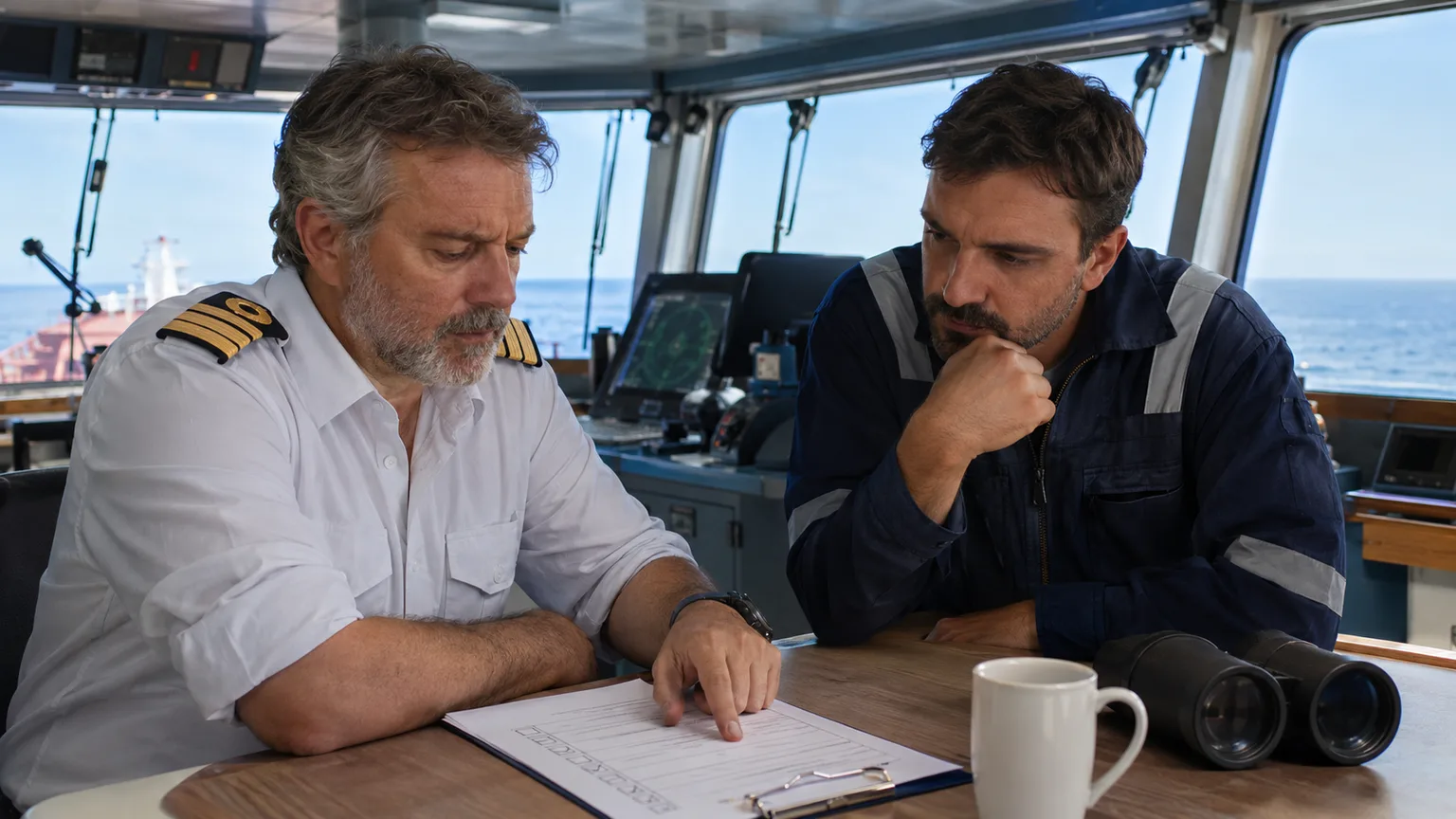
Illustrative planning scene, not an actual incident or a technical procedure. HSSE TIPS branding appears only in the designed poster footer.
Your experience matters
Share your thoughts on this page
Have a question, a useful experience or a suggestion? Add your input below.
Comments are public. Keep them respectful and relevant. Do not share contact details, confidential information or emergency reports.
Comments on this page
Loading comments…