Security · HSSE Watch
Relayed Mayday: Respond Promptly, Preserve the Report
Published
Events: 1 November 2026 at 15:09 UTC and 23:47 UTC · UKMTO archive issue dates: 1 and 2 November 2026 respectively
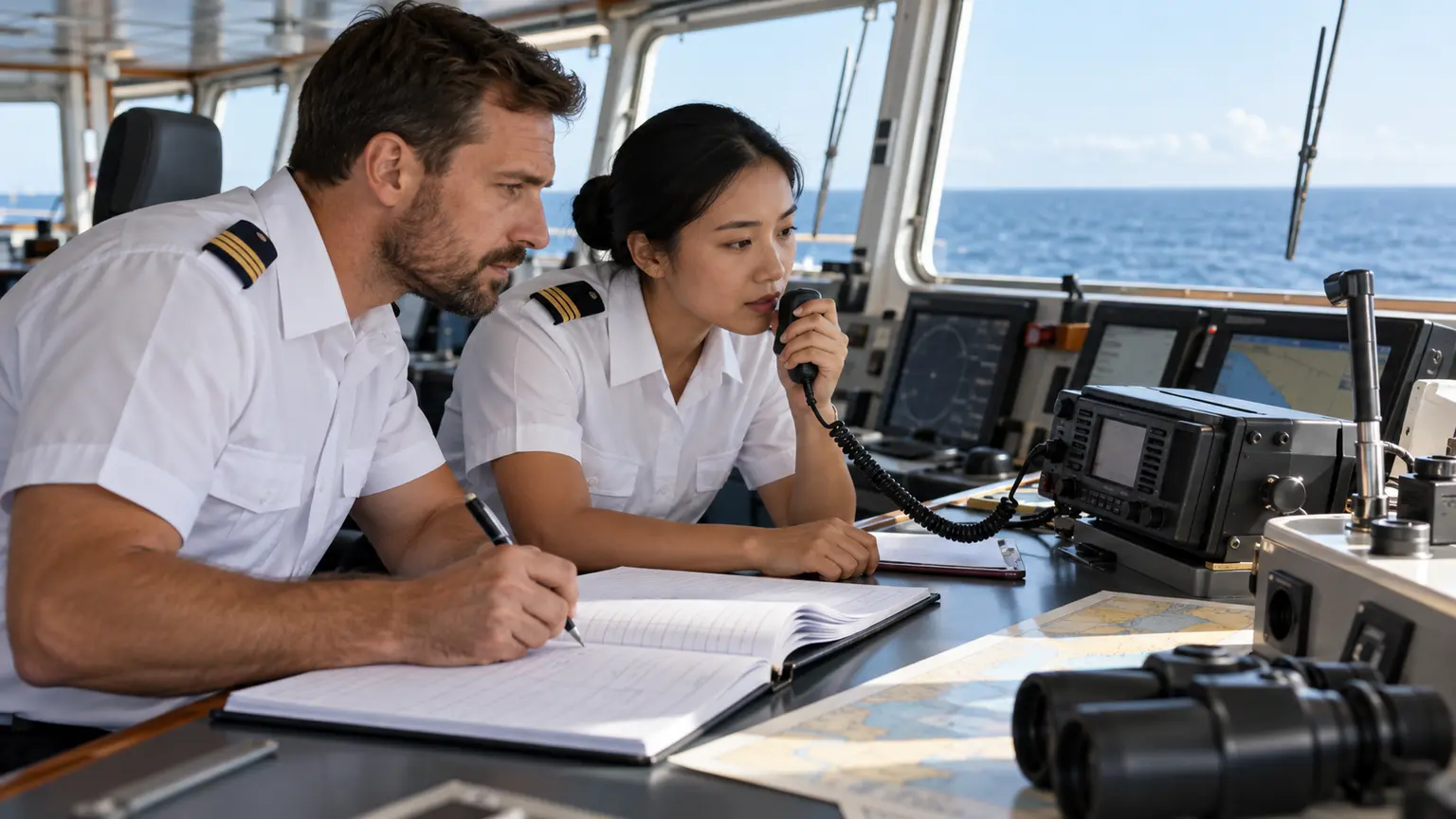
An urgent report can require action before every detail is known. The safeguard is not to wait for a perfect account: it is to escalate promptly through the approved response while keeping the original message, its source and its uncertainty intact.
Two new warnings, two different information chains
UKMTO Warning 191-26 records an event in the Strait of Hormuz on 1 November 2026 at 15:09 UTC. A merchant vessel’s Master relayed a VHF Channel 16 Mayday saying another vessel had been struck by an unidentified projectile. The warning does not name that vessel or provide its crew or environmental status.
Warning 192-26 records a separate reported tanker strike on 1 November at 23:47 UTC, east of Ras Al Khafji in the Arabian Gulf. It reports two unidentified projectiles striking the port side, personnel accounted for and no environmental impact reported at that time. It does not establish an injury assessment or identify an attacker.
The archive lists issue dates of 1 November for 191-26 and 2 November for 192-26. Publication day is not necessarily event day. Authorities are investigating; these warnings are not completed causal findings. Do not link either unnamed vessel to Al Mayeda or combine the two reports without explicit authoritative confirmation.
Why the relay matters
A bridge team may hear a distress message, receive a company update and later see an authority warning. Each has a different role. Preserving that chain helps responsible people act on urgent information without turning a relayed account into an invented eyewitness statement.
The following are original management applications, not additional UKMTO orders or findings of failure. They do not prescribe radio phraseology, rescue manoeuvres or a safe transit route. Use qualified personnel, current authority directions and approved bridge, distress and security procedures.
Escalate without waiting for a complete investigation
Ensure the watch team knows how to alert the Master and appropriate responsible authorities under the applicable arrangements. Treat an incomplete distress report as information requiring the competent response—not as permission to ignore it until a vessel name is published.
At the same time, do not direct an unplanned approach, boarding or independent investigation. Assistance decisions must account for the actual conditions, the safety of those involved and competent coordination. A public learning article cannot determine the correct manoeuvre.
Record what was heard, not what seems likely
Capture the message, receipt time, channel and source through authorized arrangements. Distinguish the time of the reported event from the time your team received or forwarded the information. If a detail was unclear, retain that uncertainty rather than silently resolving it.
Separate direct observation, information relayed by another person and interpretation. A later summary should preserve the material meaning, not add a vessel type, weapon or casualty outcome that the source did not establish.
Keep simultaneous incidents on separate records
Use report references and controlled updates to prevent one vessel’s status being copied into another incident. Similar words, dates or regional geography are not enough to establish a match. Have an owner check superseding official products and explain exactly what changed.
Keep the crew, environment and equipment fields distinct. A head count is not a medical assessment, and a dated report of no environmental impact is not an unlimited assurance about future conditions.
Exercise the communications handover safely
Use a clearly labelled tabletop exercise to test who records the report, who escalates it and who follows the next update. Include a handover between shifts and two similar-looking reports. Correct any point where source attribution or event time disappears.
Never transmit a simulated distress call on an operational emergency channel for an informal drill. Coordinate exercises through approved training arrangements, and protect sensitive ship-security information when sharing lessons.
Bridge and leadership questions
- Who escalates an incomplete but urgent report?
- Can we identify what was directly observed and what was relayed?
- Have event, receipt and issue times stayed separate?
- Could another incident’s crew status have entered this record?
- Who checks the next official update and briefs the incoming watch?
Video availability
No directly relevant authoritative embeddable video was verified for these warnings. Unrelated attack clips and informal radio demonstrations have not been inserted. Consult the original warnings and approved training instead.
Sources and dates
- UKMTO Warning 191-26 — original PDF ↗Event: 1 November 2026, 15:09 UTC; source field: Merchant Vessel. Archive issue date 1 November, time 19:12 with timezone unstated.
- UKMTO Warning 192-26 — original PDF ↗Event: 1 November 2026, 23:47 UTC; source field: Master. Archive issue date 2 November, time 02:35 with timezone unstated.
- UKMTO — 2026 warning archive ↗Select November to see the issue-date fields and original documents. Checked 2 November 2026.
- UKMTO — BMP Maritime Security ↗Existing defensive risk-management guidance, not findings about either vessel.
Sources checked 2 November 2026. Source statements and original practical applications are distinguished above. Always consult current official advice and applicable local requirements.
Share the lesson
Open the separate 9:16 Pinterest poster
Illustrative prevention visual, not an actual incident or a technical procedure. HSSE TIPS branding appears only in the designed poster footer.
Your experience matters
Share your thoughts on this page
Have a question, a useful experience or a suggestion? Add your input below.
Comments are public. Keep them respectful and relevant. Do not share contact details, confidential information or emergency reports.
Comments on this page
Loading comments…