Security · Maritime Operations
From LNG Tankers to Tugs: Bring Every Vessel into the Security Review
Published
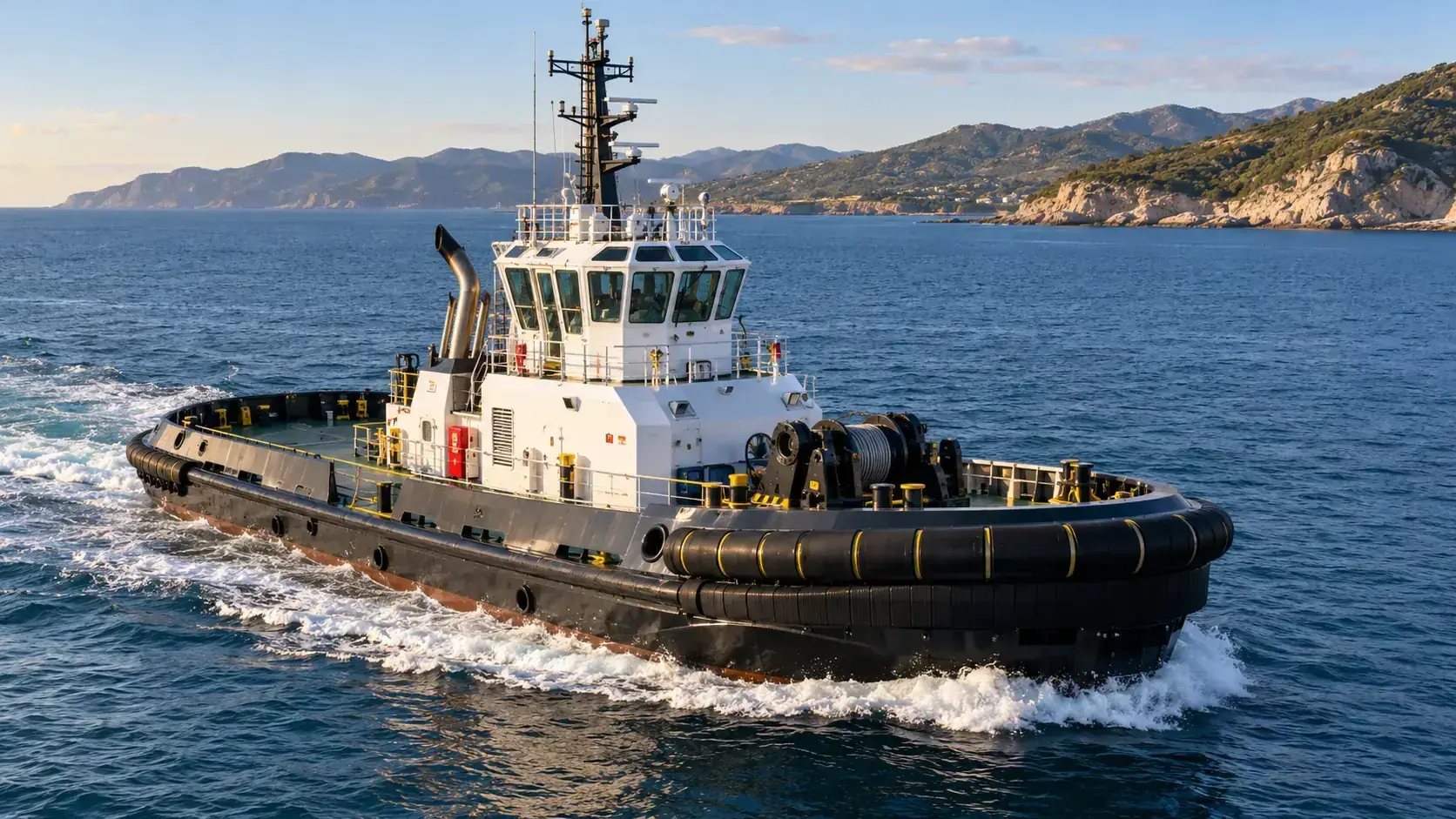
A fleet security review should not stop at its largest cargo ships. New UKMTO reports concern an LNG tanker and a tug, with different reported events and different immediate readiness questions. Support craft and their crews belong in the operational conversation.
What the new UKMTO reports say
| Warning and incident date | Reported event | Important limits |
|---|---|---|
| 176-26: 17 October, 10:30 UTC | An LNG-tanker Master reported a skiff carrying seven people. Two shots were fired at the tanker; its armed security team fired two warning shots, after which the craft changed course. | The PDF places it 140 nautical miles southeast of Al Mukalla, Yemen. UKMTO’s listing says southwest. The geographical discrepancy is unresolved here. |
| 177-26: 18 October, time TBC | A southbound tug northeast of Khor Fakkan, UAE, reported two unknown projectile strikes, damage and continued passage. One minor casualty was reported. | No vessel name, attacker, detailed damage assessment or environmental assessment is provided in the warning. |
These are UKMTO accounts of received reports while authorities investigate, not final findings about cause or responsibility. Nothing in the reviewed warnings establishes an attacker’s identity, a boarding or a hijacking. The security team’s reported response is incident history, not a recommended tactic.
Keep incident dates and document dates distinct
Both primary PDFs were checked as text and rendered pages on 18 October 2026. Their creation metadata is dated 17 October for 176-26 and 18 October for 177-26. Those dates do not establish exact publication times, which are not printed separately.
UKMTO’s listing groups 177 under 17 October, but the warning’s incident field expressly says 18 October. This article uses that printed incident date and leaves the time unconfirmed. It does not silently resolve the listing inconsistency. Similarly, do not turn the conflicting Al Mukalla directions into a precise vessel position. Obtain current clarification through official maritime-security channels before operational use.
Why the tug report deserves a fleetwide review
The practical lesson is about exposure, not vessel size. When a business reviews security for a voyage, ask which workboats, support vessels and contracted marine services may be involved in the same operational setting. Check that those responsible for them receive relevant current information and have a way to escalate concerns.
This does not mean every vessel has identical equipment, legal duties or protective arrangements. Review each operation through the responsible Master, company security function and applicable authority requirements. IMO’s existing guidance treats security as case-specific risk management and recognises the Master’s professional judgement. Do not assume that every tug falls within the same statutory ISPS scope as an internationally trading cargo ship.
Make people and medical readiness part of the briefing
A reported casualty should lead an assurance team to check its own approved arrangements: who accounts for people, who can obtain appropriate medical advice and how assistance is requested if communications or the normal shore contact are unavailable. Confirm responsibilities before the next operation, rather than relying on one familiar individual to coordinate everything.
Keep personal medical information confidential and communicate through the authorised channels. The public warning does not identify the casualty or establish the care required. Do not infer a medical evacuation, a fatality or a particular injury from the phrase used in the report.
Continued passage is not proof that the vessel is fully assessed
For an internal readiness review, separate the vessel’s ability to make way from the competent assessment needed for its next task. Ask who can decide whether an inspection, assistance or operational restriction is required under the vessel’s emergency arrangements. A short public status report cannot substitute for that decision.
Likewise, silence about pollution is not confirmation that no environmental impact exists. Ensure the approved plan identifies how suspected releases are escalated to the responsible specialists and authorities. Do not send personnel into damaged or exposed areas merely to fill a reporting gap.
Use established guidance and usable reporting channels
UKMTO’s BMP Maritime Security page points to a threat- and risk-management process for voyage planning and incident prevention and reporting. Use the current guidance alongside vessel-specific plans. A new warning does not, by itself, announce a new statutory security level, close a route or guarantee assistance.
UKMTO’s reporting page provides the established reporting arrangements. Check that the duty team can locate current contacts and forms, knows the backup contact and can distinguish an initial notification from subsequent updates. Keep the warning identifier with each record so that later information is attached to the correct incident.
Questions for leaders and marine teams
- Have support vessels and contractors been included in the relevant security review?
- Who decides whether the next voyage or marine task needs reassessment?
- Can the duty team explain crew accounting, medical escalation and backup communications?
- Who verifies vessel condition and any environmental concern before the next operation?
- Have we kept confirmed facts, received reports and unresolved discrepancies separate?
Video note
No directly relevant authoritative video with a verified publisher, title and embeddable URL was found for these warnings. Unverified attack clips and unrelated maritime footage have not been added.
The operational questions are original Worksite Safety Hub learning applications, not additional findings that any operator failed to take these steps. This article is not a navigation product, security tactic, medical procedure or substitute for current authority instructions.
Primary sources and dates
- UKMTO Warning 176-26 — Attack (PDF) ↗Incident: 17 October 2026, 10:30 UTC; source: Master. PDF creation metadata: 17 October. No separate publication timestamp is printed.
- UKMTO Warning 177-26 — Attack (PDF) ↗Incident: 18 October 2026, time to be confirmed; source field: Verified. PDF creation metadata: 18 October. No separate publication timestamp is printed.
- UKMTO — Recent incidents ↗Checked 18 October 2026. The listing and Warning 176-26 PDF disagree on the direction from Al Mukalla. The listing groups 177 under 17 October although its incident field says 18 October.
- UKMTO — BMP Maritime Security ↗Existing threat- and risk-management guidance; not a new threat-level declaration or a finding about either attack.
- UKMTO — Reporting formats ↗Existing initial, daily, final, incident and after-action reporting arrangements.
- IMO — Maritime security questions and answers ↗Supporting risk-assessment principles and the Master’s professional judgement. Applicable statutory scope must be checked for each vessel.
Checked 18 October 2026. PDF metadata is used only to describe document creation, not as a precise publication timestamp. Consult current official products for updates.
Share the lesson
Open the separate 9:16 Pinterest poster
The poster is a fictional AI-generated vessel illustration, not an image of either reported attack. HSSE TIPS branding appears only in its designed footer.
Your experience matters
Share your thoughts on this page
Have a question, a useful experience or a suggestion? Add your input below.
Comments are public. Keep them respectful and relevant. Do not share contact details, confidential information or emergency reports.
Comments on this page
Loading comments…