Security · Maritime Operations · Material Update
Tanker Projectile Reports: Verify Before the Next Move
Published · Updated
Warnings checked 23 October 2026 · Incident dates 20–21 October 2026 · Reported information with investigations continuing
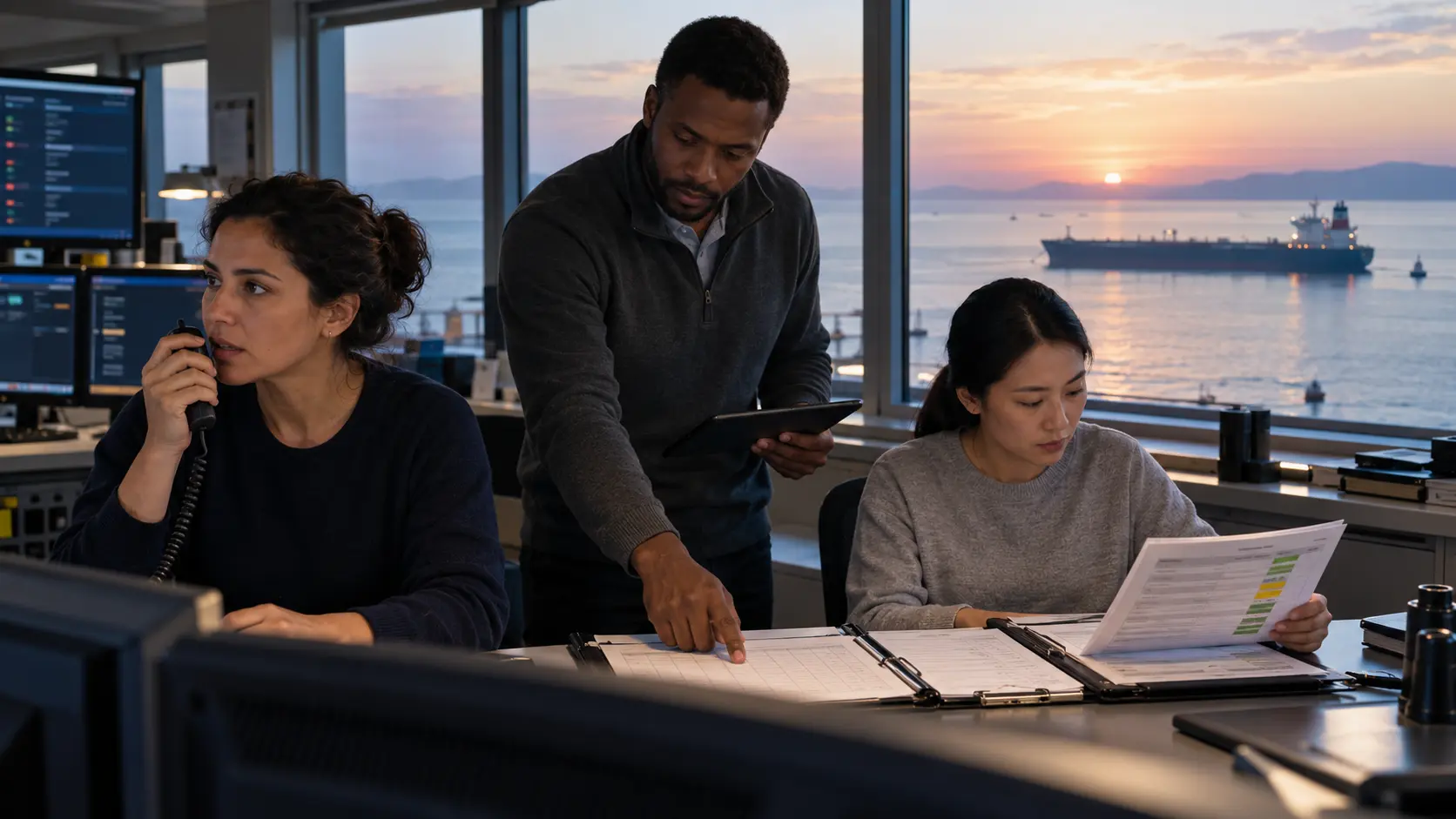
Two new UKMTO warnings describe tanker strikes in different locations and with different reported outcomes. One report includes a fire that was extinguished and a vessel at anchor. The other was received later and says no damage was reported. Combining them into one simplified headline would remove information needed for safe decisions.
Material update: two separate tanker reports
This article was first published on 17 October 2026 following two earlier Al Jubayl tanker reports. It has now been materially updated at the same canonical URL with UKMTO Warnings 179-26 and 180-26. The new warnings concern separate incidents near Bukha, Oman, and Al Faw, Iraq.
The official product URLs are dated 21 October 2026, but neither warning prints a separate publication time. Treat the incident time, the time the report reached UKMTO and the time your team received it as different records.
| Warning | Reported event | Reported status |
|---|---|---|
| 179-26 | 21 October, 01:45 UTC; 11 nautical miles west of Bukha, Oman. Local authorities reported that an unknown projectile struck a tanker and started a fire. | Fire reported extinguished; tanker at anchor; all crew reported safe; no environmental impact reported at that time. |
| 180-26 | 20 October, 18:30 UTC; 30 nautical miles southeast of Al Faw, Iraq. The Master’s account was received as a time-late report and says an unknown projectile struck the tanker. | Crew reported safe; no damage or environmental impact reported. UKMTO says authorities are investigating. |
These are UKMTO accounts of received reports, not completed investigations. The warnings do not name an attacker or establish vessel identity, cargo, responsibility or a final pollution assessment. “No reported impact” is a status at that point in time, not an independent certificate that no release occurred.
Why the difference matters
A vessel that has fought a fire and is now at anchor presents a different verification task from a vessel whose Master reports no damage. Both may require a fresh voyage-security decision, but the evidence needed before the next movement is not identical.
The practical HSSE question is: what must be confirmed before people, cargo and the environment are exposed to the next step? A single status label such as “crew safe” cannot answer whether fire boundaries, propulsion, steering, navigation, communications, cargo containment or pollution controls remain reliable.
1. Preserve the incident timeline
Record the warning number, source, incident date and time, reported position and the time the duty team received the information. Mark a time-late report clearly. Do not silently rewrite a delayed report as a real-time picture.
During handover, separate confirmed facts, reported status, assumptions and unanswered questions. Assign an owner and review time to each operationally important unknown.
2. Treat “fire extinguished” as the start of verification
Use the vessel’s approved emergency arrangements and competent personnel to verify that the fire is out, boundaries remain effective and re-ignition or hidden damage is being monitored. Account for every person and confirm that anyone exposed receives appropriate assessment and support.
Do not send people into a potentially damaged space simply to complete an early report. The Master and responsible specialists should determine inspection access, isolation and monitoring requirements.
3. Confirm vessel condition before movement
Anchorage is a reported status, not proof that the ship is ready to sail. Confirm the condition of systems relevant to safe movement, including propulsion, steering, power, navigation, communications, firefighting equipment and any affected cargo or utility systems.
Similarly, “no damage reported” should remain attributed to the report until the appropriate inspection is complete. Define who accepts the evidence and who may release the next stage of the voyage.
4. Keep environmental verification separate
Check cargo and fuel containment, tank levels where relevant, bilge or deck-drain status, visible sheen or odour observations, and any alarms or monitoring available under approved procedures. Retain the time and method of each observation.
Know who must notify coastal, port, flag, company or environmental authorities if circumstances change. Do not delay life-safety action to collect non-essential environmental evidence.
5. Reassess the voyage and support chain
The Master and Company Security Officer should review current official information against the planned route, vessel condition, approved ship-security arrangements, port options and applicable authority instructions. Commercial urgency should not replace a documented professional judgement.
Include shore operations, agents, terminals, medical support and emergency contacts in the information chain where their role requires it. Confirm that the next port or support provider receives accurate limitations rather than an abbreviated “all safe” message.
6. Make reporting arrangements usable
UKMTO’s reporting page describes initial, daily, final, incident and after-action reporting arrangements for its Voluntary Reporting Area. Check that the duty team can find current contacts and forms without relying on an old screenshot or personal device.
BMP Maritime Security and IMO security information provide the broader risk-management context. This article does not prescribe a navigation route, defensive tactic or equipment setting.
Leadership and crew-briefing questions
- Can we show the event time, report time and receipt time separately?
- Which facts are confirmed, reported, assumed or still unknown?
- What evidence is required before the vessel moves?
- Who verifies that an extinguished fire cannot re-ignite?
- How will a later damage or pollution finding reach the right authorities?
- What new information would cause the voyage decision to be reviewed again?
Video availability
No directly relevant authoritative video for Warnings 179-26 and 180-26 was verified at publication, so no attack footage or unrelated maritime clip has been inserted.
The controls and questions above are original Worksite Safety Hub learning applications. They do not imply that any named or unnamed operator failed to take these steps. Always consult current official products, relevant authorities and approved vessel plans.
Primary sources and dates
- UKMTO Warning 179-26 — Attack (PDF) ↗Incident 21 October 2026 at 01:45 UTC, 11 nautical miles west of Bukha, Oman. UKMTO reports a tanker struck by an unknown projectile, a fire extinguished, the vessel at anchor, all crew safe and no environmental impact reported at that time.
- UKMTO Warning 180-26 — Attack (PDF) ↗Time-late Master report for an incident on 20 October 2026 at 18:30 UTC, 30 nautical miles southeast of Al Faw, Iraq. UKMTO reports crew safe and no damage or environmental impact reported.
- UKMTO — Voluntary Reporting Scheme and incident reporting ↗Existing official reporting arrangements and contacts; checked 23 October 2026.
- UKMTO — BMP Maritime Security ↗Existing official risk-management guidance and publication links; checked 23 October 2026.
- IMO — Frequently asked questions on maritime security ↗Supporting official context on case-specific security assessment and the Master’s professional judgement; not evidence about either incident.
Sources checked 23 October 2026. UKMTO’s reports, their stated status and original practical applications are distinguished above. Check current UKMTO and authority information before decisions.
Share the lesson
Open the separate 9:16 Pinterest poster
The poster is a fictional AI-generated planning illustration, not actual attack footage. HSSE TIPS branding appears only in the designed footer.
Your experience matters
Share your thoughts on this page
Have a question, a useful experience or a suggestion? Add your input below.
Comments are public. Keep them respectful and relevant. Do not share contact details, confidential information or emergency reports.
Comments on this page
Loading comments…