Safety · HSSE Watch
Urea Silo Safety: Check the Material Before Anyone Enters
Published
WorkSafe alert published 30 October 2026 · Incident date and injury outcome not specified in the alert
A silo that has handled one bulk material safely is not automatically suitable for another. When a blockage appears, the most important question is not how quickly someone can reach it. It is whether the storage system and recovery method keep people out of danger.
What the new alert says
WorkSafe Victoria published a Silo Safety Alert on 30 October 2026. It describes a farmer entering a silo to dislodge clumped urea using an internal ladder. A crust beneath him collapsed and he became engulfed in the lower cone. The alert does not give the incident date or injury outcome; this article does not infer either.
The regulator highlights material-specific risks: urea absorbs moisture, may clump and, in conditions including dampness or heat, can release ammonia. Adhered material can also increase wall loading. The alert warns against damaging silo walls to free a blockage.
Why this reaches beyond farms
Fertilizer distribution, utilities, manufacturing and other bulk-handling operations all face a similar management question: has the material changed while the equipment is being treated as unchanged? The following are original planning applications, not additional incident findings or an entry procedure.
Make a material change an equipment review
Before accepting a different product, bring operations, procurement and the equipment specialist together. Check the current safety data sheet and obtain competent confirmation that the vessel, supporting structure and discharge arrangement suit the intended material. Record the evidence against the specific asset, not merely the name of a supplier.
A delivery schedule is not engineering acceptance. If suitability cannot be demonstrated, arrange an assessed alternative rather than allowing the material to arrive first and leaving operators to solve the consequences. Include temporary storage in the same review.
Design the job around avoiding entry
Ask how flow problems will be identified and managed without putting a person inside. Agree the escalation route before a blockage occurs, including who can authorize specialist help or suspend use. Repeated blockage should trigger review of the system rather than repeated improvisation.
Restrict unauthorized access and make the limit of routine operator work unambiguous. An available ladder does not establish that climbing or entry is safe. Do not stand on stored product, strike the vessel or attempt an improvised clearing method.
Keep separate hazards separate
A satisfactory atmosphere result does not establish that stored material cannot move. A stopped auger does not establish that filling cannot restart. A visible gap does not establish that material is absent from the walls. Have competent people identify each credible source of harm and verify its control independently.
For any unavoidable entry, the responsible specialists must determine applicable confined-space requirements, isolation, stored-material control, atmosphere assessment, access and rescue arrangements. A general article cannot prescribe gas-test limits, protective equipment or a safe entry configuration for a particular silo.
Plan response before people are exposed
Test whether the emergency service, specialist rescue capability, communication and access arrangements can actually support the location. Do not count a telephone number as proof of a workable rescue plan. Include lone and after-hours work in the review.
If someone becomes trapped, raise the alarm and follow the established emergency arrangements. Do not enter or disturb the vessel to attempt an unplanned rescue. Decisions about material removal or structural intervention belong to competent responders working to the actual conditions.
Leadership and toolbox questions
- What proves this silo suits this product?
- Who can stop a delivery when acceptance evidence is missing?
- What is our approved response to the first sign of poor flow?
- Could someone mistake a ladder, permit or gas test for complete protection?
- Has rescue readiness been tested for this location?
Authoritative video: silo confined spaces
SafeWork NSW embeds the video below as Silo Safety (Part 2) – Confined spaces. It provides general silo learning, not footage of this event or a urea-specific rescue procedure. Verify it on the linked regulator page.
Open the official video directly.
Sources and dates
- WorkSafe Victoria — Silo Safety Alert ↗Published 30 October 2026; incident date and medical outcome not provided.
- SafeWork NSW — Silo safety and official video series ↗Existing prevention guidance and embedded confined-space video, checked 31 October 2026.
Sources checked 31 October 2026. Source statements and original practical applications are distinguished above. Always consult current official advice and applicable local requirements.
Share the lesson
Open the separate 9:16 Pinterest poster
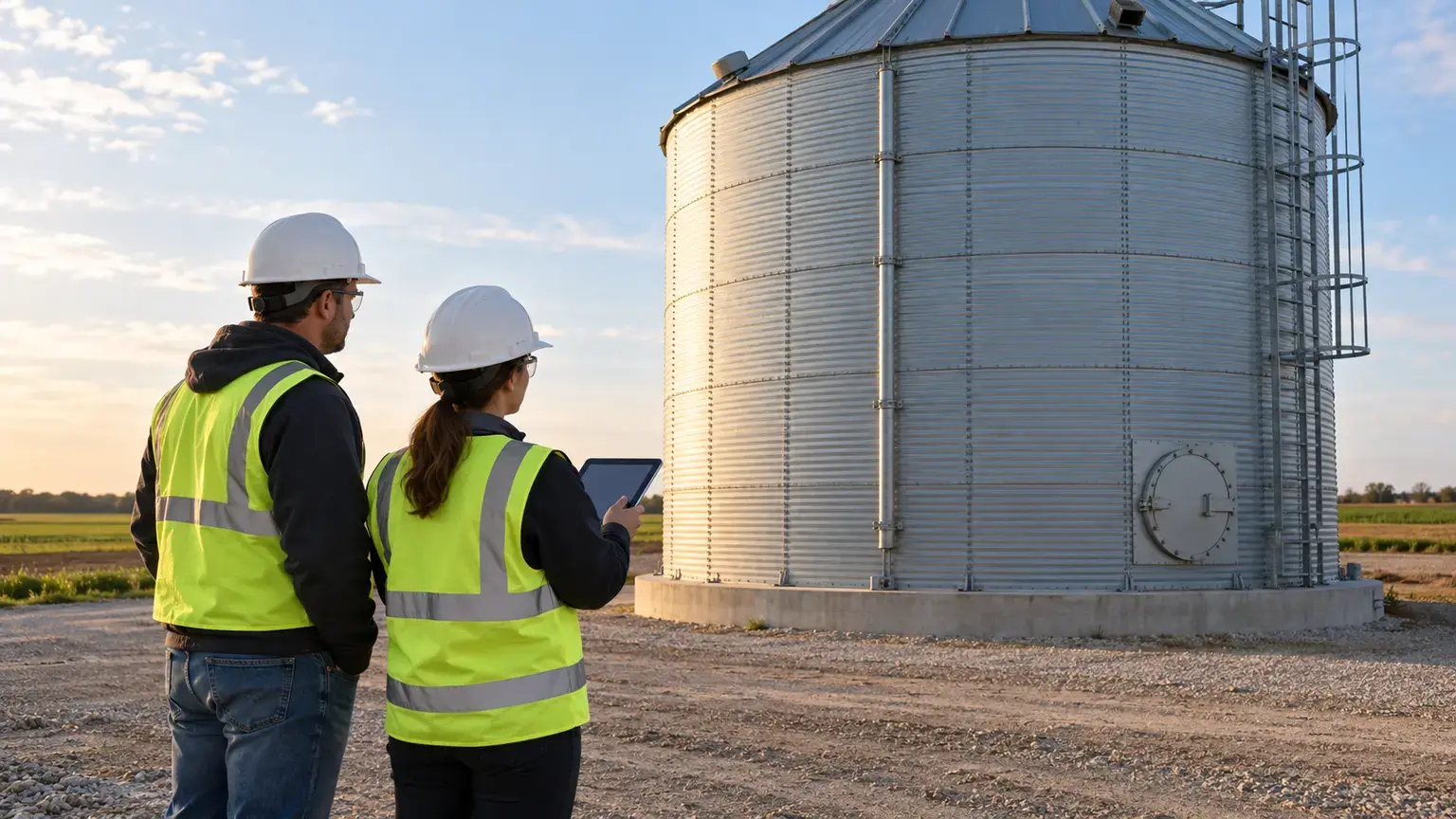
Illustrative prevention visual, not an actual incident or a technical procedure. HSSE TIPS branding appears only in the designed poster footer.
Your experience matters
Share your thoughts on this page
Have a question, a useful experience or a suggestion? Add your input below.
Comments are public. Keep them respectful and relevant. Do not share contact details, confidential information or emergency reports.
Comments on this page
Loading comments…