Safety · Construction & Building Safety · 7 min read
England’s Unsafe Cladding Bill: Prepare for Accountability, Deliver Safe Remediation
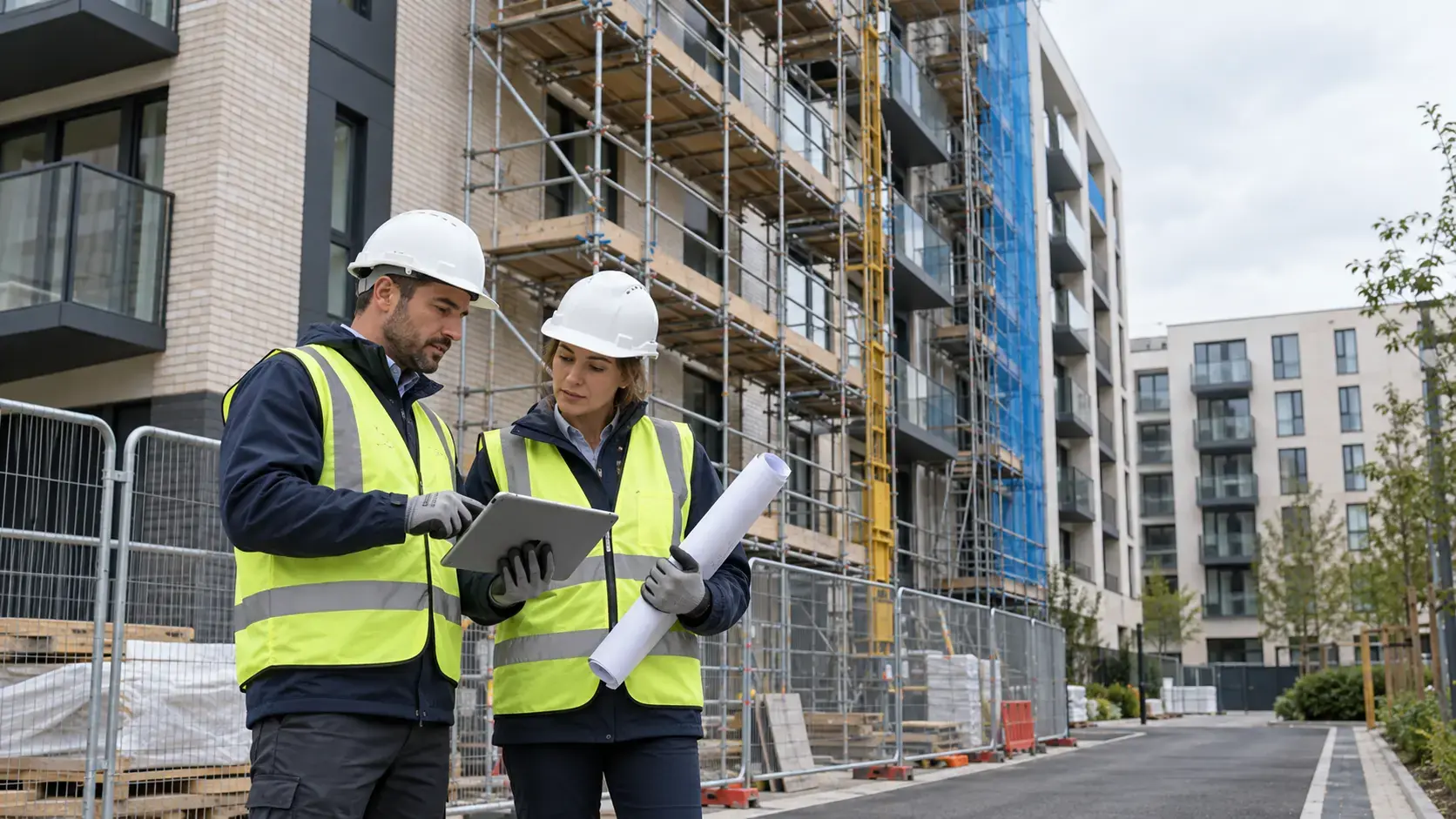
Removing a dangerous façade should reduce risk, not transfer it to residents, workers or neighbours. England’s new cladding bill puts accountability in the spotlight; HSSE teams can use that signal to check whether assessment, design and construction controls form one workable plan.
What changed on 14 October 2026
The Building Safety (Remediation of Unsafe Cladding etc) Bill was introduced in the House of Commons on 14 October 2026. Parliament lists Bill 155 of the 2026–27 session as introduced. It is proposed legislation, not an enacted Act. Follow its passage and commencement arrangements before treating proposals as new legal duties. Follow the official bill ↗
The government’s release, also published on 14 October, describes proposed duties to identify, assess and fix unsafe buildings without delay; stronger enforcement, including penalties up to £500,000 for failure to comply with a Remediation Order; and a backstop allowing third parties to act when responsible entities persistently fail.
It also proposes a medium-rise residential register in England, more consistent evidence-based external-wall appraisals and remediation plans shared with residents. The government’s expectation is that buildings over 11 metres with unsafe cladding are fixed, or have a clear completion date, by the end of 2029. That is not an enacted universal completion deadline. Read the government announcement ↗
Why HSSE teams should act before the bill becomes law
Unclear ownership, disconnected reports and unresolved design details can leave a known risk without a deliverable solution. A proposed enforcement change is a useful assurance trigger: can your organisation show who owns each action, what evidence supports the chosen approach and what protects people while work proceeds?
This article’s regulatory discussion concerns England. Other countries and UK jurisdictions have different arrangements. The broader planning lessons apply wherever repair work takes place in an occupied building; use local competent advice and applicable requirements.
1. Establish one evidence trail, not a stack of unrelated reports
BSR’s existing remediation toolkit is for applications concerning existing higher-risk buildings. It calls for construction-ready, coordinated information that explains the route to Building Regulations compliance. A PAS 9980 appraisal may support a proposal, but is not a substitute for demonstrating compliance. The toolkit and video are supporting guidance, not a new legal requirement created by today’s bill. Use the official pre-submission checklist ↗
As a practical assurance step, build a document register linking the current building condition, risk findings, design response, responsible specialist, approval status and verification record. Resolve conflicting drawing revisions before procurement or work. Do not let a generic product certificate stand in for evidence about the actual assembly and its interfaces.
2. Keep the occupied building safe while the façade changes
The government’s existing Code of Practice for the remediation of residential buildings, updated 12 December 2025, is guidance for England. It expects defined responsibilities, resident engagement and protection of residents’ safety and security. It highlights keeping fire-risk assessments current, maintaining escape arrangements and considering noise, ventilation and disruption. Read the Code of Practice ↗
For each construction phase, ask the competent team to explain how temporary conditions affect the fire strategy and emergency arrangements. Check that temporary access, hoarding, scaffolding, deliveries and waste storage do not defeat the planned protections. Assess changes before introducing them; a safe final design does not automatically make every intermediate condition safe.
3. Verify the work controls at the point of use
The following are practical HSSE review prompts, not a prescribed engineering specification:
- Access and falling objects: verify selected access equipment, inspection arrangements, exclusion areas and separation of residents from work.
- Fire and ignition: review hot work, combustible temporary materials, waste accumulation and the response to any impairment of fire protection.
- Dust and substances: assess the materials being disturbed before removal; specify exposure controls, hygiene and waste handling appropriate to the findings.
- Interface risks: coordinate deliveries, lifting, electrical work and trades so that one activity does not undermine another’s barriers.
- Weather: define competent limits for access equipment, façade work and temporary protection; give supervisors clear stop-and-secure instructions.
- Security: prevent unauthorised access through temporary works and retain a clear route for reporting urgent defects.
Observe an actual planned task with the contractor. Ask the worker to show the control, not simply point to a signed method statement.
4. Make resident communication an operational control
A resident may notice a blocked route, noise, a changed alarm arrangement or someone entering the building before the project office does. Provide a named contact, accessible communication methods and an escalation route for urgent concerns. Record what changed and who must respond.
Before a disruptive phase, explain the location, timing and likely effect in plain language. Include people whose mobility, hearing, vision, language or other circumstances affect how information reaches them. Ask whether the intended message was understood. A notice posted once is not evidence that everyone can act safely.
5. Inspect before concealment and close the handover loop
Agree inspection hold points for safety-critical work before it is hidden. Establish who can release each hold point, what evidence is required and how design changes are assessed. Keep records attributable to the location and current design rather than relying on undated general photographs.
At handover, reconcile the work performed with the design, approvals, inspection records, maintenance information and unresolved actions. Assign an owner and due date to every remaining issue. Completion is a verified state, not merely the day contractors leave.
Leadership and toolbox questions
- Who has the authority and resources to move the remediation plan forward?
- Which risks remain open, and what protects occupants today?
- Do the appraisal, design, specification and method agree?
- What changes to escape, fire protection or access occur during this week’s work?
- Which task must stop if a temporary safeguard is lost?
- Can a resident report a serious concern and receive a prompt, accountable response?
- What evidence will prove critical work was installed correctly before it is concealed?
Official regulator video: prepare a coherent application
BSR’s official remediation toolkit provides Remediation applications — Getting your application ready for assessment, presented by Jane Carroll, Head of external remediation. It supports application preparation for existing higher-risk buildings; it does not explain the new bill or replace professional advice.
Open the video on YouTube ↗ · Verify the video on the regulator’s official resource page ↗
Primary sources
- MHCLG, BSR and Homes England — Major milestone reached in ending building safety crisisPublished 14 October 2026; bill introduction and proposed measures
- UK Parliament — Building Safety (Remediation of Unsafe Cladding etc) BillBill 155, introduced 14 October 2026; monitor amendments and commencement
- MHCLG — Code of Practice for the remediation of residential buildingsUpdated 12 December 2025; existing guidance for England
- Building Safety Regulator — Remediation toolkit and official videoSupporting application guidance; no publication date shown on the consulted page
Legal status checked on 14 October 2026. This is an HSSE planning article, not project-specific legal or engineering advice.
Your experience matters
Share your thoughts on this page
Have a question, a useful experience or a suggestion? Add your input below.
Comments are public. Keep them respectful and relevant. Do not share contact details, confidential information or emergency reports.
Comments on this page
Loading comments…