Product Reviews · Fire and Rescue Vehicles
Toyota RIV Review: Inside the Land Cruiser Firefighting Conversion
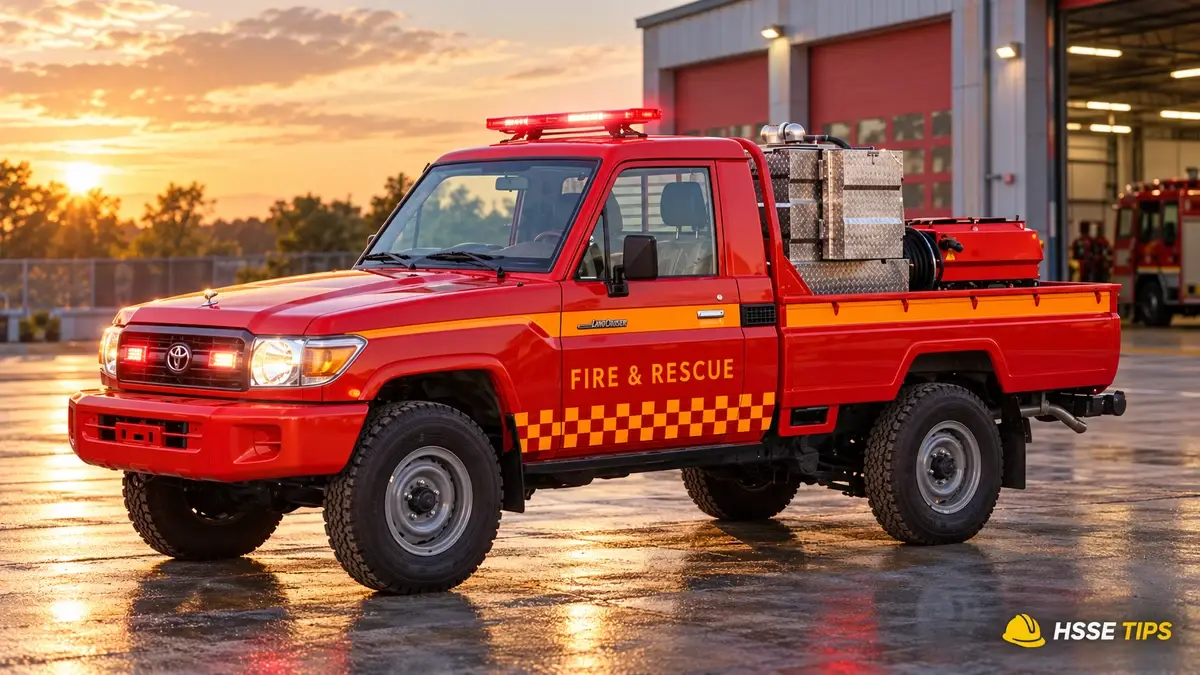
A useful first response begins with equipment that can be reached, deployed and supported by a trained crew. For a compact firefighting vehicle, the important question is how the chassis, extinguishing system and working layout fit the intended incident—not simply how the vehicle looks with its warning lights on.
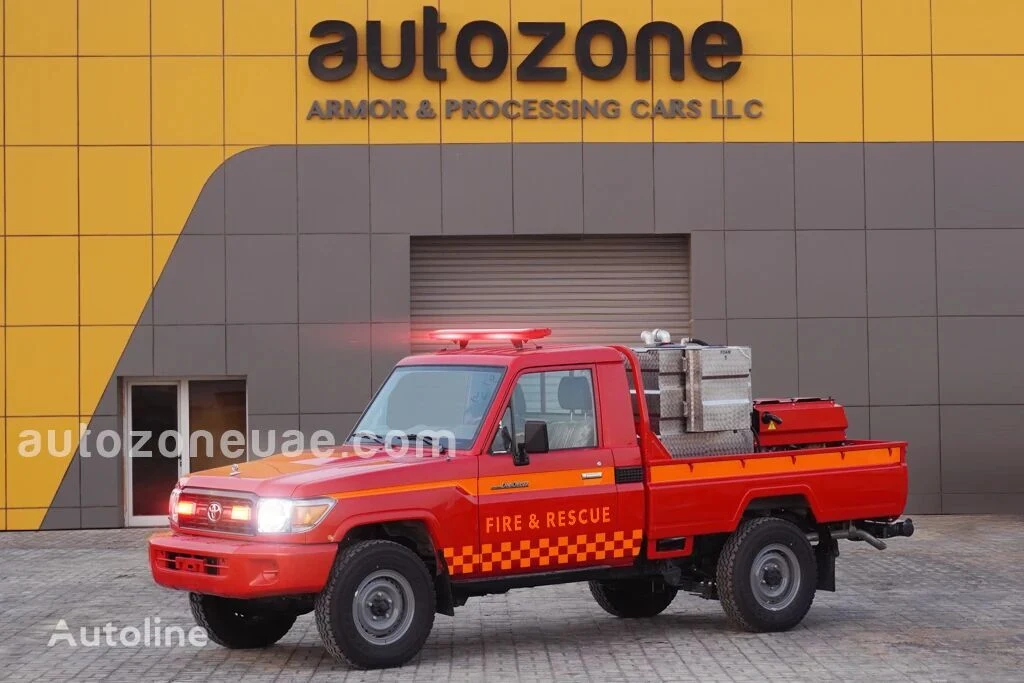
The Toyota Rapid Intervention Vehicle (RIV) Fire Truck advertised by Autozone UAE brings those elements together on a Toyota Land Cruiser platform. Its original photographs show a red single-cab pickup with an open-bed installation, a checker-plate tank assembly, a rear pump-control module and a hose reel. The seller describes water-pump, hose and foam-system equipment, with customization available.
This independently researched review examines that arrangement, explains its procurement implications and separates confirmed features from specifications needing a written build sheet. It does not claim personal operation, inspection or a measured firefighting test.
Affiliate Disclosure: Worksite Safety Hub may earn a commission if you make a qualifying purchase through links in this article. This does not change the price you pay.
EXPLORE THIS TOYOTA RIV FIRE TRUCK
Toyota Rapid Intervention Vehicle: Overview
Autozone Assembling LLC identifies itself as the manufacturer of the conversion and describes this RIV as Land Cruiser-based. The advertised vehicle is diesel-powered, manually shifted and presented with two axles. The photographs show a single-cab pickup rather than a crew-cab engine or enclosed rescue body.
The conversion’s appeal is its focused equipment arrangement. The cab carries the crew; the pickup bed carries the firefighting installation. The rear module puts the hose reel beside the operating panel, while the larger tank assembly sits immediately behind the cab. That visible layout provides a practical starting point for evaluating access, loading and deployment.
What Makes a Rapid Intervention Vehicle Different?
In this review, rapid intervention describes a vehicle configured for a defined initial-response task. It is not a universal tank size, pump output or certification class. A pickup-based RIV can concentrate selected equipment into a smaller vehicle format, with the final specification determined by the response plan.
Autozone markets this package for urban and rural firefighting and offers customer-specific equipment choices. The operational value of that flexibility is the ability to specify the agent, delivery equipment, crew and support arrangements together. It should be assessed as one part of the organization’s response resources.
“Rapid” does not establish a tested travel time, acceleration figure or extinguishing result. Likewise, the RIV name alone does not establish airport rescue and firefighting compliance. Those are separate questions requiring the relevant evidence.
Toyota Base Vehicle and Chassis Engineering
The seller confirms the Land Cruiser platform. The pictured body has the recognizable upright, single-cab pickup form associated with the Land Cruiser 70 family, but an exact Toyota chassis code or VIN is not supplied. This review therefore does not assign an HZJ, VDJ or GDJ designation to the advertised build.
That distinction matters because Toyota’s official specialized distributor, TGS, documents different Land Cruiser 79 pickup configurations and powertrains. Its current range includes both manual 4.2-litre diesel and automatic 2.8-litre turbo-diesel versions. Neither specification can be transferred to this RIV simply from its appearance.
TGS describes the 70 Series as a frame-based platform that can accommodate specialist equipment. For this conversion, the important engineering records are the actual chassis specification, equipment-mounting design and completed-vehicle weights. They connect the Toyota vehicle to the firefighting equipment it carries.
Firefighting Conversion and Equipment Layout
Autozone’s matching product page describes a Land Cruiser RIV, manual transmission, diesel fuel and customizable firefighting equipment. It also displays the reference EVT33. Treat that as a converter-page reference, not a verified Toyota engine or chassis code.
The original gallery shows a silver checker-plate assembly behind the cab, exposed connecting hoses, a red equipment module and a black hose reel toward the rear. The truck retains pickup-bed sides and a tailgate. This open arrangement is different from an enclosed body with full-height side lockers.
For a buyer, the useful assessment is a deployment demonstration: where the operator stands, how the hose pays out, how connections are reached and how the system is reset afterward. Confirm the precise quoted layout because the seller explicitly offers customization. A photograph of a completed example is not a substitute for an agreed supplied-equipment schedule.
Engine, Transmission and Vehicle Mobility
The listing confirms diesel fuel and a manual gearbox. Engine model, displacement, output, torque, gear count and emissions category were not established. The Toyota chassis and pump power source must be identified separately; the vehicle’s diesel designation does not specify how the firefighting pump is driven.
Autozone’s broader conversion information describes its RIV platforms as 4×4, and a 4WD marking is visible on the pictured tailgate. The actual transfer system, differential equipment and selected chassis variant should be confirmed in the build documents. No gradient, wading-depth or ground-clearance figure is assigned to the completed vehicle.
A loaded firefighting pickup should be evaluated in its intended service condition. Equipment mass, liquid load and route access belong in that assessment. No top-speed claim, response-time comparison or driving impression is offered here.
Water Tank and Fire Pump
The silver tank assembly is visible in the gallery, and the seller describes a water-pump installation. However, no confirmed water capacity, usable volume, pump model, flow rate or rated operating pressure is provided for this offer. Those figures should come from the final equipment sheet and identification plates.
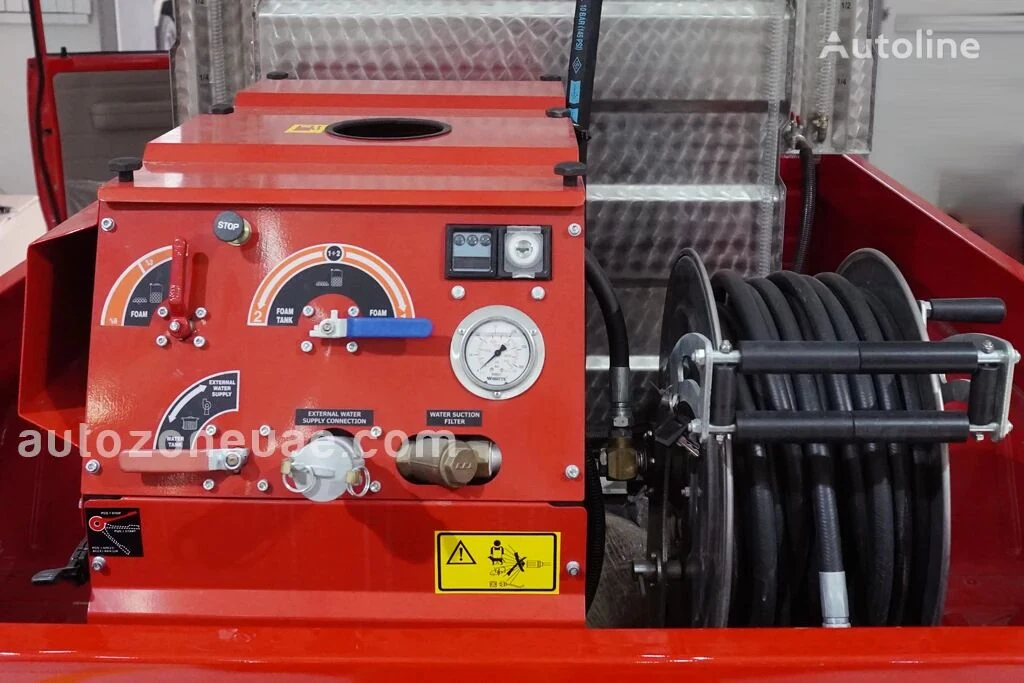
The control-panel photograph is particularly useful. It shows a pressure gauge, a stop button and labelled selections for the water tank and an external water supply. An external-water connection and a water-suction-filter label are also visible. These observations establish the pictured arrangement, not its tested duty point or suction performance.
The seller references CET Canada in its written description. That is not enough to identify the exact installed pump. CET’s own documentation explains that skid units have multiple standard features and configuration options. Ask for the pump manufacturer, model, power source, duty curve and acceptance-test record for the unit being quoted.
A complete water-delivery specification also identifies the hose and nozzle used for the stated duty. This connects an advertised pump figure to the equipment through which water will actually be delivered. No endurance calculation is possible here without verified usable tank volume and operating flow.
Foam Systems and Firefighting Accessories
Autozone describes foam systems as part of the RIV offering. The photographed panel has controls marked for foam and a foam tank, while a hose reel is mounted immediately alongside it. These are useful supporting details for the advertised firefighting configuration.
The reviewed information does not establish foam-tank volume, proportioning method, selectable concentration, agent compatibility, hose length or nozzle specification. Confirm those together. A foam control marking alone does not identify an approved agent or certify performance against a particular fire hazard.
No installed roof monitor, dry-powder system, compressed-air foam system or rescue-tool inventory is confirmed for this vehicle. Autozone’s separate products and general RIV descriptions are not an included-equipment list for this advertisement. The quotation should distinguish the base package from additions requested by the buyer.
DISCOVER THE FIREFIGHTING EQUIPMENT
Emergency Warning Lights and Communication Systems
The supplied photographs show an illuminated roof warning bar and grille-mounted warning lamps. Rear views show additional illuminated lamps. The exact warning-system manufacturer, light functions, siren specification and country configuration were not identified.
Two-way communications, scene-lighting output and public-address equipment also need confirmation. Agree the required functions and their operating controls in the supplied specification, then demonstrate them at handover. A warning-light photograph does not establish authorization for emergency-road use in a buyer’s jurisdiction.
Crew Cabin and Operator Environment
The exterior photographs establish a two-door single cab, with a separate rear equipment area. An approved seating count, complete cabin specification and detailed cockpit photographs were not supplied. No air-conditioning, radio, restraint or driver-assistance feature is assigned from a different Land Cruiser brochure.
During inspection, assess entry and exit, visibility and control access with the intended personnel and clothing. The crew requirement should be agreed alongside the vehicle’s role. A compact pickup format should not be interpreted as accommodating the personnel of a larger crew-cab fire engine.
Equipment Storage and Operational Practicality
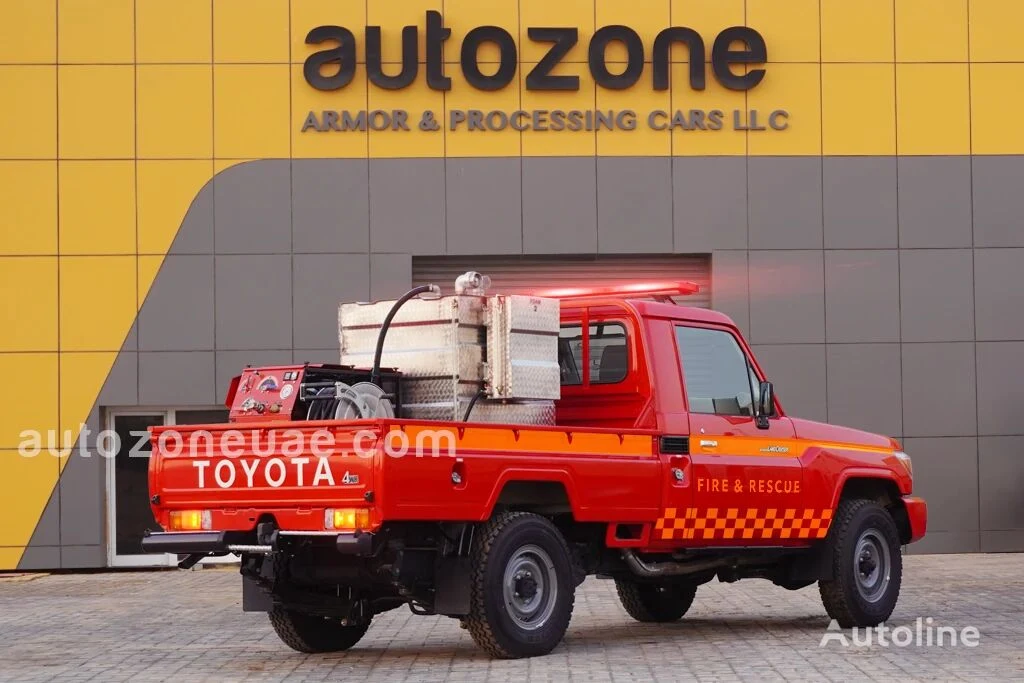
The rear view gives a clear impression of how the installation uses the pickup bed. The tank assembly occupies the forward section, with the operating equipment toward the tailgate. Exposed hose runs and the reel are visible, allowing a buyer to ask informed questions about access and retention.
Confirm the material and construction of the tanks, mounting frame, component protection and any dedicated stowage. Checker-plate surfaces do not establish the material of every tank or internal component. Agree an inventory of supplied hoses, nozzles, fittings and tools, plus their secured travel positions.
Rapid Intervention Applications
Municipal and rural fire services can evaluate the seller’s pickup-based package for a defined initial-response duty, subject to its final extinguishing specification and response plan. The water/foam equipment and hose arrangement are the relevant starting points.
Industrial brigades, mining operators and infrastructure teams should match the configured vehicle to site hazards, access routes and support resources. No hazardous-area approval, specialist chemical-response capability or acceptance for a particular oil-and-gas facility is established by this advertisement.
Airport buyers need a separate assessment. No ARFF certification or compliance report was identified for this offer. For example, the FAA publishes a dedicated ARFF vehicle procurement guide for its jurisdiction. The correct procurement requirements must come from the applicable authority; this review does not certify airport suitability.
Related reviews cover different configurations: the Toyota Hilux command pickup, IVECO FF135E22W and Mercedes-Benz Vito 114 Tourer. Their specifications and supplied equipment should be considered independently.
Safety and Operational Considerations
Commissioning should cover both the road vehicle and the firefighting installation. Request operating manuals, inspection records, an equipment demonstration and training appropriate to the final configuration. Confirm the approved vehicle weights and axle limits with crew, liquids and equipment accounted for.
No dimensions, gross vehicle weight, remaining payload or verified liquid capacities were supplied. A completed-vehicle weighing record and documented load plan are therefore more useful than a generic pickup payload figure. Ask the converter to identify the permitted loading and operating conditions.
Pump familiarisation should use the correct manufacturer’s instructions for the installed system, including its controls, pressure limits and maintenance requirements. Verify equipment retention, warning-system configuration and destination documentation through the normal fleet acceptance process. None of these checks implies an identified defect or an unverified certification claim.
Toyota RIV Technical Specifications
| Manufacturer / platform | Toyota / Land Cruiser, as described by the converter |
|---|---|
| Body pictured | Two-door single-cab pickup with open rear bed |
| Fuel / transmission | Diesel / manual, as advertised |
| Axles | Two, as listed |
| Drive evidence | 4WD rear marking pictured; converter describes RIV platforms as 4×4 |
| Converter | Autozone UAE / Autozone Assembling LLC |
|---|---|
| Equipment described | Water pumps, hoses and foam systems; customization offered |
| Rear installation pictured | Checker-plate tank assembly, pump-control module and hose reel |
| Controls pictured | Pressure gauge, stop button, water-source and foam selections |
| Connections pictured | Labelled external-water connection and suction-filter location |
| Warning equipment pictured | Roof warning bar and grille warning lamps |
Tank capacities, pump duty, exact engine, seating, dimensions and completed weights require the supplied build specification. No unverified numeric value has been inserted into these tables.
VIEW CURRENT PRICE & AVAILABILITY
Current Seller Offer — Verified 24 October 2026
Product Location: Ajman, United Arab Emirates. This is the vehicle-location field in the advertisement.
- Seller/converter: AUTOZONE UAE (Autozone Assembling LLC).
- Advertisement: VU41519.
- Asking price: on request; no numeric price advertised.
- Year: 2025, as listed.
- Condition: new, as advertised.
- Mileage: not specified; do not interpret this as a verified zero reading.
- Configuration: Land Cruiser-based RIV, diesel/manual, two axles; single-cab pickup and firefighting installation pictured.
- Equipment description: water pumps, hoses and foam systems, with customization offered. Exact supplied capacities and component models require confirmation.
- Availability: listing accessible when checked; stock status, build timing and readiness for dispatch require confirmation.
Export and shipping: Autozone’s own fleet-supply page states that it handles export documentation and shipping and advertises worldwide export services. This is a supplier service statement, not an agreed shipping contract for this RIV. No vehicle-specific destination, transport price, loading arrangement or delivery schedule was established.
Request written terms for the actual destination, including transport responsibilities, documents, collection or loading arrangements and applicable costs. Domestic delivery and warranty terms were not specified for this offer. Last verified: 24 October 2026.
Questions Buyers Should Ask Before Contacting the Seller
Obtain the exact Toyota model and VIN, production documents, engine and transmission identifiers, current mileage and approved seating. Request the completed dimensions, weighing records, axle limits and the equipment-mounting documentation.
For the conversion, ask for usable water and foam volumes, pump manufacturer and model, power arrangement, pressure/flow data, hose/nozzle specification and agent compatibility. Include the itemized accessories, test records, applicable approval evidence and a practical handover demonstration in the quotation.
Finally, agree servicing, parts support, inspection arrangements, operator training, warranty scope and delivery terms. Confirm who supplies the export and destination documentation, what transport costs are included and how payment and acceptance will be handled.
Buyer FAQs
What is this Toyota Rapid Intervention Vehicle?
It is an Autozone UAE firefighting conversion advertised on a Toyota Land Cruiser base, with diesel fuel and a manual gearbox.
What firefighting equipment is confirmed?
The seller describes water pumps, hoses and foam systems. The gallery shows a tank assembly, control module and hose reel; the supplied build must be itemized.
What is its water-tank capacity?
No verified volume was provided for this offer. Obtain the final tank specification and usable capacity from the converter.
Which fire pump is fitted?
The description references CET Canada, but no exact installed pump model or duty is confirmed. Request the identification plate and test data.
Is it certified for airport firefighting?
No ARFF compliance evidence was identified. Airport suitability requires assessment against the buyer’s applicable requirements.
Where is it located?
The vehicle advertisement gives Ajman, United Arab Emirates.
Does the supplier offer international shipping?
Autozone advertises export documentation and shipping services generally. The destination, costs and terms for this RIV require an agreed quotation.
How do buyers contact the seller?
Use the seller-offer buttons in this review. All commercial enquiries preserve the supplied affiliate URL.
Original Photos and Manufacturer Video
The three original advertiser photographs above come from the 11-image listing and retain their watermarks. They are hosted on this website under the publisher’s previously confirmed affiliate-media permission. The featured promotional artwork is separately captioned.
No exact-vehicle advertiser video was identified. The following official CET skid-unit video provides general equipment context only. It does not identify the pump on this RIV, show its supplied build or establish its performance. Use the actual installed-system instructions for training.
Sources and Editorial Basis
Checked 24 October 2026: advertisement VU41519 and its 11 photographs; the converter’s matching Land Cruiser RIV and fleet-shipping pages; Toyota specialized-distributor Land Cruiser information; CET skid-unit documentation; and FAA ARFF procurement guidance. General documentation is distinguished from this vehicle’s supplied specification. Original commercial source pages were used for research; all purchase enquiries use the affiliate buttons.
Final Verdict
This Toyota RIV’s clearest strengths are its Land Cruiser base, dedicated open-bed firefighting installation and the converter’s offer of a tailored specification. The original photographs make the tank, hose reel and operating-panel arrangement tangible for a prospective buyer.
The next step is a documented match between that package and the intended response duty. Confirm the chassis, pump, agent capacity and final equipment schedule, then arrange the appropriate inspection and acceptance demonstration. Explore the current offer with a clear operational requirement and a written supplied-build specification.
Join the Conversation
What matters most when selecting a rapid intervention vehicle—equipment access, water capacity, pump duty or mobility? Share your thoughts in the website’s comments below.
Your experience matters
Share your thoughts on this page
Have a question, a useful experience or a suggestion? Add your input below.
Comments are public. Keep them respectful and relevant. Do not share contact details, confidential information or emergency reports.
Comments on this page
Loading comments…