Product Reviews · Fire and Rescue Vehicles
IVECO FF135E22W Review: Inside the Magirus Fire Truck
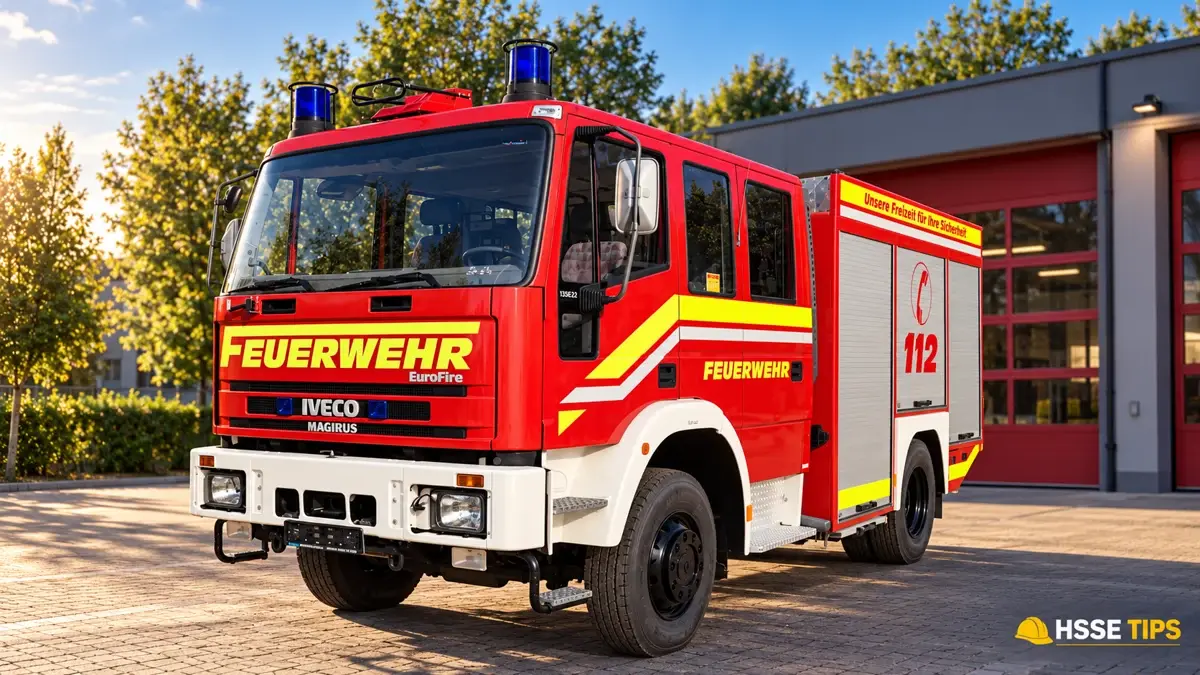
A fire truck earns its place in a fleet through the way its crew, water supply, pump and equipment work together. The IVECO FF135E22W brings those elements into a compact-looking, double-cab format, with a 4×4 chassis beneath a dedicated firefighting body.
The vehicle examined here is advertised with a Magirus TLF 16/25 body, six seats and a 2,400-litre water tank. Its original photographs reveal useful details of the rear pump station, locker layout and cab. For a fire department or industrial brigade, those details provide the beginning of a procurement assessment: what is installed, what is included, and how does it fit the intended response plan?
This independently researched review combines the exact advertisement, its photographs and relevant manufacturer background. It does not claim a personal inspection, road test, pump test or operational firefighting experience with this vehicle.
Affiliate Disclosure: Worksite Safety Hub may earn a commission if you make a qualifying purchase through links in this article. This does not change the price you pay.
IVECO FF135E22W: Professional Firefighting Vehicle
The FF135E22W designation identifies the IVECO vehicle in the advertisement. EuroFire and Magirus branding are visible on the front, while the seller separately names the firefighting body as Magirus TLF 16/25. Keeping the chassis and body identities separate is essential: a chassis name does not establish pump performance, foam provision or the inventory of tools carried.
The combination is relevant to buyers assessing a crew-carrying fire appliance with onboard water and a rear pumping arrangement. Its potential place in municipal, rural or facility response depends on documented equipment, local requirements and the brigade’s deployment plan. It should be evaluated as a specific apparatus configuration, rather than a universal solution to every emergency.
Magirus’s manufacturer material treats firefighting vehicles as individual configurations and lists distinct pumper, industrial and airport vehicle categories. That is a useful procurement principle here: select against the mission and evidence, including the systems actually fitted to the used truck.
IVECO Chassis and Fire Apparatus Engineering
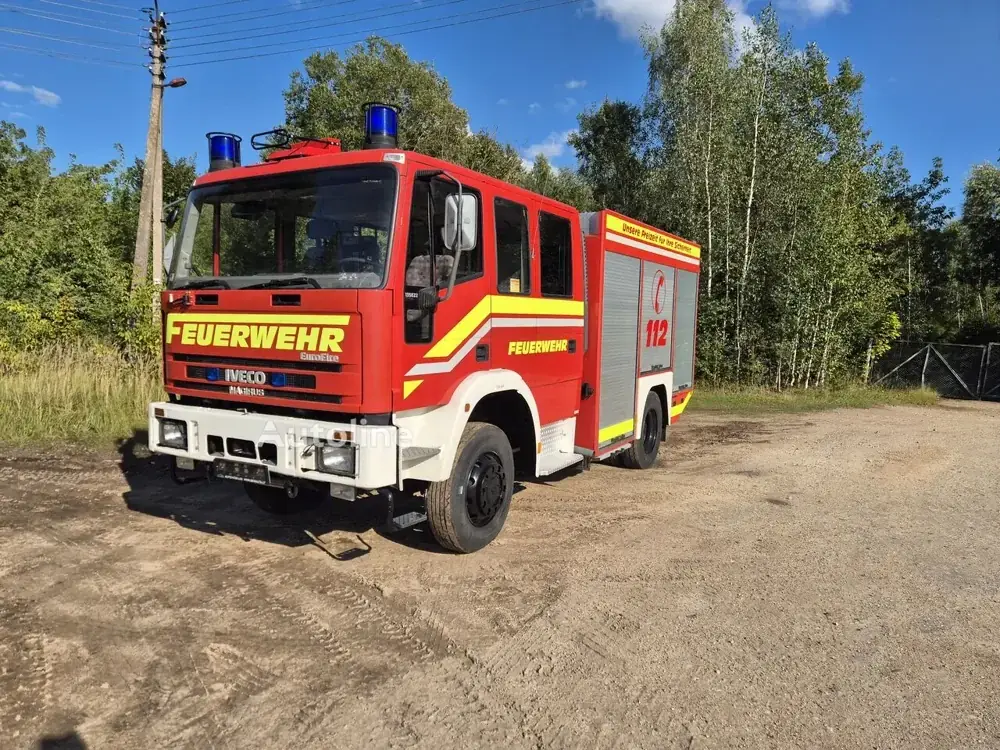
The photographs show a two-axle vehicle with a forward-control double cab, a box-shaped rear body and silver roller-shutter lockers. White bumper and wheel-arch sections contrast with the red bodywork, yellow markings and existing FEUERWEHR lettering. The vehicle’s presentation is clearly rooted in its original emergency-service layout.
The seller gives overall dimensions of 7.3 metres long, 2.5 metres wide and 3.18 metres high. These are advertised figures, useful for an initial station-access and transport discussion. Confirm the measured height with roof equipment stowed and obtain the wheelbase, turning information and axle limits before planning a collection or depot allocation.
Net and gross weights are listed as 7,490 kg and 12,000 kg. They should be checked against the vehicle documents and an appropriate weighing record. The chassis designation should not be used to substitute another gross-weight figure, and subtraction alone does not establish the usable payload of an operationally loaded fire appliance.
Engine, Transmission and Drivetrain
The advertisement identifies an IVECO six-cylinder, in-line diesel engine with 5,861 cm³ displacement and a listed output of 160 kW / 218 HP. Turbocharging and intercooling are also recorded. It specifies a six-speed manual gearbox and 4×4 drive.
These entries describe the seller’s stated chassis configuration. The precise engine code, gearbox model, emissions category and power-take-off arrangement are not established in the material reviewed. Request the vehicle identification number and build documents to support parts identification, maintenance planning and driver familiarisation.
IVECO’s current Eurocargo 4×4 literature discusses firefighting and civil-protection applications, but its present engines, controls and cab specifications are not evidence for this 1994 truck. No current-generation driver-assistance systems, fuel-economy result or acceleration claim is assigned here.
The listing calls the suspension “torsion.” Its exact construction and specification need confirmation from the chassis records or inspection; specifications from other FF135E22W advertisements are not substituted. Likewise, the 125-litre fuel-tank entry describes fuel storage, not firefighting water or foam.
Fire Pump and Water Delivery Systems
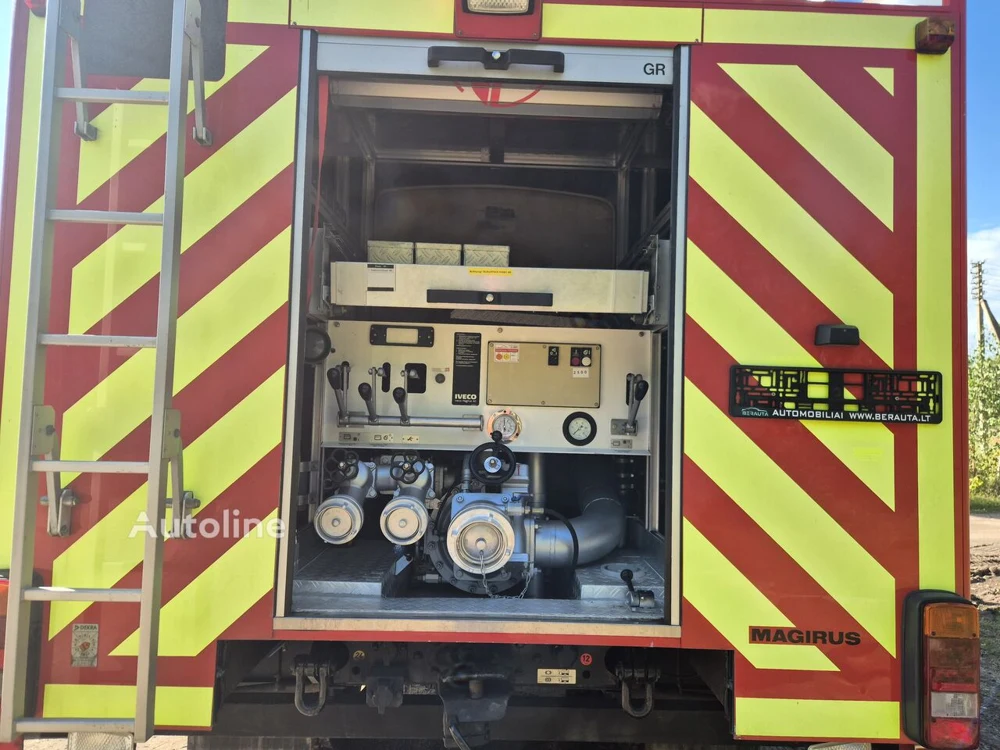
The rear photograph is one of the most useful images in the offer. An open roller shutter exposes a fixed pump installation, capped connections, gauges and mechanical controls. An IVECO Magirus panel is visible above the pumping hardware, allowing buyers to see the actual arrangement rather than a generic fire-pump illustration.
The pump model, rated flow and operating pressure have not been verified. The written advertisement does not supply those values, and the photographed plate is not sufficiently legible to establish them reliably. The TLF 16/25 body description is therefore retained as a designation, without turning it into a certified pump rating.
Magirus’s current pump documentation illustrates why identification matters: the manufacturer distinguishes different pressure classes and gives outputs under stated operating conditions. Those current ratings do not identify the older installed pump. Request its plate, performance curve, manual, drive details and recent test records.
For procurement, assess the complete water-delivery arrangement. Confirm the suction and discharge connections, priming equipment, tank-to-pump path, controls and compatibility with the brigade’s hoses. A suitable demonstration should be organized by competent personnel using the correct equipment and the manufacturer’s procedure.
Water Tank, Foam Systems and Firefighting Equipment
The specific water capacity advertised is 2,400 litres. That is the figure used in this review; the body designation is not treated as an alternative measured tank capacity. Ask for tank documentation, inspection information and confirmation of the usable firefighting volume.
A tank is only one part of a water-supply plan. Buyers should connect the verified supply and replenishment arrangements to the intended hose lines and operational demand. No duration of firefighting, discharge rate or number of simultaneously supported branches is claimed from tank volume alone.
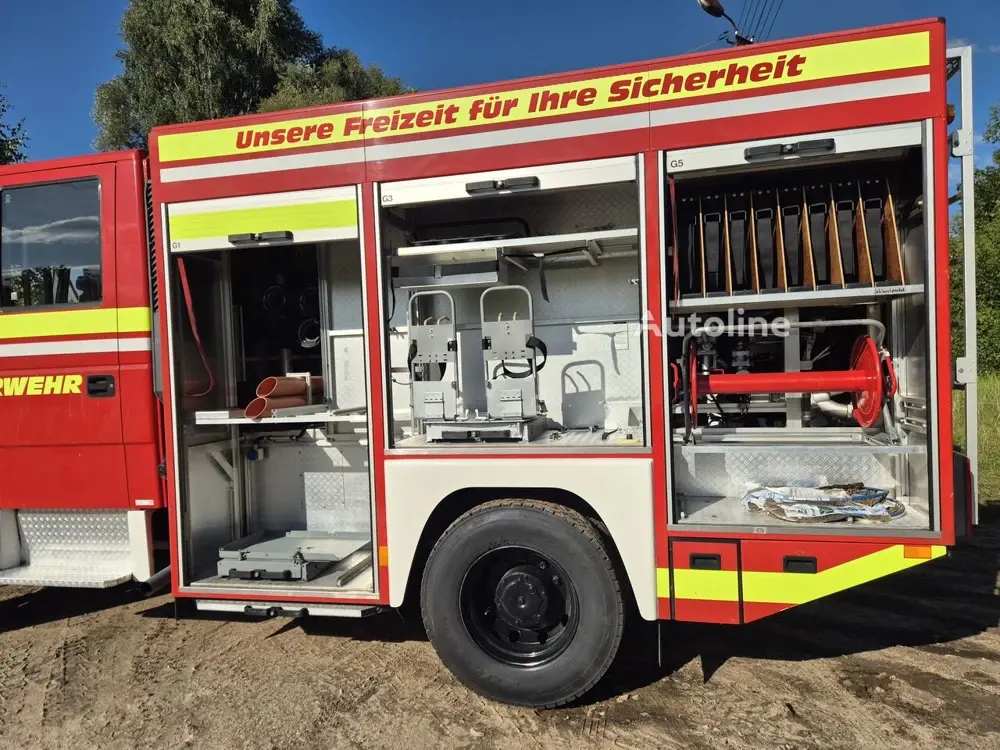
The gallery shows a red hose reel, stored hose-like sections and other equipment in open side lockers. Their lengths, diameters, pressure ratings, condition and inclusion in the sale require an itemized inventory. No foam-tank capacity, proportioning system, roof monitor, portable pump or hydraulic rescue set is confirmed.
This distinction is particularly relevant to industrial buyers. A water-carrying fire appliance should not be presented as suitable for a particular chemical, fuel or specialist hazard simply because it has a firefighting body. Establish the required extinguishing media and equipment against the facility’s assessed risks.
DISCOVER THE FIREFIGHTING EQUIPMENT
Crew Cabin and Emergency Response Ergonomics
The seller lists a double cab with six seats. Interior photographs show a left-hand-drive position, a conventional instrument panel, manual gear lever and rear crew space. The cab provides a useful basis for discussing how personnel and their personal equipment will travel together.
Seat allocation, restraints, mounting points and any breathing-apparatus accommodation must be checked on the actual vehicle. A rear bench or equipment fixture in a photograph does not establish an approved seating position or certification. Confirm the registered capacity and crew-protection arrangements in the documents and inspection.
For a working brigade, ergonomics also concerns entry and exit, handholds, clearance around protective clothing and access to frequently used controls. Assess those points with the intended crew and equipment. Air conditioning, a supplementary heater and a complete communications installation are not verified by the advertisement.
Emergency Lighting and Communication Equipment
Blue roof beacons and front blue warning-light units are visible in the exterior photographs. A close-up also shows a control labelled for mast raising and lowering, with Teklite and Clark Masts identification. These observations establish pictured equipment, not its current performance or every component included.
Request a demonstration of the warning equipment, scene-lighting arrangements, mast operation and electrical supply. Confirm which lamps, switches, wiring and accessories form part of the handover. The function and specification of the siren, radio, charging systems and any intercom were not established.
The future operator should also confirm which warning devices and communications arrangements are permitted and compatible with its intended service. Existing markings and beacons do not themselves provide authority for emergency-road use.
Equipment Storage and Operational Practicality
The side-locker photographs show shelves, vertical storage positions and the hose reel behind raised shutters. The rear access panel serves the pumping area, and a fixed rear ladder provides access towards the roof. The gallery is valuable because it reveals usable layout information beyond the closed-body exterior.
For a procurement team, a practical next step is a compartment-by-compartment inventory. Identify every loose item, its mounting, weight and documentation, then compare the proposed load with the vehicle and axle allowances. Confirm whether pictured hoses, fittings and tools are included in the quotation.
Storage should support the brigade’s own deployment sequence. During inspection, assess shutter operation, safe access and equipment retention with the actual intended load. Avoid treating a photograph of an open locker as a guarantee of a complete, standardized firefighting inventory.
Mobility and Access to Emergency Scenes
The seller’s 4×4 entry makes the truck relevant to buyers considering access beyond a wholly paved station-to-scene route. It does not establish a wading depth, gradient limit, approach angle or unrestricted all-terrain capability. Those values need the correct chassis documentation and operating limits.
Tyres are listed as 10R22.5 on both axles, with twin wheels recorded and tyre condition described as 90%. That percentage is a seller assessment, not a tyre inspection result. Confirm the actual sizes, load ratings and suitability for the proposed vehicle load and service.
Assess mobility with water, crew and equipment accounted for. Route width, surface bearing, overhead clearances and positioning space matter alongside traction. No pump-and-roll function, differential-lock specification or specialist wildfire protection package is assumed.
Safety and Operational Considerations
Readiness for emergency work requires more than a running vehicle. Review roadworthiness, crew restraints, electrical systems, equipment retention, tank condition and the pump installation through a competent inspection. The advertisement does not establish compliance with any particular firefighting standard or service-acceptance requirement.
Obtain chassis and body manuals, pump service records and the relevant inspection or performance-test documentation. Arrange driver and pump-operator familiarisation appropriate to this apparatus. Magirus’s Fire Fighter Academy provides manufacturer context for the importance of equipment-specific operator training; it does not certify the condition of this used vehicle.
Water, crew and equipment change the loading condition. Verify actual axle loads and operating limits, and follow documented procedures for vehicle positioning, pump operation, pressure systems, lighting masts and maintenance isolation. This review provides purchasing guidance, not instructions for carrying out a firefighting operation.
Firefighting Applications and Ideal Buyers
Municipal and community fire services may assess the six-seat, water-carrying configuration against their fleet role and local requirements. The useful question is whether the verified pump, equipment inventory and crew arrangements support the proposed response plan.
Industrial brigades and infrastructure operators can examine it for an appropriately defined facility-support role. Confirm water supply, hose compatibility, communications and any required extinguishing-media capability. No hazardous-materials or specialist industrial-fire capability has been demonstrated by the listing.
Institutional buyers and emergency-vehicle dealers should connect the technical inspection with documentation, service support and import requirements. Airport teams should not treat this as an airport rescue and firefighting appliance without evidence of the required equipment and acceptance criteria. No response-time advantage or cost saving is promised.
Related reading includes our reviews of UHPS firefighting equipment, the Holmatro EVO 3 rescue set, a GEMCO breathing-air container and fire-hose equipment. These are separate products; their inclusion here does not imply that they are carried on this truck.
IVECO FF135E22W Technical Specifications
| Make / model | IVECO FF135E22W |
|---|---|
| Engine | IVECO, in-line six-cylinder diesel; turbocharged and intercooled, as listed |
| Displacement / power | 5,861 cm³ / 160 kW (218 HP as displayed) |
| Gearbox | Manual, six gears |
| Axles / drive | Two axles / 4×4 |
| Cab / seats | Double cab / six total seats listed |
| Overall dimensions | 7.3 × 2.5 × 3.18 m, as advertised |
| Net / gross weight | 7,490 / 12,000 kg, as advertised; document confirmation required |
| Fuel tank | 125 litres listed |
| Bodybuilder / model | Magirus / TLF 16/25, as advertised |
|---|---|
| Water tank | 2,400 litres, seller entry |
| Pumping arrangement | Rear fixed pump, control panel, gauges and capped connections visible |
| Equipment pictured | Side roller-shutter lockers, hose reel, stored equipment and rear access ladder |
| Lighting pictured | Blue roof beacons, front warning units and mast-control panel |
The exact pump rating, foam provision, included loose equipment, emissions category and wheelbase remain subject to vehicle-specific documentation.
VIEW CURRENT PRICE & AVAILABILITY
Current Seller Offer — Verified 24 October 2026
Advertised vehicle location: Bajorai, Lithuania. This is the listing’s vehicle-location field, not an assumption based on a contact address.
- Seller: Algirdas Bernatavičius.
- Listing reference: Autoline LF52218.
- Asking price: on request; no numeric price advertised.
- Year: 1994.
- Mileage: 23,000 km in the listing; the supplied odometer photograph shows 23,937 km. Confirm the current reading and records.
- Running hours: 200 hours listed; the advertisement does not define whether this refers to the engine, pump or another meter.
- Condition: used. The seller states garage storage, running and working condition, unrepainted bodywork and a service booklet; these are seller claims.
- Configuration: 4×4, six-seat double cab, Magirus TLF 16/25 body and seller-listed 2,400-litre water tank.
- Availability: the advertisement was accessible when reviewed; confirm unsold status and handover readiness.
A generic marketplace “Vehicle delivery service” option was displayed. It does not establish seller-specific destinations, transport responsibility or an included delivery price.
Delivery destinations, shipping arrangements, and applicable transport terms were not specified in the information reviewed. Prospective buyers should confirm these details directly with the seller.
Warranty terms and a complete included-equipment inventory were not specified. Last verified: 24 October 2026. Update this offer section independently when the advertisement changes or the vehicle sells.
Questions Buyers Should Ask Before Contacting the Seller
Request the VIN, registration and build documents, engine and gearbox identification, current mileage and an explanation of the hour-meter entry. Confirm the approved seating, gross and axle weights, actual transport dimensions and the precise suspension specification.
For the body, obtain the pump identification plate, rated duty points, test and service records, tank capacities and the included hose-and-tool inventory. Ask about foam equipment, suction fittings, mast and warning-system operation, manuals, equipment support and any written warranty.
Arrange an independent inspection and competent pump demonstration. Establish the standards and acceptance process relevant to the intended brigade, then agree collection or delivery responsibilities, export documents, insurance, transport costs and payment procedures in a written quotation.
Buyer FAQs
What is the IVECO FF135E22W fire truck?
The reviewed vehicle is an IVECO 4×4 fire truck advertised with a Magirus TLF 16/25 body and six-seat double cab. Body equipment must be identified separately from the chassis.
What firefighting equipment is visible?
Original photos show a rear pump installation and controls, side lockers, a hose reel, stored equipment and mast controls. Confirm the complete inventory and what is included.
What is its water-tank capacity?
The seller lists 2,400 litres. Obtain the tank documentation and confirm usable capacity; do not derive a different capacity from the body name alone.
What pump does it use?
A rear fixed pump and IVECO Magirus panel are pictured. The exact pump model, rated output and pressure were not verified and need the plate and test records.
What emergency-response work may it suit?
It may warrant assessment for a defined municipal, rural or facility firefighting role. Suitability depends on verified equipment, inspection and applicable requirements; specialist airport or hazardous-materials capability is not established.
Where is the advertised fire truck located?
Bajorai, Lithuania, according to the listing. Confirm the exact viewing and collection point with the seller.
Does the seller offer shipping or export?
No seller-specific destinations or terms were established. Request written transport and documentation arrangements, responsibilities and costs.
How can I ask about price and availability?
Use the seller-offer buttons in this review. Each uses the supplied affiliate URL to reach the offer for a current quotation and enquiry.
Original Advertiser Images and Official Video
The offer contains 17 original photographs. Exterior, rear-pump and open-locker images appear here under the affiliate reuse permission confirmed by the publisher. Source watermarks are retained, and the files are hosted on this website. The separately captioned featured artwork is promotional imagery.
No video of the advertised FF135E22W was identified. For limited bodybuilder context, the official Magirus clip below demonstrates equipment access on a different, later LF10 EC-Line vehicle. Its removable pump and lifting arrangement are not confirmed equipment on the truck reviewed here. This is not operating guidance for the 1994 apparatus.
Sources and Editorial Basis
Research checked 24 October 2026: advertisement LF52218 and its 17 original photographs; IVECO’s current 4×4 application information; Magirus pump documentation; and the Magirus Fire Fighter Academy. Current manufacturer material supplies background, not a build certificate for this 1994 truck. No exact historical factory specification was verified for its VIN.
Final Verdict
The FF135E22W offer brings together a seller-described 4×4 chassis, six-seat crew accommodation, a Magirus firefighting body and onboard water. Its original gallery adds useful visibility into the pump station and storage arrangement, making it a concrete starting point for professional fleet enquiries.
The right next step is to connect those features with a defined response requirement. Confirm the pump duty, included equipment, documents and current readings, then arrange a specialist assessment of the actual vehicle. For buyers whose requirements match the verified configuration, this is an offer worth exploring in detail.
Join the Conversation
What matters most when choosing a fire truck—pump capability, water capacity, crew space or equipment access? Share your thoughts in the website’s comments below.
Your experience matters
Share your thoughts on this page
Have a question, a useful experience or a suggestion? Add your input below.
Comments are public. Keep them respectful and relevant. Do not share contact details, confidential information or emergency reports.
Comments on this page
Loading comments…