HSSE TIPS · Product Reviews · Mobile Laboratories / Food Safety Infrastructure
Toyota Mobile Food Testing Lab Review: Equipment, Specifications, Applications & Buying Guide
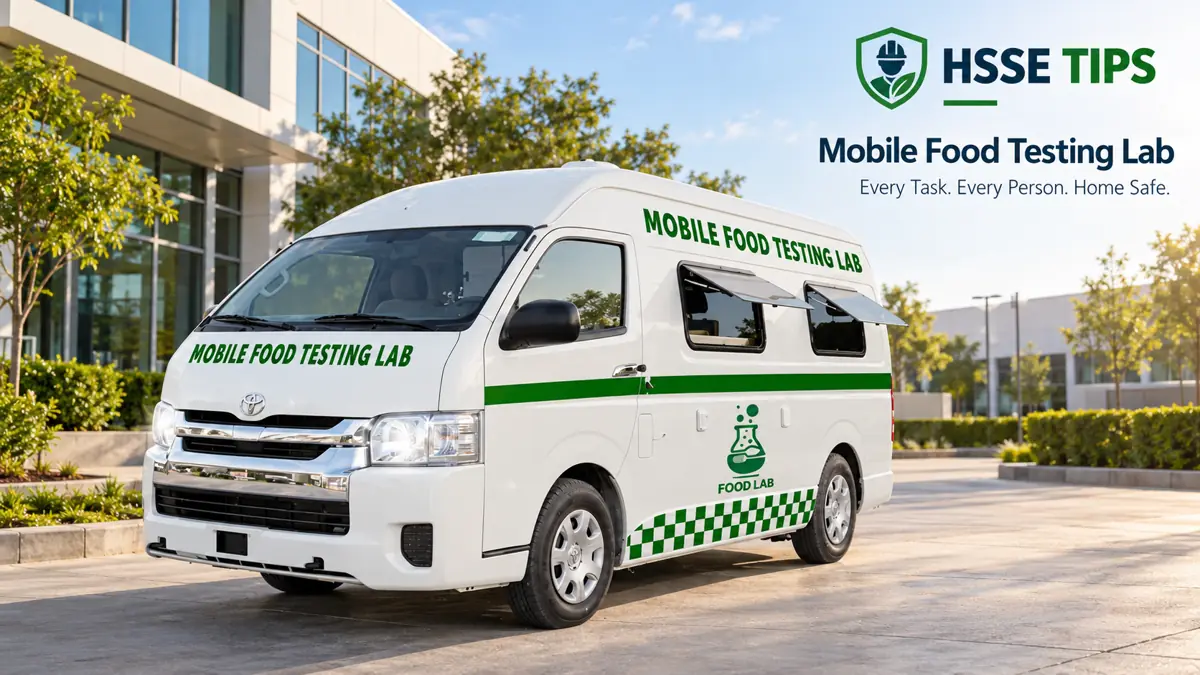
Introduction — Taking Food-Testing Infrastructure to the Field
A food inspection team arrives at a distribution center. Samples need clear identification, suitable storage and an organized place to work. At a catering event, the same practical questions arise: where will the team prepare its materials, record observations and protect samples before analysis or onward transport?
A mobile laboratory can bring a planned workspace closer to those activities. The purchase becomes useful when the vehicle, methods, equipment and people support the same service.
The Toyota Mobile Food Testing Lab is an advertised specialist conversion aimed at on-site food-testing projects. Its appeal is the combination of a mobile workspace and supporting utilities, allowing buyers to develop a specification around their own inspection and quality-control program.
This review examines the published proposal, original advertiser photographs and the purchasing decisions that connect a vehicle to a credible laboratory operation.
Affiliate Disclosure: Worksite Safety Hub may earn a commission if you make a qualifying purchase through links in this article. This does not change the price you pay.
EXPLORE THE TOYOTA MOBILE FOOD TESTING LAB
Toyota Mobile Food Testing Lab Overview
Think of the product as a platform for a defined analytical service. An inspection authority may need sample reception and selected field checks; a manufacturer may need a workspace supporting a specific quality-control method. Their equipment and acceptance criteria will differ.
The advertisement sits within an ambulance marketplace category, while its title and laboratory description concern food testing. That category does not establish emergency medical capability. The right procurement language is the food-testing conversion and the exact build agreed with the supplier.
Autozone UAE provides the corresponding conversion description. Establish which published features are included in the offered unit, which can be customized and which require separate quotation. A broad laboratory label does not define an instrument package.
Toyota Vehicle Platform and Engineering
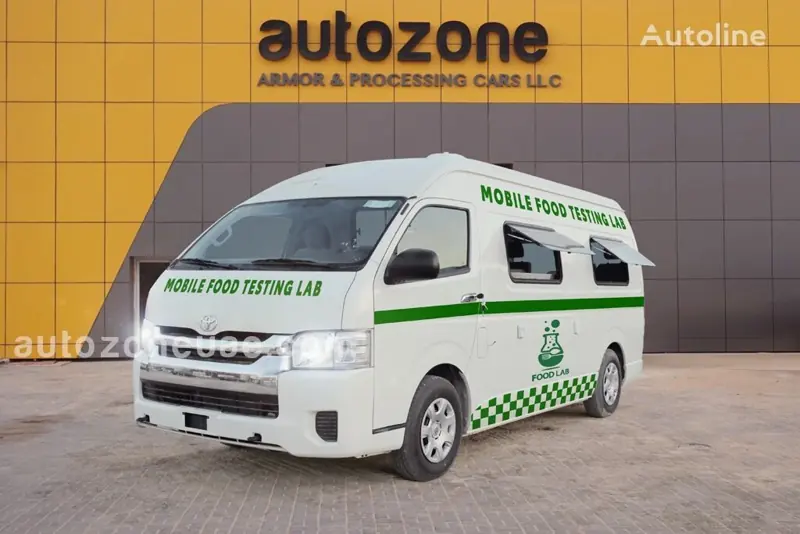
The seller identifies a Hiace high-roof configuration. The vehicle figures below are advertiser-reported, rather than specifications independently established from an identified chassis record. Request the VIN, model code and destination-market documentation before selecting the applicable Toyota manual.
Vehicle choice affects access, servicing, driver licensing and the load available for the conversion. Assess the completed vehicle with equipment, people, water, samples and consumables accounted for. A base-vehicle payload figure is not automatically the remaining allowance after conversion.
Ask for the completed weight, permissible gross and axle weights, dimensions and equipment installation drawings. Check maintenance access and parts support at the destination. An acceptance inspection should reconcile those records with the delivered vehicle.
Laboratory Conversion and Interior Layout
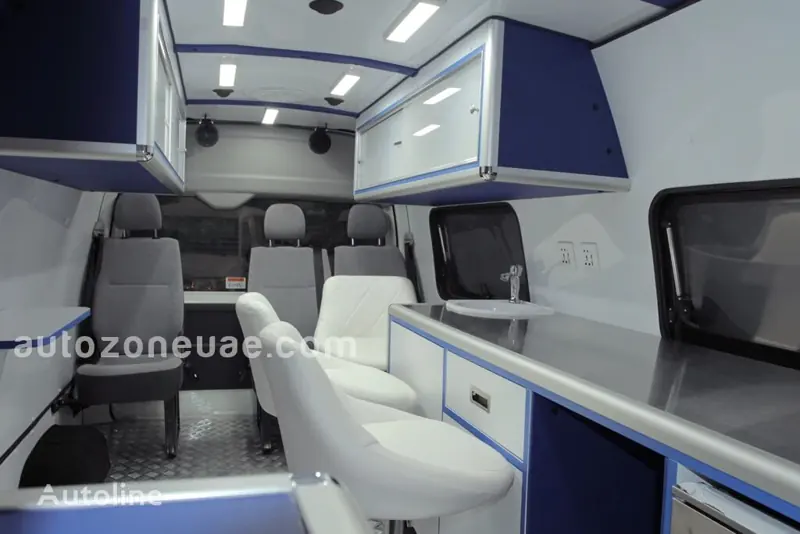
The gallery shows a central working aisle, facing work surfaces, overhead storage, seating and a sink. These observations help buyers discuss the layout, but do not establish workspace dimensions, permitted staffing or an approved laboratory workflow.
Review a complete sample journey: receive, identify, store, prepare, analyze where authorized, document and dispose or transfer. Mark each stage on a scaled drawing. Identify where unopened samples, used materials and clean supplies will be placed.
Check door operation, staff movement and access to utility cabinets. Furniture and equipment should remain secure during travel, while the parked configuration should provide the clearances required by the agreed procedures.
Work Surfaces, Cabinets and Sample Handling
The photographed interior provides a concrete starting point for planning storage. Ask which compartments are intended for consumables, records, sample containers and equipment, then agree how each will be restrained in transit.
Select surfaces and cleaning arrangements around the intended work. Obtain material specifications, joint details and cleaning-product compatibility. A general description of corrosion resistance does not establish compatibility with every laboratory reagent.
Keep sample identification visible throughout handling. Plan space for labels, records and packaging without crowding the active preparation area. Where clean and used materials require separation, demonstrate the arrangement with the team before accepting the layout.
Laboratory Equipment and Verified Testing Scope
An itemized analytical equipment schedule was not established from the information reviewed. Ask for manufacturer, model, quantity, accessories, manuals, installation requirements and acceptance tests for every instrument proposed.
A useful procurement schedule connects each intended determination to the sample type, method, equipment, operator competence and reporting requirements. It should distinguish supplied instruments from options, pictured items and buyer-provided equipment.
Do not assume included pH meters, balances, incubators, microscopes, PCR instruments, chromatography systems or pathogen, allergen and residue tests. Specify these only where the intended program requires them and the installation can support their documented conditions.
Rapid screening and confirmatory analysis serve different purposes. Agree how results will be interpreted, when further analysis is needed and which laboratory receives referred samples. No universal detection capability, analytical turnaround or regulatory acceptance is established by the vehicle advertisement.
DISCOVER THE LABORATORY FACILITIES & EQUIPMENT
Refrigeration and Sample Storage
Refrigeration is described, but its capacity, temperature range, monitoring and performance under the planned conditions need confirmation. A refrigerator’s presence alone does not establish an appropriate cold chain for every food sample.
Choose storage requirements from the relevant sampling and analytical methods. Plan segregation, container support, monitoring records, alarms where required and arrangements during travel or power interruption. Establish how staff will respond to an excursion.
FDA’s food-sampling guidance emphasizes sample condition and appropriate handling during collection and transport. Use the applicable method and receiving laboratory’s instructions rather than applying one temperature or holding time to all products.
Electrical Power, Inverter and External Supply
Build an electrical load schedule before agreeing the power system. Include instruments, refrigeration, lighting, computing and climate-control demand, identifying simultaneous loads, starting demand and equipment needing continuity.
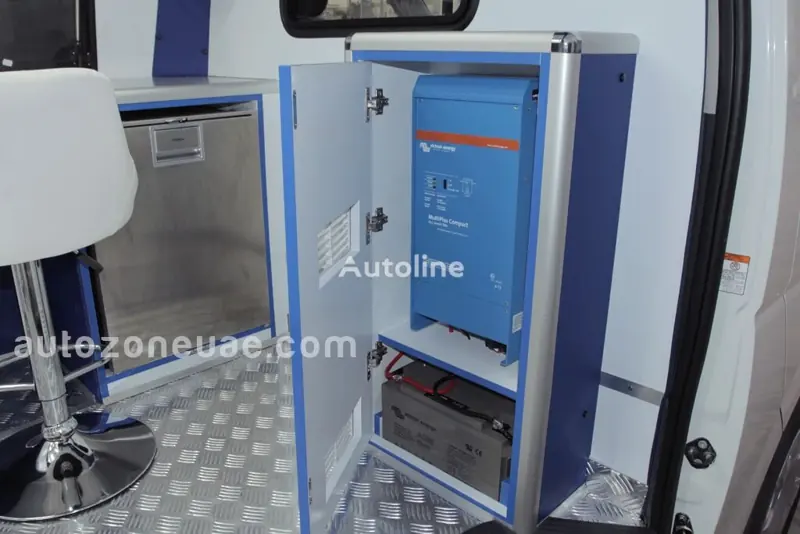
The gallery includes an electrical cabinet with a blue unit and batteries. Its appearance does not establish the accepted electrical ratings, battery condition or usable energy. Obtain the final diagrams, component schedule and operating instructions.
The published generator-compartment wording requires clarification: storage provision is not proof that a generator is supplied. If included, confirm its model, fuel, continuous output, operating placement and service arrangements separately from the vehicle engine.
An inverter’s output rating and a battery’s stored energy are different quantities. Neither establishes runtime without the actual load and usable battery capacity. Request a demonstration against the accepted operating scenario, including changeover, charging and orderly shutdown.
Air Conditioning, Ventilation, Water and Drainage
Cooling should be assessed for the destination, staff occupancy and equipment heat. Air conditioning does not establish laboratory extraction, filtered containment or protection for a particular chemical or biological procedure.
Identify environmental conditions required by the selected instruments and methods. Ask the designer to demonstrate how the accepted installation maintains those conditions during the proposed deployment, with doors and windows used as intended.
Plan water supply, handwashing, cleaning and wastewater management as one system. Obtain tank capacities, materials, filling arrangements, drainage connections and cleaning procedures. Confirm water quality against the proposed use; a sink does not establish analytical-grade water.
Agree where wastewater will be collected and discharged, and who manages it at each site. Chemical or biological waste may require separate arrangements rather than disposal through the sink.
Technical Specifications and Facilities
Vehicle and Conversion Specifications
These entries summarize seller/converter information; final applicability requires a unit-specific offer.
| Specification | Published Information | Buyer Confirmation Needed |
|---|---|---|
| Vehicle description | Toyota Hiace GL high-roof conversion | VIN, chassis code and exact market variant |
| Engine / transmission | 2,500 cm³ diesel / manual | Engine code, power, torque and gear count |
| Fuel tank / tyres | 70 litres / 195R15C | Offered chassis specification; fuel capacity is not water capacity |
| Drive / steering | Converter page describes 2WD / LHD | Exact vehicle documents |
| Vehicle features | ABS, airbags, air conditioning and power steering described | Offered equipment and completed-build configuration |
| Dimensions, wheelbase and weights | Not specified in the information reviewed | Drawings, gross and axle limits, completed weight and remaining payload |
| Year and mileage | Not specified in the information reviewed | Vehicle records |
Laboratory Facilities and Equipment
| Facility or Equipment | Evidence Status | Practical Application |
|---|---|---|
| Work surfaces, cabinets and seating | Visible in original gallery | Plan working space, storage and transit restraints |
| Sink / water / wastewater storage | Published description; sink visible | Specify hygiene, refill and disposal arrangements |
| Refrigerator | Described; ratings unconfirmed | Match sample-storage requirements |
| Inverter / external supply | Described; electrical cabinet pictured | Confirm accepted loads, protection and continuity |
| Generator | Compartment provision mentioned; inclusion and output unconfirmed | Specify separately if required |
| Lighting and compartment finishes | Visible in gallery; materials require confirmation | Review visibility and cleaning compatibility |
| Analytical instruments and extraction | Not itemized in the reviewed information | Agree method-specific equipment and engineering controls |
VIEW CURRENT PRICE & AVAILABILITY
Food-Safety and Quality-Control Applications
Inspection and Sampling Programs
A suitably specified vehicle may support teams visiting food premises, markets or distribution centers. Define sampling authority, sample identification and the handover to the receiving laboratory before deployment. Onboard testing should be limited to the agreed equipment and methods.
Food Manufacturing and Supply Chains
Manufacturers may consider a mobile workspace for a defined field project or quality-control activity. Link results to the facility’s existing decision process, with responsibility for review, escalation and any follow-up analysis clearly assigned.
Hospitality, Catering and Events
Temporary operations may benefit from a planned inspection base where suitable parking and utilities are available. Coordinate site access, appointments and waste handling with the organizer. The vehicle does not replace the operator’s food-safety responsibilities.
Research and Field Investigations
Research institutions may specify equipment around a study protocol and the expected deployment conditions. Where testing belongs in a reference laboratory, the mobile workspace may support collection, documentation and controlled transfer instead.
Sample Integrity and Laboratory Quality Management
The sample record should connect the collection site to the final report. Agree identifiers, collection times, condition on receipt, custody transfers and storage records. Define what happens when a sample does not meet the accepted criteria.
Plan calibration, quality controls, maintenance and records around the methods being used. Staff should know which activities are authorized onboard and when to refer work. Relocation may require checks before instruments return to service.
ISO/IEC 17025 addresses laboratory competence and consistent operation. Buying a converted vehicle does not establish laboratory accreditation. If an accredited service is required, confirm the organization, scope, methods and mobile activities with the relevant accreditation arrangements.
For public or commercial decisions, establish who authorizes reports and what the receiving authority accepts. A converter’s management-system certification is separate from the laboratory’s analytical competence and recognized scope.
Operator Safety and Environmental Management
Assess the actual proposed work before choosing protective equipment, chemical storage and waste arrangements. Use current safety data and equipment instructions. Provide appropriate segregation, labeling and access to spill and emergency resources.
Have qualified personnel assess electrical protection, external connections and isolation. Protect cables from traffic and moisture, keep exits usable and agree fire precautions. Do not introduce procedures requiring extraction or containment without a suitable engineered installation.
If a portable combustion generator is supplied, operate it outdoors in accordance with its instructions and authoritative carbon monoxide guidance, away from doors, windows and air intakes. A storage compartment or open door is not proof of a safe running arrangement. Purpose-designed installations require their own approved design and instructions.
Collect chemical, biological and general wastes in suitable separate streams. Agree authorized disposal and wastewater responsibilities for every site. Train staff in setup, shutdown, emergency response and securing equipment before travel.
Transportation, Parking and Deployment
Check the route, height restrictions, turning space and ground conditions before scheduling a visit. Confirm that the completed vehicle and any external connections fit the site, with safe access for staff and sample deliveries.
Allow time for parking, utilities, environmental stabilization where required, instrument checks, cleaning and recovery. A deployment schedule should reflect these activities as well as analytical work.
Separate the work area from moving traffic. Confirm permitted seating and occupancy during travel, and secure loose equipment, containers and chairs. Review axle loading with the actual carried supplies and water, not an empty demonstration configuration.
Current Seller Offer — Verified 26 October 2026
Verification means checking the published advertisement, converter page and affiliate redirect on this date. No physical inspection, seller contact, stock confirmation or equipment testing was performed.
| Offer Detail | Information Reviewed |
|---|---|
| Product / reference | Toyota Mobile Food Testing Lab / Autoline VT41519 |
| Advertised base vehicle | Toyota Hiace GL high roof; exact chassis code requires confirmation |
| Condition / year / mileage | Advertised new; year and mileage not specified |
| Asking price | On request |
| Product location | Ajman, United Arab Emirates, as stated in the product-location field |
| Offered configuration | Laboratory workspace and utilities described above; accepted equipment schedule required |
| Stock or production status | Advertisement accessible; ready stock and lead time not confirmed |
| Delivery, freight and export | Vehicle-specific destinations, charges, insurance, Incoterms and collection terms not specified |
| Commissioning and support | Product-specific training, warranty and after-sales arrangements not specified |
Delivery destinations, shipping arrangements, and applicable transport terms were not specified in the information reviewed. Prospective buyers should confirm these details directly with the seller.
Request a written allocation of freight, insurance, export paperwork, customs, registration and destination-country acceptance responsibilities. The supplier’s general export statements do not establish the terms for this vehicle.
CHECK SHIPPING & EXPORT OPTIONS
What Buyers Should Confirm Before Purchasing
Send the supplier a service brief describing sample types, methods, equipment, staffing, sites and reporting requirements. Ask the quotation to address:
- Vehicle identity: VIN, chassis records, dimensions, completed weight and remaining load allowance.
- Approved layout: Scaled drawings, workflow, clearances, cleaning access and transport restraints.
- Equipment schedule: Included instruments, options, accessories, calibration and servicing.
- Utilities: Accepted load scenario, supply connections, refrigeration, environmental conditions and water arrangements.
- Quality and commissioning: Demonstrations, acceptance criteria, staff familiarization and required documentation.
- Commercial responsibilities: Exact price, lead time, shipping, registration, warranty and local support.
Arrange a dated demonstration or inspection of the offered unit. Record outstanding actions and how acceptance will be confirmed. Budget for the operating program, including staff, consumables, maintenance and reference-laboratory services, rather than vehicle purchase alone.
Frequently Asked Questions
What is this vehicle designed to support?
A mobile workspace for food-testing projects, with actual activities determined by the accepted equipment, methods, staff and operating arrangements.
Which Toyota model is advertised?
The description identifies a Hiace GL high roof. Confirm the VIN, chassis code, year and market specification in the offered vehicle’s records.
Does the ambulance category establish medical capability?
No. The reviewed product concerns food testing. Do not infer emergency transport equipment or medical authorization from marketplace classification.
Which analytical instruments are included?
An itemized package was not established. Request the exact device schedule and distinguish contractual inclusions from options and illustrative items.
Can it perform pathogen, allergen or residue tests?
Only where the agreed equipment, validated methods and operating controls support the specific determination. Those capabilities were not established as supplied.
Are results immediate or legally accepted?
Neither is guaranteed by the advertisement. Confirm method-specific turnaround, reporting authority and any confirmatory analysis requirements.
Is the refrigerator suitable for every sample?
Its temperature range and performance require confirmation. Match storage to the sampling method and receiving laboratory’s instructions.
Is a generator definitely included?
The description mentions accommodation for one. Obtain explicit confirmation of inclusion, model, output and safe operating arrangements.
How much water can it carry?
Freshwater and wastewater capacities were not specified. The advertised 70-litre figure refers to vehicle fuel.
Does it arrive as an accredited laboratory?
Accreditation was not established. Agree staffing, methods, quality systems, commissioning and any required accreditation scope separately.
What are the price, location and availability?
The reviewed offer lists price on request and Ajman, United Arab Emirates. Confirm the current quotation, exact unit and stock or production status.
Can it be delivered internationally?
Vehicle-specific destinations and transport terms were not established. Request a written proposal for the intended country, including export and registration responsibilities.
Final Verdict
The Toyota Mobile Food Testing Lab offers a practical starting point for buyers planning a mobile food-sampling or analytical workspace. The photographed interior makes layout discussions tangible, while the published utilities give procurement teams subjects to specify and demonstrate.
Its suitability rests on one coherent agreement: the identified vehicle, accepted workflow, itemized equipment and operating conditions required by the chosen methods. Bring those together before evaluating the final commercial offer.
For a separate laboratory-vehicle example, see our Ford Transit Mobile Laboratory review. Its equipment and specifications must not be transferred to this Toyota conversion. Explore more Product Reviews for institutional purchasing guidance.
Sources and Editorial Method
Reviewed on 26 October 2026: the affiliate-linked Autoline VT41519 advertisement, the corresponding Autozone UAE Mobile Food Testing Lab page and the exact listing’s eleven-image gallery. Published specifications, visual observations and original procurement analysis are distinguished throughout. No physical inspection, analytical testing or seller contact is claimed.
- FDA: Food sampling and sample preparation — method and sample-handling context.
- ISO: ISO/IEC 17025 — laboratory competence and accreditation context.
- CDC: Generator safety — portable-generator carbon monoxide precautions.
Original advertiser photographs are used under the publisher’s recorded permission, with watermarks retained. The featured image is separately captioned editorial artwork. No product-specific advertiser video was verified, so none is embedded.
Join the Conversation
If you were specifying a mobile food-testing laboratory, which would matter most—testing equipment, sample refrigeration, reliable power or an efficient workspace? Share your priorities and experiences in the comments below.
Your experience matters
Share your thoughts on this page
Have a question, a useful experience or a suggestion? Add your input below.
Comments are public. Keep them respectful and relevant. Do not share contact details, confidential information or emergency reports.
Comments on this page
Loading comments…