Product Reviews · Patient Transport Vehicles
Renault Master Ambulans Ambulance Review: Specifications, Medical Equipment & Buying Guide
Affiliate Disclosure: Worksite Safety Hub may earn a commission if you make a qualifying purchase through links in this article. This does not change the price you pay.
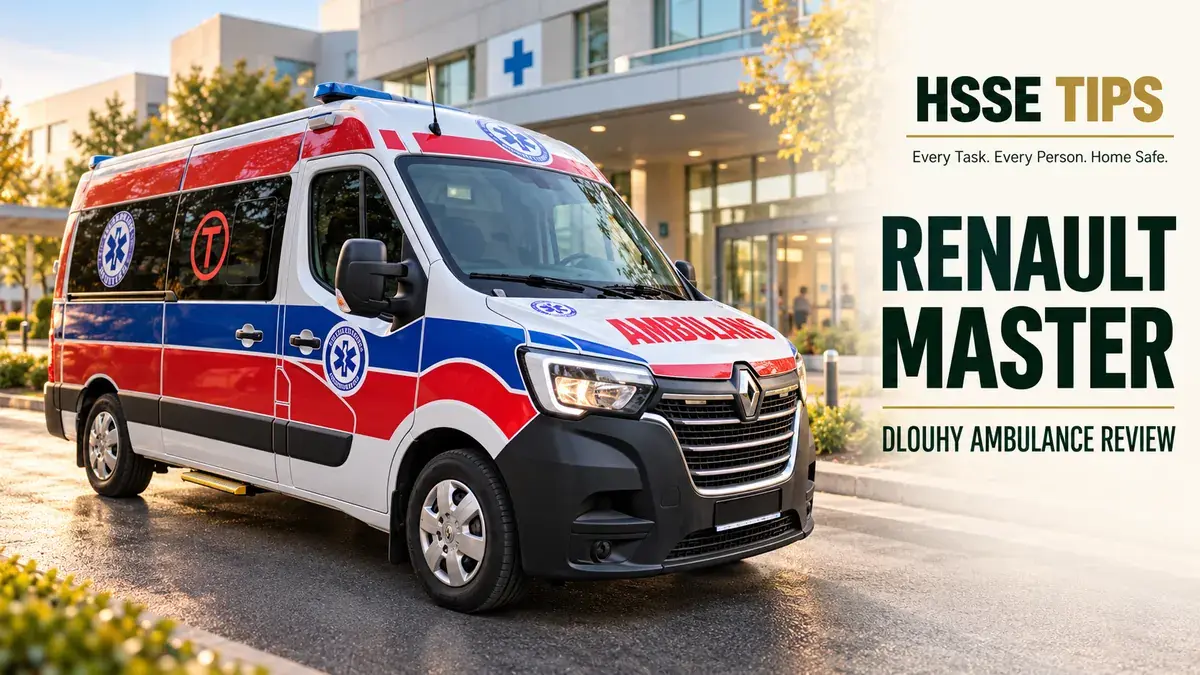
An ambulance purchase brings together two decisions: choosing the vehicle that will complete the journey and choosing the patient environment that will support the people travelling inside. The most useful advertisement lets a fleet manager examine both.
This Renault Master offers a particularly interesting patient-handling combination. Its seller identifies a Dlouhy conversion, a Stryker M1 stretcher and a transport chair fitted into the Dlouhy floor system. Original photographs show the stretcher, multiple medical-area seats, storage and a rear access ramp. The advertised mechanical package is a 132 kW diesel with a six-speed manual gearbox and front-wheel drive.
Our review examines that specific configuration, explains the equipment evidence and separates the current offer from longer-term buying guidance. It is a researched listing review, rather than a road test or physical equipment inspection.
EXPLORE THE RENAULT MASTER AMBULANCE
Renault Master Ambulans Ambulance Overview
The advertisement is identified by reference QJ52920. It describes a used 2022 Renault Master, first registered in November 2022. Its strongest editorial feature is the combination of conventional roll-in stretcher transport with a separate floor-mounted chair arrangement.
“Ambulans” is also the Turkish word for ambulance, but this advertisement is associated with Poland and has a Polish seller description. Language alone establishes neither manufacturing origin nor vehicle location. The location field specifically names Wadowice, Poland.
The seller says original homologation and a manufacturer declaration for EN 1789 Type B are available. That is a documentary claim worth following up: it does not establish an independently inspected clinical equipment package or justify calling this an intensive-care ambulance.
Understanding the Renault Master Platform
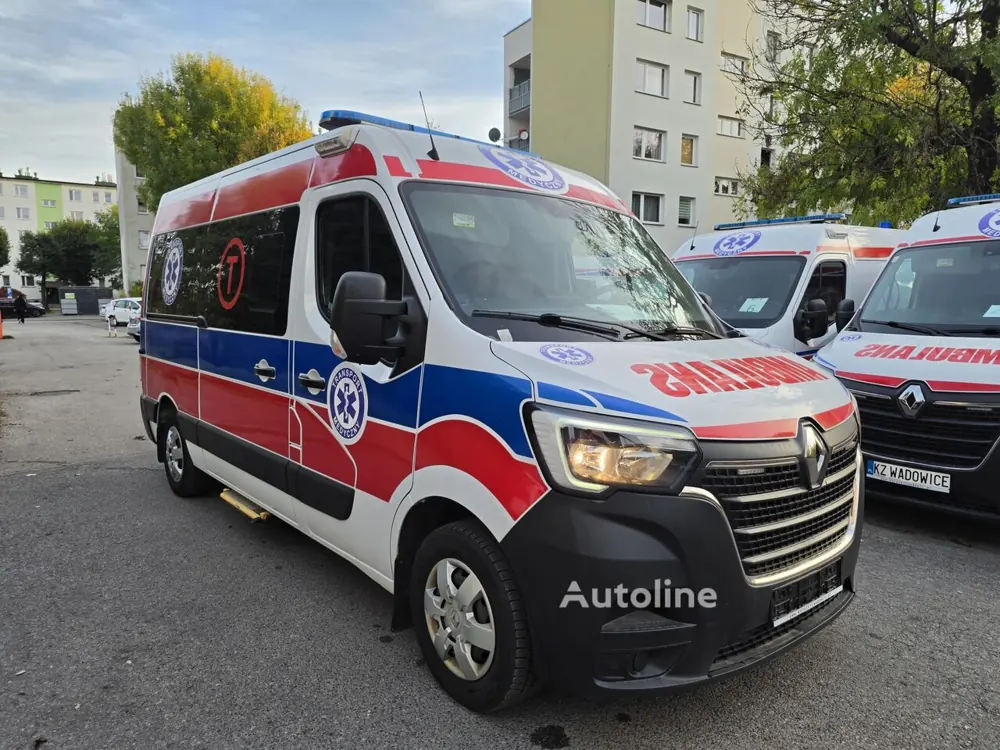
The stated year and photographed facelift front correspond to the third-generation Master. This is the earlier commercial-van platform, rather than the newer Master generation with a different engine range and body dimensions. The photographs show a high-roof van conversion retaining the recognisable Renault cab and body.
Renault offered several lengths, roof heights and mechanical variants within this generation. Consequently, “Master” and a model year do not provide enough information to assign L2H2 or L3H2. Neither body code is established for this vehicle in the information reviewed.
The practical advantage of reviewing the completed ambulance is that its seats, cabinets and patient-handling installation can be assessed together. A bare-van brochure cannot show how those components affect access, usable floor space or the final weight budget.
Engine, Transmission and Drivetrain
The advertiser lists a four-cylinder, turbocharged and intercooled diesel of 2,299 cm³, rated at 132 kW and displayed as 179 HP. A manual gearbox provides six forward gears and reverse. Front-wheel drive is expressly stated; no four-wheel-drive capability is advertised.
For context, Renault Trucks documentation for this generation describes a 2.3-litre twin-turbo 180 power variant producing 132 kW and 400 Nm. This is manufacturer range information, not confirmation of this ambulance’s exact engine suffix or calibration. Its engine identification and torque should be checked against the VIN-specific build record before ordering parts or preparing a fleet specification.
A particulate filter and a 20-litre AdBlue tank appear in the listing. These entries describe advertised emissions-related equipment; they do not establish the exact Euro certification, fuel-tank capacity or local emissions-zone eligibility. Fuel economy and operating range are not supplied.
Chassis, Dimensions and Operating Configuration
The listing specifies two axles and describes the suspension as hydraulic. It does not identify the suspension manufacturer, controlled axle, adjustment range or permitted loading procedure. A demonstration and the conversion maintenance record would make that description operationally useful.
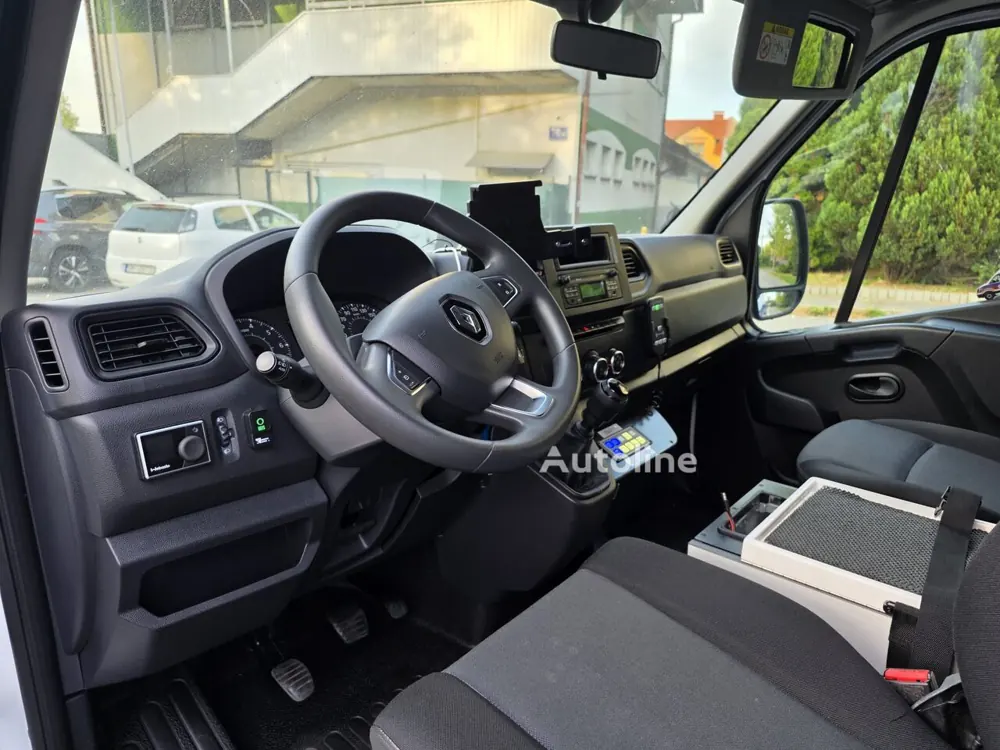
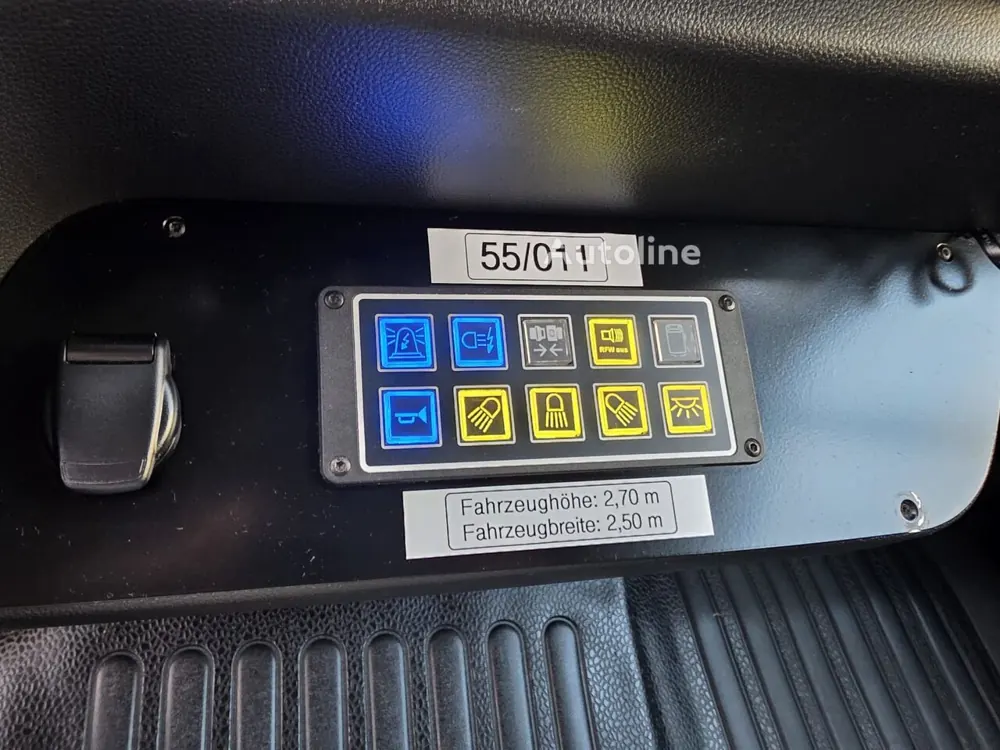
A cab notice visible beside the emergency controls reads 2.70 m vehicle height and 2.50 m vehicle width. These are useful photographed clearance notices, but the width basis is not explained and the figures have not been independently measured. Confirm completed dimensions, including mirrors and warning equipment, before arranging covered transport or allocating a garage.
Wheelbase, overall length, finished interior height, tyre specification, axle limits and loading height remain unverified. A buyer should request the completed-vehicle dimensional drawing and weight documentation rather than select measurements from a similar-looking Master brochure.
Ambulance Conversion and Exterior Design
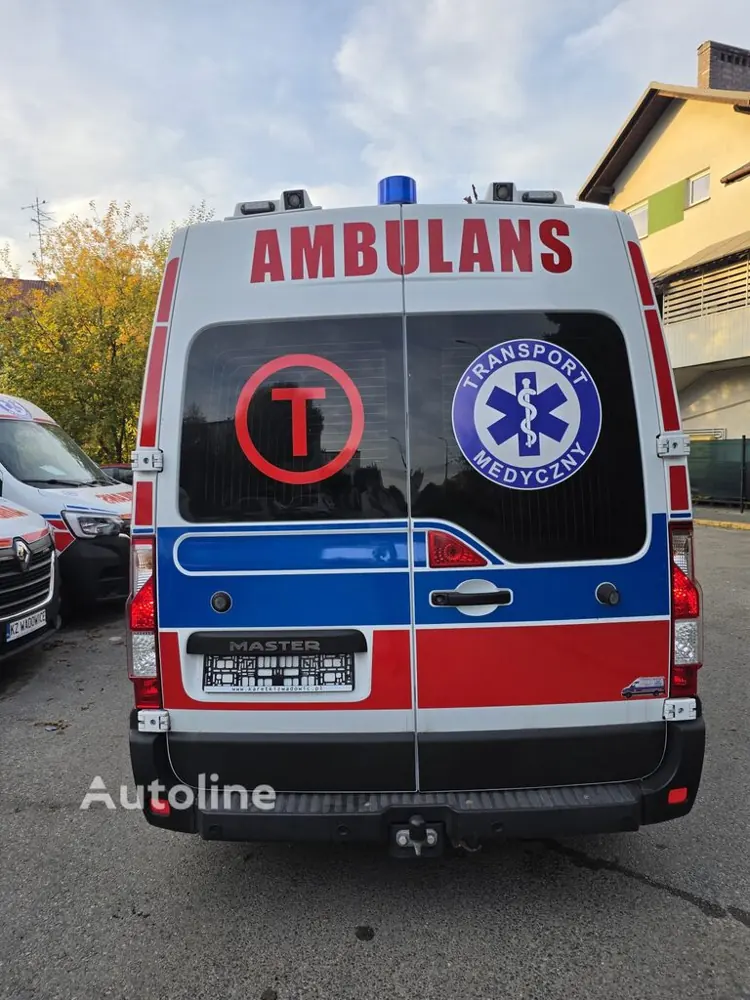
Dlouhy is the converter named by the seller, and Dlouhy markings also appear in the patient-area photographs. Its official rescue-vehicle material includes Renault Master conversions and explains that interiors are configurable for their intended service. That supports the converter context without making every current Dlouhy option part of this sale.
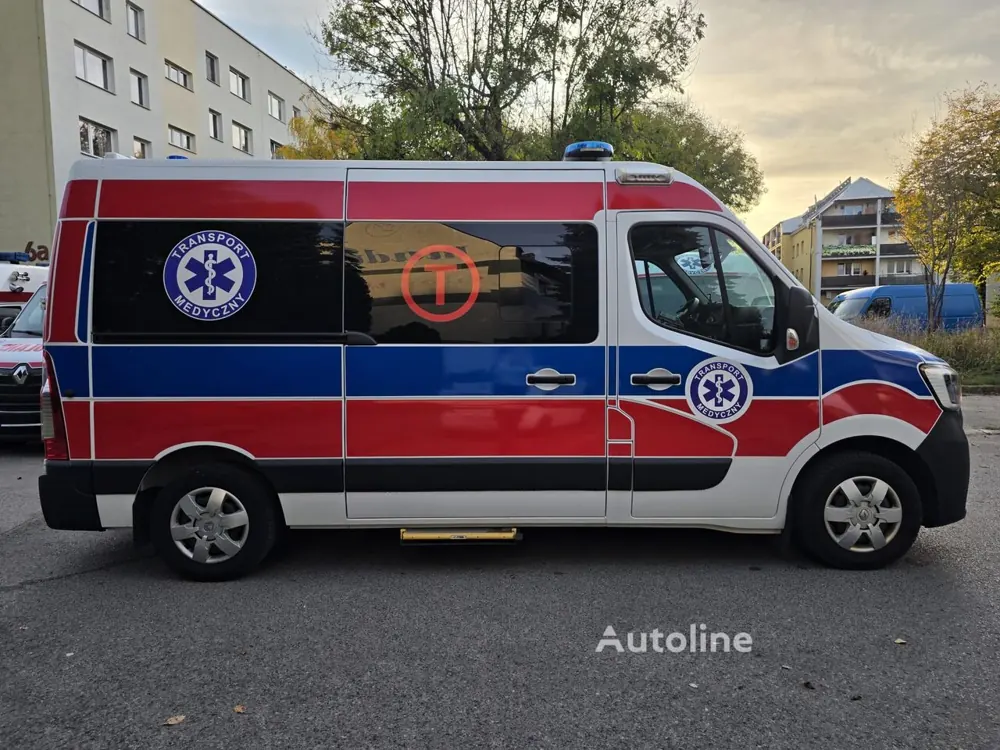
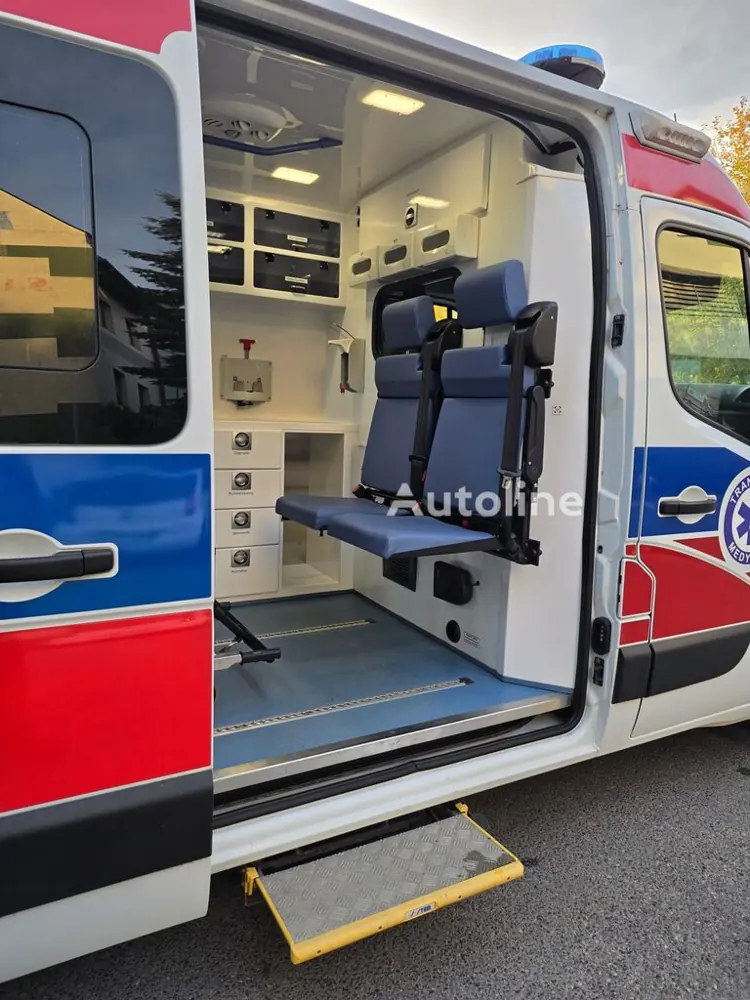
The actual vehicle has white bodywork, red and blue markings, dark patient-area windows, rear double doors and a sliding side entrance. Photographs show roof-level warning fittings and a side access step. Their position, together with the cabin and patient doors, is more informative than a generic ambulance equipment list.
The interior has pale moulded surfaces, blue flooring, cupboards, shelves and equipment-retaining arrangements. Exact material grades and antibacterial treatments are not documented. For procurement, request the converter’s cleaning instructions and approved products for the fitted upholstery, surfaces and electrical panels.
Patient Compartment and Interior Layout
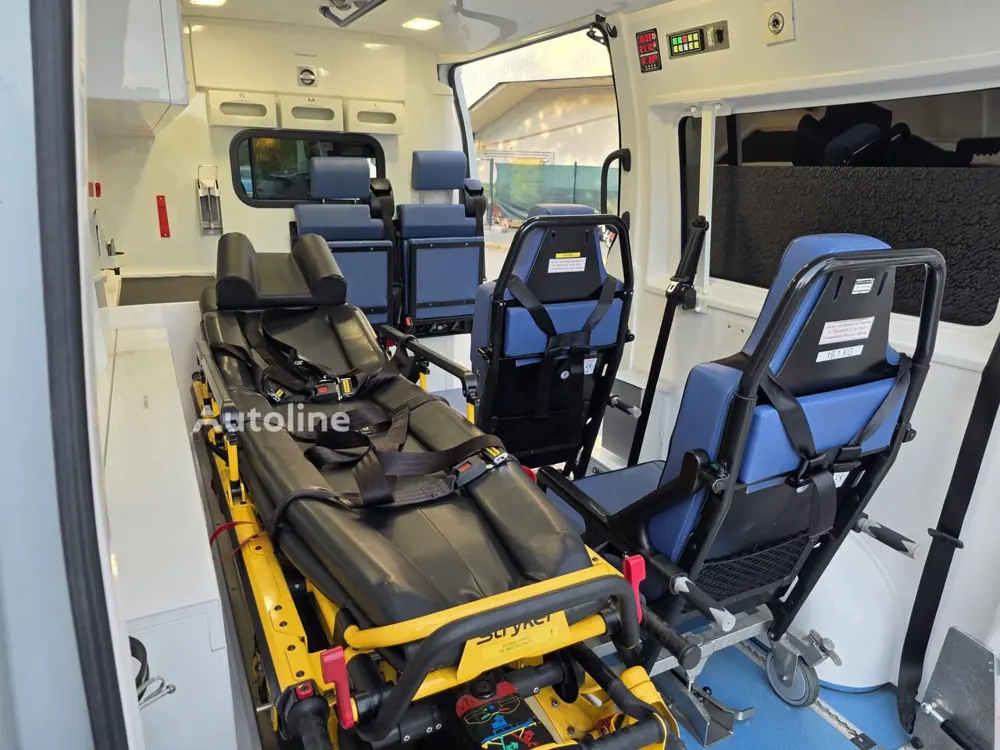
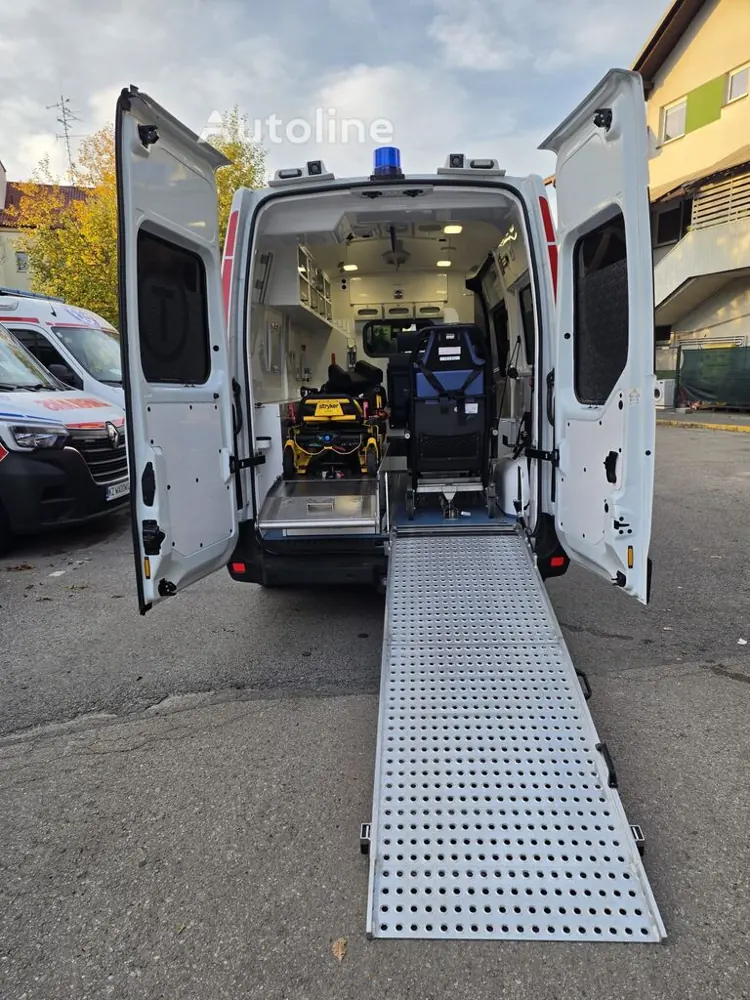
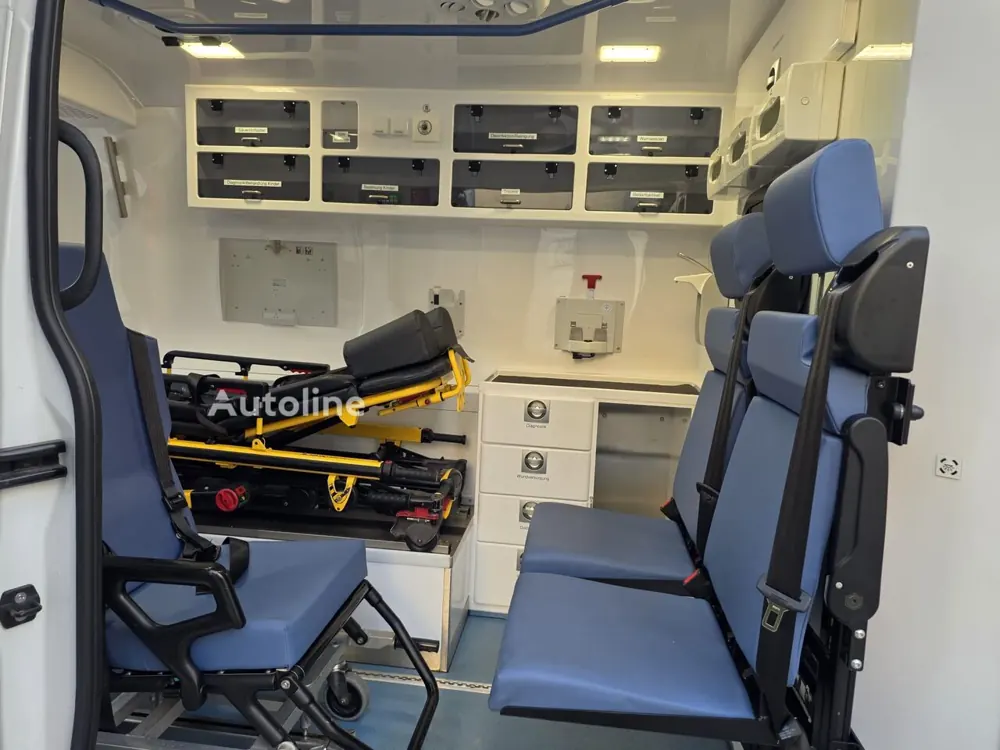
A longitudinal stretcher occupies the principal patient position. Blue and dark upholstered seating surrounds the working area, with belts visible on several positions. Storage is arranged above and alongside the patient space, while lighting is distributed along the ceiling.
The advertisement lists seven seats overall. That must be reconciled with the registration certificate, the photographed layout and the approved configuration when the stretcher or transport chair is occupied. It does not mean seven patients or seven seated passengers plus a stretcher patient.
During viewing, ask the crew to walk through boarding, access to the patient’s head, cabinet opening and exit with the supplied chair secured. This practical exercise establishes whether the layout matches the operator’s tasks without relying on an impression of spaciousness from a wide-angle image.
Stretcher and Patient Handling Equipment
The seller expressly names a Stryker M1 stretcher, and the yellow cot in the photographs carries Stryker markings. Stryker identifies the M-1 Roll-In System as model 6100: a manual, non-powered ambulance cot with a removable litter and steering-control features.
This distinction matters because wheeled or “roll-in” handling does not mean electrically powered lifting. The advertisement does not establish an electric bariatric cot or automatic powered loader. Match the supplied cot’s serial plate, retaining system and operating manual before confirming its configuration.
Stryker’s published M1 guidance gives a 500 lb/227 kg maximum capacity inclusive of patient, mattress and accessories. Treat that as manufacturer model-family guidance; the plate, version, installed fastener and approved vehicle arrangement determine the actual usable combination. It is not a promise of a 227 kg patient allowance in this ambulance.
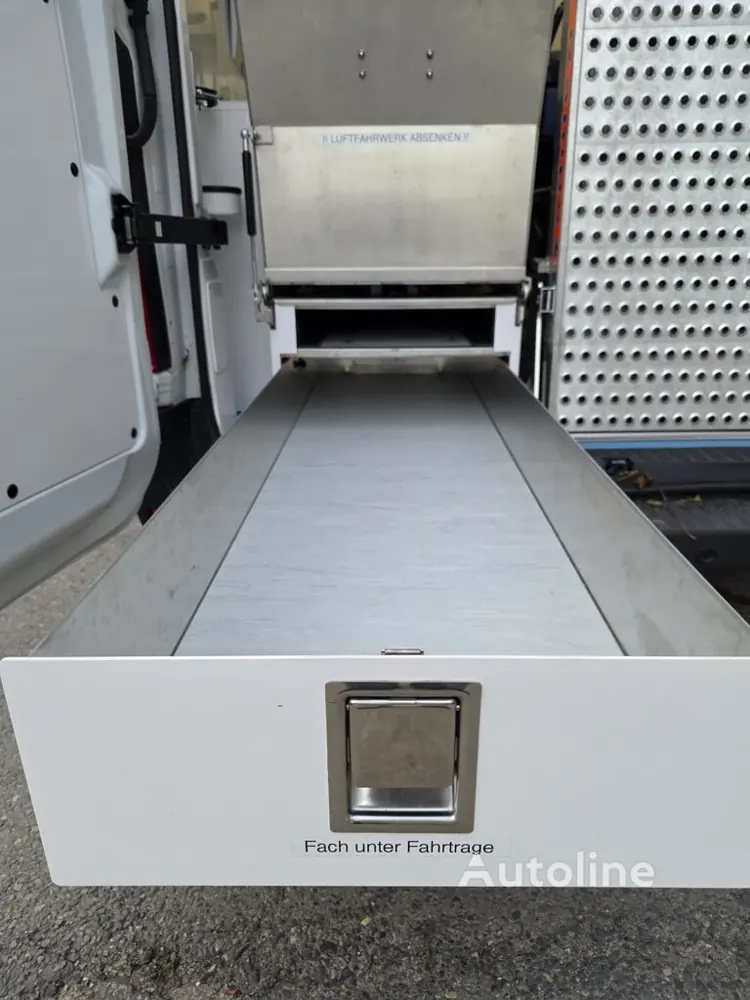
A long perforated rear ramp and a separate metal stretcher support are photographed. Their individual ratings and intended uses are not stated. The ramp may be relevant to the transport-chair arrangement, but its approved use with each device needs confirmation. A wheeled chair is also visible beside the cot; the seller describes a cardiac/transport chair mounted through the Dlouhy floor system, without naming its exact model.
Medical Equipment and Storage
The clearest way to assess the equipment is to separate four kinds of evidence:
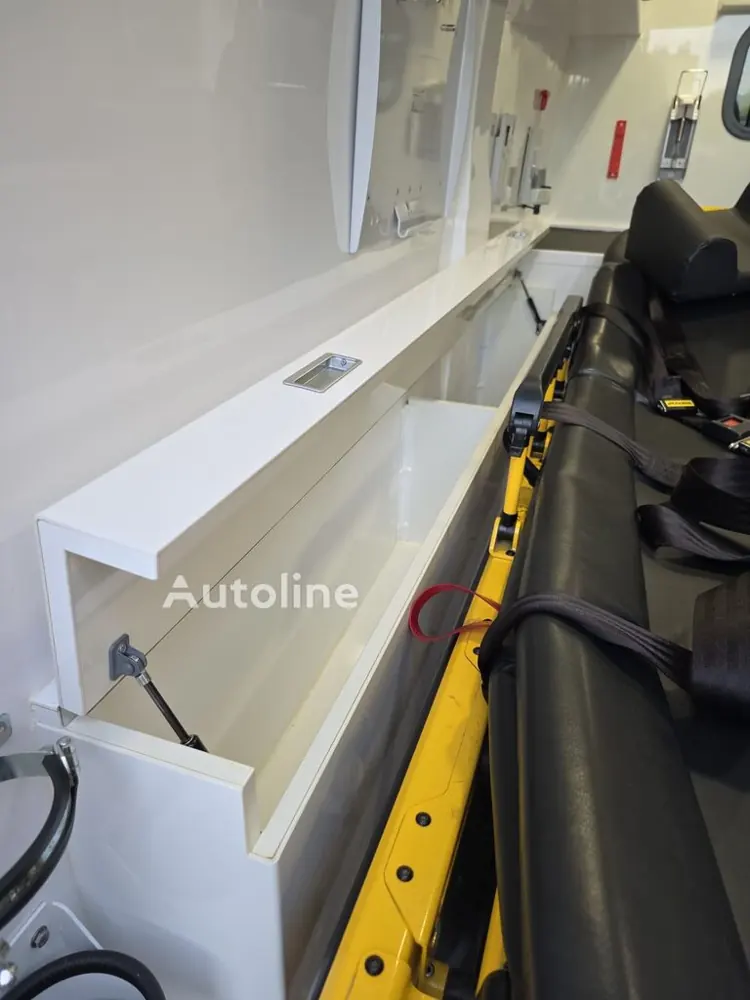
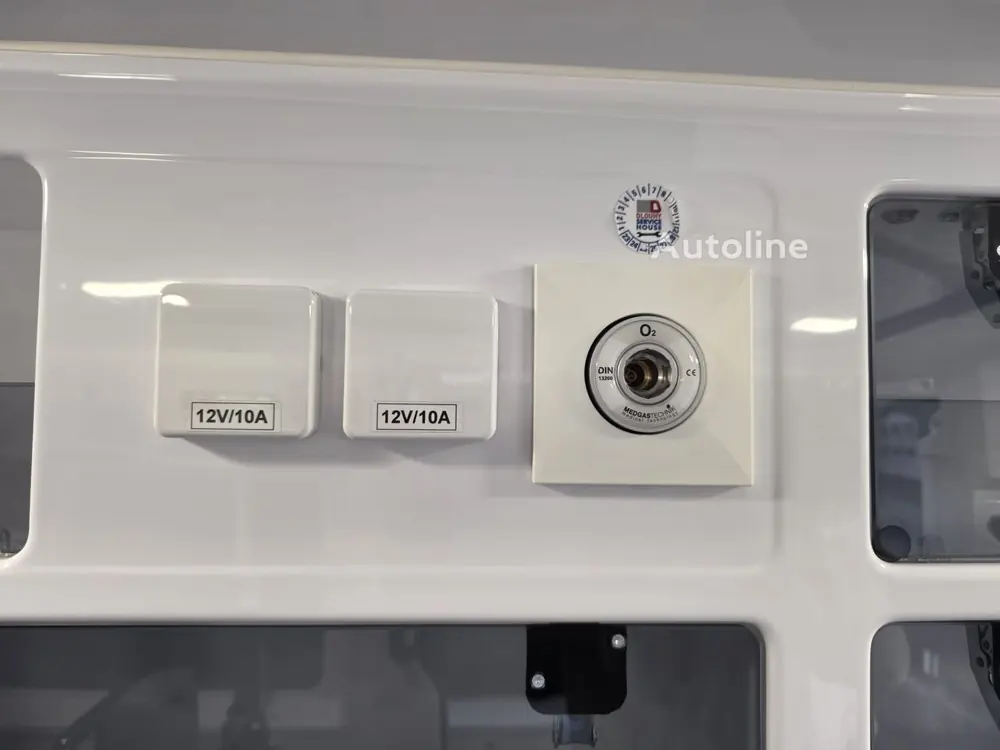
- Installed fittings evidenced in photographs: cabinets, floor tracks, seating, ceiling lighting, control panels, covered outlets labelled 12 V/10 A and an oxygen-labelled wall terminal. An external power inlet is also pictured.
- Express sale-description equipment: Stryker M1 stretcher, floor-mounted transport chair, air conditioning, Webasto additional heating and external 230 V supply.
- Visible but not itemized as included: loose storage contents, accessory holders and individual components shown around the patient area. Confirm their identities and inclusion in writing.
- Optional or separate equipment: the listing does not publish a priced optional-equipment schedule. Do not assume the availability or inclusion of an upgrade package.
The oxygen outlet establishes a visible connection point, not a complete, charged and tested oxygen installation. Cylinder quantities, regulators, pressure-test records and sale inclusion are not itemized. Nor is a monitor, defibrillator, ventilator or suction device expressly identified as supplied. A signed inventory should settle the clinical package.
DISCOVER THE AMBULANCE EQUIPMENT
Emergency Warning and Communication Systems
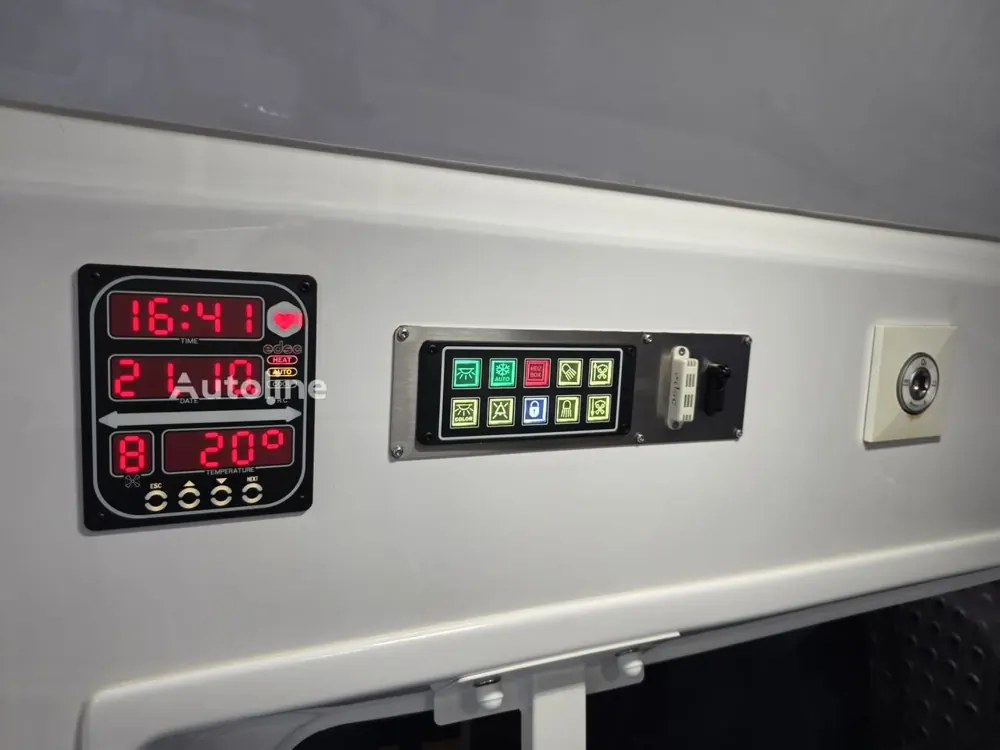
The exterior photographs show upper warning fittings and forward-facing warning units. A dedicated cab keypad includes light and horn/siren-style symbols, and another panel serves the patient compartment. These are visible installation details; flash patterns, siren approval, output and functional condition require demonstration.
The cab has an audio head unit, but no specific operational radio network, GPS tracking service or dispatch integration is confirmed. Buyers should define their communications requirement separately and establish compatibility, mounting and power needs before fitting additional equipment.
Driver Cabin and Medical Crew Accommodation
Photographs show left-hand-drive controls, individual front seats and a dashboard-mounted manual gear lever. The medical-area images show several seating arrangements and restraints. The listing’s seven-seat total should govern only after the approved seating diagram and registration records have been reconciled.
For an ambulance fleet, controls are part of the handover. Drivers need to understand warning functions, power connections and the vehicle clearance notice, while attendants need access to lighting, heating and retained equipment. A documented familiarisation session is more useful than assuming that every Master conversion works identically.
Heating, Ventilation and Climate Control
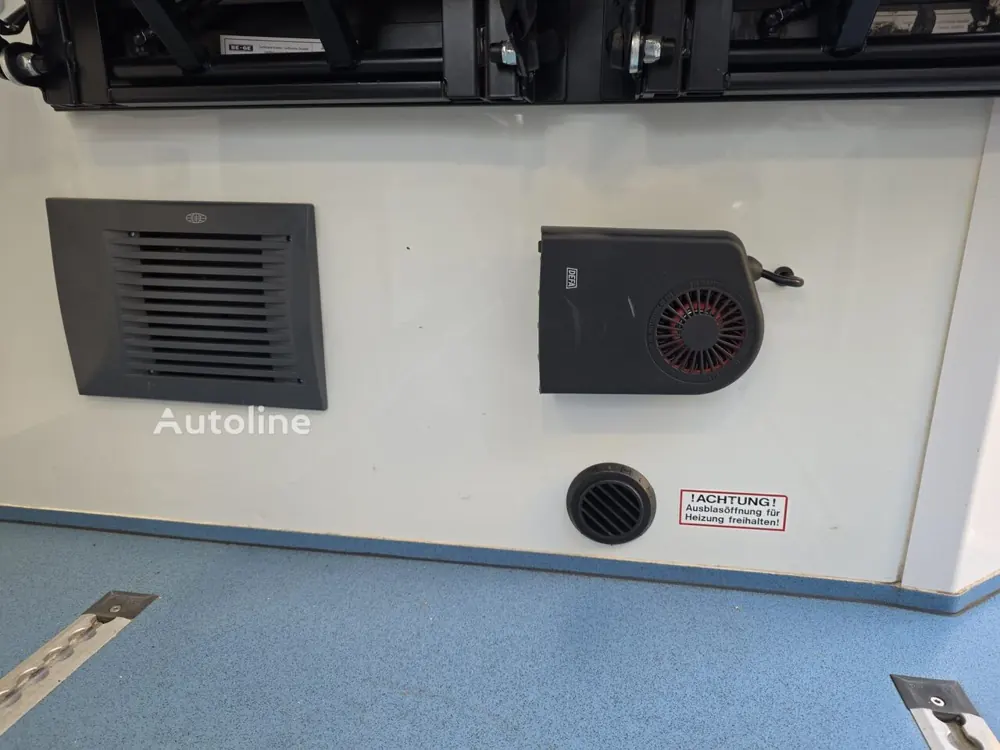
Air conditioning and additional Webasto heating are seller-listed. The photographs show cab climate controls, interior ventilation grilles and a separate DEFA-branded fan unit. The DEFA unit’s model, power rating and exact function are not specified, so it should not be substituted for the advertised Webasto system in the equipment schedule.
External 230 V supply can support a parked ambulance’s electrical arrangements, but the listing does not specify circuit allocation, battery charging, inverter capacity or auxiliary-battery condition. Ask for the wiring diagram, supply requirements, protective-device test results and a demonstration of parked and engine-running operation.
Technical Specifications
Renault Master Base Vehicle Specifications
| Specification | Evidence and scope |
|---|---|
| Model / generation | Renault Master Ambulans Ambulance / third-generation facelift appearance |
| Manufacture / registration | 2022 / 2022-11, advertiser entries |
| Condition / mileage | Used / 188,420 km, advertiser entries |
| Engine / power | 2,299 cm³ four-cylinder turbo/intercooled diesel / 132 kW (displayed as 179 HP) |
| Transmission / drive | Manual, six forward gears plus reverse / front-wheel drive |
| Axles / suspension | Two axles / hydraulic, seller-described without component specification |
| Weights / seats | 3,500 kg gross / 2,835 kg net / seven seats, listing figures |
| Emissions-related equipment | Particulate filter and 20-litre AdBlue tank listed; exact Euro approval not established |
| Cab clearance notice | 2.70 m height / 2.50 m width photographed; dimensions and width basis to verify |
Ambulance Conversion and Medical Equipment
| Specification | Evidence and scope |
|---|---|
| Converter / approval claim | Dlouhy; seller says original homologation and manufacturer declaration for EN 1789 Type B available |
| Express handling equipment | Stryker M1 stretcher and transport chair mounted through Dlouhy floor system |
| Stretcher family | Stryker M-1 model 6100, manual and non-powered according to manufacturer |
| Access / seating pictured | Rear ramp, support tray, side step, multiple belted medical-area seats |
| Electrical / climate described | External 230 V supply, air conditioning and additional Webasto heating |
| Fittings pictured | Cabinets, ceiling lighting, controls, floor tracks, 12 V/10 A-labelled sockets and oxygen terminal |
| Clinical-device inventory | Complete oxygen package, monitor, defibrillator, ventilator and suction inclusion not itemized |
Dimensions, engine identification, torque, emissions classification and finished payload are deliberately omitted as definitive specifications where unit-specific evidence is missing. Manufacturer references explain the range; they do not replace the ambulance’s records.
VIEW CURRENT PRICE & AVAILABILITY
Healthcare and Emergency Medical Applications
The documented focus is patient transportation using a stretcher and a separate transport chair. Hospital transfers, scheduled patient journeys and an appropriately equipped ambulance service are reasonable procurement applications to evaluate, subject to local authorisation, staffing and the final medical inventory.
Industrial medical operators and humanitarian buyers can assess the same configuration against their routes and clinical plans. Front-wheel drive does not establish off-road capability, and a Type B document claim does not establish an advanced-life-support package. Define the service first, then verify the vehicle, equipment and personnel needed to deliver it.
What Makes This Renault Master Ambulance Different?
The distinguishing combination is Dlouhy conversion, manual Stryker M1 handling, a floor-mounted chair arrangement, rear ramp, 230 V connection and additional heating. It gives buyers specific systems to inspect and identify.
Our separate Renault Master L2H2 bariatric ambulance review concerns a different seller, GIFA conversion and PROMEBA PC-750 electric stretcher with an advertised extension kit. Those specifications do not apply here. The broader MAN TGE ambulance review offers another listing-specific example of checking stretcher identification and included equipment without treating all conversions as interchangeable.
Safety and Operational Considerations
The listed gross weight is 3,500 kg and net weight 2,835 kg. Their arithmetic difference is 665 kg, but that is not a verified operational payload: the net-weight basis, fuel, crew, patient, devices and accessories must be established. Obtain a completed-vehicle weighing and check each axle in the intended operating load.
Patient restraints, cot retention and chair-to-floor attachment should be checked as approved systems. Request applicable maintenance and inspection records, including latch operation, belts, ramp condition and identification labels. Qualified personnel should demonstrate handling in accordance with the matching manuals.
Commissioning should also cover cleaning, oxygen-system verification where fitted, electrical testing, vehicle servicing and warning-light permissions. The seller’s Type B declaration and homologation should be reviewed against the exact vehicle and destination’s requirements. These are normal acceptance checks, not findings of a defect.
Current Seller Offer — Verified 25 October 2026
Product Location: Wadowice, Poland. This is the advertisement’s vehicle-location field; the seller’s street address is not being used as a substitute.
| Specification | Evidence and scope |
|---|---|
| Product / seller / reference | Renault Master Ambulans Ambulance / Auto Centrum Piotr Maciejczyk / QJ52920 |
| Price / invoice wording | €34,990 gross; seller states VAT included and used-goods margin procedure invoice |
| Year / registration / condition | 2022 / November 2022 / used |
| Mileage / engine | 188,420 km / 2,299 cm³ diesel, 132 kW advertised |
| Transmission / drive | Six-speed manual plus reverse / front-wheel drive |
| Conversion / included equipment | Dlouhy; Stryker M1 stretcher, floor-mounted transport chair, air conditioning, Webasto heating, external 230 V supply described |
| Other medical devices | Not itemized as a complete supplied package |
| Availability | Specific listing retrievable through research service; direct requests redirected to category. Stock unconfirmed |
| Delivery / shipping / export | No named destinations, charges, lead time or transport/export terms established |
The seller describes Renault authorised-service history, an additional technical inspection and accident-free, unrepainted condition. These remain seller statements pending records and inspection. The listing shows technical inspection validity to November 2027.
Availability note: the research service returned this specific advertisement and its 35-photo gallery. Direct link requests redirected to the general ambulance category during the same check. Current stock and the offer’s continued validity are therefore unconfirmed; the seller also asks buyers to confirm availability directly.
Delivery destinations, shipping arrangements, and applicable transport terms were not specified in the information reviewed. Prospective buyers should confirm these details directly with the seller.
No vehicle-specific export service, port delivery, Incoterm, freight charge or lead time was established. Ask for a written quotation covering the selected vehicle, documentation and agreed handover arrangements.
What Buyers Should Confirm Before Purchasing
Start with identity: obtain the VIN, registration, completed-vehicle approval and Dlouhy conversion reference. Request the engine build data, service history, current mileage and gross/axle weight plates. Then agree an inventory identifying the cot, chair, retention components, ramp and every medical device supplied.
For international procurement, establish registration and export eligibility, destination compliance, payment milestones, tax treatment and collection or delivery responsibilities before contracting. A gross price and a used-goods margin invoice should not be converted into an assumed recoverable VAT amount. Obtain the seller’s invoice treatment and suitable local professional advice for the actual transaction.
Finally, cost commissioning alongside purchase: equipment servicing, crew familiarisation, local communications installation and the initial maintenance plan. A useful acceptance record ties each demonstration and document to this vehicle, giving the fleet a reference after the listing disappears.
Advertiser Media and Manufacturer References
The exact advertisement supplies 35 photographs; fourteen selected originals appear here. No advertiser video was identified. A verified official vehicle- or equipment-specific demonstration suitable for embedding was not established, so unrelated footage has not been presented as this ambulance.
Technical context comes from Renault Trucks’ contemporary Master range information, Dlouhy’s rescue-vehicle documentation, Dlouhy’s transport-chair explanation and Stryker’s M1 technical guidance. Manufacturer examples and options are distinguished from this used vehicle’s supplied configuration.
Frequently Asked Questions
1. What is the exact advertised Renault Master?
It is listing QJ52920, described as a used 2022 Renault Master Ambulans Ambulance with Dlouhy conversion. Its exact length/roof code and engine suffix are not supplied.
2. Is this a new ambulance?
No. The seller lists it as used, with 188,420 km and first registration in November 2022.
3. What engine and gearbox are advertised?
A 2,299 cm³ four-cylinder diesel, 132 kW, six-speed manual gearbox and front-wheel drive. Exact torque and emissions approval need unit documentation.
4. Does it include an electric bariatric stretcher?
The seller names a Stryker M1. Stryker identifies this model family as manual and non-powered. An electric bariatric stretcher is not confirmed here.
5. What patient-handling equipment is included?
The description includes the M1 stretcher and a transport chair attached through the Dlouhy floor system. Confirm the exact serials, fasteners, ramp inclusion and ratings in the purchase inventory.
6. Is oxygen or a defibrillator included?
An oxygen terminal is photographed, but a complete oxygen package and defibrillator are not itemized as supplied. Ask for the complete medical-equipment list.
7. Where is it and what is the price?
The advertisement’s location field says Wadowice, Poland. Its reviewed price is €34,990 gross, with used-goods margin invoice wording. Confirm the current offer and invoice basis.
8. Is it available for international delivery?
Current availability is unconfirmed, and no delivery destinations or export terms were established. Obtain the seller’s written stock and transport confirmation.
Final Verdict
This Renault Master is most interesting for its Dlouhy patient-area layout and the expressly described Stryker M1 and floor-mounted transport chair. The manual diesel drivetrain, rear access arrangements and external electrical supply provide concrete subjects for an institutional buyer’s inspection.
Its value to a fleet depends on the approved seating and weight configuration, the equipment inventory and the service it will perform. Use the original photographs and this buying guide to prepare a focused enquiry, then confirm current stock, documents and the supplied configuration before committing.
Join the Conversation
Which matters most in your next patient-transport vehicle: stretcher handling, seated access, crew working space or equipment storage? Share the procurement checks that have helped your team below.
Your experience matters
Share your thoughts on this page
Have a question, a useful experience or a suggestion? Add your input below.
Comments are public. Keep them respectful and relevant. Do not share contact details, confidential information or emergency reports.
Comments on this page
Loading comments…