HSSE TIPS · Product Reviews · Mobile Veterinary Care
Peugeot Boxer Mobile Veterinary Clinic Review: Equipment, Specs & Buying Guide
Affiliate Disclosure: Worksite Safety Hub may earn a commission if you make a qualifying purchase through links in this article. This does not change the price you pay.
Introduction — Bringing Veterinary Healthcare Closer to Animals and Their Owners
For a mobile veterinary team, the useful journey ends at a workable animal-care space. The owner needs clear access, the animal needs appropriate handling, and the practitioner needs equipment, hygiene facilities and utilities suited to the appointment. Selecting the right van means planning those requirements together.
Autozone UAE’s Peugeot Boxer Mobile Veterinary Clinic presents a distinctive starting point: a diesel, manual, front-wheel-drive van with a photographed stainless work table, fitted storage, sink and green-and-white interior. This review examines the advertised engineering, visible conversion and practical procurement questions, keeping veterinary examination and outreach separate from unverified specialist procedures.
EXPLORE THE PEUGEOT BOXER MOBILE VETERINARY CLINIC
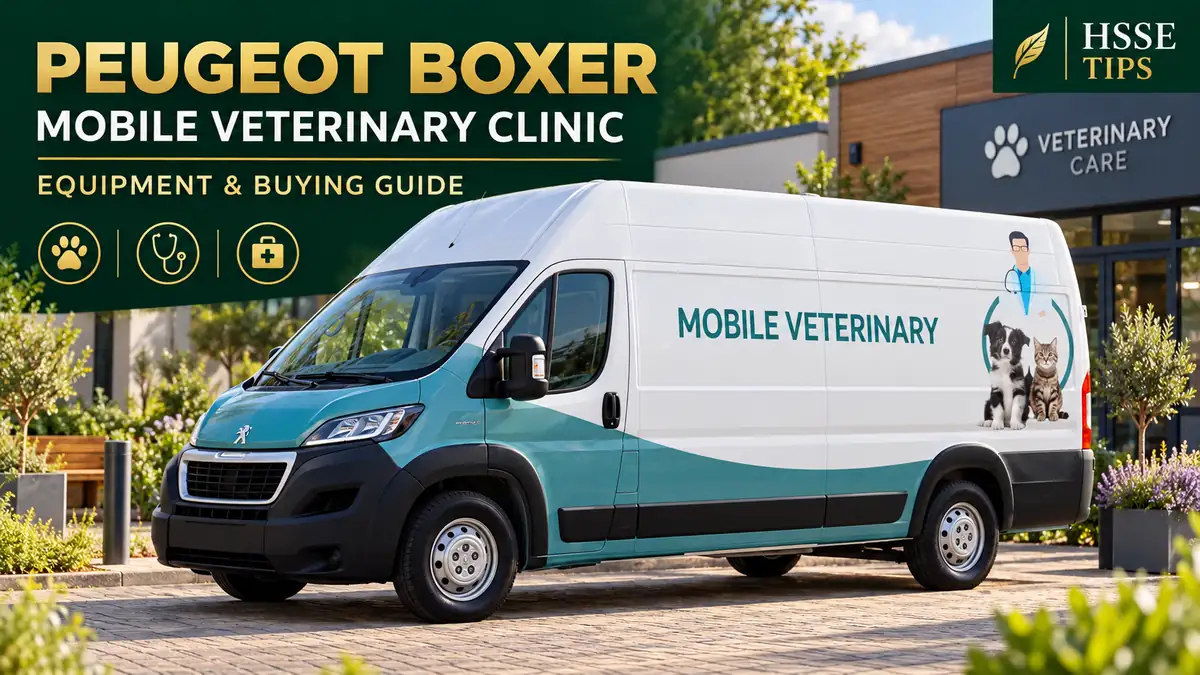
Peugeot Boxer Mobile Veterinary Clinic Overview
The exact advertisement is Autoline PT41519, supplied by Autozone UAE, identified as Autozone Assembling LLC. Its category is cargo van and its model description is Boxer Mobile Veterinary Clinic. Autozone’s corresponding product page describes a customizable grooming bench, working area, water tank and equipment zone.
The photographs support evaluating a van-based animal-care workspace rather than a human healthcare vehicle. They do not establish a maternity unit, dental clinic, diagnostic laboratory or conventional emergency ambulance. The practical question is which veterinary services the contracted fit-out can support with qualified staff and appropriate authorization.
Understanding the Peugeot Boxer Platform
The offered model is Boxer; a full L2H2, L3H2, L4H2 or other length/height code is not established in the reviewed listing. Obtain the VIN-linked build record and finished conversion drawings. The converter’s product page describes left-hand drive; confirm the supplied steering configuration and destination requirements in the purchase specification.

Engine, Transmission and Drivetrain
The seller and matching converter page describe a 2.2-litre, four-cylinder diesel engine with manual transmission and front-wheel drive. The advertisement gives 130 HP / 96 kW, while the converter describes 320 Nm torque. These are source-stated specifications, not measurements from a road test or VIN inspection.
Engine code, exact gearbox, gear count and emissions classification are not established. Request those records alongside service intervals and parts support. Do not assign a BlueHDi engine identity or an emissions standard solely from displacement or vehicle appearance.
The advertised 90-litre fuel tank is useful fleet-planning information, but route range depends on the completed vehicle and operating conditions. Published consumption and performance claims were not independently validated for the converted clinic; no range or operating-cost forecast is calculated here. Front-wheel drive also does not establish off-road suitability.
Chassis, Dimensions and Gross Vehicle Weight
The advertisement quotes 6.363 m length, 2.050 m width and 2.760 m height, with a 4,035 mm wheelbase. Confirm the measurement basis, including mirrors and roof equipment, before choosing parking, transport or access routes. Internal usable dimensions and working clearances are not provided.
Two axles and two seats are listed, but gross vehicle weight, axle ratings, completed weight and remaining payload are unverified. Obtain weights with the intended water, equipment, staff and supplies aboard. The listing does not establish suspension or braking specifications, so those details should come from the actual chassis documentation.
Veterinary Clinic Conversion and Exterior Design
The seller describes aluminium-panel walls, vinyl flooring, thermal insulation, PVC Intecel, storage cabinets and a marine-grade subfloor. The photographs show light-coloured surfaces, green overhead trim, fitted cupboards and veterinary exterior graphics. Confirm the actual materials, joints and installation details in the build schedule.
Veterinary Examination Area and Interior Layout
An original rear view reveals a stainless work surface on a scissor-style support, tall glass-front storage and a pale-teal seat. Another angle shows the table alongside the available working area. The supplier calls the principal fitting a grooming bench; its suitability as a veterinary examination surface depends on its documented design and the intended patient.
Request table dimensions, rated load, adjustment functions and approved animal-handling attachments. Then walk through an appointment: animal entry, owner position, examination, access to supplies and departure. Confirm that furniture movements and open cupboard doors preserve a usable exit route.

Veterinary Equipment and Diagnostic Facilities
The advertised conversion list names a grooming bench, brackets, equipment area, water tank, pump, vacuum cleaner, charging station and refrigerator. Treat this as the supplier’s proposed package, then obtain manufacturer, model, quantity and inclusion status for the actual order.
The photographs add visual detail: work surfaces, task lighting, cabinets, a compact appliance, a covered bench instrument and a cabinet labelled “STERILIZER 209.” The covered instrument’s identity and diagnostic function are not sufficiently established. The visible label does not by itself establish a validated instrument-sterilization process.
No identified ultrasound, veterinary X-ray, anesthetic system, oxygen/suction package or animal weighing device is confirmed as included. A housekeeping vacuum cleaner must not be described as clinical suction. Likewise, a refrigerator entry does not establish vaccine-storage qualification or a documented cold chain.
Separate fixed installations, expressly included equipment, items only visible in photographs, optional additions and equipment the practice must source. That inventory lets the veterinary team match the unit to its authorized services without assuming surgery, radiography or specialized diagnostics.
DISCOVER THE VETERINARY EQUIPMENT & FACILITIES
Animal Handling and Welfare Considerations
Rear doors and a side entrance provide access points, but no documented animal ramp, lift, transport cage or examination-restraint system was verified. Wall brackets cannot be assigned an animal-restraint function without their instructions and approved installation details.
Ask the veterinary team to assess the entry route and table-transfer method for the intended species, size and mobility. Verify footing, reachable support and table stability through inspection and appropriate demonstrations. Vinyl flooring is listed, but a tested non-slip performance is not established.
Plan the owner’s position and staff movement so the animal can be handled without obstructing access to equipment or exits. Room cooling and ventilation also need to match occupied use. Large-animal treatment, livestock carriage and unattended animal holding are not established capabilities of this fit-out.
Cleaning, Disinfection and Veterinary Biosecurity
The photographed cabinets and counters provide a useful basis for assessing cleaning access. Inspect surface joints, corners, table mechanisms and areas around equipment mounts, then obtain material-compatible cleaning instructions. No dedicated isolation compartment or specialized containment system is verified.
AAHA guidance distinguishes removal of visible contamination from subsequent disinfection and recommends cleaning/disinfecting animal-contact surfaces between patients. For this van, translate those principles into a practice-specific schedule, suitable products and staff responsibilities, following product directions and the veterinary team’s risk assessment.
Include hand hygiene, sharps, animal waste, instrument handling and protection of clean supplies in the operating plan. The “STERILIZER 209” item needs manufacturer documentation, intended-use confirmation and an agreed process before any sterilization claim. An autoclave or validated onboard reprocessing installation is not established.

Electrical Power and Backup Systems
The description includes a charging station, and the photographs show lighting and control fittings. Supply voltage, frequency, power consumption, shore-power connection, inverter, battery capacity and circuit protection are not established. A charging-station entry does not prove a particular backup-power system.
No generator is confirmed as included. Prepare a load schedule for the selected devices, lighting, water pump and climate equipment, then specify supply, protection and any backup arrangement. Obtain drawings and functional tests, including the agreed response to a supply interruption. No independent operating endurance is calculated from the available information.
Water Supply, Sanitation and Waste Management
A sink and tap are visible, while the source specification lists a water tank and pump. Freshwater volume, wastewater storage, refill/drain arrangements and water-treatment provisions remain unverified. The listing does not establish a toilet or onsite treatment of veterinary waste.
Agree how the unit will be replenished and cleaned between operating sites, and how wastewater, sharps and other clinical waste will be collected under local requirements. Include access for tank servicing and maintenance. The planned appointment schedule should reflect measured capacity and servicing needs rather than an assumed day of water autonomy.
Heating, Ventilation and Air Conditioning
The source lists air conditioning and the counter photograph shows a split indoor unit. Other visible grilles and control fittings do not establish fresh-air flow, heating capacity or environmental performance. Request equipment identities and a demonstration under conditions representative of the intended deployments.
Assess occupied temperature control, outside-air provision and maintenance access separately. No medical-grade filtration, negative pressure, specialized biosecurity ventilation or humidity-control performance is documented. A comfort-cooling unit is not proof of infectious-animal isolation capability.

Transportation and Deployment Requirements
Use the quoted dimensions as a starting point for route planning, then confirm the complete van’s actual envelope and weights. Survey parking, bends, gradients, overhead obstructions and the route from owners’ vehicles to the clinic entrance. No turning-circle, ground-clearance or all-terrain claim was verified.
Before travel, secure furniture, cabinets, appliances and portable equipment using the approved arrangements. At each site, define parking, utilities, owner waiting, animal access and waste servicing. Check the environment before starting appointments and arrange appropriate support or referral when the proposed service is outside the agreed scope.
Mobile Veterinary Healthcare Applications
The fitted workspace is a candidate for companion-animal examinations and appropriate outreach services once the table, equipment and operating approval match the clinical brief. Private mobile practitioners, animal-welfare organisations and rural programmes can assess it against their own patient groups and site requirements.
Preventive-care or vaccination programmes require the relevant devices, medicines, storage conditions and qualified personnel. Education and owner consultations may form part of an outreach service. Neither photographed refrigeration nor a branded veterinary exterior establishes a complete vaccination package.
For livestock-health programmes, distinguish a vehicle carrying staff and supplies to farms from a van treating or transporting large animals onboard. The latter capabilities are not verified. Major surgery, advanced imaging and anesthesia likewise need a separately documented installation and authorization.
Mobile Veterinary Clinic vs Conventional Veterinary Practice
The mobile format brings a defined workspace to selected sites, while a conventional practice plans around permanent rooms and utility infrastructure. Mobile operations add travel securing, access checks, site selection and replenishment to clinical work. Both require competent veterinary staff, appropriate equipment and hygiene procedures.
Safety, Animal Welfare and Regulatory Considerations
Have the finished vehicle and veterinary installation inspected by appropriately qualified professionals. Check operating weight, equipment anchorage, fire protection, electrical safety, exits and animal access. Maintain devices according to their instructions and confirm who will provide parts, servicing and training at the deployment destination.
The veterinary operator should define safe handling, zoonotic-disease precautions, sharps and waste procedures, and a route for patients needing facilities beyond the van’s service. Confirm destination vehicle-import, emissions, registration, veterinary-practice and medicine-storage requirements. Company quality statements are not a clinical authorization for the individual van.
Technical Specifications
Figures below are attributed to the advertiser and corresponding converter page. They require confirmation against the offered chassis and final conversion; no road test or VIN inspection was performed.
| Item | Source-supported specification |
|---|---|
| Advertised model | Peugeot Boxer Mobile Veterinary Clinic; full length/height derivative not established. |
| Engine / output | 2.2-litre four-cylinder diesel; 130 HP / 96 kW in listing; converter states 320 Nm. |
| Transmission / drive | Manual; front-wheel drive. Two axles listed. |
| Quoted dimensions | 6.363 × 2.050 × 2.760 m; measurement basis to confirm. |
| Wheelbase / fuel tank | 4,035 mm / 90 litres, source-stated. |
| Seating / identification | Two seats listed; converter describes LHD. VIN-linked records required. |
| Weight / year records | GVW, payload, production year, first registration and mileage not established. |
| Item | Source-supported specification |
|---|---|
| Converter / supplier | Autozone UAE — Autozone Assembling LLC in advertisement. |
| Advertised construction | Aluminium-panel walls, vinyl floor, insulation, PVC Intecel and marine-grade subfloor. |
| Advertised functional areas | Grooming bench, working/action area, equipment zone and storage cabinets. |
| Photographed layout | Stainless work table on scissor-style support, sink/counters, cupboards and teal seating. |
| Access evidence | Rear and side door openings; animal ramp/lift, restraints and carriage system not verified. |
| Item | Source-supported specification |
|---|---|
| Advertised utility items | Water tank, water pump, fridge, vacuum cleaner and charging station; final models/inclusions to confirm. |
| Visible equipment | Task lighting, control fittings, covered instrument and cabinet marked STERILIZER 209; functions not clinically validated here. |
| Water / climate | Sink and split AC pictured; water capacities and HVAC performance not documented. |
| Power architecture | Voltage, frequency, load, inverter/batteries and backup package not specified; generator inclusion unverified. |
| Specialist devices | Ultrasound, X-ray, anesthesia, oxygen/suction and weighing package not verified as included. |
VIEW CURRENT PRICE & AVAILABILITY
Current Seller Offer — Verified 26 October 2026
Product: Peugeot Boxer Mobile Veterinary Clinic Cargo Van. Manufacturer: Peugeot. Supplier/Converter: Autozone UAE / Autozone Assembling LLC. Advertisement: PT41519. Exact Model: Boxer veterinary conversion; full derivative not stated.
Product Location: Ajman, United Arab Emirates, as entered in the vehicle-location field. Exact physical collection premises remain to be confirmed; no seller office address is substituted as proof.
Asking Price: on request; no amount or currency quoted. Condition: new, advertiser-stated. Production Year, First Registration and Mileage: not specified in the information reviewed.
Powertrain: source-stated 2.2-litre diesel, manual, front-wheel drive; engine and gearbox codes unverified. Gross Vehicle Weight/Payload: not established. Facilities: photographed work table, storage, sink and seating; final veterinary inventory and animal-handling specification required.
Power Systems: charging station described without system ratings; generator/backup inclusion unconfirmed. Availability: listing accessible when checked, but allocated vehicle, build status and dispatch lead time unconfirmed.
Delivery and Export: Autozone’s website states general worldwide export activity. That does not establish delivery eligibility, included freight or transport terms for this van. Named destinations, charges, Incoterms, documentation responsibilities and commissioning arrangements were not specified for this offer.
Delivery destinations, shipping arrangements, and applicable transport terms were not specified in the information reviewed. Prospective buyers should confirm these details directly with the seller.
Obtain a destination-specific quotation covering collection, road/sea transport, loading, insurance, export and registration records, customs responsibilities and lead time. Any required installation, staff training or commissioning should be expressly scheduled.
CHECK DELIVERY & EXPORT OPTIONS
What Buyers Should Confirm Before Purchasing
Request the VIN and chassis records, complete measurements and weights, construction drawings and current photographs of the quoted build. Agree a veterinary equipment inventory with model identities, inclusion status, accessories and maintenance support. Resolve the table’s load rating, animal-entry method and the intended handling provisions.
Acceptance should demonstrate table use, secured travel condition, water servicing, electrical loads, climate control and cleaning access. Include device instructions, training, warranty and destination authorization. For other conversion-planning examples, our Ford Transit laboratory guide and van-type dental vehicle review concern separate human-healthcare missions; their equipment is not attributed to this veterinary van.
Frequently Asked Questions
Which Boxer configuration is advertised?
A Boxer veterinary cargo-van conversion. A complete L/H code and VIN-linked derivative are not established.
What engine and drivetrain are described?
The seller describes a 2.2-litre four-cylinder diesel, manual transmission and front-wheel drive. Exact engine/gearbox codes require confirmation.
What are its advertised dimensions?
6.363 m long, 2.050 m wide and 2.760 m high, with a 4,035 mm wheelbase. Confirm the measurement basis and finished vehicle.
Is the work table a veterinary examination table?
The supplier calls it a grooming bench. Its examination suitability, load rating and approved attachments require documentation.
Does it include ultrasound or X-ray?
No identified ultrasound or veterinary radiography package is confirmed as included.
Is an autoclave included?
A cabinet marked STERILIZER 209 is photographed, but a validated sterilization system or autoclave is not established.
Can it transport livestock or large animals?
Approved livestock carriage and large-animal onboard treatment are not verified. Define any transport function separately.
Does the fridge establish vaccine storage capability?
No. Confirm the unit, temperature requirements, monitoring and power continuity for the intended medicines.
Are price and delivery confirmed?
Price is on request. Ajman is the listing location; stock allocation, collection premises and destination-specific delivery terms need confirmation.
Are original photos or a vehicle video available?
Four distinct advertiser photographs are included here. No unit-specific video was verified; request a current walkthrough and functional demonstration.
Final Verdict
The Peugeot Boxer offer combines source-stated diesel/manual/front-wheel-drive engineering with a clearly photographed animal-care workspace. Its stainless table, cabinets, sink, seating and climate fittings give veterinary buyers a concrete starting point for planning a mobile examination and outreach service.
Specify the actual patient group, equipment, handling arrangements and utility requirements, then confirm them through an agreed acceptance process. That gives private practitioners, animal-welfare programmes and institutional buyers a practical basis for evaluating this configurable veterinary van.
Join the Conversation
Which requirement matters most to your mobile veterinary project: safe animal entry, working space, hygiene, equipment storage or dependable utilities? Share your service requirements and procurement experience. Every Task. Every Person. Home Safe.
Sources and Editorial Method
The exact affiliate redirect, Autoline PT41519 and its nine-image gallery were reviewed on 26 October 2026. Four distinct original photographs are shown; repeated/cropped views are omitted. The review is desk-based, without physical inspection, device testing or clinical commissioning.
Primary context: Autozone’s matching veterinary product specification, Peugeot Boxer conversion context and AAHA veterinary infection-control guidance. Regional/current Peugeot specifications are not substituted for the offered chassis. Company-wide export and quality statements are distinguished from vehicle-specific terms. Commercial enquiries use the tracked offer buttons.
Your experience matters
Share your thoughts on this page
Have a question, a useful experience or a suggestion? Add your input below.
Comments are public. Keep them respectful and relevant. Do not share contact details, confidential information or emergency reports.
Comments on this page
Loading comments…