HSSE TIPS · Product Reviews · Veterinary Healthcare Comparison
Mobile Veterinary Clinic vs Traditional Veterinary Practice: Which Model Fits Your Animal Healthcare Services?
Affiliate Disclosure: Worksite Safety Hub may earn a commission if you make a qualifying purchase through links in this article. This does not change the price you pay.
Introduction: Two Valuable Approaches to Animal Healthcare
Where should your veterinary service meet the animals and owners who need it: at a carefully chosen outreach location, inside an established practice, or through a coordinated combination of both? That question begins with your patients, professional team and service objectives—not a contest between a van and a building.
Mobile veterinary clinics can bring appropriately equipped services to planned locations. Traditional veterinary practices provide established premises for organized animal healthcare. Both can support examinations, preventive care, owner communication and continuity, according to their equipment, staffing and authorization.
This guide compares how the two models work, explains ways they can complement each other and offers a practical planning framework. Autozone UAE’s Peugeot Boxer Mobile Veterinary Clinic provides a product example within the wider discussion; the right service model remains a decision about your own animal healthcare programme.
EXPLORE THE PEUGEOT BOXER MOBILE VETERINARY CLINIC
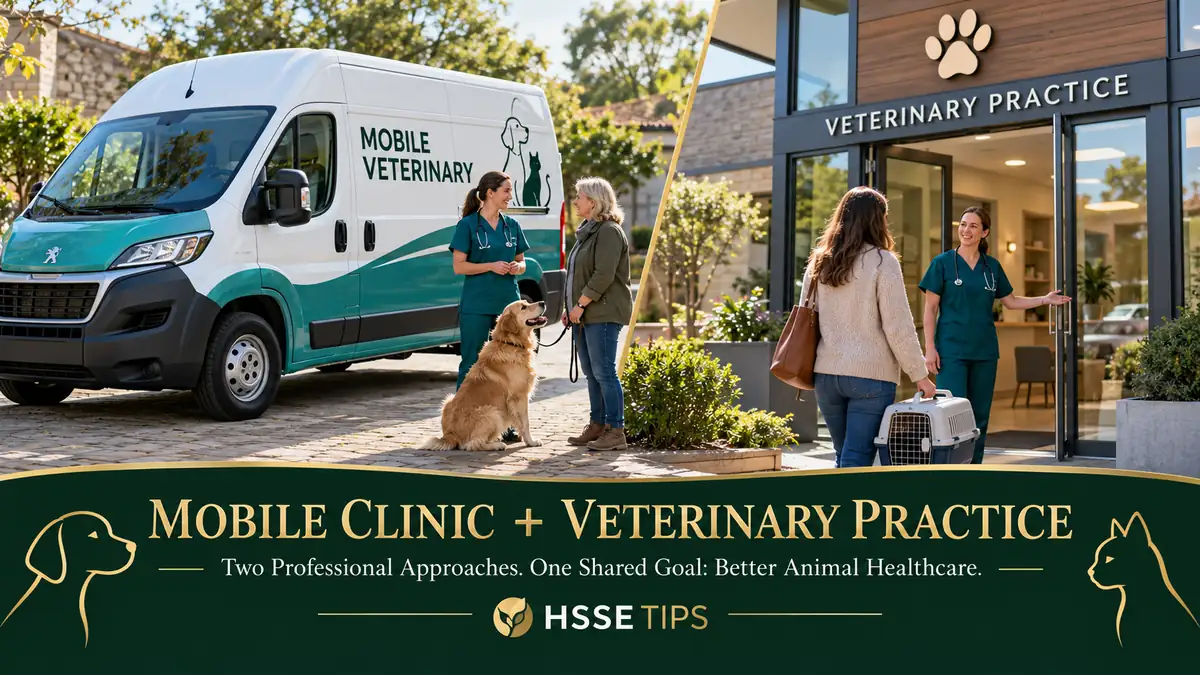
Understanding Mobile Veterinary Clinics
Mobile veterinary practice can take several forms. A vehicle may carry a fitted clinical workspace to a site, or transport a veterinary team and equipment to animals examined at their usual premises. A house-call service and an onboard treatment clinic therefore need their own service descriptions and operating arrangements.
For a fitted clinic, the conversion links the vehicle with work surfaces, storage, access, power, water and environmental control. The clinical team defines what can be provided there, how animals enter and leave, and how records and onward care are managed. The installed equipment and authorization establish the service scope.
Companion-animal appointments, preventive-care programmes, community education and welfare partnerships are potential applications when appropriately organized. Farm visits may focus on animals in their own handling facilities, with the vehicle carrying staff and supplies. This does not imply that a particular van accommodates or transports livestock onboard.
Understanding Traditional Veterinary Practices
A traditional veterinary practice operates from established premises. Its layout can organize reception, consultation rooms, treatment areas, medical storage and staff functions around the services offered. Appointment systems and familiar contact arrangements help owners understand where to attend and whom to contact for follow-up.
Depending on the facility, equipment and professional team, a practice may offer diagnostic testing, laboratory services, surgical facilities or animal accommodation. Those functions are confirmed individually; “veterinary practice” does not describe one identical equipment package. Planning should reflect the species treated and the approved clinical programme.
The UK RCVS accreditation framework, for example, distinguishes practice categories and species-specific requirements. Its Practice Standards Scheme is voluntary accreditation, and its categories are UK context rather than an approval for this advertised van or a universal classification for every country.
Mobile Veterinary Clinic vs Traditional Veterinary Practice: At a Glance
The table compares applications and planning responsibilities positively. Neither column is a rating. Clinical capability depends on the actual service, equipment, staff and permissions in either setting.
| Healthcare consideration | Mobile veterinary clinic | Traditional veterinary practice |
|---|---|---|
| Service environment | Vehicle-based workspace or professionally organized visits. | Established premises arranged around the practice’s services. |
| Healthcare delivery | Appointments at suitable planned locations. | Appointments at an established, identified facility. |
| Community outreach | Planned visits and community animal-health programmes. | Community services, partner programmes and referral support. |
| Veterinary examinations | According to installed equipment and authorization. | According to facility equipment and authorization. |
| Diagnostic services | Selected onboard/portable equipment and laboratory partnerships. | Selected installed/portable equipment and laboratory partnerships. |
| Animal welfare | Species-appropriate handling and a defined care plan. | Species-appropriate handling and a defined care plan. |
| Veterinary staffing | Qualified professionals matched to the service and site. | Qualified professionals matched to the service and facility. |
| Equipment planning | Vehicle layout, mounting, utility and service requirements. | Room layout, utility and service requirements. |
| Hygiene and biosecurity | Procedures suited to the mobile workspace and visits. | Procedures suited to the premises and patient flow. |
| Business development | An organized mobile service or outreach extension. | An organized premises-based service or network of services. |
| Service integration | Can connect outreach with facility-based care. | Can connect facility-based care with outreach. |
Veterinary Services and Healthcare Applications
Companion Animal Care and Preventive Services
Start with the appointments your team intends to provide. Consultations, examinations, preventive-care discussions and appropriate vaccination programmes can be organized in either model when the facilities, medicines, equipment and permissions support them. Define patient groups, follow-up arrangements and the information owners receive before booking.
Community, Animal Welfare and Rescue Programmes
A welfare partnership can combine planned outreach appointments with a supporting practice for agreed onward care. Assign responsibility for scheduling, client consent, animal identification, records and transport. Rescue organisations can help coordinate attendance while veterinary professionals retain responsibility for the clinical decisions within their roles.
Livestock Healthcare and Rural Outreach
For agricultural services, identify the species, farms, handling facilities and veterinary tasks first. A mobile team can travel to animals while an established practice coordinates supplies, records, laboratories and professional support. Vehicle selection then follows the route and equipment brief. Large-animal treatment inside a van is a separate requirement needing specific confirmation.
Veterinary Education and Community Engagement
Practices and outreach programmes can provide a setting for owner education and supervised learning. Define student supervision, permitted tasks and consent arrangements. The WOAH workforce framework recognizes veterinary work across farms, clinics and other settings, with professional and delegated roles linked to national authorization.
The Value of Mobile Veterinary Services
The mobile model allows the service location to be part of the care plan. A practice might schedule visits with a community partner, arrange a recurring outreach stop or serve clients through a defined house-call programme. Each format can be planned around an identified patient group and an agreed clinical offer.
Useful design questions include where the practitioner works, how an owner and animal arrive, what equipment travels, and how water, power and supplies are replenished. A clear visit schedule can connect the mobile team with the wider practice’s appointment and records systems. These are service-design opportunities, not promises of a particular outcome or financial return.
The Value of Established Veterinary Facilities
Established premises give a veterinary organisation a consistent location around which to arrange consultations, staff coordination, equipment servicing and supplies. Rooms can be assigned to the activities provided there, with documented patient pathways and responsibilities. The facility’s value comes from how its resources support its intended services.
A practice may also act as the coordinating base for a broader care network: laboratory submissions, follow-up appointments, professional communication and planned outreach. Equipment and staffing determine the available services in each premises. Facility-based care and mobile visits can therefore form parts of the same patient journey.
Combining Mobile and Traditional Veterinary Services
Community Outreach and Clinic Referrals
Agree a referral pathway before launching the programme. Identify receiving services, how appointments are arranged, what clinical information accompanies the animal and who communicates with the owner. RCVS professional communication guidance supports timely sharing of relevant information when responsibility passes between clinicians, with appropriate handling of client data.
Preventive Healthcare and Follow-Up
Outreach appointments can connect with an ongoing preventive-care plan maintained by the responsible veterinary team. Agree who reviews results, sends reminders, answers subsequent questions and arranges another examination. Owners should receive clear information about the next step, contact arrangements and any planned facility visit.
Livestock and Rural Veterinary Programmes
Coordinate visit calendars with farms and local partners, confirming suitable animal handling and site access. The supporting practice can organize equipment, medicine records and laboratory logistics for the programme. Use a common patient-identification approach so field observations and subsequent investigations remain connected.
Veterinary Business Expansion and Welfare Partnerships
An established practice may add a mobile service, while a mobile practitioner may arrange ongoing support with an established facility. Specify the services, responsibilities, handover arrangements and commercial terms. Welfare partnerships can use the same framework with explicit funding, consent and patient-care responsibilities.
Veterinary Education
A coordinated programme can connect community education with supervised clinical learning at appropriate sites. Agree the educational purpose and team roles, and describe the service accurately to participants. Learning opportunities should fit the actual patient-care programme rather than be inferred from vehicle ownership or a facility name.
DISCOVER THE VETERINARY FACILITIES
Animal Welfare, Hygiene and Veterinary Biosecurity
Both models begin with the animal’s needs and professional assessment. Plan species-appropriate entry, handling, examination and waiting arrangements. Define how owners participate and where staff work. In a mobile programme, inspect the site and vehicle access; in a facility, inspect the route through reception and the relevant rooms.
Biosecurity means organizing work to reduce the movement of infectious agents between animals, people and environments. AAHA guidance distinguishes cleaning from disinfection and addresses patient flow, hand hygiene and protective equipment. Apply a veterinary-led plan to the actual setting and its materials.
Include cleaning between patients, protected clean supplies, sharps, waste, laundry and instrument handling in the operating schedule. Agree methods using the relevant equipment instructions and product directions. These principles apply to both models; a vehicle fit-out or building alone does not establish a complete biosecurity programme.
Professional Teams, Records and Client Relationships
Match veterinarians, nurses or technicians, assistants and administrative support to the service and applicable professional roles. Account for setup, cleaning, records, stock management and client communication alongside clinical appointments. Training should cover the actual equipment and setting in which the team works.
A shared service plan should explain booking, estimates, consent, results and follow-up. Keep patient records clear and accessible to the responsible clinicians, with privacy controls and appropriate consent for information sharing. If more than one organisation is involved, agree who maintains the record and confirms that clinical handovers are received.
Planning Equipment, Premises and Transportation
Write the clinical service brief before selecting a vehicle or premises. List the intended activities, patient species and sizes, equipment, consumables, storage and professional staffing. Separate an examination surface from a surgical installation, or a refrigerator from a qualified medicine-storage system; each has its own specification and acceptance criteria.
For a mobile workspace, confirm usable dimensions, equipment securing, operating weight, animal access, utility connections and travel preparations. For premises, confirm room layout, circulation, utilities, equipment installation and service access. In either model, identify maintenance providers and the resources needed to keep the agreed services operating.
Plan laboratory and referral connections as part of the equipment decision. Some investigations may use selected onsite devices, while others use external laboratories or another facility. This is a service-network decision that should be explained clearly to clients and supported by reliable records and specimen arrangements.
Building a Veterinary Business Plan Around the Service
Begin with a documented picture of demand: intended communities, species, appointment types and operating locations. Discuss the proposal with veterinary colleagues, potential service partners and qualified business advisers. Use that information to define a realistic timetable, professional team and itemized procurement brief.
Build separate budget categories for clinical equipment, vehicle or premises, staffing, maintenance, insurance, utilities, consumables, waste services, training and administration. Obtain quotations for the selected scope. The VMG/AAHA financial framework provides a professional example of consistently organizing practice revenue and expense information; it is not a forecast for either model.
For an integrated service, document how shared resources are scheduled and accounted for. Review actual appointment activity, travel or room use, follow-up completion and expenditure after launch. These observations support service planning without assigning invented profit, savings, break-even dates or clinical outcomes to a van or a building.
Registration and Professional Planning
Check the veterinary, medicines, premises, vehicle and business requirements in the jurisdiction where the service will operate. Confirm the professional roles, record systems, storage arrangements and any procedure-specific permissions. Requirements should be identified for the actual operating model rather than assumed from a vehicle’s marketplace category.
As one jurisdiction-specific example, RCVS guidance for the UK explains how mobile or ambulatory units supplying medicines must link to registered bricks-and-mortar premises. This illustrates why the relationship between a mobile service and its base deserves early planning. Buyers elsewhere should obtain the applicable local guidance.
Peugeot Boxer Mobile Veterinary Clinic: A Practical Example of Vehicle-Based Animal Healthcare
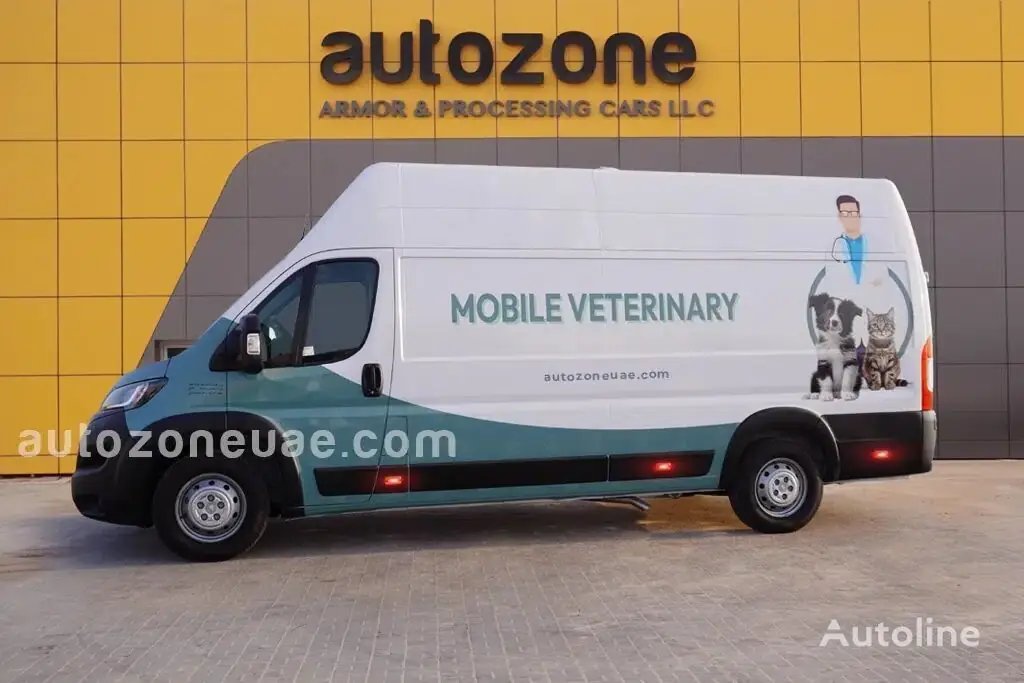
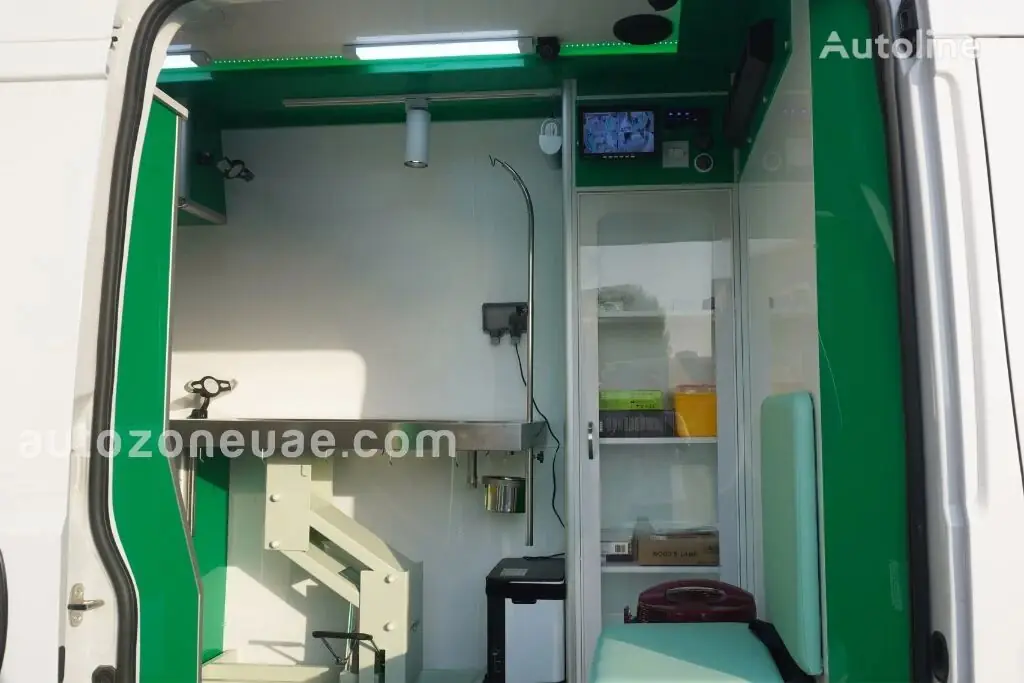
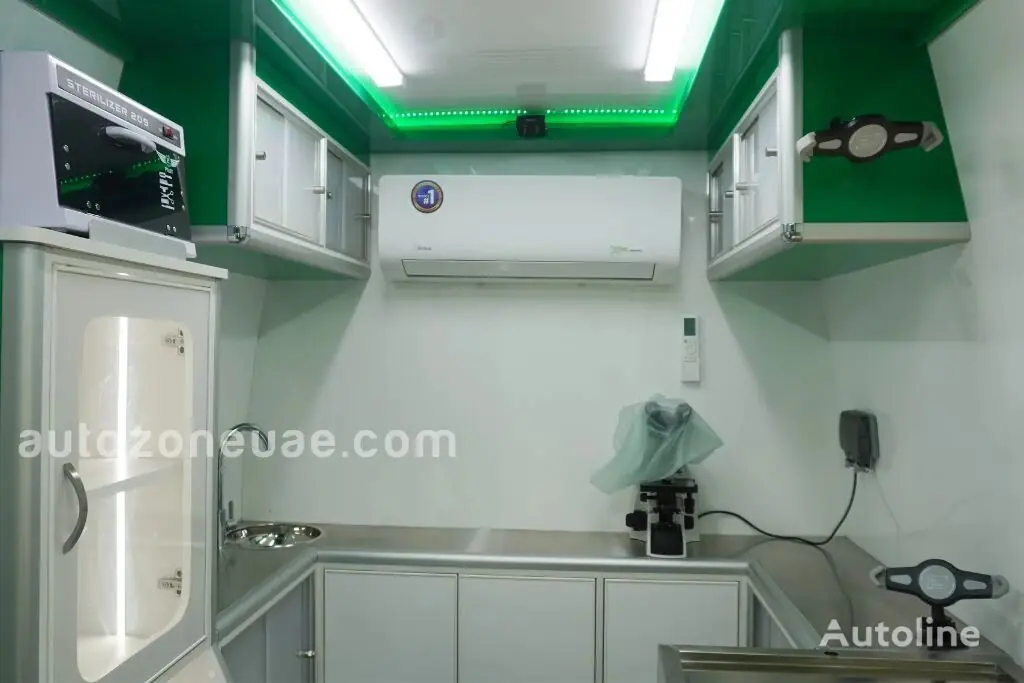
Autozone UAE’s advertised Boxer illustrates how a cargo van can be configured around an animal-care workspace. The source material describes a grooming bench, working area, storage and utilities, while the gallery shows stainless work surfaces, cabinets, sink, seating and air-conditioning fittings. The actual veterinary service should follow the final agreed equipment and handling arrangements.
Our Peugeot Boxer Mobile Veterinary Clinic review examines the individual offer. Here, it is an example within the wider service-model decision, not a claim that this vehicle supports every activity discussed above.
Inside the Advertised Peugeot Boxer Veterinary Van
These original advertiser photographs show the vehicle used for this product example. They help readers assess the exterior, workspace and visible fittings alongside the service-planning discussion.
| Item | Verified source information and scope |
|---|---|
| Advertised platform | Peugeot Boxer Mobile Veterinary Clinic; full derivative and production year not established. |
| Powertrain | Seller states 2.2-litre four-cylinder diesel, manual transmission and front-wheel drive; 130 HP / 96 kW listed, 320 Nm on converter page. |
| Quoted size | 6.363 × 2.050 × 2.760 m; wheelbase 4,035 mm. Final measurement scope to confirm. |
| Converter / workspace | Autozone UAE; grooming/work bench, storage, sink and climate fittings described or pictured. |
| Utilities / final equipment | Water tank/pump, fridge and charging station described; ratings, capacities and signed device inventory required. |
| Records for purchasing | GVW, payload, VIN-linked derivative, year and mileage not established. Confirm intended animal handling and clinical service. |
Ultrasound, radiography, anesthesia, major surgery and large-animal transport are not verified inclusions for this particular offer. Any proposed clinical function should be documented through the exact equipment, patient-handling plan, qualified staffing and applicable approval. That confirmation supports a clear, constructive purchasing decision.
VIEW CURRENT PRICE & AVAILABILITY
Featured Vehicle Offer — Verified 26 October 2026
Product: Peugeot Boxer Mobile Veterinary Clinic Cargo Van. Exact model: Boxer veterinary conversion; full length/height derivative not stated. Supplier/converter: Autozone UAE / Autozone Assembling LLC. Advertisement PT41519.
Condition: new, advertiser-stated. Year, first registration and mileage: not specified in the reviewed offer. Price: on request; amount and currency not quoted. Physical Product Location: Ajman, United Arab Emirates, from the vehicle-location field; exact collection premises remain to be confirmed.
Veterinary equipment: source-described workspace and photographed fittings; final device inventory and animal-handling arrangements require confirmation. Availability: advertisement accessible when checked; allocated vehicle, build status and dispatch date unconfirmed.
Delivery destinations, shipping arrangements and export terms: no order-specific destination, charge, Incoterm, document allocation or lead time verified. The supplier states company-wide export activity; a destination-specific quotation should define collection, road/sea transport, insurance, customs responsibilities and any commissioning.
Delivery destinations, shipping arrangements, and applicable transport terms were not specified in the information reviewed. Prospective buyers should confirm these details directly with the seller.
CHECK DELIVERY & EXPORT OPTIONS
Choosing a Suitable Veterinary Service Model
Start with five questions: Which animals and owners will you serve? Which services will the qualified team provide? Where will those services take place? What equipment and utilities support them? How will ongoing care be coordinated? A mobile, facility-based or combined model can then be assessed against the same service brief.
For community visits, evaluate routes, partner sites and the mobile workspace. For established premises, evaluate the appointment pathway and facility resources. For a combined programme, evaluate both settings and the handovers between them. Use written specifications and acceptance demonstrations to confirm that the chosen arrangements match the plan.
A phased service can begin with a clearly defined appointment offer and expand when the required resources, permissions and support are in place. Review the actual experience of patients, owners and staff alongside operating records. Growth should reflect the veterinary service being built, without an assumed universal business outcome.
Frequently Asked Questions
Is a mobile clinic or a traditional practice the better model?
The suitable model follows your services, patients, professional team, operating locations and support arrangements. Both can contribute to the same care network.
Can a traditional practice add mobile veterinary services?
Yes, as a planned service expansion with suitable equipment, staffing, site arrangements, records and local authorization.
Does mobile veterinary practice always mean treatment inside a van?
No. It can include fitted vehicle workspaces and ambulatory visits where the team works at the animal’s premises. Define the intended format.
Can both models provide preventive care?
Appropriate preventive services can be organized in either setting when the professional team, equipment, medicines and authorization support them.
How do the two models coordinate referrals?
Agree receiving services, owner communication, appointment arrangements, clinical information and responsibility for follow-up in advance.
Does every veterinary facility include surgery and imaging?
Those services depend on the individual facility’s equipment, staffing and authorization. Confirm the specific service offering.
Is the featured Boxer suitable for every animal and procedure?
Its actual service scope needs a defined patient group, equipment inventory and handling plan. Specialist procedures and large-animal carriage are not verified by this offer.
How should medicines and refrigeration be planned?
Specify the intended medicines’ storage and monitoring requirements, the equipment and power arrangements, and the applicable local professional rules.
Can one model be assumed to cost less?
Use itemized quotations and an operating plan for your project. This article does not assign financial returns or savings to either model.
Do the photographs show the actual advertised veterinary van?
The three credited product photographs in the Boxer spotlight come from the actual advertiser listing. They show the exterior and interior fittings. The featured comparison image and portrait artwork are separately labelled illustrations.
Final Perspective: Two Professional Approaches, One Shared Goal
Mobile veterinary clinics offer a way to organize suitable services at planned locations. Traditional veterinary practices offer established settings around which teams, equipment and ongoing care can be arranged. The most useful choice is the configuration—or combination—that fits your patients and the service you intend to provide.
Define the clinical brief, verify the resources, plan professional support and make the care pathway clear to owners. If a vehicle-based workspace is part of that plan, assess the featured Peugeot Boxer against the exact specification and acceptance requirements your veterinary team has approved.
Join the Conversation
How would mobile visits and established facilities work together in your veterinary service? Share your patient group, outreach goals or planning questions. Every Task. Every Person. Home Safe.
Sources, Images and Editorial Method
Primary sources reviewed on 26 October 2026 include RCVS practice and professional guidance, WOAH workforce information, AAHA biosecurity and business resources, Peugeot conversion context, the Autozone product page and Autoline PT41519. Professional guidance is identified by scope; planning recommendations are editorial synthesis, not a clinical procedure or financial forecast.
Three original advertiser photographs from Autoline PT41519 are reproduced under the review-use permission confirmed by HSSE TIPS. Optimized copies are hosted on this website, with Autozone UAE / Autoline attribution and existing watermarks preserved. The separate editorial artwork is labelled as illustrative. Photographs establish visible layout, not clinical certification or a final sale inventory. No unit-specific advertiser video was verified.
Your experience matters
Share your thoughts on this page
Have a question, a useful experience or a suggestion? Add your input below.
Comments are public. Keep them respectful and relevant. Do not share contact details, confidential information or emergency reports.
Comments on this page
Loading comments…