HSSE TIPS · Product Reviews · Mobile Healthcare Infrastructure
Mercedes-Benz Mobile Wellness Clinic Review: Facilities, Equipment, Specifications & Buying Guide
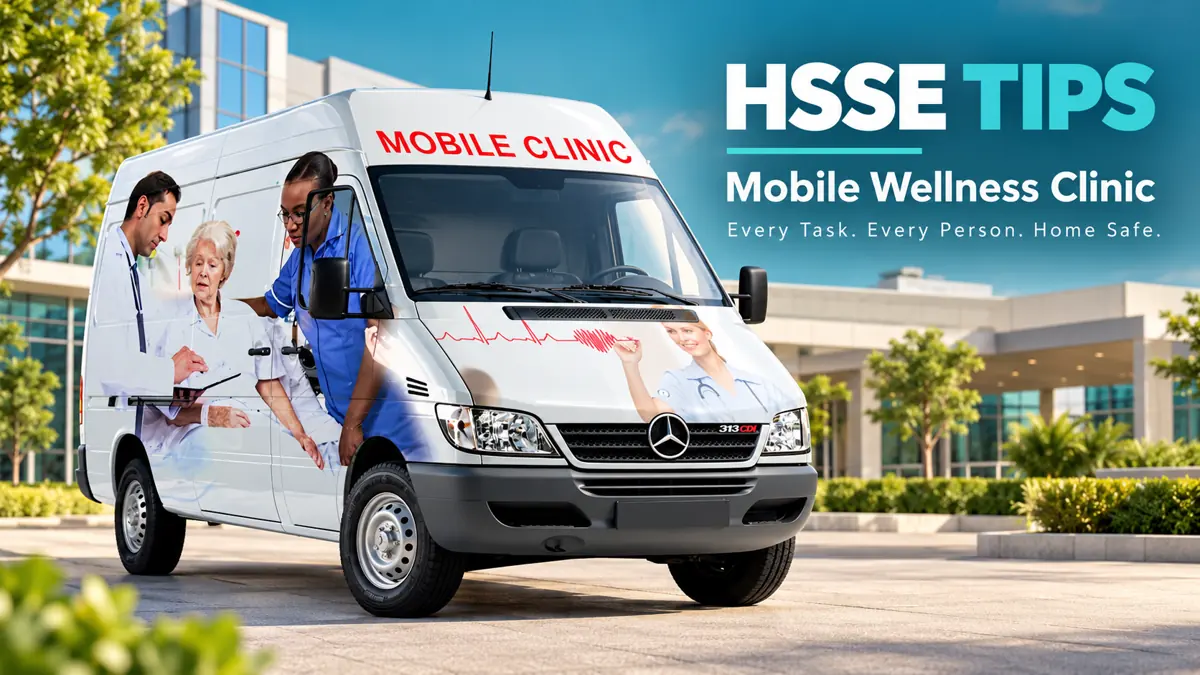
Introduction — Bringing Wellness Services Closer to People
A workplace health appointment should fit around the people who need it. A community outreach visit needs somewhere private to talk, examine patients and explain the next step. A hospital extending its services needs an organized clinical space as well as a way to reach the destination.
A mobile wellness clinic can bring those requirements together when the vehicle, professional team and service plan are designed around the same purpose.
The Mercedes-Benz Mobile Wellness Clinic is an advertised specialist conversion for buyers exploring consultation and examination services away from a permanent clinic. Its appeal is the opportunity to organize the vehicle around a defined healthcare program, with the facilities and utilities agreed before purchase.
This review explains the published configuration, the practical questions it raises for procurement and how to assess its suitability for a particular project.
Affiliate Disclosure: Worksite Safety Hub may earn a commission if you make a qualifying purchase through links in this article. This does not change the price you pay.
EXPLORE THE MERCEDES-BENZ MOBILE WELLNESS CLINIC
Mercedes-Benz Mobile Wellness Clinic Overview
A mobile clinic is most useful when it supports a complete service pathway. Patients need clear access, a suitable assessment and a reliable route to results, treatment or onward care. The vehicle should make that pathway workable for both patients and staff.
The advertised conversion provides a starting point for discussion, rather than a substitute for an agreed clinical specification. Buyers should connect the proposed facilities to the appointments they intend to offer, the people they will serve and the locations they can safely reach.
For a hospital, this might mean planned outreach linked to its existing records and referral system. For an occupational health provider, it might mean scheduled workplace consultations with appropriate confidentiality and follow-up. Each program needs its own equipment and staffing brief.
The WHO-hosted Mobile Clinic Quality of Care Toolkit provides planning and quality-monitoring resources for humanitarian mobile services. It reinforces the importance of treating the clinical service, rather than the vehicle alone, as the project.
Understanding the Vehicle Platform and Conversion
The advertisement identifies Mercedes-Benz, but its description also contains an ambiguous reference to an International chassis. The converter presents the product within a van/bus category. The gallery presents a high-roof van exterior alongside three concept renderings. These show the advertised design, but do not establish an identified, completed vehicle. The precise chassis and body configuration therefore require documentary confirmation.
Request the VIN, chassis plate, model designation, registration information and conversion drawings. Those records should establish which vehicle is actually offered and which engineering documents apply. No Sprinter, Vito, bus or truck specification should be transferred to it by assumption.
The marketplace's ambulance category does not establish emergency patient-transport or advanced life-support capability. Describe the purchased vehicle according to its verified build, installed equipment and authorized use.
Vehicle identity also guides practical ownership questions: driver licensing, servicing, parts, registration, dimensions and route suitability. Ask the supplier to connect each answer to the exact unit or agreed new-build specification.
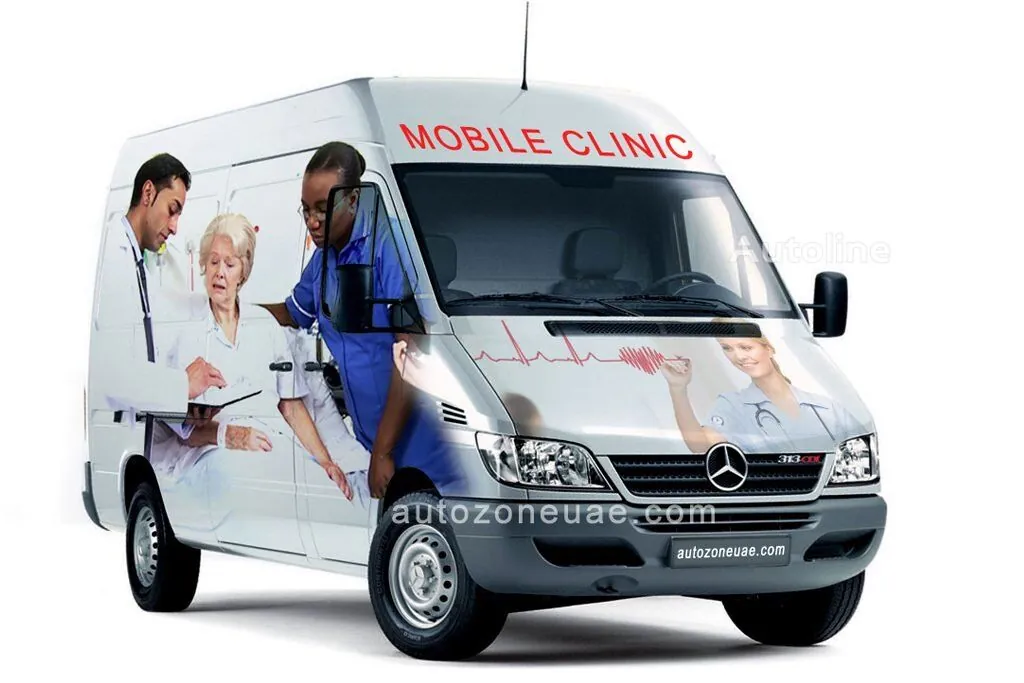
Consultation and Examination Facilities
Start the layout review with a realistic appointment. A patient arrives, registers, discusses their needs, undergoes the planned assessment and receives an explanation of the next step. Identify where each activity will happen and who is responsible for it.
The published proposal describes consultation and examination facilities, partitions, cabinets and a sink. Confirm the accepted layout, room count, working clearances and included fittings from scaled drawings.
A clinician should be able to use the agreed equipment without obstructing access or compromising privacy. Staff also need somewhere to document findings, manage supplies and prepare the space for the next patient.
Ask for a demonstration of the proposed workflow. Include a patient companion where relevant, together with realistic cleaning and restocking between appointments. Room names and photographs alone do not establish patient throughput or clinical capacity.
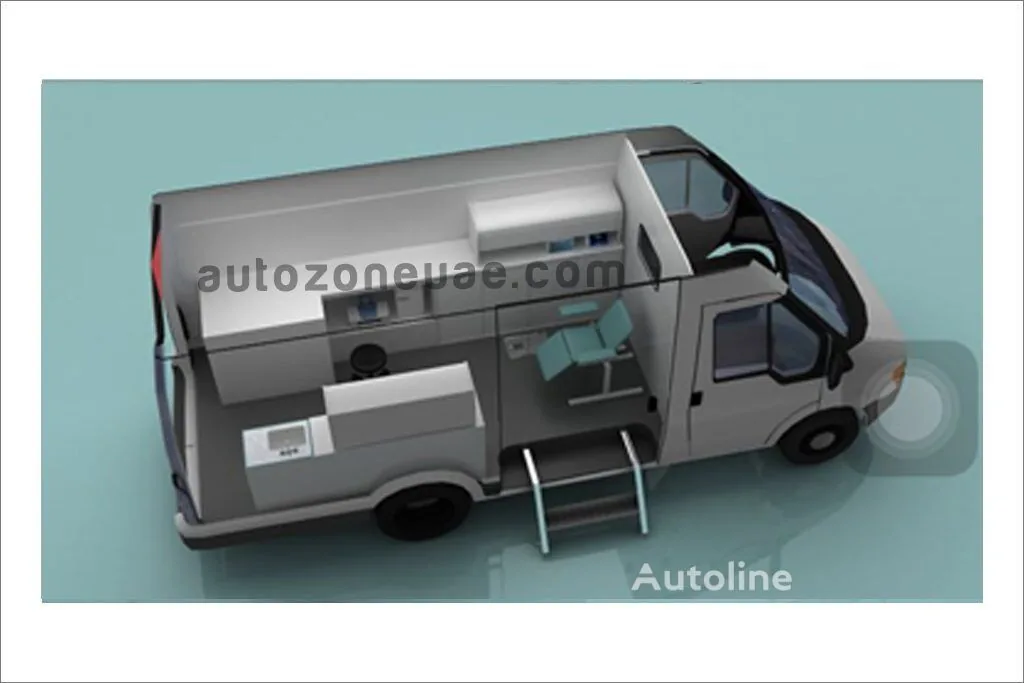
Patient Privacy, Access and Clinical Workflow
Privacy begins before the examination. Consider how people wait, how they enter and whether a conversation can be overheard. Check windows, doors, partitions and the route between different assessment stages.
Review access against the patients expected to attend. Older people, people with limited mobility and patients accompanied by caregivers may need particular arrangements. Obtain door widths, step heights, handrail details and any proposed ramp or lift specification. Do not infer accessible entry from the general clinic designation.
Plan how records are collected, stored and transferred. A visiting service needs clear responsibility for consent, confidential discussions, results and follow-up after the vehicle leaves.
For workplace programs, define how individual clinical information remains confidential. Agree separately what information the employer receives, in accordance with the service's professional and applicable legal requirements.
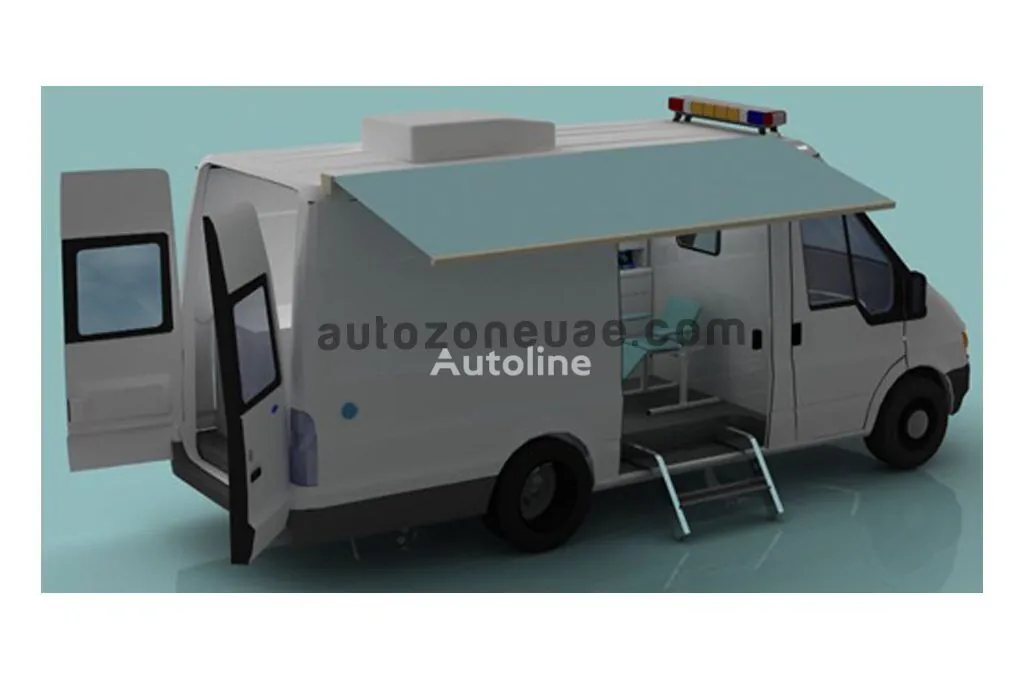
Medical Equipment: What Is Included and What Needs Confirmation
The phrases “standard accessories” and “examination room with equipment” do not establish an itemized medical-device package. Obtain the exact make, model, quantity and accessories for each proposed device.
Define equipment from the service scope. A consultation program and a specialist diagnostic program can require very different instruments, consumables, training and support. The name “wellness clinic” does not establish either package.
Separate four groups in the purchasing schedule:
Contractually included: Equipment explicitly accepted in the signed quotation.
Visible but unconfirmed: Items shown in media whose inclusion or identity remains unestablished.
Optional: Additions specifically offered and quoted as optional.
Not specified: Equipment not established by the reviewed material.
Do not assume included ECG, ultrasound, laboratory equipment, refrigeration, oxygen, suction or a defibrillator. If needed for the proposed service, request a suitable package and its supporting documentation.
Device selection should also address cleaning, calibration, consumables, warranty and servicing at the destination. Ask who provides commissioning and competency-based familiarization before the service starts.
DISCOVER THE CLINICAL FACILITIES & EQUIPMENT
Electrical Power, Batteries, Solar and Shoreline Supply
Power planning should begin with the connected equipment. List the devices, lighting, computing, charging and climate-control loads that may operate together. Separate continuous demand from starting loads and identify anything requiring uninterrupted power.
The published configuration includes battery, inverter, solar and external-supply provisions, summarized below. Their ratings describe different functions. Inverter output is not stored battery energy; a solar-panel rating does not guarantee daily energy production.
A seller's runtime statement needs an operating scenario. Ask which equipment was running, under what environmental conditions, with what battery specification and usable capacity. Obtain a demonstration against the service's agreed load schedule before relying on a particular duration.
Confirm supply voltage, frequency, outlet ratings, earthing, protective devices, charging and changeover arrangements. Have appropriately qualified personnel approve the complete installation for its intended use and destination.
Plan for interruptions: which activities can continue, which must stop and how staff will safely close the appointment. The operating procedure should be understood before deployment.
Air Conditioning, Ventilation, Water and Sanitation
Climate control should suit the destination, occupancy and installed equipment. Cooling capacity and ventilation are separate considerations; an air-conditioning description does not establish every ventilation requirement.
Ask for operating conditions and performance criteria that reflect the proposed sites. Include equipment heat, patient numbers, solar exposure and the actual arrangement of doors and windows.
For water, establish the source, daily demand, refill access, cleaning and wastewater disposal. A sink does not establish tank capacity, water quality or a complete sanitation arrangement.
Include handwashing supplies, cleaning access and secure storage of materials in the layout review. If the program needs refrigeration, plumbing or waste-handling equipment beyond the accepted build, specify it separately.
Technical Specifications and Facilities
The following are published seller/converter details, not an inspected or contractually accepted build.
Vehicle and Conversion Specifications
| Specification | Published Information | Buyer Confirmation Needed |
|---|---|---|
| Advertised product | Mercedes-Benz Mobile Wellness Clinic | Exact chassis, body and VIN |
| Clinical areas | Consultation and examination spaces | Final drawings, room count and fittings |
| Interior facilities | Partitions, cabinets, sink and finished surfaces | Materials, dimensions and cleaning compatibility |
| Inverter / batteries | 3,000 W / eight batteries described | Chemistry, voltage, capacity and usable energy |
| Solar | Two 150 W panels described | Controller, installation and expected charging |
| External supply | 32 A shoreline described | Voltage, frequency, protection and changeover |
| Air conditioning | 12,000 BTU roof unit described | Performance and ventilation design |
| Other provisions | Lighting, awning and intercom described | Final quantities and specifications |
| Exact chassis, engine, fuel, transmission and drivetrain | Not specified in the information reviewed | VIN and chassis-specific engineering documents |
| Dimensions, wheelbase, steering position, GVW, completed weight and remaining payload | Not specified in the information reviewed | Approved drawings, weighing record and axle loads |
| Patient entry | Steps appear in concept renderings | Actual doorways, step heights and any ramp or lift |
| Medical devices and water capacities | Not itemized in the reviewed information | Accepted equipment and utilities schedules |
No vehicle-specific Mercedes-Benz engineering figures are assigned without confirmed chassis identification.
Facilities and Equipment
| Facility or Equipment | Evidence Status | Practical Relevance |
|---|---|---|
| Consultation and examination areas | Described in published proposal; final room count unconfirmed | Discuss the patient journey and staff working space |
| Cabinets, partitions and sink | Published proposal; cabinetry also shown in concept layout | Confirm storage, privacy and hygiene arrangements |
| Side entry and awning | Shown in concept renderings; not an inspected installation | Establish the actual deployment footprint |
| Inverter, batteries and solar | Converter-described configuration | Assess accepted loads and charging arrangements |
| Shoreline supply and cooling | Converter-described configuration | Match external supply and climate requirements |
| ECG, ultrasound and other diagnostic devices | Not specified in the information reviewed | Request an itemized, service-specific package |
| Generator and water-tank capacities | Not specified in the information reviewed | Agree utilities independently of the sink or battery provisions |
| Customization | Advertised; individual options and prices unconfirmed | Record every accepted change in the purchase contract |
The gallery includes conceptual layouts rather than evidence of tested device performance. A pictured object does not establish a device make, rating or contractual inclusion.
VIEW CURRENT PRICE & AVAILABILITY
Healthcare and Occupational Wellness Applications
Community and Rural Outreach
A suitably specified clinic may support scheduled consultations where patients have limited access to a permanent service. Choose visit locations with the community and the receiving healthcare network, then plan continuity between visits.
Patients should know how to obtain results, arrange follow-up and access a higher level of care when needed. A visiting clinic works best as part of a connected service.
Workplace and Corporate Wellness
An occupational health team may consider the configuration for planned employee consultations or defined health assessments. Match every assessment to the staff's professional scope, equipment and agreed protocol.
Coordinate appointment times, access and confidential record handling with the host organization. Distinguish a wellness visit from emergency-response provision and from any separately governed fitness-for-work assessment.
Hospital and Private-Provider Outreach
A mobile unit may extend an established provider's consultation program. Connect its records, clinical responsibility, consumables and referral arrangements to the parent organization.
Agree which patients can be seen on the mobile unit and which should attend the main facility directly. The service menu should reflect the accepted configuration.
Humanitarian Programs and Temporary Capacity
Assess the local healthcare need, deployment conditions and available referral support before choosing the platform. WHO describes mobile services as one way to reach isolated and vulnerable populations; the appropriate delivery arrangement depends on the setting.
A unit may also provide temporary consultation space where site infrastructure and approvals support that use. Define patient circulation, supplies, security, waste handling and staff support alongside the physical accommodation.
Infection Prevention and Safe Operation
CDC's core practices and outpatient guidance provide useful planning references for hand hygiene, cleaning, reusable-device processing, protective equipment and safe clinical routines. Apply the requirements relevant to the intended service and destination.
Assign responsibility for the infection prevention program. Review clean and used-material storage, cleaning access, sharps arrangements and clinical-waste handling before accepting the layout.
Use device and surface manufacturers' instructions when selecting cleaning methods and products. A material description or sink installation does not replace the operational procedures needed for safe care.
Engineering checks should address electrical protection, fire precautions, exits and equipment mounting. Secure devices and supplies for travel and confirm the permitted occupancy of clinical spaces while the vehicle is moving.
The clinical team needs an escalation plan, emergency access and referral arrangements appropriate to the service. A converter's management-system certification does not by itself certify clinical capability, ambulance approval or authorization for a procedure.
Transportation, Parking and Deployment
Check the route before scheduling the service. Confirm vehicle dimensions, turning space, loading limits, ground conditions and any restrictions affecting access to the proposed site.
At the destination, allow space for patient entry, the agreed awning or access equipment, staff movement and a safe waiting area. Keep these activities separated from traffic.
Document setup and recovery: parking controls, utility connection, equipment checks, cleaning, waste transfer and securing the unit for travel. Include this time in deployment planning rather than counting patient-contact hours alone.
Confirm completed-vehicle weight and axle loads with the actual equipment, people, water and supplies accounted for. Ask for the applicable operating and maintenance instructions and the documents required for registration at the destination.
Current Seller Offer — Verified 26 October 2026
Verification here means the published advertisement and converter information were reviewed online on this date. Ready stock, the exact physical unit and delivery readiness were not confirmed with the seller.
| Offer detail | Information reviewed |
|---|---|
| Product / reference | Mercedes-Benz Mobile Wellness Clinic / ZT41519 |
| Condition | Advertised as new |
| Asking price | On request |
| Product location | Ajman, United Arab Emirates, as stated in the advertisement's location field |
| Exact chassis / year / mileage | Not specified in the information reviewed; chassis wording requires clarification |
| Offered configuration | Consultation/examination proposal with utilities described above; final build and equipment schedule require acceptance |
| Commissioning, training and after-sales | Product-specific arrangements not specified in the information reviewed |
| Availability | Advertisement accessible; ready stock and production lead time require confirmation |
| Delivery and export | Product-specific destinations, charges, Incoterms and delivery dates not established |
Delivery destinations, shipping arrangements, and applicable transport terms were not specified in the information reviewed. Prospective buyers should confirm these details directly with the seller.
Ask the quotation to allocate responsibility for collection or freight, insurance, export documents, customs, registration, commissioning and training. General export claims do not establish the terms of this particular order.
CHECK SHIPPING & EXPORT OPTIONS
What Buyers Should Confirm Before Purchasing
Prepare a written service brief before requesting the final offer. It should describe patients, appointments, staffing, equipment, deployment locations and follow-up arrangements.
Ask the supplier to respond with:
Vehicle identity: VIN, base model, condition, chassis records and completed-build documents.
Approved layout: Dimensions, access arrangements, consultation privacy and working clearances.
Equipment schedule: Included devices, accessories, options, manuals, consumables and service support.
Utilities design: Load schedule, battery specification, external-supply requirements, HVAC criteria and water arrangements.
Clinical commissioning: Cleaning procedures, staff familiarization, device checks and the approvals needed before service.
Ownership support: Warranty boundaries, maintenance, spare parts, destination-country assistance and insurance requirements.
Commercial terms: Exact inclusions, price, availability, transport responsibilities and acceptance criteria.
Arrange an inspection or dated unit-specific demonstration. Record how outstanding items will be resolved before acceptance.
Budget for the complete program: purchase, transport, site preparation, staffing, consumables, maintenance and clinical administration. No cost-saving or financial-return forecast is established by the vehicle advertisement.
Frequently Asked Questions
Is this a wellness clinic or an emergency ambulance?
It is advertised as a mobile wellness clinic within an ambulance marketplace category. Emergency transport, life-support equipment and ambulance authorization require separate confirmation.
Is it a Mercedes-Benz Sprinter?
The exact base-model designation remains unconfirmed. Request the chassis documents and VIN rather than relying on a general brand description.
What clinical services can it provide?
Only services supported by its accepted layout, equipment, qualified staff, operating protocols and applicable authorization. Define the service scope before purchasing.
Are consultation and examination facilities included?
They are described in the published proposal. Obtain the final layout and equipment schedule to establish what the purchased build actually contains.
Does it include ECG, ultrasound or laboratory equipment?
An itemized package establishing those devices was not found in the reviewed information. Request specific options where required.
Is patient entry wheelchair accessible?
An accessible-entry specification was not established. Confirm doorways, working space and any ramp or lift against the intended patient population.
How long can it run on batteries?
A guaranteed runtime was not independently established. Request a test using the agreed equipment, HVAC demand and documented battery configuration.
Do the solar panels make it fully self-sufficient?
No such conclusion is established. Assess energy demand, charging conditions and external-supply arrangements as a complete system.
What water and wastewater capacities are provided?
They were not specified in the reviewed information. Ask for tank, plumbing, refill and disposal details.
What training and commissioning should be included?
Agree vehicle familiarization, utilities operation, device commissioning, cleaning arrangements and the responsible team's competency requirements in the purchase plan.
What are the price and shipping terms?
Price is on request. Destination-specific shipping and export responsibilities require a current written offer.
How should a buyer assess suitability?
Compare the exact offered build with a documented clinical and deployment brief, supported by inspection, commissioning and agreed acceptance criteria.
Final Verdict
The Mercedes-Benz Mobile Wellness Clinic offers a basis for discussing a consultation-focused mobile healthcare project. Its published facilities and utilities proposal gives buyers concrete subjects to explore with the converter.
The purchasing decision should rest on one coherent specification: confirmed vehicle identity, a workable patient journey, an accepted equipment schedule and utilities demonstrated against the planned service.
For healthcare and occupational wellness teams, the next step is a defined enquiry that connects the vehicle to the people, places and care pathway it is expected to support.
For related planning, read our Mobile General OPD Clinic review and Mobile Eye Clinic versus General Mobile Medical Clinic comparison. These are separate products and service configurations.
Sources and Editorial Method
Commercial details were reviewed on 26 October 2026 from the exact advertised product ZT41519 and the corresponding Autozone UAE Mobile Wellness Clinic page. Published statements are distinguished from an inspected build. No physical inspection, seller contact, equipment testing or certification assessment is claimed.
The exact advertisement and corresponding Autozone UAE product documentation supplied the commercial evidence. No product-specific advertiser video was verified. The watermarked gallery images below are publisher-authorized advertiser material; captions identify the promotional image and concept renderings.
This is procurement information, not clinical operating instructions.
Join the Conversation
Which requirement would matter most for your mobile wellness project—patient privacy, examination facilities, accessible entry, reliable power or deployment flexibility? Share your priorities and experiences in the comments below.
Your experience matters
Share your thoughts on this page
Have a question, a useful experience or a suggestion? Add your input below.
Comments are public. Keep them respectful and relevant. Do not share contact details, confidential information or emergency reports.
Comments on this page
Loading comments…